
Technology
Mohammed Al-Wais... from football player to monologist, then director and broadcaster
The monologue (a Latin word meaning solo performance) is an art form that has long been popular in the Arab world, captivating audiences with its short, sung songs accompanied by fast-paced music, as well as its humorous, satirical, and critical nature, offering insightful commentary on social and political conditions. Among its early pioneers in Egypt was the artist Sayed Darwish, who composed and wrote numerous monologues (or "taqtuqat") in the 1920s. This inspired other Egyptian artists to follow in his footsteps, leading to the emergence of artists associated with this satirical genre, such as Mahmoud Shokoko, Thuraya Helmy, Ismail Yassin, Sayed Suleiman, and Mohamed Kamel, later progressing to Ahmed Ghanem, Sayed El-Mallakh, Mosaad El-Qass, and others. Initially performed on stage, monologues were later recorded on records before being adapted for film, radio, and television. Early pioneers of this art form in Saudi Arabia included the artists Abdulaziz Al-Hazzaa, Saad Al-Tamami, and Hassan Dardir (Mashqas). The undisputed pioneer of monologue in Kuwait is the artist Mohammed Hamoud Al-Dhafeeri, known as “Mohammed Al-Wais,” whose biography and works we will document in this article, based on what was written about him in the Kuwaiti and Gulf press, especially Al-Jarida newspaper in its issue of 8/23/2011, and what is recorded in Kuwaiti artistic literature. It was not surprising that Kuwait witnessed, since the 1960s, the emergence of this exceptional talent that combined in one person diverse abilities that included football, singing monologues, writing and composing songs, television directing, preparing and presenting programs, and many other things related to arts and creativity. This is because, as soon as Kuwait gained its independence in 1961, it paid great attention and care to what is called today “soft power.” It spent generously on theater, television, musical groups, and folk heritage, and sent talented sons and daughters abroad to study and hone their talents in the best Arab and foreign institutes and colleges. It sought the help of artistic geniuses in Egypt to create an unprecedented cultural and artistic movement in the region, to the point that in the seventies Kuwait became a beacon of culture, creativity, and enlightenment, and a destination for all talented sons of the Gulf seeking fame, success, and stardom, just as Egypt was for the Arabs. The credit for the decisions Kuwait made at that time goes to a group of its educated and dedicated men, such as Abdulaziz Hussein, Ahmed Meshari Al-Adwani, and Hamad Issa Al-Rajeeb, who worked with the unlimited support of the late Sheikh Jaber Al-Ali Al-Sabah, the former Minister of Information. Mohammed Hamoud Al-Dhafeeri, nicknamed "Abu Abdullah," was born in Kuwait in 1950. He completed his formal education there, completing all three levels. During his school years, he was a whirlwind of activity, performing in acting, singing, and playing musical instruments on the school stage, in scout camps, and during desert and sea excursions. His talents in monologue also shone through at the Al-Razi Club, which he joined during summer vacations with a musical group composed of his young friends, including the now-retired artists Abdulrahman Al-Sari' and Hamdan Al-Sari'. In addition, Al-Awais was passionate about football. He was one of the most prominent and talented players in this captivating sport during his school years, and later played for Al-Salmiya Sports Club as a goalkeeper. At this club, one day a coach noticed his absence and asked for him to be brought in, not knowing his name. This led the coach to call him "Al-Wais" after a foreign biologist who resembled him in features and stature. From then on, this name stuck, and his friends and colleagues began calling him "Mohammed Al-Wais." At the closing ceremony of a scout camp held in 1967, attended by the pioneer of education, the spiritual father of Kuwaiti education, and its first minister, Sheikh Abdullah Al-Jaber Al-Sabah (may God have mercy on him), Al-Wais performed two monologues accompanied by a musical group of his colleagues. The first monologue was titled "Stretch Your Legs as far as Your Blanket allows," beginning with the lines: "Stretch your legs as far as your blanket allows, don't look at others, you'll tire yourself out. This and that won't benefit you. Eat, drink, and stretch your legs as far as your money allows." The second monologue was titled "The Girls of Your Own Country Are Better," beginning with the lines: "If you're going to propose to someone from abroad, the girls of your own country are better for you." Our friend left this experience with a gift: a medal and 100 dinars. Furthermore, in recognition of his excellent performance, Sheikh Abdullah Al-Jaber, the patron of the event, instructed Kuwaiti radio officials to support him artistically and provide him with the opportunity to record his songs in the radio studio accompanied by its musical ensemble. Thus, in 1968, at the age of 18, Al-Awais recorded monologues in the radio studios, which were later filmed for television. These included the aforementioned monologue "Mad Riwalik" and the monologue "Ajaib Al-Dahr," in addition to the monologue "Sheeli Qashk" (composed and written by Thamer Al-Sayyar), which he performed with the late artist Abdulaziz Al-Namash. It was due to Al-Namash's participation that the work became popular, and Al-Awais's name became widely known in artistic circles. Kuwaiti artistic literature considers the monologue "Sheeli Qashk" (Take Your Pack) one of the most famous monologues presented in the history of the modern Kuwaiti song movement. It was purchased by a record company, recorded, and continues to be broadcast to this day. Until that time, the art of monologue was merely one of Al-Wais's many hobbies, but he found himself immersed in this genre, feeling compelled to offer more to satisfy a growing audience and in response to his friend, the poet Yousef Al-Jarrah, who wrote lyrics for many of his monologues. It's worth noting that the first person to write a monologue text for him to perform was Abdul-Jabbar Mazaal. Initially, Al-Wais presented his work through radio and television, but he later began performing it in public concerts, despite his initial shyness and embarrassment. His first public concert was a charity event organized by Mrs. Luluah Al-Qatami in the early 1970s at the Andalus Theater, where he was joined by Abdul-Muhsin Al-Muhanna and Laila Abdul-Aziz from Kuwait, and Najat Al-Saghira from [unspecified location]. In Egypt, Al-Wais wept at this concert, deeply moved by the applause and warm welcome of the large audience. His second concert was a musical performance at the Yarmouk Sports Club, celebrating their victory in the Emir's Cup. There, Al-Wais performed a special song, composed by him with lyrics by the poet Yousef Nasser, beginning: "I went to ask, 'What's the news, friends? What's this beauty that's been mentioned in the sea?' They told me, 'The Emir's Cup flew away on a silk carpet, carried by the dark-skinned players.'" His first trip abroad was to the Sultanate of Oman to participate in the anniversary celebrations of Sultan Qaboos's accession to the throne, may God have mercy on him, alongside Mustafa Ahmed and Aisha Al-Murta from Kuwait, Mohammed Zwaid from Bahrain, Adel Mamoun from Egypt, and Abu Bakr Salem from Saudi Arabia. This was followed by a trip to Cairo, during which he participated with his Egyptian friend, the composer Mustafa Al-Awadi, in presenting some monologues in Cairo, some of which were composed by Al-Awadi, such as the national song “Ya Kuwait” and the sports song “Ahli Wal Nabi Ahli.” The early seventies of the twentieth century constituted an important turning point in Al-Wais’s monologue career, as he collaborated with the great Kuwaiti composer and the one with the immortal imprints in the development of the singing art in the State of Kuwait, the late Abdul Rahman Al-Baijan, in launching the monologue “Ya Tuwair Hindi” with lyrics by the lyric poet Muhammad Al-Mahrous, whose opening says: “Ya Tuwair Hindi, you have what I have, you have a car, in it is loss.” After Al-Baijan and the remarkable success of his composition of “Ya Tuwair Hindi,” Al-Wais collaborated with many other composers and poets. In 1974, he presented the monologue "Shapes and Colors," which he wrote himself, with music composed by the late Hamdi Al-Hariri. In 1975, he presented the monologues "The Plane Took Off" and "Peace of Mind," with lyrics by Abdul Latif Al-Bannai and music by Yousef Al-Muhanna, and "The Bomb," with lyrics by Yousef Nasser. In 1968, he presented the traffic monologue "Safety Road," with lyrics by Yousef Nasser, and in 1978, he recorded the monologue "Oh, You Who Are Yearning," with lyrics by Abdul Amir Issa and music by Rashid Al-Sultan. He also collaborated with the esteemed artist Ghanem Al-Dikan on several artistic works, with the poet Abdul Rahman Al-Najjar on the monologue "They Heard This Story," and with the composer Khaled Al-Zayed on the monologue "Morning Tea." Among his other famous works are the monologues: “The Rooster is Lost,” “Oh God, protect us from speed,” “The Madman,” “Bachelorhood,” “The Cigarette,” “The World is Appearances,” “Don’t Be Deceived by His Sail,” and other monologues that dealt with the social changes and problems that occurred in Kuwaiti society in particular. Although Al-Wais relied on the melodies of others for the greater part of what he sang, he also ventured into the field of composing, in another indication of the diversity of his talents, as he composed monologues for himself and for other artists such as the Bahraini Basit Al-Busta and the Kuwaiti Abdul Majeed Abdul Qader. It should be noted that his shift towards composing for others came in the later years of his career with monologues, when he felt that the monologue had lost its role, influence, and audience, especially with the emergence of performers who, in his words, had abused this satirical genre with ridiculous movements, gaudy costumes, and clownish antics on stage. Undoubtedly, Al-Awais sparked a unique movement in Kuwaiti radio and television, and the Ministry of Information rewarded him by sending him to Egypt at the state's expense to complete his university studies. He did indeed travel there and graduated from the Faculty of Business Administration at Cairo University in the 1981/1982 academic year. He also studied at the Higher Institute of Musical Arts in Egypt, which awarded him a higher diploma. He then continued his studies in Britain, obtaining a diploma in production and directing from London Television. Upon returning to his homeland, adorned with these qualifications, he was initially appointed as an assistant director before being promoted to director. He then became the Director of Operations, Implementation, and Follow-up at the Third Sports Channel. Subsequently, he was appointed as an advisor to the Ministry of Information, a position he held until his retirement from government service. During his time as a television director, he directed numerous variety programs, including "The World of Cinema," "Variety Evening," "Television Magazine," "Thursday Meeting," "You and Variety," and "Asfart." He also directed coverage of official celebrations and documentaries about various regions of Kuwait, such as Failaka Island, as well as a program about Kuwait's early pioneers titled "Companions of the Path." Al-Awais retired from government service, but he never retired from art and creativity. While it's true he moved away from singing monologues and directing for television, it's equally true he turned to producing and presenting television and radio programs, thus establishing himself as a broadcaster and program presenter, and joining the ranks of media professionals. He successfully produced and presented the game show "Ghatawi" starting in 2000, alongside presenters Ward and Halima Boland and Bahraini actress Zainab Al-Askari. He also produced and presented the program "This is Kuwait" and various variety shows. He also extended his activities to Kuwaiti radio and FM stations, presenting programs such as "Stars on the Road," "Al-Bashtakhta," "Al-Darwaza," "Nights of the Homeland," "Ateej Al-Souf," and "Guests of Mercy," among others. During the brutal Iraqi occupation of Kuwait, Al-Awais moved to the United Arab Emirates with his wife and children. From there, he presented the daily radio program "My Message." However, his most monumental work came after the liberation, when he traveled to stations and channels in Abu Dhabi, Dubai, Doha, Muscat, and elsewhere to collect and bring back the musical, theatrical, and program tapes that the Kuwait Television library had lost due to the Iraqi invasion. He managed to bring back approximately five thousand tapes. The government rewarded him for this effort at the time by appointing him director of the Third Sports Channel. Al-Awais is quoted as saying, regarding the art of monologue: "You are not required to dress as a clown and appear before people, or to disfigure yourself and dress as a woman in order to perform a monologue." As for the director of variety shows, he said that he “must study music, and if he doesn’t study it, he must have a musical background, and if he doesn’t have that, he must have an artistic appreciation for music.” Finally, it must be noted that Al-Awais has been honored several times by various local, Gulf, and Arab entities, including his honoring in 2009 at the Cairo International Television and Radio Festival.

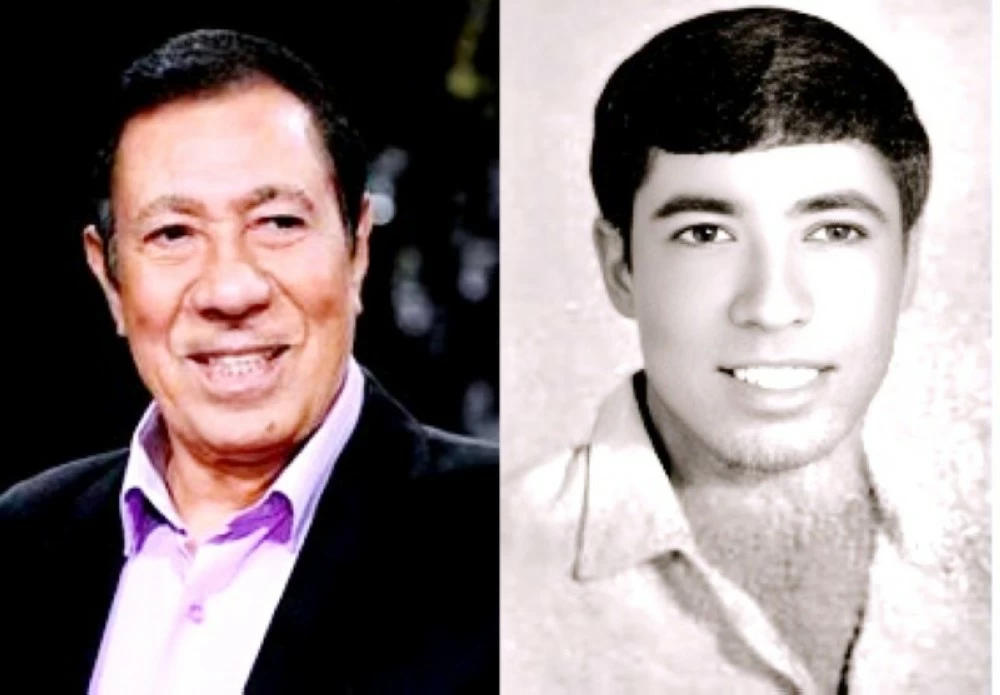
The monologue (a Latin word meaning solo performance) is an art form that has long been popular in the Arab world, captivating audiences with its short, sung monologues accompanied by fast-paced music, as well as its humorous, satirical, and critical nature, offering insightful commentary on social and political conditions. Among its early pioneers in Egypt was the artist Sayed Darwish, who composed and wrote numerous monologues (or "taqtuqat") in the 1920s. This inspired other Egyptian artists to follow in his footsteps, leading to the emergence of artists associated with this satirical genre, such as Mahmoud Shokoko, Thuraya Helmy, Ismail Yassin, Sayed Suleiman, Mohamed Kamel, Ahmed Ghanem, Sayed El-Mallakh, Mosaad El-Qass, and others. Initially performed on stage, monologues were later recorded on records before transitioning to cinema, radio, and television.
Among the pioneers of this art form in Saudi Arabia were artists Abdulaziz Al-Hazza, Saad Al-Tamami, and Hassan Dardir (Mashqas). The undisputed pioneer of monologue in Kuwait is artist Mohammed Hamoud Al-Dhafeeri, known as "Mohammed Al-Wais," whose biography and works we will document in this article, based on what has been written about him in the Kuwaiti and Gulf press, particularly in the Al-Jarida newspaper on August 23, 2011, and what is recorded in Kuwaiti artistic literature.
It was no surprise that Kuwait witnessed the emergence of this exceptional talent in the 1960s, a person who combined diverse abilities encompassing football, monologue singing, songwriting and composing, television directing, program production and presentation, and many other arts and creative pursuits. This is because, upon gaining independence in 1961, Kuwait devoted considerable attention and care to what is now called "soft power," investing generously in theater, television, musical groups, and folk heritage. It sent its talented sons and daughters abroad to study and hone their skills in the best Arab and international institutes and colleges. It also enlisted the help of artistic luminaries from Egypt to create an unprecedented cultural and artistic movement in the region, to the point that by the 1970s, Kuwait had become a beacon of culture, creativity, and enlightenment, a destination for all talented Gulf nationals seeking fame, success, and stardom, much like Egypt was for other Arabs. The credit for the decisions taken by Kuwait at that time goes to a group of its educated and loyal men, such as Abdulaziz Hussein, Ahmed Meshari Al-Adwani and Hamad Issa Al-Rajeeb, who worked with unlimited support from the former Minister of Information, the late Sheikh Jaber Al-Ali Al-Sabah.
Mohammed Hamoud Al-Dhafeeri, nicknamed "Abu Abdullah," was born in Kuwait in 1950. He completed his formal education there, completing all three levels. During his school years, he was a whirlwind of activity, performing in acting, singing, and playing musical instruments on the school stage, in scout camps, and during desert and sea excursions. His talent for monologues also shone through at the Al-Razi Club, which he joined during summer vacations with a musical group composed of his young friends, including now-retired artists Abdulrahman Al-Sari' and Hamdan Al-Sari'. Al-Awais was also passionate about football. He was a prominent and talented player in this captivating sport during his school years, and later played for Al-Salmiya Sports Club as a goalkeeper. At this club, one day a coach noticed his absence and, not knowing his name, asked for him to be brought in. This led the coach to nickname him "Al-Awais" after a foreign biologist who resembled him in features and stature. And from then on, this name stuck with him, and his friends and colleagues began calling him “Mohammed Al-Wais”.
At the closing ceremony of a scout camp held in 1967, in the presence of the pioneer of education, the spiritual father of Kuwaiti education, and its first minister, Sheikh Abdullah Al-Jaber Al-Sabah (may God have mercy on him), Alois performed two monologues accompanied by a musical ensemble of his colleagues. The first monologue was titled "Stretch Your Legs as far as Your Blanket allows," and its opening lines were:
Stretch your legs only as far as your blanket allows; don't look at others
You get tired, and neither of them will benefit you
Spend your money, eat, drink, and stretch your legs
The second monologue was titled "The girls of your country are better," and it began:
By the one who proposes to someone from outside
Girls from your own country are better for you
Our friend left this experience with a gift: a medal and 100 dinars. Furthermore, in appreciation of his excellent performance, the event's sponsor, Sheikh Abdullah Al-Jaber, instructed Kuwaiti radio officials to take him under their wing and give him the opportunity to record his songs in the radio studio with their musical ensemble. Thus, in 1968, at the age of 18, Al-Awais recorded monologues in the radio studios, which were then filmed for television. Among these were the aforementioned monologue "Mad Riwalik" (Stretch Your Legs), the monologue "Ajaib Al-Dahr" (Wonders of Time), and the monologue "Sheeli Qashk" (Pack Your Bags) (composed and written by Thamer Al-Sayyar), which he performed with the late artist Abdulaziz Al-Namash. It was Al-Namash's participation that led to the work's widespread popularity and Al-Awais's name becoming a household name in artistic circles. Kuwaiti artistic literature considers the monologue “Sheeli Qashk” to be one of the most famous monologues presented in the history of the modern Kuwaiti singing movement. It was bought by an artistic company and printed on records and is still being broadcast to this day.
Until that time, the art of monologue was just one of Al-Wais’s many hobbies, but he found himself immersed in this genre of singing, and required to offer more to satisfy an audience whose numbers were gradually increasing, and also in response to his friend, the poet Youssef Al-Jarrah, who prepared many monologue lyrics for him, knowing that the first person to write a monologue text for him to perform was Abdul-Jabbar Mazaal.
Initially, Al-Wais focused on performing his work through radio and television, but he later began performing in public concerts, despite his initial shyness and embarrassment. His first public concert was a charity event organized by Mrs. Luluah Al-Qatami in the early 1970s at the Andalus Theater. He was joined by Abdulmohsen Al-Muhanna and Laila Abdul Aziz from Kuwait, and Najat Al-Saghira from Egypt. Al-Wais was so moved by the applause and warm welcome of the large audience that he wept. His second public performance was at a concert at the Yarmouk Sports Club celebrating their victory in the Emir's Cup. There, Al-Wais performed a special song, composed by him with lyrics by the poet Yousef Nasser, which begins:
I went to ask the guys what the news was, what was this beautiful thing that was mentioned in the sea?
They told me the Prince's Cup flew away on a silk carpet, paralyzed by the dark-skinned players
His first trip abroad was to the Sultanate of Oman to participate in the celebrations of Sultan Qaboos's accession to the throne, may God have mercy on him, along with Mustafa Ahmed and Aisha Al-Murta from Kuwait, Mohammed Zwaid from Bahrain, Adel Mamoun from Egypt, and Abu Bakr Salem from Saudi Arabia. This was followed by a trip to Cairo, where he collaborated with his Egyptian friend, the composer Mustafa Al-Awadi, in performing several monologues, some of which were composed by Al-Awadi, such as the patriotic song "Ya Kuwait" and the sports anthem "Ahli Wal Nabi Ahli.".
The early seventies of the twentieth century marked a significant turning point in Alois's monologic career, as he collaborated with the great Kuwaiti composer and the late Abdul Rahman Al-Baijan, who left an indelible mark on the development of Kuwaiti song, in launching the monologue "Ya Tuweir Hindi" with lyrics by the poet Muhammad Al-Mahrous, the opening lines of which say:
Oh Indian bird, you have what I have
You have a car, and it's a loss
Following Al-Buaijan and the remarkable success of his composition "Ya Tuwair Hindi," Al-Wais collaborated with many other composers and poets. In 1974, he presented the monologue "Ashkal wa Alwan" (Shapes and Colors), which he wrote himself, with music by the late Hamdi Al-Hariri. In 1975, he presented the monologues "Tarat Al-Tayara" (The Plane Flew Away) and "Rahat Al-Bal" (Peace of Mind), with lyrics by Suleiman Al-Merdas and music by Abdullah Bughaith, and "Al-Bambara" (The Bomb), with lyrics by Yousef Nasser. In 1968, he presented the traffic monologue "Darb Al-Salama" (The Road to Safety), with lyrics by Yousef Nasser, and in 1978, he recorded the monologue "Ya Al-Mushtaqee" (O You Who Are Yearning), with lyrics by Abdul-Amir Issa and music by Rashid Al-Sultan. He also collaborated with the esteemed artist Ghanem Al-Dikan on several artistic works, with the poet Abdul-Rahman Al-Najjar on the monologue "Sama'u Hal-Qissa" (They Heard This Story), and with the composer Khaled Al-Zayed on the monologue "Shay Al-Dhuha" (Morning Tea). Among his other famous works are the monologues: “The Rooster is Lost,” “Oh God, the Speed,” “The Madman,” “Bachelorhood,” “The Cigarette,” “The World is All Appearances,” “Don’t Be Deceived by His Sail,” and other monologues that dealt with the social changes and problems that occurred in Kuwaiti society in particular.
Although Al-Awais relied heavily on the melodies of others for the majority of his songs, he also ventured into composing, further demonstrating the breadth of his talents. He composed monologues for himself and for other artists such as the Bahraini Basit Al-Busta and the Kuwaiti Abdul Majeed Abdul Qader. It's worth noting that his foray into composing for others came in the later years of his monologue career, when he felt the genre had lost its appeal, influence, and audience, especially with the emergence of performers who, in his words, had abused this satirical musical form with ridiculous movements, gaudy costumes, and clownish antics on stage.
There is no doubt that Al-Awais brought about a unique movement in Kuwaiti radio and television, and the Ministry of Information rewarded him by sending him to Egypt at the state's expense to complete his university studies. He traveled there and graduated from the Faculty of Business Administration at Cairo University in the 1981/1982 academic year. He also studied at the Higher Institute of Musical Arts in Egypt, which awarded him a higher diploma. He then continued his studies in Britain, obtaining a diploma in production and directing from London Television.
Upon returning to his homeland with his academic qualifications, he was initially appointed assistant director before being promoted to director. He then became the director of operations, implementation, and follow-up at the Third Sports Channel. Following this, he was appointed advisor to the Ministry of Information, a position he held until his retirement from government service. During his time as a television director, he directed numerous variety programs, including "The World of Cinema," "Variety Evening," "Television Magazine," "Thursday Meeting," "You and Variety," and "Asfart." He also directed coverage of official celebrations and documentaries about various regions of Kuwait, such as Failaka Island, as well as a series about Kuwait's early pioneers titled "Companions of the Path.".
Al-Awais retired from government work, but he didn't retire from art and creativity. While he did move away from singing monologues and directing for television, he also turned to producing and presenting television and radio programs, thus establishing himself as a broadcaster and program presenter, and joining the ranks of media professionals. He successfully produced and presented the game show "Ghatawi" starting in 2000, alongside presenters Ward and Halima Boland and Bahraini actress Zainab Al-Askari. He also produced and presented the program "This is Kuwait" and various variety shows. Furthermore, he extended his activities to Kuwait Radio and FM stations, presenting programs such as "Stars on the Road," "Al-Bashtakhta," "Al-Darwaza," "Nights of the Homeland," "Ateej Al-Souf," "Guests of Mercy," and others.
During the brutal Iraqi occupation of Kuwait, Al-Awais moved to the United Arab Emirates with his wife and children. From there, he presented the daily radio program "My Message." However, his most remarkable work came after the liberation, when he traveled to stations and channels in Abu Dhabi, Dubai, Doha, Muscat, and elsewhere to collect and bring back the musical, theatrical, and program tapes that the Kuwait Television library had lost due to the Iraqi invasion. He managed to bring back approximately five thousand tapes. The government rewarded him for this effort at the time by appointing him director of the Third Sports Channel.
Alois was quoted as saying regarding the art of monologue: “You are not required to dress as a clown and appear before people, or to disfigure yourself and dress as a woman in order to perform a monologue.” As for the director of variety shows, he said that “he must study music, and if he hasn’t studied it, he must have a musical background, and if he doesn’t have that, he must have an appreciation for music.”.
Finally, it must be noted that Al-Awais has been honored several times by various local, Gulf and Arab entities, including his honoring in 2009 at the Cairo International Television and Radio Festival.
The monologue (a Latin word meaning solo performance) is one of the arts that invaded the Arab world long ago and attracted audiences, as it relied on short singing accompanied by fast music, not to mention its comedic, satirical nature that critiques social and political conditions in a humorous way. Among its early pioneers in Egypt was the artist Sayed Darwish, who composed and arranged many monologues (taqtuqat) in the 1920s, which encouraged other Egyptian artists to follow in his footsteps later on. Names associated with this satirical musical genre emerged, such as Mahmoud Shokoko, Thuraya Helmy, Ismail Yassin, Sayed Suleiman, and Mohamed Kamel, leading up to Ahmed Ghanem, Sayed Al-Mallah, Masoud Al-Qass, and others. Monologues were initially performed on stage, then recorded on discs, before moving to cinema, radio, and television.
Among the early pioneers of this art in Saudi Arabia were the artists Abdulaziz Al-Hazaa, Saad Al-Tamami, and Hassan Dardir (Mishqas). As for the undisputed pioneer of the monologue in Kuwait, it is the artist Mohamed Hamoud Al-Dhafiri, known as “Mohamed Al-Wais,” whose biography and works we will document in this material, based on what has been written about him in the Kuwaiti and Gulf press, especially the newspaper “Al-Jarida” in its issue dated 8/23/2011, and what is recorded in Kuwaiti artistic literature.
It was not surprising that Kuwait witnessed the emergence of this exceptional talent since the 1960s, which combined diverse abilities in football, monologue singing, songwriting, composing, television directing, program preparation, and presentation, along with many other things related to the arts and creativity. This is because Kuwait, upon its independence in 1961, paid great attention and care to what is now called “soft power,” generously spending on theater, television, musical bands, and folk heritage, sending talented boys and girls abroad to study and refine their talents at the best Arab and foreign institutes and colleges, and enlisting artistic geniuses from Egypt to create an unprecedented cultural and artistic movement in the region, to the extent that Kuwait became, in the 1970s, a beacon of culture, creativity, and Enlightenment, a destination for all talented Gulf youth seeking fame and stardom, just as Egypt was for Arabs. The credit for the decisions taken by Kuwait at that time goes to a group of its educated and dedicated men, such as Abdulaziz Hussein, Ahmed Mashari Al-Adwani, and Hamad Isa Al-Rujib, who worked with unlimited support from the late Minister of Information Sheikh Jaber Al-Ali Al-Sabah.
Mohamed Hamoud Al-Dhafiri, nicknamed “Abu Abdullah,” was born in Kuwait in 1950, where he completed his formal education through its three stages. During those school years, he was a bundle of energy, engaging in acting, singing, and playing on stage at school events, scouting camps, and during trips and outdoor and marine excursions. His talents in the art of monologue also emerged through the “Al-Razi Club,” which he joined during summer vacations with a musical band made up of his young peers, including currently retired artists Abdulrahman Al-Sari and Hamdan Al-Sari. Additionally, Al-Wais was involved in playing football, being one of the prominent and talented players during his school years, later playing as a goalkeeper for Al-Salmiyah Sports Club. One day, a coach at this club missed him and requested that he be brought in without knowing his name, which led him to call him “Al-Wais,” after a foreign biologist who resembled him in features and stature. Since then, this name stuck with him, and his friends and colleagues began to call him “Mohamed Al-Wais.”
At the closing ceremony of one of the scouting camps held in 1967, attended by the pioneer of education and the spiritual father of Kuwaiti knowledge and its first minister Sheikh Abdullah Al-Jaber Al-Sabah, may he rest in peace, Al-Wais presented two monologues accompanied by a musical band of his peers. The first monologue was titled “Mad Riyolak Qad Lihafak,” with the opening lines:
Mad Riyolak Qad Lihafak, the whole 'a ghayrak
Ta'tab, hadha wa dhak ma yufidunak
Qad flusak kul washreb wa mad Riyolak
The second monologue was titled “Banat Biladik Ahsan,” with the opening lines:
Bil-li takhtab min barra
Banat Biladik Ahsan lak
Our friend emerged from this experience with a gift that was a medal and 100 dinars. Moreover, in appreciation from the event's sponsor for his good performance, Sheikh Abdullah Al-Jaber ordered the officials of the Kuwaiti radio to adopt him artistically and provide him with the opportunity to record his musical works in the radio studio with their musical band. Thus, Al-Wais recorded in 1968, at the age of 18, monologues in the radio studios, then filmed them for television, including the aforementioned monologue “Mad Riyolak” and the monologue “Ajayib Al-Dahr,” in addition to the monologue “Shili Qashk” (music and lyrics by Thamer Al-Sayar), which he performed with the late artist Abdulaziz Al-Namash. Due to Al-Namash's participation, the work spread, and Al-Wais's name became well-known in artistic circles, becoming more famous than fire on a mountain. Kuwaiti artistic literature considers the monologue “Shili Qashk” one of the most famous monologues presented in the history of modern Kuwaiti musical movement, and it was purchased by a production company and printed on discs, still being broadcast to this day.
Until that period, the art of the monologue was merely one of Al-Wais's many hobbies, but he found himself immersed in this musical genre, being demanded to present more to satisfy an audience that was gradually increasing in number, and also responding to his friend, poet Youssef Al-Jarah, who prepared many monologue lyrics for him, knowing that the first person to write a monologue text for him to perform was Abdul Jabbar Maz'al.
Initially, Al-Wais used to present his works through radio and television, but he later began to present them through public concerts, despite feeling shy and nervous. The first public concert he participated in was a charity event held by Mrs. Lulwa Al-Qatami in the early 1970s on the stage of Al-Andalus Theater, where he was joined by Abdul Mohsen Al-Muhanna, Leila Abdulaziz from Kuwait, and Najat Al-Saghira from Egypt. Al-Wais cried during this event, moved by the applause and warm welcome from the large audience. The second concert he participated in was a musical event at Al-Yarmouk Sports Club to celebrate the latter's victory in the Amir's Cup, where Al-Wais presented a special song, composed and written by poet Youssef Nasser, with the opening lines:
Rahit as'al ya al-rub' shenho al-khabar, shenhi hal-zina illi tatri bil-bahr
Qalu li Kas al-Amir tar bibisat al-harir shalla fi al-lawa'ib al-sumr
As for his first trip abroad, it was for the Sultanate of Oman to participate in the Sultan Qaboos’ accession anniversary, along with Mustafa Ahmed, Aisha Al-Murtah from Kuwait, Mohamed Zoweid from Bahrain, Adel Mamoun from Egypt, and Abu Bakr Salem from Saudi Arabia. This was followed by a trip to Cairo, where he collaborated with his Egyptian friend, composer Mustafa Al-Awadi, to present some monologues in Cairo, some of which were composed by Al-Awadi, such as the patriotic song “Ya Kuwait,” and the sports song “Ahli wa Al-Nabi Ahli.”
The early 1970s marked an important turning point in Al-Wais's monologue career, during which he collaborated with the great Kuwaiti composer and a key figure in the development of musical art in Kuwait, the late Abdul Rahman Al-Baijan, to launch the monologue “Ya Tweer Hindi,” with lyrics by the lyricist Mohamed Al-Mahrous, which opens with:
Hey Tweet Hindi, 'indak ma'andi
'indak sayara, fiha al-khasara
After Al-Baijan and the remarkable success of his composition “Ya Tweer Hindi,” Al-Wais collaborated with many other composers and poets. In 1974, he presented the monologue “Ashkal wa Alwan,” written by himself and composed by the late Hamdi Al-Hariri. In 1975, he presented monologues “Tarat Al-Tayara” and “Rahat Al-Bal,” with lyrics by Abdul Latif Al-Bunay and music by Youssef Al-Muhanna, as well as “Al-Bambara,” with lyrics by Youssef Nasser. In 1968, he presented the traffic monologue “Darb Al-Salama,” with lyrics by Youssef Nasser, and recorded the monologue “Ya Al-Mushtaqi” in 1978, with lyrics by Abdul Amir Isa and music by Rashid Al-Sultan. He also collaborated with the esteemed artist Ghanam Al-Dikan in more than one artistic work, with poet Abdul Rahman Al-Najjar in the monologue “Sami’u Hal-Qissa,” and with composer Khalid Al-Zayed in the monologue “Shay Al-Duha.” Among his other famous works are the monologues: “Da'a Al-Dik,” “Ya Sater Min Al-Sur’a,” “Al-Mainoon,” “Al-Azobiya,” “Al-Sigara,” “Al-Dunya Mazahir,” and “La Yghurak Shar’ah,” among others that addressed the changes and social issues that arose in Kuwaiti society in particular.
Although Al-Wais relied mostly on the melodies of others for his songs, he also ventured into composing, further demonstrating the breadth of his talents. He composed monologues for himself and for other artists such as the Bahraini Basit Al-Bosta and the Kuwaiti Abdul Majid Abdul Qader. It is noteworthy that this towards composing for others came in the later years of his monologue career, when he found that the monologue had lost its role, impact, and audience, especially with the emergence of models that negatively affected this satirical musical genre, with silly turn movements, flashy clothing, and clown-like antics on stage, as he put it.
There is no doubt that Al-Wais created a special movement in Kuwaiti radio and television, which rewarded him by sending him on a state-sponsored scholarship to Egypt to complete his university studies. He indeed traveled there and graduated from the College of Business Administration at Cairo University in the academic year 1981/1982, and also studied at the Higher Institute of Musical Arts in Egypt, which granted him a higher diploma, then continued his studies in Britain, obtaining a diploma in production and directing from London Television.
Upon his return to his homeland, adorned with certificates, he was initially appointed as an assistant director, before being promoted to director, and then became the director of the operation, execution, and follow-up department at “Channel Three” sports, after which he was appointed as a consultant in the Ministry of Information, remaining so until his retirement from government work. During his tenure as a director in television, he directed many variety programs, including: “Alam Al-Sinema,” “Sahra Munawwa’a,” “Television Magazine,” “Thursday Meeting,” “Antum wa Al-Munawwat,” and “Asfarat.” He also directed coverage of official celebrations and documentary programs about some areas of Kuwait, such as Failaka Island, and others about the early pioneers in Kuwait under the title “Rufaqa’ Al-Darb.”
Al-Wais retired from government work, but he did not retire from art and creativity. While it is true that he distanced himself from singing monologues and directing for television, it is also true that he turned to preparing and presenting television and radio programs, thus taking on the role of a broadcaster and program presenter, joining the ranks of media professionals. He succeeded in preparing and presenting the competition programs “Ghatawi” starting in 2000, in collaboration with the female presenters Roud and Halima Boland and Bahraini actress Zainab Al-Askari, and he also prepared and presented the program “This is Kuwait” and various evening shows. Additionally, he extended his activities to Kuwaiti radio and FM stations, presenting programs such as: “Nojoom Ala Al-Tariq,” “Al-Bashtakhta,” “Al-Darwaza,” “Layali Al-Dira,” “Atij Al-Suf,” “Duyuf Al-Rahma,” and others.
During the period of the brutal Iraqi occupation of Kuwait, Al-Wais moved to the United Arab Emirates with his family, consisting of his wife and children, and from there he presented the daily radio program “Risalati.” However, the monumental work he accomplished came after liberation, when he traveled to Abu Dhabi, Dubai, Doha, Muscat, and other stations and channels to collect and bring back the musical, theatrical, and program tapes that the Kuwait Television library lost due to the Iraqi invasion, managing to bring back about five thousand tapes. The government rewarded him for this effort at the time by appointing him as the director of Channel Three sports.
Al-Wais was quoted regarding the art of the monologue: “You are not asked to wear a clown's outfit and appear before people, or to distort yourself and wear women's clothing to perform a monologue.” As for the variety program director, he stated that he must “study music, and if he hasn’t studied, he should have a musical background, and if he doesn’t, he should be an artistic connoisseur of music.”
Finally, it is worth noting that Al-Wais has been honored several times by various local, Gulf, and Arab entities, including his recognition in 2009 at the Cairo International Television and Radio Festival.


Technology
ICAN 2026 Conference Conclusion: Initiatives to Enhance Saudi Arabia's Leadership in Artificial Intelligence
The ICAN 2026 conference concluded with the launch of 7 initiatives and the signing of 27 strategic agreements to enhance national capacity building in data and artificial intelligence within the framework of Vision 2030.

ICAN 2026 conference concludes with resounding success
The International Conference on Building Capabilities in Data and Artificial Intelligence (ICAN 2026) concluded its work in Riyadh, organized by the Saudi Data and Artificial Intelligence Authority (SDAIA) at King Saud University. The two-day conference witnessed an exceptional turnout of over 30,000 participants and experts from within the Kingdom and abroad, marking a significant milestone in the Kingdom's journey towards global leadership in advanced technologies. The conference yielded tangible results, including the launch of seven key initiatives and the signing of 27 strategic agreements aimed at accelerating digital transformation and building a knowledge-based economy.
Strategic background: Artificial intelligence at the heart of Vision 2030
The organization of this conference comes within the framework of the Kingdom of Saudi Arabia’s tireless efforts to achieve the goals of Vision 2030, which places digital transformation and technological innovation at the heart of its priorities. The Saudi Data & Artificial Intelligence Authority (SDAIA) plays a pivotal role in leading this transformation, working to build a sophisticated data and artificial intelligence infrastructure, develop national capabilities, and stimulate investment in this vital sector. The ICAN 2026 conference serves as a strategic platform to translate these directions into practical reality by bringing together leading minds, experts, and decision-makers to exchange knowledge and forge effective partnerships that support national aspirations.
Key initiatives and agreements and their expected impact
The initiatives launched formed the cornerstone of the conference's outcomes, designed to address multiple aspects of the artificial intelligence ecosystem, from education and research to professional application. Among the most prominent of these initiatives are:
- The “Samai 2” initiative, in partnership with 11 ministries, aims to enable government personnel to use artificial intelligence technologies responsibly and efficiently, thereby enhancing the quality of government services and improving performance efficiency.
- National Frameworks and Standards: The second version of the National Framework for Academic and Professional Program Standards, in addition to a unified university curriculum, was launched to ensure that educational outcomes are aligned with future labor market requirements.
- “Azka X” platform: A national capacity-building platform that offers specialized training programs in collaboration with global technology giants such as IBM, Microsoft, AWS, and Oracle, to equip young people with the necessary skills.
In addition, the conference witnessed the signing of 27 strategic agreements with more than 50 local and international entities, including leading universities and technology companies. These partnerships will contribute to accelerating knowledge transfer, localizing technology, creating new job opportunities, and enhancing the Kingdom's position as a regional hub for attracting investment and talent in the field of artificial intelligence. The significance of these outcomes extends beyond the local level, impacting regionally and internationally, as Saudi Arabia presents a pioneering model for building a sustainable and integrated digital economy.
A global platform for exchanging experiences
The conference was more than just an advertising platform; it was a vibrant intellectual forum featuring over 64 international speakers across 14 panel discussions and 15 practical workshops. The accompanying exhibition, comprising 23 booths, provided a unique opportunity for educational and technological institutions to showcase their latest innovations and experiences, enriching the dialogue and opening new avenues for collaboration. The event concluded with an awards ceremony honoring partners and celebrating outstanding national talent, including SDAIA employees, alumni of its academy, and high-achieving participants in international competitions, underscoring that investment in human capital is the foundation of future success.
Technology
Launch of the Drone Club at Tuwaiq Academy to support Vision 2030
Tuwaiq Academy launched the Drones Club in partnership with DCL International, with the aim of developing national capabilities and enhancing the Kingdom’s position as a global center for advanced technologies within Vision 2030.

Minister of Investment Khalid bin Abdulaziz Al-Falih announced today at the Tuwaiq Academy in Riyadh the launch of the “Drone Club,” a strategic initiative in partnership with DCL, a leading global organization in drone racing. This launch aims to build and develop national capabilities in drone technology and solidify the Kingdom of Saudi Arabia’s position as a key player in this growing technology sector on the international stage.
An ambitious initiative within Vision 2030
The club's launch is part of the ambitious "Tuwaiq Drones" initiative, which aims to provide a stimulating and integrated environment that brings together professionals, amateurs, and those interested in drone sports and science. The inauguration ceremony, attended by prominent figures such as Captain Sulaiman bin Saleh Al-Muhaimidi, Executive Vice President of Aviation Safety and Environmental Sustainability, witnessed the graduation of a new cohort of FPV camp students, as well as the announcement of registration for eight new camps, reflecting a commitment to expanding the skills base in this field.
Strategic context and importance of the drone sector
This step cannot be viewed in isolation from the broader framework of the Kingdom’s Vision 2030, which places digital transformation and the localization of advanced technologies at the heart of its objectives. Investing in sectors such as drones is a pivotal part of the strategy to diversify the national economy and reduce dependence on oil. As the Kingdom’s first academy specializing in advanced technologies, Tuwaiq Academy plays a vital role in building a knowledge-based economy by developing young Saudi talent and equipping them with the skills necessary to meet the demands of the future job market.
The drone sector is experiencing rapid global growth, with its uses no longer limited to racing and entertainment. Drones have become a vital tool in various sectors, including logistics, precision agriculture, construction monitoring, media production, and even search and rescue and disaster response. By establishing this club, the Kingdom is positioning itself at the heart of this technological development, aiming not only to participate but also to lead innovation in diverse drone applications.
Expected impact at the local and international levels
The Drone Club is expected to have a multifaceted impact. Locally, it will contribute to creating a new generation of skilled programmers, engineers, and pilots, and fostering an entrepreneurial ecosystem by supporting startups in this field. Regionally and internationally, the partnership with a global organization like DCL lends the club international credibility and opens doors to hosting world championships, thus enhancing the Kingdom's position as a destination for sports and technology tourism. This initiative also supports the investment sector's efforts to attract high-quality partnerships and facilitate the foreign investor journey, aligning with the goal of transforming the Kingdom into a global hub for modern technologies and innovation.
The club offers a comprehensive system that includes dedicated spaces for experimentation and learning, advanced professional programs, a training center for the Saudi national drone racing team, and the organization of workshops, community events, and regular championships. This initiative underscores the pioneering role of the Tuwaiq Academy in empowering youth and supporting the Kingdom's technological transformation.
Technology
Saudi Arabia is leading the transformation in artificial intelligence to achieve Vision 2030
The Minister of Education affirms the Kingdom’s endeavor to transform from a consumer of artificial intelligence to a developer, within the framework of the Vision 2030 strategy to build a knowledge economy and bridge the digital divide.

Saudi Arabia’s Minister of Education, Yousef Al-Bunyan, affirmed that the Kingdom is steadily progressing towards a strategic transformation in its relationship with advanced technologies, striving to move from being a consumer of artificial intelligence to becoming a major contributor and innovator in its development and applications. This statement was made during his opening address at the International Conference on Building Capabilities in Data and Artificial Intelligence (ICAN 2026), hosted by King Saud University. He emphasized that this approach aims to bridge the growing global digital divide and achieve tangible economic and societal benefits.
General context: Artificial intelligence at the heart of Vision 2030
This ambitious approach is an integral part of Saudi Vision 2030, which places digital transformation and the building of a knowledge-based economy at the heart of its objectives. The Kingdom recognized early on that the future depends on data and smart technologies, and established specialized bodies such as the Saudi Data & Artificial Intelligence Authority (SDAIA) to lead national efforts in this field. The shift from consumption to production means not only adopting technology, but also localizing it and developing a national workforce capable of innovation and global competitiveness, thereby reducing reliance on imported solutions and enhancing national technological security.
Conference pillars and the importance of the human element
Al-Bunyan explained that the conference focuses on three key pillars: artificial intelligence infrastructure, digital readiness for different age groups, and future preparedness. He noted that the event goes beyond theoretical discussions to focus on practical steps, including signing agreements and launching initiatives that link education, the labor market, and national aspirations. The minister emphasized that global challenges are no longer limited to the availability of technology, but extend to the ability of individuals to utilize it efficiently and effectively, stressing that “the future of artificial intelligence is shaped by people as much as by technology.”.
Artificial intelligence as a support for education, not a replacement
Regarding the education sector, the Minister of Education affirmed that artificial intelligence is a supportive and enabling element, not a replacement for teachers or human resources. He explained that the goal is to use it to enhance productivity, improve the quality of educational outcomes, and provide personalized learning experiences for students. He emphasized the paramount responsibility of designing AI systems where humans remain in control and are the primary beneficiaries, considering this a fundamental requirement for achieving sustainable development and the desired growth.
Expected impact: National leadership and regional influence
The Kingdom's success in this transformation will have far-reaching effects across various sectors. Domestically, it will create high-quality, skilled jobs for Saudi youth and accelerate the diversification of the economy away from oil. Regionally, it will solidify Saudi Arabia's position as a leading technology hub in the Middle East, attracting investment and talent. Internationally, this transformation will position the Kingdom as a producer and exporter of AI innovations, enhancing its economic and technological influence on the global stage.
Al-Bunyan concluded his speech by praising the role played by King Saud University, its faculty members and students in driving research and innovation, stressing that the educational environment in the Kingdom is witnessing rapid development that supports the success of such international events and contributes to building effective partnerships and career paths that extend from learning to leadership, in order to serve the goals of Vision 2030.
-

 Local News 6 days ago
Launch of the city's shuttle bus service in Ramadan 1447 AH: Routes and stations
-
Local news one week ago
Rabigh inaugurates the world's largest water innovation oasis and enters the Guinness World Records
-
Culture and Art, 1 week ago
The series "Rouh OFF" was permanently canceled by a decision of the Actors' Syndicate
-
Culture and Art 6 days ago
Yasser Galal and Radwa El Sherbiny: Details of a new artistic project that brings them together
-
Local news one week ago
Schedule of Taraweeh and Tahajjud prayers at the Two Holy Mosques for Ramadan 1447 AH
-
Local News 6 days ago
The Ministry of Education revokes the licenses of 74 private schools due to safety and quality violations
-
Local news one week ago
Saudi Arabia weather: Rain in Riyadh, the Eastern Province, and Qassim, and dense fog
-
Local News 6 days ago
Mohammed Al-Rasasmeh appointed as official spokesperson for the Ministry of Municipalities and Housing


