
Technology
The new HUAWEI MatePad Pro tablet enhances user productivity
Tablets have become more than just a tool for consuming media. In the past few years, we've seen tablets


Tablets have become more than just a media consumption tool. In the past few years, we've seen tablets emerge as personal computing devices thanks to their ability to handle tasks as well as, or even better than, a laptop.
In line with technological innovations, Huawei has introduced the new 12.6-inch HUAWEI MatePad Pro tablet with the flagship Kirin 9000E processor, a 2K AMOLED display, and smart office capabilities that provide a connected collaborative experience and an essential tool to enhance user productivity.
Amazing performance powered by the flagship Kirin 9000e chipset
More than just a beautiful exterior, the new 12.6-inch HUAWEI MatePad Pro tablet delivers powerful performance thanks to its flagship Kirin 9000e chipset, which represents future-proof performance. The 5nm Kirin 9000E SoC can handle massive amounts of data and effortlessly run real-time AI computing.
The processor also comes with eight cores with a large core operating at 3.13 GHz to provide improved performance and high energy efficiency. It also includes a Mali-G78 22-core GPU with an advanced graphics processing unit for a more realistic gaming experience, in addition to a dedicated Neural Processing Unit (NPU) that takes on-device AI to a new level and is applied across various functions including camera features, gesture controls, and AI-assisted object recognition.
See more and do more with a 12.6-inch AMOLED full-screen display
The new flagship 12.6-inch HUAWEI MatePad Pro features a 16:10 ultra-wide AMOLED FullView display with ultra-slim 5.6mm bezels. It also boasts a 90% screen-to-body ratio, the highest among all tablets currently on the market. The beautiful display delivers a seamless and immersive experience for all types of content, ensuring that photos, videos, and even text always look their best.
An unparalleled experience among premium devices
In terms of smart office capabilities, Huawei has introduced some of its devices to function as a single super virtual machine, where the screen of the 12.6-inch HUAWEI MatePad Pro tablet can be wirelessly displayed on the HUAWEI MateView screen once the function is enabled via the Control Center, and then the HUAWEI MateBook D15 laptop can be wired via a USB-C cable to the HUAWEI MateView screen.
Users now have the option to switch from the tablet to the monitor, or use the monitor as an extended display on their laptop. With a mouse and keyboard connected to the monitor, users can easily switch and type seamlessly between the tablet and laptop.
The HUAWEI MatePad Pro 12.6-inch tablet also provides efficient ways to help users switch between other devices easily, such as the multi-screen display feature between the tablet and smartphone that allows for easy file transfer and sharing, while the multi-screen display feature between the tablet and PC comes with three modes to choose from: Mirror Mode, Extend Mode, and Collaborate Mode.
Mirroring mode allows you to mirror your laptop screen onto your tablet to display the exact same content. Using the HUAWEI M-Pencil (2nd generation), users can perform typical tablet tasks but also sign, annotate, and even draw on PC-related tasks.
There is also an extension mode that turns the laptop into a second screen, providing additional screen space to display more content, allowing users to open another window on the extended screen to facilitate switching between different relevant files when making comparisons.
Collaborate mode allows users to turn their desktop computer mouse into a drag-and-drop file transfer tool between the two devices, thanks to the multi-screen display feature, which is a more obvious way to enable users to become more productive and creative.
Collaboration mode allows users to move the computer mouse to drag-and-drop files between two devices thanks to multi-screen collaboration between the tablet and computer, an approach that is more evident when users need to be productive.
The tablet also features a new audio control center that provides a unified interface for music playback. It supports up to three recently used music apps and allows users to switch between multiple music playback devices, including connected Bluetooth speakers and headphones.
The device also features a new desktop design with Bottom Dock and Service Widgets for easy access and viewing of information. Folders have also received management improvements thanks to a large folder that can display all similar applications in one place.
Enjoy high and distinctive sound quality
The HUAWEI MatePad Pro 12.6-inch tablet features an octa-speaker sound system, with four woofers for low frequencies and four tweeters for high frequencies. This allows the tablet to deliver rich low and high-frequency sound waves, producing ideal audio for watching movies or listening to music. It also boasts large-capacity tweeters that utilize a resonant soundstage and a large rear cavity to amplify vibrations, resulting in a truly powerful bass response. Furthermore, the audio is professionally tuned by Harman Kardon for exceptional sound quality.
Express yourself more with the second generation of the M-Pencil
The new second-generation M-Pencil features a new hexagonal design that offers users a more comfortable grip and improved handling. Inspired by traditional wooden pencils, the M-Pencil weighs just six grams and is 160 millimeters long, providing a pleasant writing experience.
Furthermore, the M-Pencil features a new high-precision gauge that is resistant to temperature changes, capable of distinguishing between 4,096 levels of strength that allow it to draw shapes of any size and thickness without rough edges, and supports tilt writing to create perfect shadows.
Complete the setup with the Smart Magnetic Keyboard. As a precursor, the Smart Magnetic Keyboard is the perfect companion for the HUAWEI MatePad Pro 12.6-inch tablet, offering a magnetic stand, wireless charging, and Bluetooth connectivity for immediate use. The full-size keyboard allows for two-handed typing and even includes Fn keys for additional functions.
Final verdict
With its features alone, the HUAWEI MatePad Pro 12.6-inch tablet offers everything a user needs from a tablet, and more. This makes it the perfect all-around tablet that can seamlessly transition between entertainment and productivity.
Price and availability
The HUAWEI MatePad Pro 12.6 tablet will soon be available in Saudi Arabia starting from SAR 3,599, with a valuable gift package including a keyboard, HUAWEI M-Pencil stylus, AM61 Bluetooth sports headphones, a carrying case, and subscriptions to HUAWEI Video VIP and HUAWEI Music VIP. You can order it through the HUAWEI online store, the HUAWEI flagship store in Riyadh Park, and authorized retailers across the Kingdom.


Technology
ICAN 2026 Conference Conclusion: Initiatives to Enhance Saudi Arabia's Leadership in Artificial Intelligence
The ICAN 2026 conference concluded with the launch of 7 initiatives and the signing of 27 strategic agreements to enhance national capacity building in data and artificial intelligence within the framework of Vision 2030.
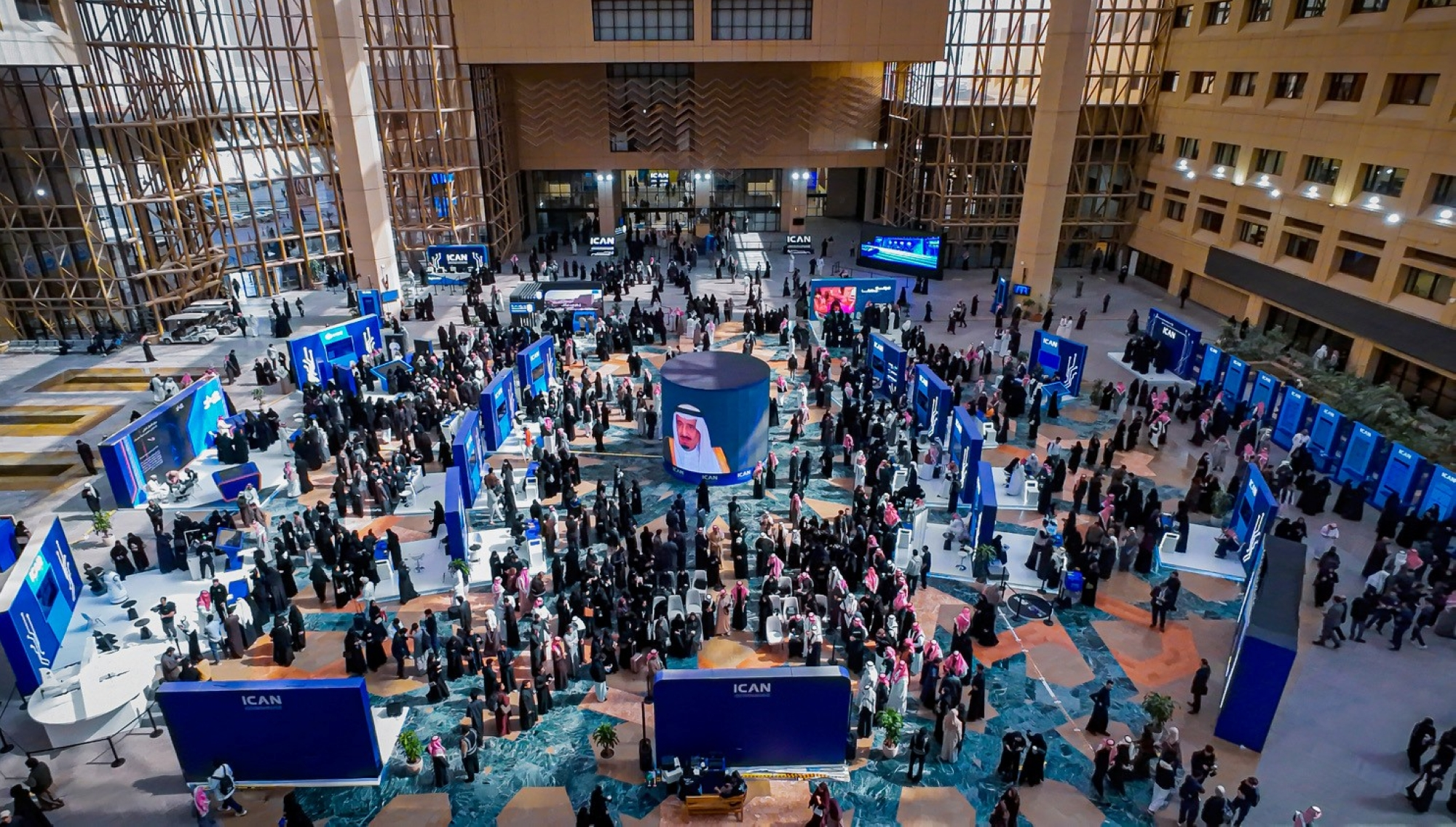
ICAN 2026 conference concludes with resounding success
The International Conference on Building Capabilities in Data and Artificial Intelligence (ICAN 2026) concluded its work in Riyadh, organized by the Saudi Data and Artificial Intelligence Authority (SDAIA) at King Saud University. The two-day conference witnessed an exceptional turnout of over 30,000 participants and experts from within the Kingdom and abroad, marking a significant milestone in the Kingdom's journey towards global leadership in advanced technologies. The conference yielded tangible results, including the launch of seven key initiatives and the signing of 27 strategic agreements aimed at accelerating digital transformation and building a knowledge-based economy.
Strategic background: Artificial intelligence at the heart of Vision 2030
The organization of this conference comes within the framework of the Kingdom of Saudi Arabia’s tireless efforts to achieve the goals of Vision 2030, which places digital transformation and technological innovation at the heart of its priorities. The Saudi Data & Artificial Intelligence Authority (SDAIA) plays a pivotal role in leading this transformation, working to build a sophisticated data and artificial intelligence infrastructure, develop national capabilities, and stimulate investment in this vital sector. The ICAN 2026 conference serves as a strategic platform to translate these directions into practical reality by bringing together leading minds, experts, and decision-makers to exchange knowledge and forge effective partnerships that support national aspirations.
Key initiatives and agreements and their expected impact
The initiatives launched formed the cornerstone of the conference's outcomes, designed to address multiple aspects of the artificial intelligence ecosystem, from education and research to professional application. Among the most prominent of these initiatives are:
- The “Samai 2” initiative, in partnership with 11 ministries, aims to enable government personnel to use artificial intelligence technologies responsibly and efficiently, thereby enhancing the quality of government services and improving performance efficiency.
- National Frameworks and Standards: The second version of the National Framework for Academic and Professional Program Standards, in addition to a unified university curriculum, was launched to ensure that educational outcomes are aligned with future labor market requirements.
- “Azka X” platform: A national capacity-building platform that offers specialized training programs in collaboration with global technology giants such as IBM, Microsoft, AWS, and Oracle, to equip young people with the necessary skills.
In addition, the conference witnessed the signing of 27 strategic agreements with more than 50 local and international entities, including leading universities and technology companies. These partnerships will contribute to accelerating knowledge transfer, localizing technology, creating new job opportunities, and enhancing the Kingdom's position as a regional hub for attracting investment and talent in the field of artificial intelligence. The significance of these outcomes extends beyond the local level, impacting regionally and internationally, as Saudi Arabia presents a pioneering model for building a sustainable and integrated digital economy.
A global platform for exchanging experiences
The conference was more than just an advertising platform; it was a vibrant intellectual forum featuring over 64 international speakers across 14 panel discussions and 15 practical workshops. The accompanying exhibition, comprising 23 booths, provided a unique opportunity for educational and technological institutions to showcase their latest innovations and experiences, enriching the dialogue and opening new avenues for collaboration. The event concluded with an awards ceremony honoring partners and celebrating outstanding national talent, including SDAIA employees, alumni of its academy, and high-achieving participants in international competitions, underscoring that investment in human capital is the foundation of future success.
Technology
Launch of the Drone Club at Tuwaiq Academy to support Vision 2030
Tuwaiq Academy launched the Drones Club in partnership with DCL International, with the aim of developing national capabilities and enhancing the Kingdom’s position as a global center for advanced technologies within Vision 2030.
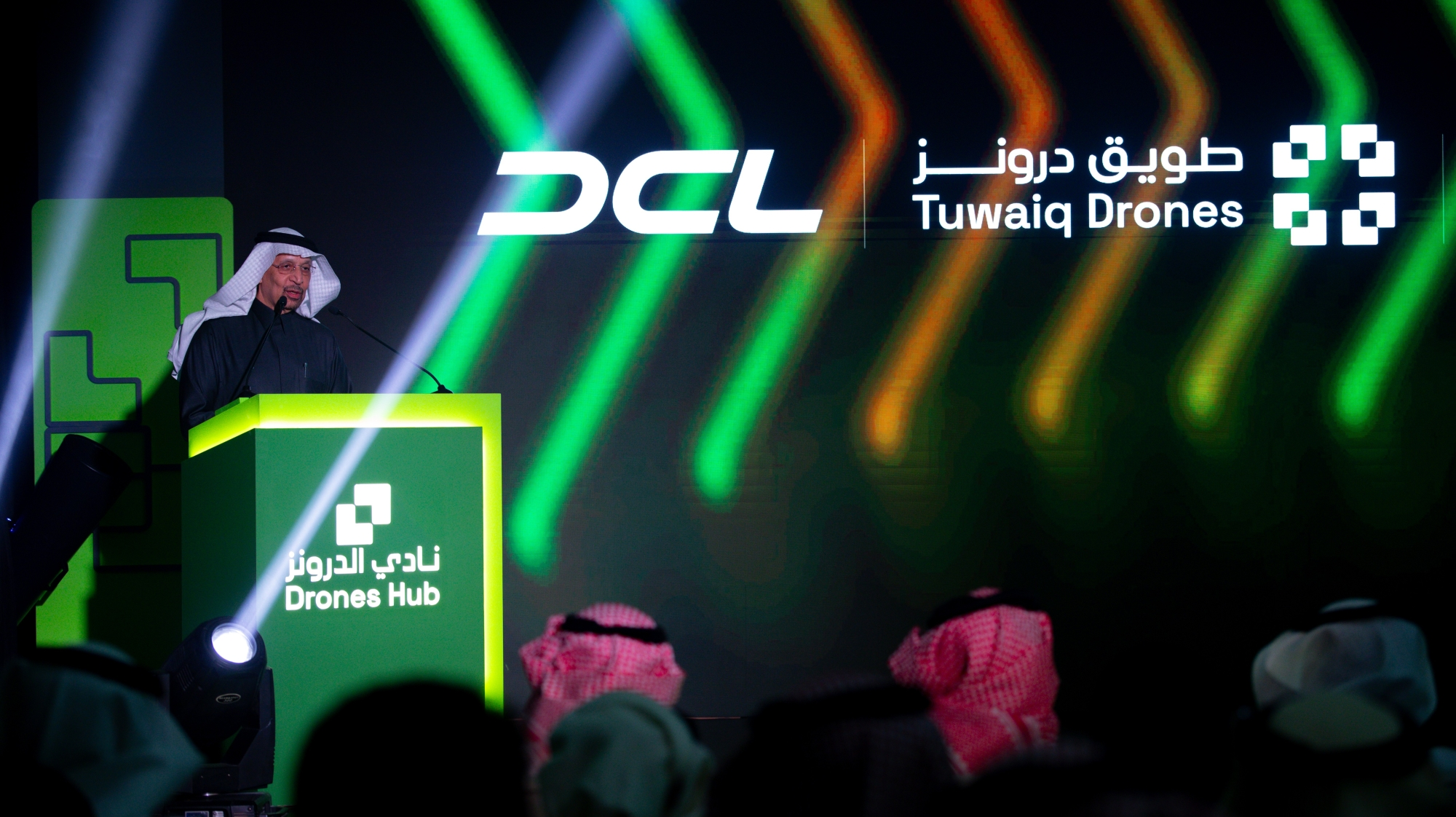
Minister of Investment Khalid bin Abdulaziz Al-Falih announced today at the Tuwaiq Academy in Riyadh the launch of the “Drone Club,” a strategic initiative in partnership with DCL, a leading global organization in drone racing. This launch aims to build and develop national capabilities in drone technology and solidify the Kingdom of Saudi Arabia’s position as a key player in this growing technology sector on the international stage.
An ambitious initiative within Vision 2030
The club's launch is part of the ambitious "Tuwaiq Drones" initiative, which aims to provide a stimulating and integrated environment that brings together professionals, amateurs, and those interested in drone sports and science. The inauguration ceremony, attended by prominent figures such as Captain Sulaiman bin Saleh Al-Muhaimidi, Executive Vice President of Aviation Safety and Environmental Sustainability, witnessed the graduation of a new cohort of FPV camp students, as well as the announcement of registration for eight new camps, reflecting a commitment to expanding the skills base in this field.
Strategic context and importance of the drone sector
This step cannot be viewed in isolation from the broader framework of the Kingdom’s Vision 2030, which places digital transformation and the localization of advanced technologies at the heart of its objectives. Investing in sectors such as drones is a pivotal part of the strategy to diversify the national economy and reduce dependence on oil. As the Kingdom’s first academy specializing in advanced technologies, Tuwaiq Academy plays a vital role in building a knowledge-based economy by developing young Saudi talent and equipping them with the skills necessary to meet the demands of the future job market.
The drone sector is experiencing rapid global growth, with its uses no longer limited to racing and entertainment. Drones have become a vital tool in various sectors, including logistics, precision agriculture, construction monitoring, media production, and even search and rescue and disaster response. By establishing this club, the Kingdom is positioning itself at the heart of this technological development, aiming not only to participate but also to lead innovation in diverse drone applications.
Expected impact at the local and international levels
The Drone Club is expected to have a multifaceted impact. Locally, it will contribute to creating a new generation of skilled programmers, engineers, and pilots, and fostering an entrepreneurial ecosystem by supporting startups in this field. Regionally and internationally, the partnership with a global organization like DCL lends the club international credibility and opens doors to hosting world championships, thus enhancing the Kingdom's position as a destination for sports and technology tourism. This initiative also supports the investment sector's efforts to attract high-quality partnerships and facilitate the foreign investor journey, aligning with the goal of transforming the Kingdom into a global hub for modern technologies and innovation.
The club offers a comprehensive system that includes dedicated spaces for experimentation and learning, advanced professional programs, a training center for the Saudi national drone racing team, and the organization of workshops, community events, and regular championships. This initiative underscores the pioneering role of the Tuwaiq Academy in empowering youth and supporting the Kingdom's technological transformation.
Technology
Saudi Arabia is leading the transformation in artificial intelligence to achieve Vision 2030
The Minister of Education affirms the Kingdom’s endeavor to transform from a consumer of artificial intelligence to a developer, within the framework of the Vision 2030 strategy to build a knowledge economy and bridge the digital divide.
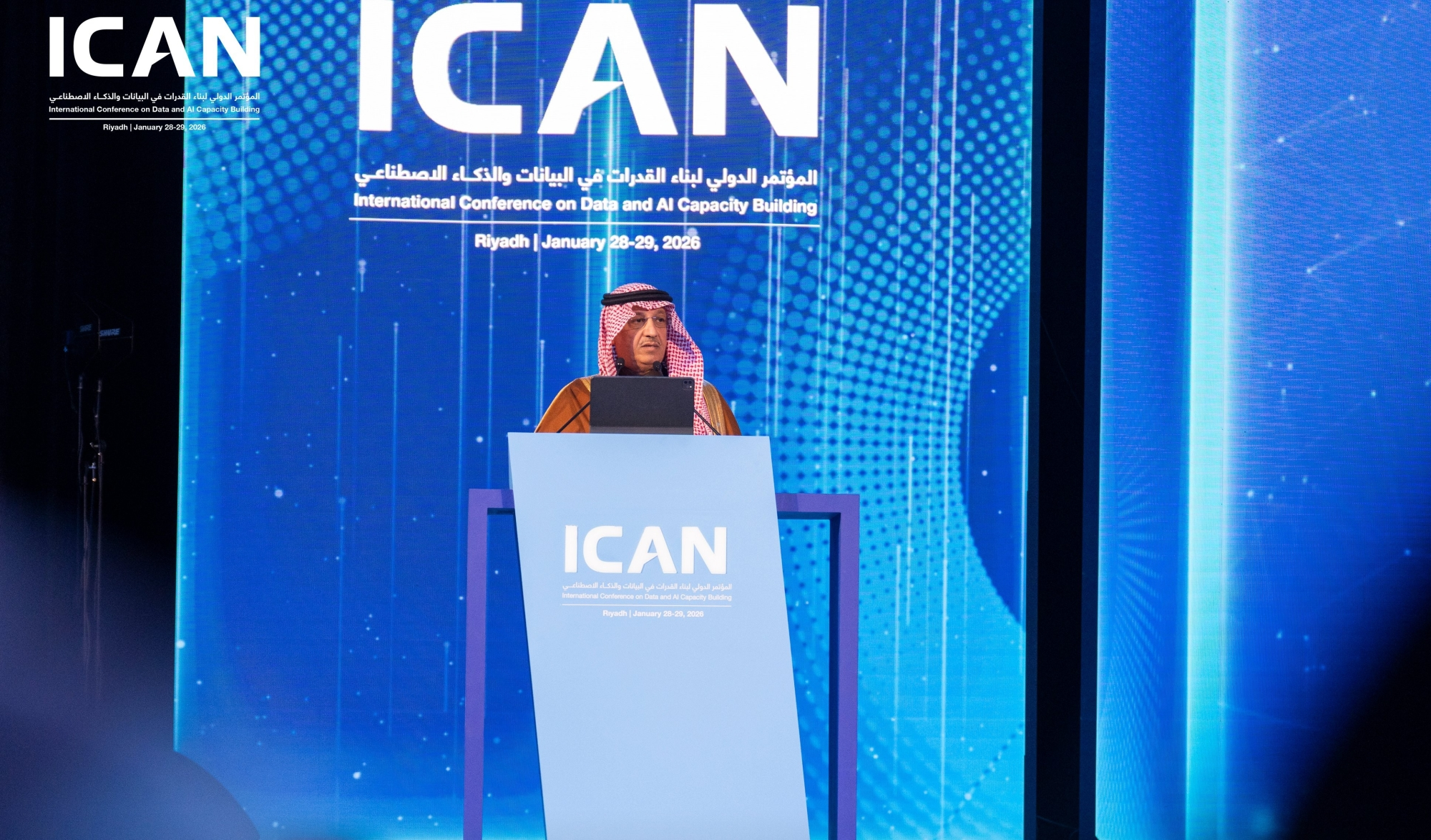
Saudi Arabia’s Minister of Education, Yousef Al-Bunyan, affirmed that the Kingdom is steadily progressing towards a strategic transformation in its relationship with advanced technologies, striving to move from being a consumer of artificial intelligence to becoming a major contributor and innovator in its development and applications. This statement was made during his opening address at the International Conference on Building Capabilities in Data and Artificial Intelligence (ICAN 2026), hosted by King Saud University. He emphasized that this approach aims to bridge the growing global digital divide and achieve tangible economic and societal benefits.
General context: Artificial intelligence at the heart of Vision 2030
This ambitious approach is an integral part of Saudi Vision 2030, which places digital transformation and the building of a knowledge-based economy at the heart of its objectives. The Kingdom recognized early on that the future depends on data and smart technologies, and established specialized bodies such as the Saudi Data & Artificial Intelligence Authority (SDAIA) to lead national efforts in this field. The shift from consumption to production means not only adopting technology, but also localizing it and developing a national workforce capable of innovation and global competitiveness, thereby reducing reliance on imported solutions and enhancing national technological security.
Conference pillars and the importance of the human element
Al-Bunyan explained that the conference focuses on three key pillars: artificial intelligence infrastructure, digital readiness for different age groups, and future preparedness. He noted that the event goes beyond theoretical discussions to focus on practical steps, including signing agreements and launching initiatives that link education, the labor market, and national aspirations. The minister emphasized that global challenges are no longer limited to the availability of technology, but extend to the ability of individuals to utilize it efficiently and effectively, stressing that “the future of artificial intelligence is shaped by people as much as by technology.”.
Artificial intelligence as a support for education, not a replacement
Regarding the education sector, the Minister of Education affirmed that artificial intelligence is a supportive and enabling element, not a replacement for teachers or human resources. He explained that the goal is to use it to enhance productivity, improve the quality of educational outcomes, and provide personalized learning experiences for students. He emphasized the paramount responsibility of designing AI systems where humans remain in control and are the primary beneficiaries, considering this a fundamental requirement for achieving sustainable development and the desired growth.
Expected impact: National leadership and regional influence
The Kingdom's success in this transformation will have far-reaching effects across various sectors. Domestically, it will create high-quality, skilled jobs for Saudi youth and accelerate the diversification of the economy away from oil. Regionally, it will solidify Saudi Arabia's position as a leading technology hub in the Middle East, attracting investment and talent. Internationally, this transformation will position the Kingdom as a producer and exporter of AI innovations, enhancing its economic and technological influence on the global stage.
Al-Bunyan concluded his speech by praising the role played by King Saud University, its faculty members and students in driving research and innovation, stressing that the educational environment in the Kingdom is witnessing rapid development that supports the success of such international events and contributes to building effective partnerships and career paths that extend from learning to leadership, in order to serve the goals of Vision 2030.
-

 Culture and Art, 1 week ago
Haifa Wehbe's absence in Riyadh: A photo crisis or a strained relationship with the media?
-

 Local news one week ago
Riyadh collapse: Emergency plans to secure water after a main pipeline burst
-

 Culture and Art, 1 week ago
City Kitchen series: A drama of conflict and the middle class during Ramadan
-

 Culture and Art, 1 week ago
The series "Kasra": Dawood Hussein in a moving social drama this Ramadan
-
 Local news one week ago
Applying for the 1447 Opportunities Program for Teachers via the Fares System
-

 Local News 7 days ago
Ramadan 2026 discounts in Saudi Arabia: Offers valid for 54 days
-
 Culture and Art 6 days ago
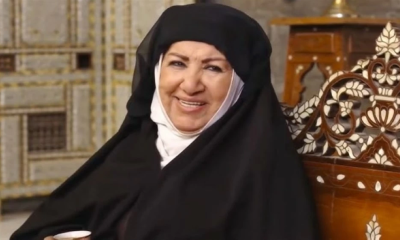
The death of artist Huda Shaarawi “Umm Zaki” and her funeral in Damascus
-

 Technology 6 days ago
ICAN 2026 Conference Conclusion: Initiatives to Enhance Saudi Arabia's Leadership in Artificial Intelligence