Politics
Sending Tomahawk missiles to Ukraine: A Russian warning of dire consequences
Russia warns of dire consequences after supplying Tomahawk missiles to Ukraine, amid escalating tensions between Moscow and Washington and significant geopolitical implications.


Tensions are escalating between Moscow and Washington over Tomahawk missiles
Amid escalating international tensions, former Russian President Dmitry Medvedev warned that the US supply of Tomahawk missiles to Ukraine could have dire consequences for everyone, specifically mentioning the impact on former US President Donald Trump. These remarks come against a backdrop of increasing geopolitical complexities among the world's major powers.
Russian warnings and American statements
Medvedev explained that distinguishing between conventional Tomahawk missiles and those equipped with nuclear warheads is impossible once launched, raising concerns about how Russia would respond to such a development. He hinted at the possibility of a Russian response of a nuclear nature, reflecting the gravity of the current situation.
For his part, Trump warned that he might send long-range Tomahawk missiles to Ukraine if Moscow did not end the war there soon. He emphasized that he might be prepared to increase pressure on Russian President Vladimir Putin using a substantial weapons system, stressing the power and impact of these offensive missiles.
Talks with Zelensky
Trump's remarks came after a phone call with Ukrainian President Volodymyr Zelensky, during which they discussed strengthening Ukraine's air defenses and long-range capabilities. Zelensky described the call as "very productive," indicating a convergence of views on the importance of bolstering Ukraine's defense capabilities.
International reactions and strategic analysis
Russian President Vladimir Putin has previously warned that the United States supplying Ukraine with long-range missiles would seriously damage relations between Moscow and Washington. This warning reflects Russia's deep concern about any escalatory steps that could worsen the security situation in the region.
Saudi Arabia and its diplomatic role
Amid these escalating tensions, Saudi Arabia is playing a crucial diplomatic role in attempting to de-escalate the situation and promote regional and international stability. Riyadh is relying on its diplomatic strength and strategic balance to achieve peace and stability in the region and the world.
Conclusion and analysis of the international situation
The situation between Russia and the United States remains sensitive and complex, requiring wisdom and diplomacy to avoid any escalation that could lead to disastrous consequences. Continued dialogue and mutual understanding are the best way to resolve conflicts and ensure global security and peace.




Politics
Prince Andrew arrested for leaking documents to Epstein – full details
Details of the British police arrest of Prince Andrew, brother of King Charles, on suspicion of leaking confidential documents to Jeffrey Epstein, along with the reaction of the royal palace and background information on the case.
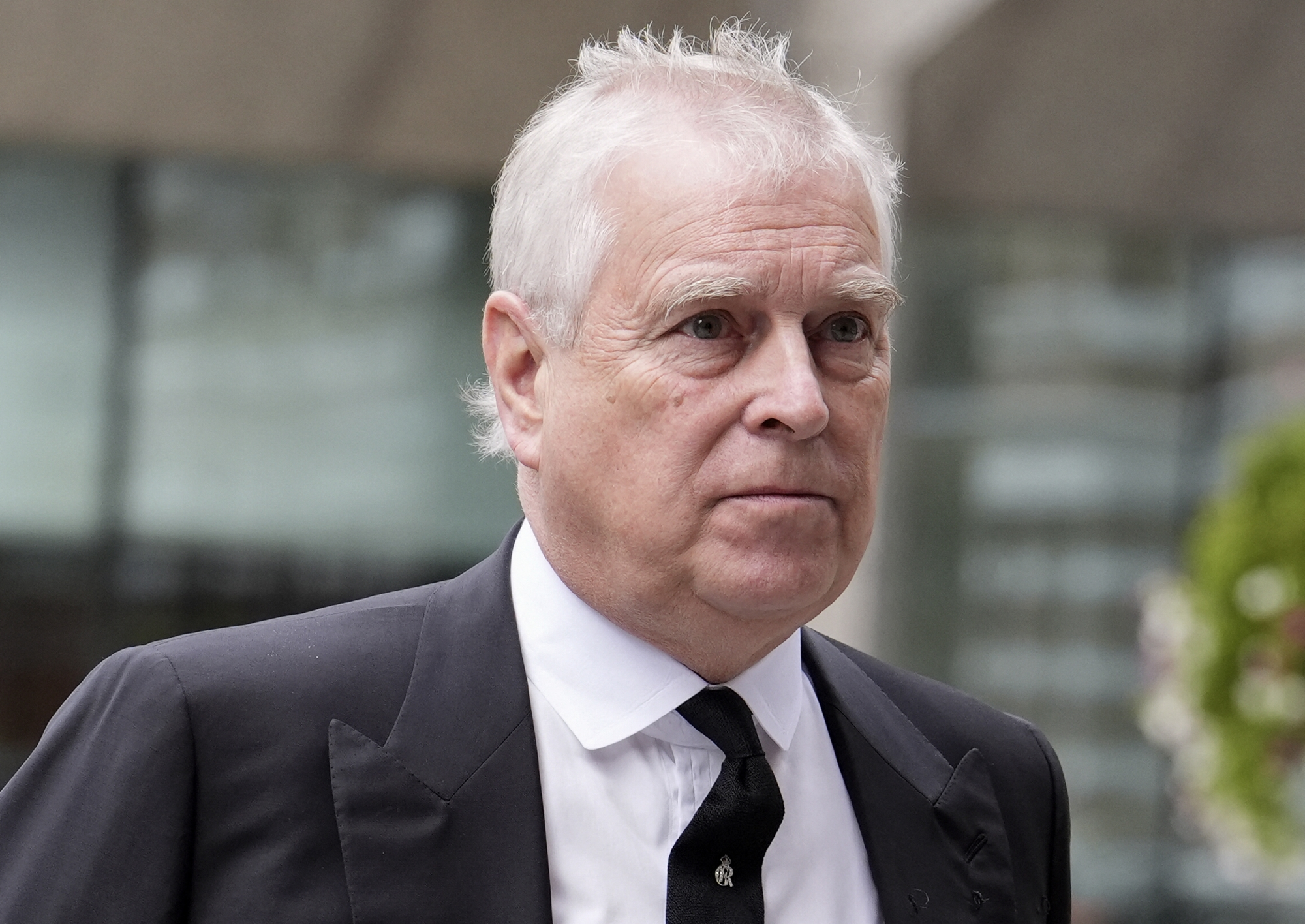
In a dramatic development that has shaken British and international circles, the BBC announced on Thursday that British police had arrested Prince Andrew Mountbatten-Windsor, Duke of York and younger brother of King Charles III. The arrest comes on suspicion of serious misconduct in public office, stemming from his controversial relationship with the late American businessman Jeffrey Epstein, who was convicted of sex crimes.
Police confirmed in an official statement that a man in his seventies had been arrested for questioning, refraining from explicitly naming him in accordance with strict legal protocols in the United Kingdom. However, all indications and media reports confirmed the prince's identity. Thames Valley Police had paved the way for this action by announcing earlier this month a wide-ranging investigation into serious allegations that Prince Andrew had leaked confidential government documents to Epstein, information that came to light through files recently released by the US government.
King Charles' reaction and the Royal Family's stance
In the first official statement from Buckingham Palace, King Charles III reaffirmed the rule of law, emphasizing that "justice must take its course." A statement signed by the King himself read: "What now follows is a full, fair, and proper process by which this matter is investigated in the appropriate manner and by the competent authorities." The King added, expressing the position of the Royal Household: "In this regard, as I have said before, the authorities have our full support and cooperation.".
Historical background: The Andrew Epstein crisis
This event is not a sudden occurrence, but rather the latest chapter in a series of crises that have plagued the Duke of York for years. The roots of the case lie in Prince Andrew's friendship with Jeffrey Epstein and his associate Ghislaine Maxwell. The Prince previously faced civil charges in the United States related to sexual misconduct, a case that ended with a substantial financial settlement and no admission of guilt. However, it did lead to him being stripped of his military titles and royal duties by order of the late Queen Elizabeth II.
Political and legal repercussions
This arrest carries serious implications that extend beyond the prince's personal life. The charges of "misconduct in a public office" and leaking classified documents affect British national security and diplomatic relations with the United States. Observers note that this investigation presents the royal family with a genuine test of its commitment to transparency and adherence to the law, particularly under King Charles, who is striving to establish a modern and responsible monarchy. These developments suggest that the files recently released by the US government may contain compelling evidence that necessitated the swift and decisive action of the British police.
Politics
The Security Council representative stated: Israel has no sovereignty over Palestine
Ambassador Abdulaziz Al-Wasil affirmed before the Security Council Saudi Arabia’s categorical rejection of classifying West Bank lands as Israeli property, stressing the two-state solution and the protection of humanitarian work in Gaza.
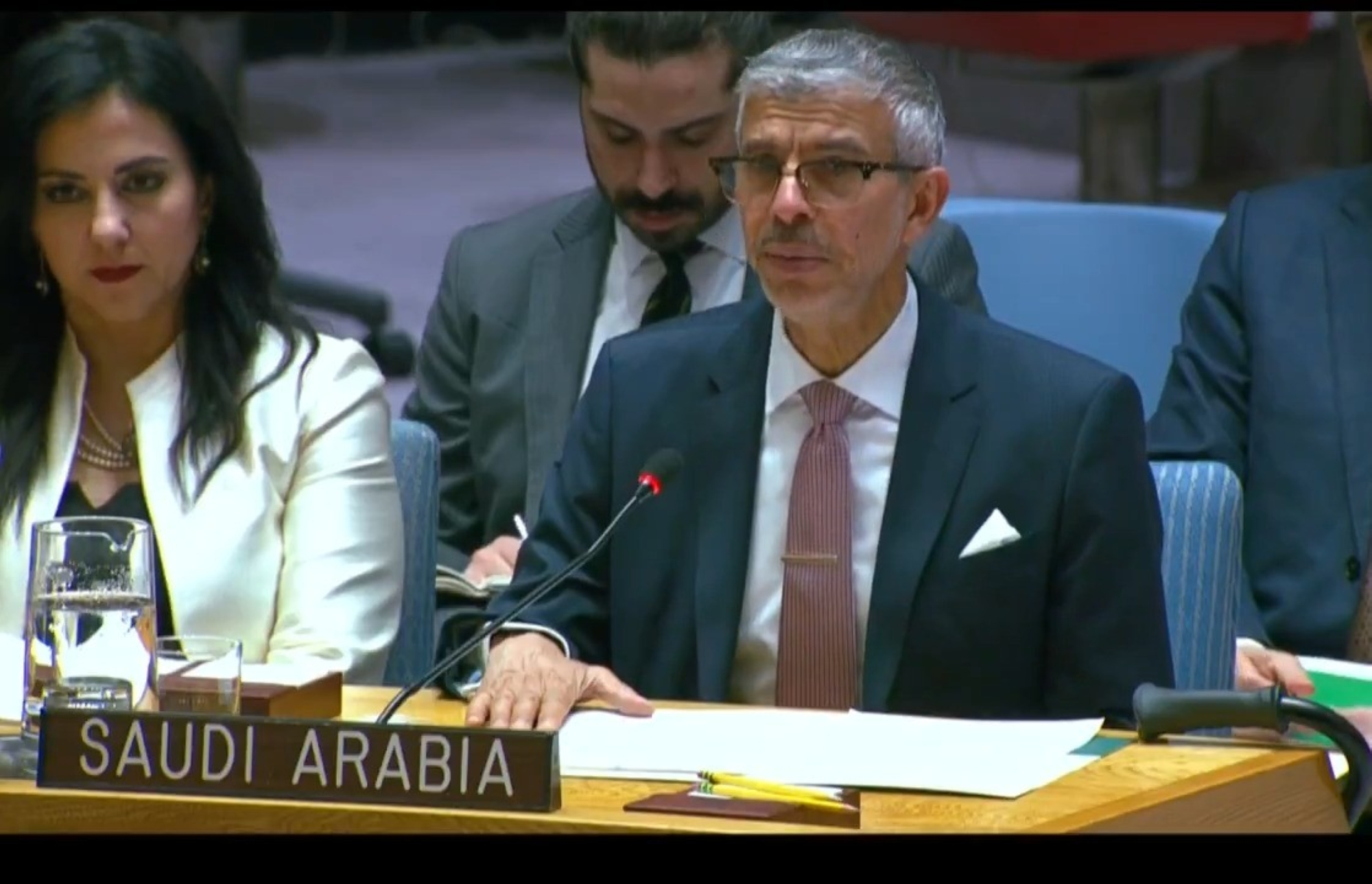
As part of the intensive diplomatic efforts led by the Kingdom of Saudi Arabia to support the Palestinian cause in international forums, the Kingdom’s Permanent Representative to the United Nations, Ambassador Dr. Abdulaziz Al-Wasil, participated in the ministerial session of the UN Security Council dedicated to discussing the situation in the Middle East, where he presented a strong argument reflecting the constants of Saudi foreign policy.
A firm rejection of the policy of imposing a fait accompli
In his address, Ambassador Al-Wasel affirmed that the Kingdom categorically rejects unilateral Israeli measures, specifically the recent decision by the occupying authorities to classify vast areas of the occupied West Bank as “state land.” He explained that this classification represents a blatant legal ploy to legitimize settlement activity and land confiscation, constituting a flagrant and grave violation of the principles of international law and the Geneva Conventions, which prohibit an occupying power from altering the geographic or demographic character of occupied territories.
Al-Wasel stressed that these practices directly undermine any real opportunities for peace in the region, reaffirming the firm Saudi position that “Israel has no sovereignty over the occupied Palestinian territories,” and that these territories are an inherent right of the Palestinian people that does not lapse with time or with ongoing Judaization policies.
International references and the two-state solution
In discussing a political solution, the Saudi representative reiterated the principles upon which the international community agrees, emphasizing the Palestinian people's legitimate right to self-determination and the establishment of their independent, sovereign state within the June 4, 1967 borders, with East Jerusalem as its capital. Al-Wasel based his remarks on resolutions of international law, particularly Security Council Resolution 2334, which condemns settlements and deems them illegal, calling on the Council to uphold its responsibilities in implementing its resolutions.
This position is an extension of the historical role of the Kingdom of Saudi Arabia, which presented the Arab Peace Initiative in 2002, and which still represents the Arab strategic option for a just and comprehensive peace, based on land for peace.
The humanitarian situation and the unity of Palestinian territory
On the humanitarian front, Ambassador Al-Wasel addressed the catastrophic situation in the Gaza Strip, particularly with the arrival of the holy month of Ramadan. He called on the international community to provide immediate protection for humanitarian and relief organizations, enabling them to carry out their duties in accordance with international humanitarian law. He stressed the need to open the crossings and ensure the unimpeded delivery of food and medical aid by Israel.
Al-Wasel also noted the Kingdom's constructive participation in the Peace Council meeting held on February 19, 2026, commending international efforts aimed at ending the war. He concluded his remarks by warning against any plans to divide Palestinian territories or separate the Gaza Strip from the West Bank, emphasizing the necessity of preserving the geographical and political unity of the Palestinian territories as a fundamental condition for any future solution.
Politics
Washington awaits a written response from Iran to avoid military confrontation
A US official confirms Washington is awaiting a written Iranian proposal following recent talks to avoid confrontation. Details of the US troop deployment and Marco Rubio's visit to Israel.
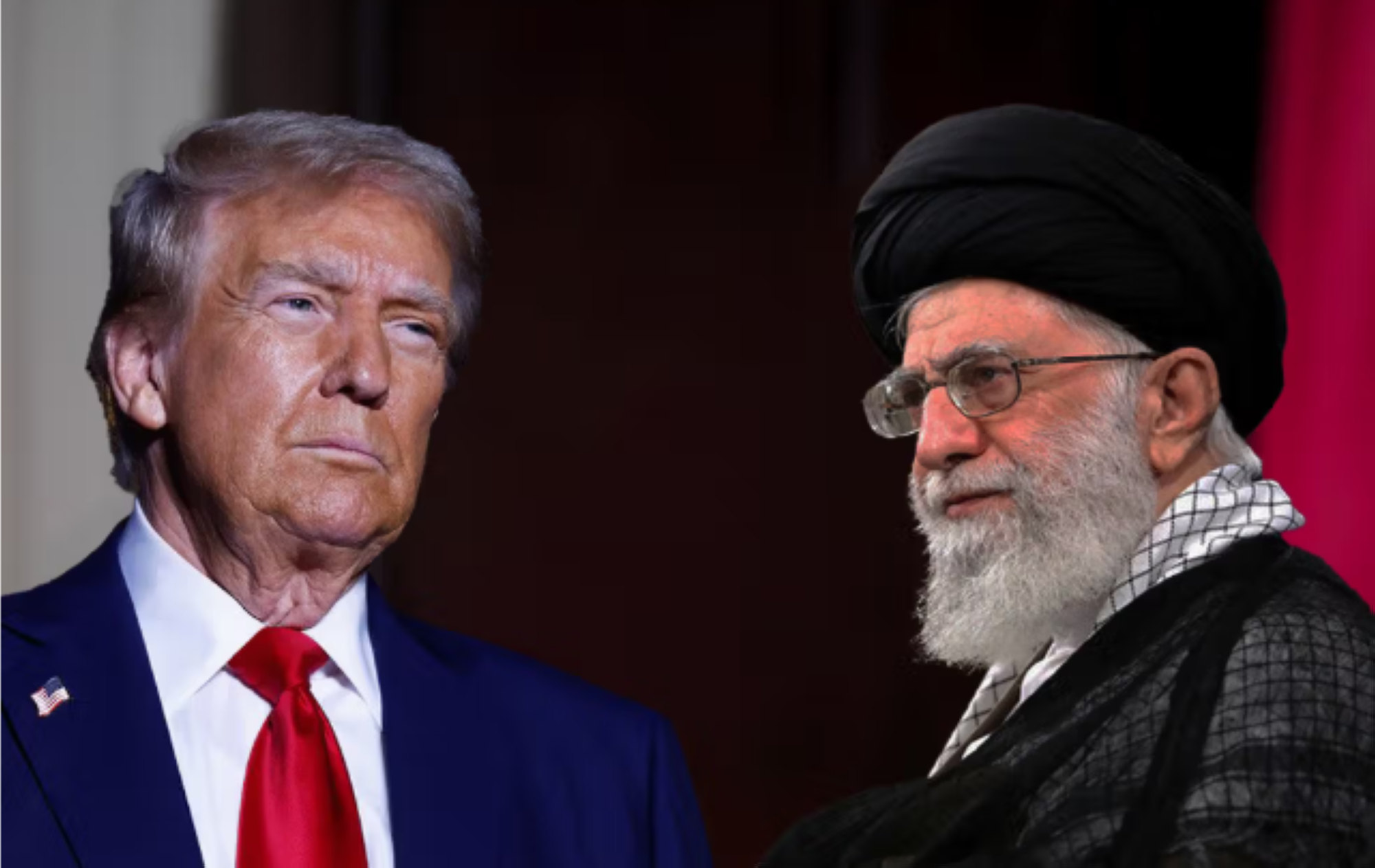
A senior US official revealed new developments in the strained relations between Washington and Tehran, confirming that the United States is currently awaiting a written proposal from the Iranian side. This anticipated proposal aims to establish clear and specific mechanisms for avoiding direct confrontation with the United States, as a follow-up to the recent US-Iranian talks, which sought to de-escalate tensions in the region.
In the context of military and security moves coinciding with the diplomatic track, the official explained that senior national security advisors held a crucial meeting in the White House Situation Room to discuss the details of the complex Iranian issue. Those present were informed of the necessity to complete the deployment of all US forces in the region by mid-March, reflecting a dual US strategy based on diplomacy backed by military readiness.
Regarding coordination with regional allies, the source, according to Reuters, indicated that US Secretary of State Marco Rubio intends to make an important visit to Israel, where he is scheduled to meet with Israeli Prime Minister Benjamin Netanyahu on February 28. This visit comes at a sensitive time for coordinating positions on regional threats and ensuring the security of allies.
Context of tension and historical background
These developments come against the backdrop of a long history of tension and strained relations between the United States and Iran, marked by decades of rupture and escalating conflict. The move to request a "written response" represents a significant shift in crisis management, as Washington seeks to move from verbal understandings, which are susceptible to misinterpretation or reneging, to documented commitments that guarantee de-escalation. The Iranian nuclear program and Tehran's regional influence have long been key points of contention that previous rounds of negotiations have failed to resolve definitively.
Strategic importance and international anticipation
This move is of paramount importance both regionally and internationally. On the one hand, setting a date for the completion of the US troop deployment sends a strong deterrent message, reaffirming Washington's commitment to protecting its interests and international shipping lanes. On the other hand, the anticipated coordination between Rubio and Netanyahu indicates that any agreement or understanding with Tehran will not be reached without addressing Israeli security concerns. Political circles are awaiting the written Iranian response, the content of which will determine whether the region will move toward a path of diplomatic de-escalation or witness a new chapter of escalation and confrontation.
-

 Culture and Art, 1 week ago
The "Between and Between" exhibition in Jeddah: 5 artists reshape Saudi memory
-
Local News 6 days ago
Saudi Arabia's National Arabic Language Policy: 8 Principles to Promote Identity
-
Culture and Art, 1 week ago
Shakira's concert in Jeddah: Details of the international star's first concert in Saudi Arabia
-
Local News 5 days ago
Adopting the National Policy for the Arabic Language: Strengthening Identity and Vision 2030
-
Local News 6 days ago
The Riyadh-Rin-Bisha dual carriageway, spanning 559 km, has been completed
-
Culture and Art, 1 week ago
Ramez Level the Monster: Details of Ramez Galal's program in Ramadan 2026
-
Local news one week ago
Launch of the new Dammam project with investments of 98 billion riyals
-
Local news two days ago
Human Resources sets the date for the 2026 Founding Day holiday for both sectors