
social responsibility
Adoption of the Associations Support Fund Regulations: Grant Conditions and Investment Mechanisms
Learn about the details of the updated regulations for the Associations Support Fund adopted by the National Center for the Development of the Non-Profit Sector, the conditions for granting and withholding funds, and the mechanisms for sustainable investment.


In a significant regulatory step aimed at enhancing the sustainability of the non-profit sector in Saudi Arabia, the official gazette, Umm Al-Qura, published the decision of the Board of Directors of the National Center for the Development of the Non-Profit Sector, approving the updated regulations for the "Associations Support Fund." This step aims to solidify the principles of transparency and efficient spending in charitable and developmental work.
Context of the decision and the objectives of Vision 2030
The development of this regulation comes at a time when the non-profit sector in the Kingdom is witnessing unprecedented growth, in line with the goals of Vision 2030, which aims to increase the sector's contribution to the GDP to 5% and reach one million volunteers. The "Associations Support Fund" is a key enabler for achieving these goals, serving as a financial arm that ensures a continuous flow of resources for projects with sustainable social impact, rather than relying solely on direct and sporadic donations.
Legislative development of the regulation and governance mechanisms
According to the official document, this version was not a product of the moment, but rather the result of a series of continuous updates that began in August 2022, passing through amendments in November of the same year and July 2023, leading up to the fourth developed version in January 2026. These updates reflect the National Center’s keenness to close legislative gaps and regulate work and supervision mechanisms in line with the expansion in the number of civil associations and the diversity of their specializations.
The new regulations include a robust administrative structure comprised of a supervisory committee and an executive management team. The committee includes leading experts in legal, financial, and investment fields, as well as representatives from strategic entities such as the Social Development Bank and the Ihsan platform, thus enhancing the integration of roles between government institutions and the third sector.
Fund objectives and investment areas
The regulations set out a strategic framework for the Fund's objectives that goes beyond the traditional concept of support, to include:
- Financial sustainability: Enabling associations to develop their own resources.
- Institutional empowerment: Supporting training, qualification, and research studies programs.
- Social investment: Encouraging innovation in social solutions.
Regarding financial resources, the regulations granted the fund high flexibility in investing in accordance with Islamic Sharia principles, as it permitted investment in real estate, investment funds, and fixed-income securities, with a strict prohibition on investment in any activities that violate or are outside the Kingdom, in order to ensure the security and growth of financial assets within the national economy.
Granting and withholding regulations and financial oversight
The regulations established strict criteria for granting support, requiring the association to have a valid license, be registered on the electronic platform, and demonstrate sound financial and administrative standing. Conversely, they included a punitive system allowing the fund to withhold or prevent support in specific cases, such as submitting misleading information, submitting multiple support requests, or using funds for purposes other than those for which they were intended.
To ensure justice, the regulation guarantees the right of appeal for affected associations within 60 days from the date of notification of the decision, with the possibility of escalation to the Administrative Court, which confirms the principle of the rule of law and the preservation of the rights of all parties.
Financial compliance and anti-money laundering
The regulations concluded by affirming the Fund's full commitment to the Kingdom's sovereign laws, most notably the Anti-Money Laundering Law and the Law on Combating Terrorism and its Financing. The Fund's management is obligated to maintain financial records for ten years and to immediately report any suspicious financial activity to the Financial Intelligence Unit, thus ensuring a high level of security and oversight of funds within the charitable sector.




social responsibility
The Governor of Riyadh honors the winners of the Princess Seetah Award for Social Work
On behalf of the Custodian of the Two Holy Mosques, Prince Faisal bin Bandar honored the winners of the Princess Seetah Award for Excellence in Social Work in its 13th session, with the participation of a select group of pioneers in charitable work.
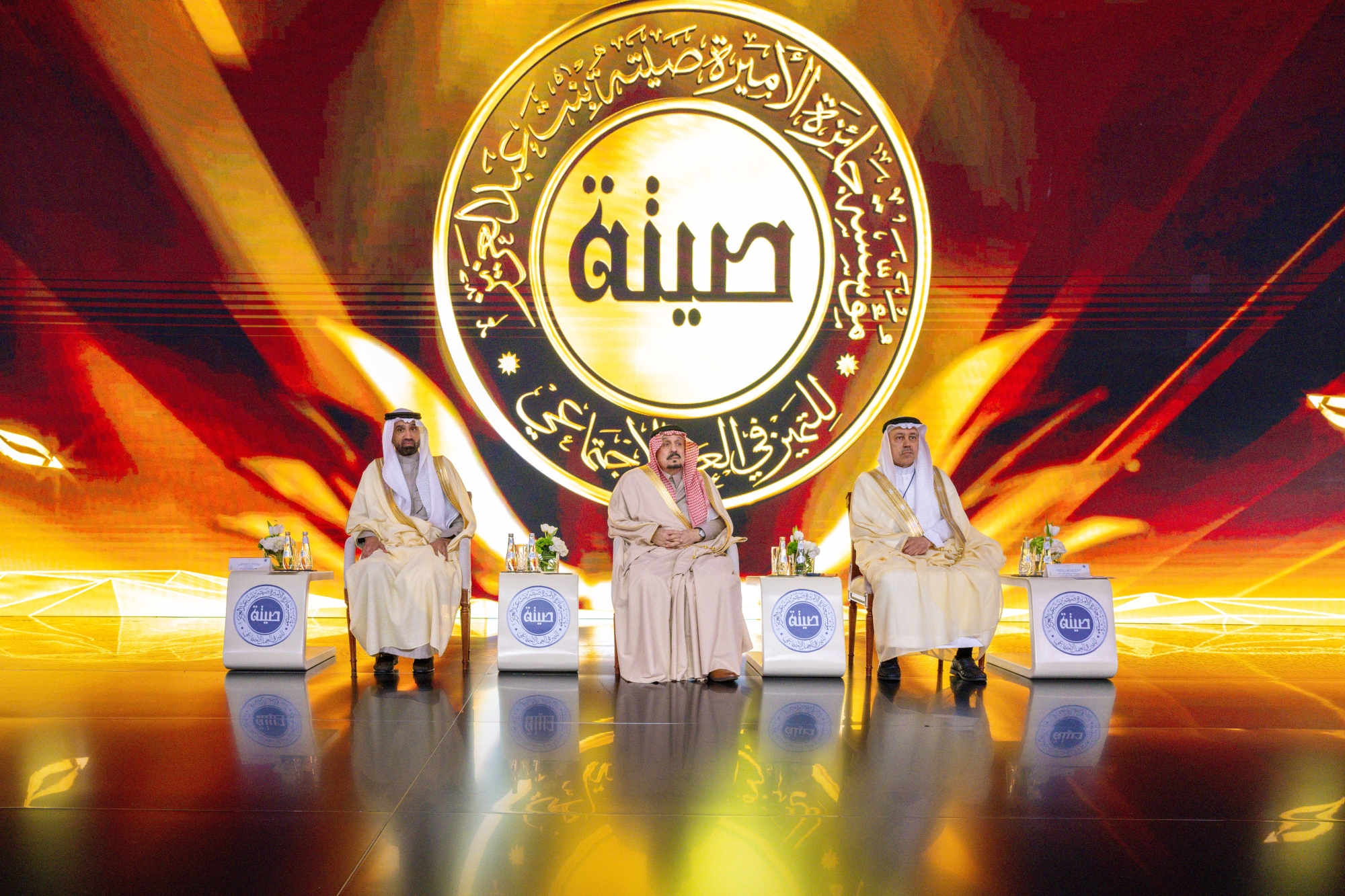
Under the patronage of the Custodian of the Two Holy Mosques, King Salman bin Abdulaziz Al Saud - may God protect him - and on his behalf, the capital, Riyadh, witnessed a magnificent ceremony to honor the pioneers of social work, where His Royal Highness Prince Faisal bin Bandar bin Abdulaziz, Governor of Riyadh Region, honored the ten winners in the thirteenth session for the year 2025 AD of the “Princess Seetah bint Abdulaziz Award for Excellence in Social Work”.
Royal support for humanitarian work
This recognition underscores the great importance that the wise leadership of the Kingdom of Saudi Arabia places on the non-profit sector and social responsibility. This royal patronage is an extension of the Kingdom's steadfast approach to promoting the values of solidarity and compassion, and supporting initiatives that contribute to sustainable development. During the ceremony, Prince Faisal bin Bandar commended the advanced level the award has reached, emphasizing that the Kingdom strongly supports organized and institutional social work that leaves a tangible impact on the lives of beneficiaries.
Princess Seeta's legacy: A history of giving
The award derives its significance and prestige from its name, as it was established to commemorate Princess Seeta bint Abdulaziz – may God have mercy on her – who was renowned for her humanitarian initiatives and generous contributions. In his address, the Secretary-General of the award, Dr. Fahd Al-Maghlouth, highlighted the pivotal role of King Abdullah bin Abdulaziz – may God have mercy on him – in founding this award to serve as a beacon of charitable work and an embodiment of the altruism and generosity that characterized the life of the late princess. Today, the award serves as a fundamental pillar of volunteer work, aligning with the objectives of the Kingdom's Vision 2030, which seeks to increase the contribution of the non-profit sector to the GDP and promote a culture of volunteerism.
Growth statistics and winner diversity
The current cycle witnessed a remarkable increase in competitiveness, with the Minister of Human Resources and Social Development, Engineer Ahmed Al-Rajhi, explaining that the number of winners of the award since its inception has risen to 143. In this particular cycle, 754 participants applied and underwent rigorous evaluation stages that included scientific screening and field visits, culminating in the final selection of 10 winners representing the elite of social work in the Kingdom.
List of winners in the thirteenth session
The ceremony crowned the winners in the six award categories, and the results were as follows:
- National Achievement Excellence Branch (Government Entities): Shared equally between the Saudi Authority for Industrial Cities and Technology Zones “MODON”, and the General Directorate of Education in the Qassim Region.
- The Excellence Branch in Islamic Endowments: shared equally between the Endowment for the Glorification of the Two Revelations in Madinah and the Islamic University in Madinah.
- Social Work Programs Branch (Non-Profit Organizations): Shared equally between the Neighborhood Centers Association in the Makkah Region and the Hajj and Umrah Services Association in the Al-Jawf Region.
- Social Work Pioneers Branch (Individuals): Winner: Mr. Abdullah bin Saleh Al-Othaim.
- Corporate Social Responsibility Branch: Won by Sahara International Petrochemical Company “SABIC”.
- Environmental Sustainability Branch: Shared equally between the Hail Region Municipality and King Khalid University.
Launch of the fourteenth session
At the conclusion of the ceremony, it was announced that nominations were open for the next (fourteenth) session under the slogan “Human Development and the Promotion of Social Cohesion and National Loyalty,” a title that reflects the strategic direction of the award in focusing on building the human being as a fundamental pillar of development, and strengthening national unity to face future challenges.
social responsibility
The King Salman Relief Center is implementing the Noor Saudi Arabia program in Damascus
The King Salman Relief Center concludes the Noor Saudi Arabia program in Damascus by performing 455 surgeries and examining thousands of patients, as part of its humanitarian efforts to support the medical sector and combat blindness.
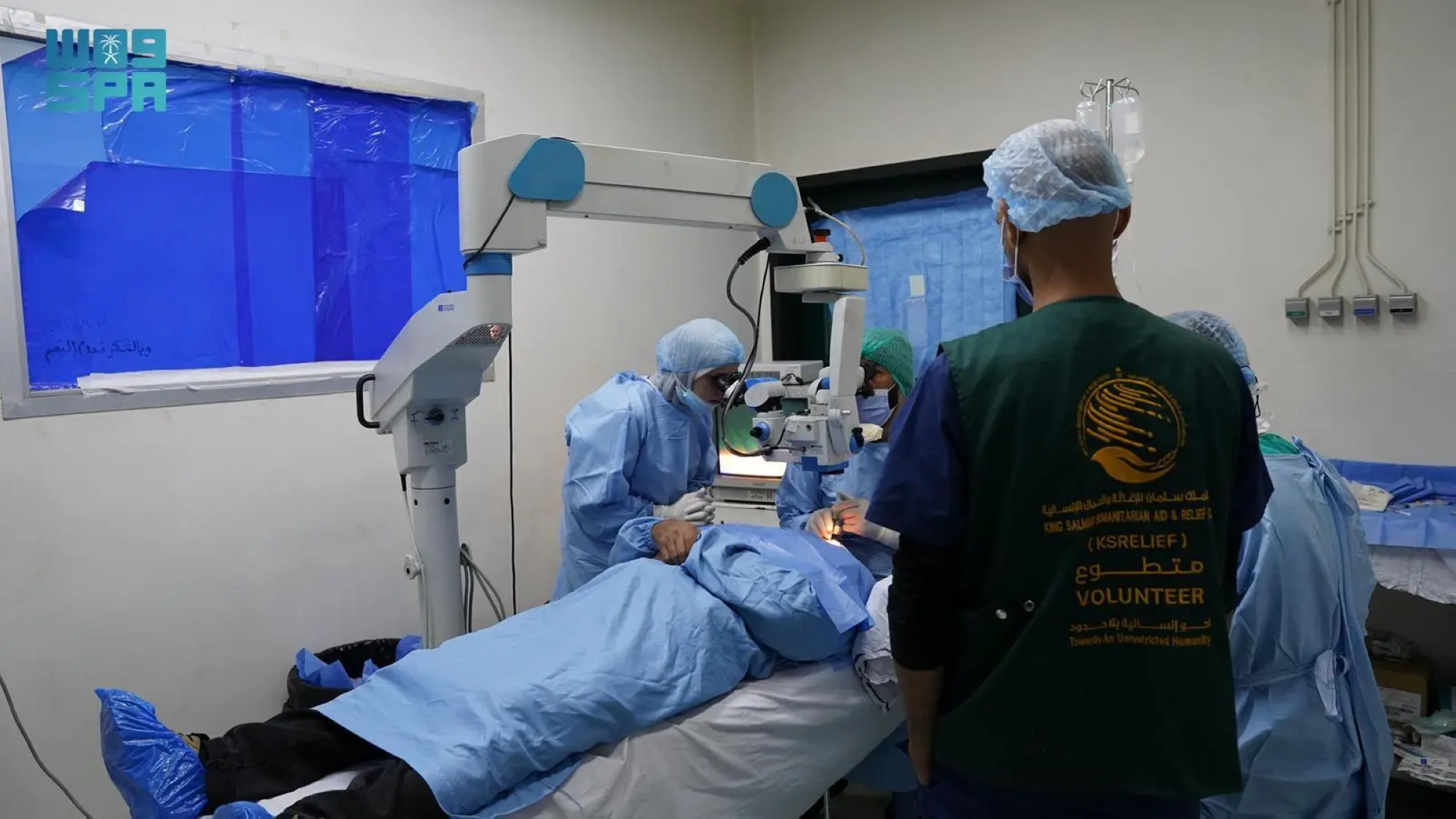
As part of the Kingdom of Saudi Arabia's ongoing humanitarian efforts to assist those in need around the world, the King Salman Humanitarian Aid and Relief Center implemented the "Noor Saudi Arabia Volunteer Program" to combat blindness and its causes in the Syrian capital, Damascus. This campaign is part of a series of high-quality medical projects aimed at alleviating the suffering of patients in brotherly and friendly nations.
Campaign details and achievement statistics
The campaign, which ran from January 31 to February 6, saw the participation of a volunteer medical team comprised of four Saudi medical professionals. The team worked diligently to provide diagnostic and treatment services to as many beneficiaries as possible, achieving the following results:
- Medical examinations were conducted on 3,830 beneficiaries suffering from various visual problems.
- cataract surgeries were performed
- pairs of eyeglasses to patients to improve their visual acuity.
The context and importance of the "Noor Saudi Arabia" program
The "Noor Saudi Arabia" program is one of the most prominent volunteer programs adopted by the King Salman Humanitarian Aid and Relief Center, focusing primarily on combating and treating preventable blindness. This campaign in Damascus is of particular importance given the urgent need to support the medical sector and provide specialized ophthalmological care, especially for the most vulnerable groups who may not have the financial means to afford complex surgical procedures.
This initiative comes in response to the health challenges facing many communities, as cataracts are a leading cause of preventable blindness worldwide. Through these rapid and effective surgical interventions, the center helps restore sight to patients, positively impacting their daily lives and their ability to work and be productive.
Human and social impact
The importance of this project extends beyond the medical aspect, encompassing a wide-ranging social and economic impact. Restoring the sight of the head of the household means he can once again provide for his family, and restoring sight to a child means enabling him to continue his education and build his future. Thus, these campaigns contribute to promoting sustainable development and combating poverty resulting from health deprivation.
This project affirms the pioneering role of the Kingdom of Saudi Arabia, represented by its humanitarian arm, the King Salman Humanitarian Aid and Relief Center, in promoting the concepts of volunteer work and international social responsibility, translating the values of solidarity and compassion into tangible projects that touch people’s lives and alleviate their suffering.
social responsibility
Masar Association: Sanad and Amal projects to support amputees in Saudi Arabia
Learn about the efforts of the Masar Association for Artificial Limbs through its “Sanad” and “Amal” projects to support and rehabilitate amputees in the Kingdom, and an inspiring success story of a beneficiary who returned to his normal life.

In line with strengthening the role of the non-profit sector and the goals of the Kingdom's Vision 2030 to improve quality of life, the Masar Association for Prosthetics and Rehabilitation to fulfill its noble humanitarian mission. The association stands out as a leading model in supporting amputees and patients in need, offering a comprehensive package of high-quality projects that go beyond physical treatment to aim for the holistic empowerment of beneficiaries, enabling them to return to their normal lives with complete independence and safety.
An integrated system of care and rehabilitation
The association recognizes that limb loss is not only a physical challenge, but also has psychological and social repercussions. Therefore, it has launched strategic initiatives, including the “Sanad” , dedicated to providing high-quality prosthetic limbs that utilize the latest global technologies, and the “Amal” , which undertakes complex amputation surgeries and limb fittings. These efforts come at a time when the need for such specialized services is increasing, particularly given the rising rates of diabetes and traffic accidents that can lead to amputations, making the association's role pivotal within the health and social system.
Inspiring success stories and tangible impact
In a vivid illustration of the impact of these projects, “Akhbar 24” met with beneficiary Mohamed Belghossoun , who faced the challenge of having his leg amputated due to complications from diabetes. Belghossoun recounted the details of the radical transformation in his life, noting that obtaining a prosthetic limb through the association was not merely a medical procedure, but rather a rebirth that allowed him to reintegrate into society.
“Balghosoun” confirmed, saying: “The support I found allowed me to resume my life normally, and I experienced a high level of humane and professional treatment from the team, which helped me overcome the psychological and social crisis.”.
Comprehensive services and diverse initiatives
Masar's efforts extend beyond prosthetics to include the "Safe Home" , which provides housing and living support to underprivileged families, and the "Care" , which provides regular monthly medical supplies. Furthermore, the association supports the "Knowledge Transfer" , which aims to empower emerging organizations in the same field, and the "Your Awareness" , which focuses on community awareness and health prevention. This reflects a strategic vision aimed at reducing future injury rates.
Comprehensive geographic coverage and ease of access
Faisal Baazeem explained that “Masar’s” services are not limited to a specific region but cover all areas of the Kingdom, targeting all those in need. Baazeem pointed out the association’s commitment to adopting digital transformation to facilitate the beneficiary’s journey by providing online applications through the official website, thus ensuring a rapid response and that support reaches those who deserve it.
“Ba’azeem” concluded his speech by emphasizing the association’s continuous efforts to expand the scope of its community partnerships, to ensure the sustainability of the impact and to empower beneficiaries in terms of health, psychological and social well-being, so that “Masar” remains a beacon of hope illuminating the paths of those in need.
-

 Local news one week ago
Agreement to regulate and empower street vendors in Jeddah: Details and objectives
-
Local news one week ago
The Spears of Victory 2026 military exercises concluded in Saudi Arabia with international participation
-
Culture and Art 3 days ago
The "Between and Between" exhibition in Jeddah: 5 artists reshape Saudi memory
-
Culture and Art, 1 week ago
Ahmed Dawood in Ramadan 2026 with the series "Baba and Mama Jiran"
-
Culture and Art 5 days ago
Shakira's concert in Jeddah: Details of the international star's first concert in Saudi Arabia
-
Culture and Art 7 days ago
The truth about Nancy Ajram's video and Epstein Island, and her legal response
-
Culture and Art, 1 week ago
Rawan Bin Hussain's first appearance after her imprisonment and deportation from Dubai
-
Culture and Art, 1 week ago
Sarah Al-Wadaani without a hijab ignites social media and tops the trending list


