
Reports
The Saudi program launches the third phase of the development of Aden International Airport
The Saudi Program for the Development and Reconstruction of Yemen launches the third phase of the development of Aden Airport, which includes the rehabilitation of the main runway and the modernization of navigation systems to raise operational efficiency and support the economy.

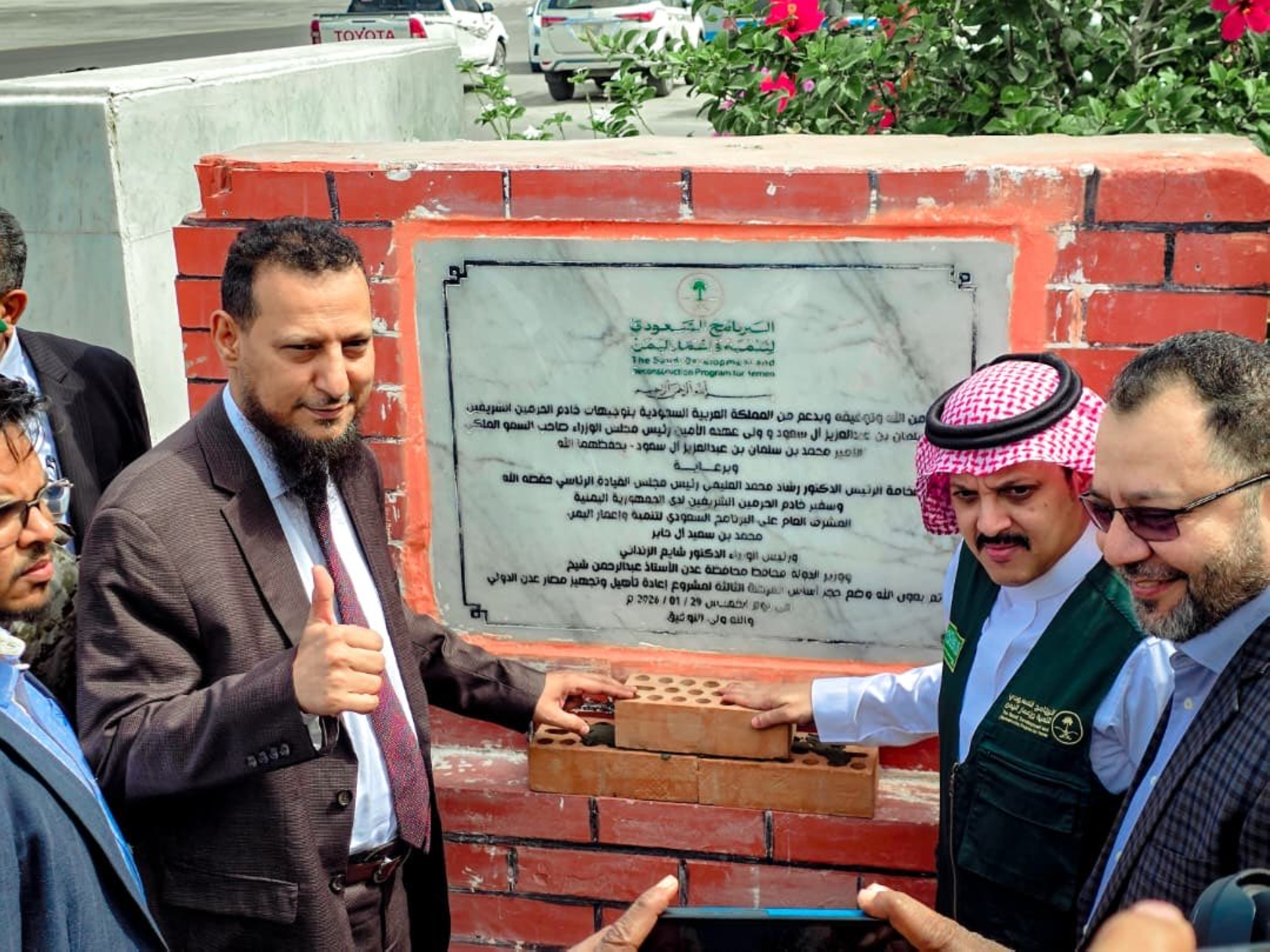
In a strategic move aimed at strengthening the air transport sector in the Republic of Yemen, the Saudi Development and Reconstruction Program for Yemen (SDRPY) launched the third phase of the project to develop and upgrade Aden International Airport. The launch ceremony was attended by the Minister of State and Governor of Aden Governorate, Mr. Abdulrahman Sheikh Al-Yafei, and the Director of the SDRPY office in Aden, Engineer Ahmed Madkhali, reflecting the great importance the Kingdom of Saudi Arabia places on supporting vital infrastructure in Yemen.
Details and objectives of the third phase
This phase includes a package of advanced engineering and technical works, most notably the complete rehabilitation of the airport's main runway and the modernization of navigation and communication systems to meet the latest international standards. This ambitious project aims to enhance the airport's operational efficiency, directly contributing to improving the passenger experience and raising the level of air safety, as well as ensuring the airport's continuous operation in all weather conditions, 24/7.
The strategic importance of Aden International Airport
Aden International Airport is of paramount importance as Yemen's main air gateway to the world, especially given the current circumstances. This development will bolster Aden's position as a pivotal economic and commercial hub, enabling international and domestic airlines to operate more regular and efficient flights. The project will also help alleviate the isolation of Yemeni regions and facilitate the movement of citizens for humanitarian, commercial, and medical purposes, thereby strengthening social and economic ties within Yemen and with the region.
Integrating projects with international standards (ICAO)
This phase was not a sudden development, but rather an extension of previous and ongoing efforts. The first two phases of the project contributed to significant leaps in airport services. These phases included the rehabilitation of the auxiliary runway, the modernization of the passenger terminal, the development of the air cargo area, and the enhancement of emergency preparedness. All these efforts work in perfect harmony to meet the requirements of the International Civil Aviation Organization (ICAO), thus raising the airport's ranking and making it an attractive environment for international airlines.
Comprehensive support for the transport and logistics sector
The Saudi Development and Reconstruction Program for Yemen (SDRPY) extends beyond airports to encompass a comprehensive vision for developing the transport and logistics sector. The program has implemented other vital projects, such as the rehabilitation of the strategic Al-Abir road, which serves millions of beneficiaries and connects Yemen to the Kingdom, in addition to developing land border crossings like Al-Wadi'ah. These projects collectively contribute to achieving the Sustainable Development Goals, creating direct and indirect job opportunities for Yemeni youth, and driving the national economy towards recovery and stability.





Reports
18 killed in mine explosion in India: Details of the disaster
A new tragedy has struck India, with 18 people killed in a mine explosion. Read the full details of the incident and an analysis of safety procedures and the frequency of accidents in the Indian mining sector.
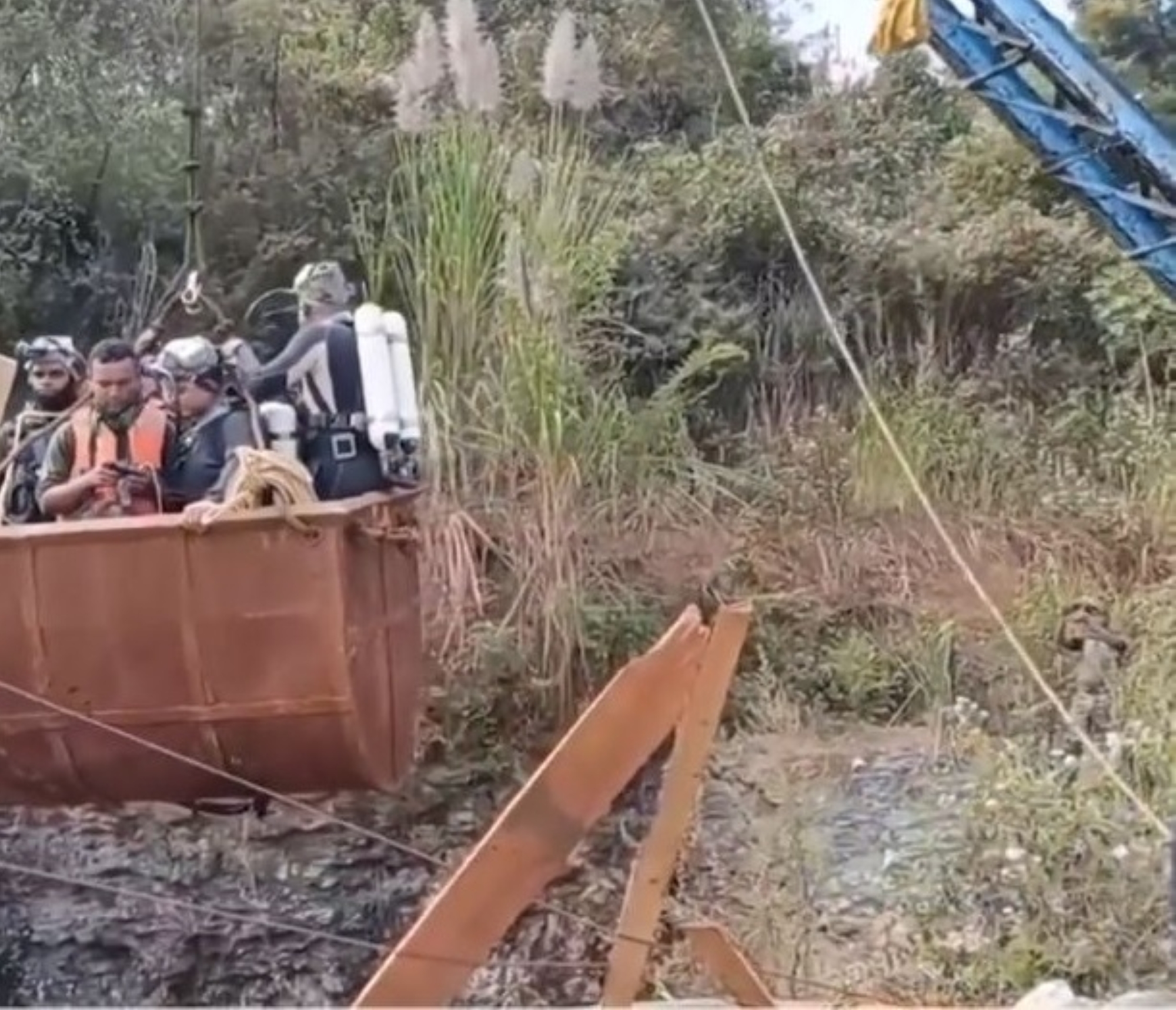
At least 18 people were killed in another tragic accident in India's mining sector, following a massive explosion at a mine. This incident has reignited concerns about occupational safety and the risks faced by workers in this vital and dangerous industry. It adds to the death toll from a series of similar accidents that have plagued the country in recent years.
Details of the incident and casualties
Initial reports indicate that the explosion occurred suddenly, trapping the workers and killing 18 of them. Rescue teams and local authorities are working against the clock to recover bodies and secure the site, amid fears that more may be trapped or injured. This heavy toll is a horrific indication of the scale of the disaster that has befallen the victims' families and the local community surrounding the mine.
India's mining accident record: a disturbing historical context
India is one of the world's largest producers of coal and minerals, but this massive production often comes at a heavy human cost. Historically, the Indian mining sector has suffered from a troubled safety record, with frequent incidents of roof collapses, mine flooding, and explosions caused by gas leaks. Despite existing laws and regulations, enforcing strict safety standards remains a significant challenge, particularly in older mines or those lacking technological modernization.
Economic importance versus human cost
The mining sector is the backbone of the Indian economy and a major source of energy, as the country relies heavily on coal for electricity generation and to power heavy industries. This heavy reliance places immense pressure to increase production, sometimes leading to the overlooking of essential safety measures or the operation of mines beyond their safe capacity. The deaths of 18 people in this incident raise pressing questions about the balance between meeting growing economic needs and ensuring workers' right to a safe working environment.
Expected effects and reactions
This incident is expected to spark public outrage and calls for a thorough investigation to hold those responsible for any potential negligence accountable. Such disasters typically lead to the government announcing financial compensation for the victims' families, as well as the formation of fact-finding committees. Internationally, these incidents highlight the urgent need to improve working conditions in developing countries, prompting human rights and labor organizations to demand the adoption of stricter global safety standards to protect the lives of ordinary workers who risk their lives to extract the earth's resources.
Reports
Project Masam removes 2,100 landmines in Yemen in one week
The Masam demining project in Yemen succeeded in removing 2,100 mines and unexploded ordnance during the fourth week of January 2026, bringing the total number of mines removed to 534,000.
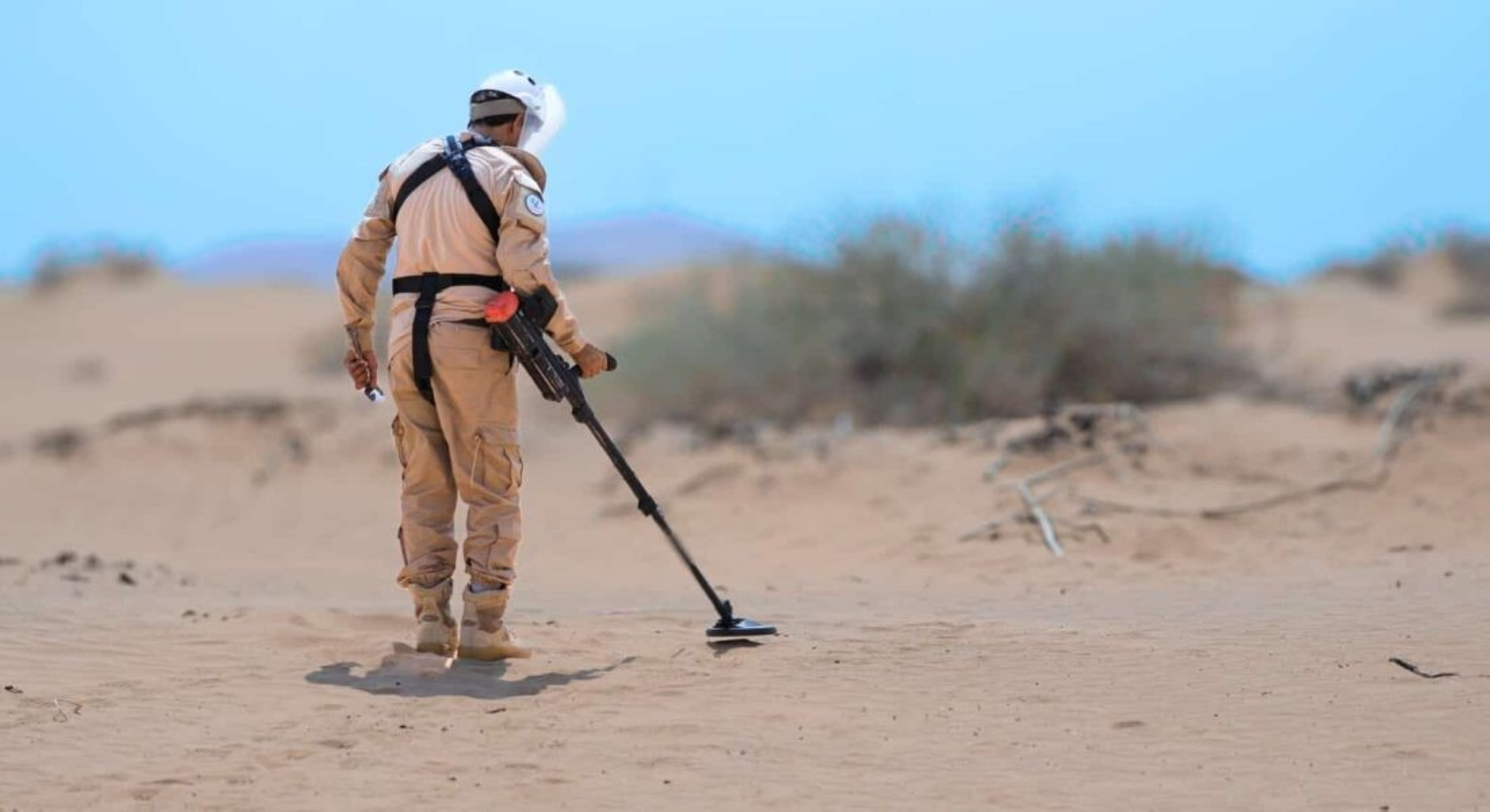
The King Salman Humanitarian Aid and Relief Center’s “Masam” project to clear Yemeni lands of mines continued to achieve successive field accomplishments, as the project’s engineering teams were able, during the fourth week of January 2026, to remove a total of 2,100 mines, unexploded ordnance and improvised explosive devices in various liberated Yemeni governorates, as part of its ongoing efforts to secure the lives of civilians.
In detail, the field operations resulted in the removal of a variety of ordnance, including 31 anti-personnel mines, 7 anti-tank mines, 2,000 pieces of unexploded ordnance, and 2 improvised explosive devices (IEDs). These efforts were spread across several governorates. In Aden Governorate, the team removed one piece of unexploded ordnance in the Khormaksar district and 242 pieces in Aden city. In Al Hudaydah Governorate, the team removed 601 pieces of unexploded ordnance in the Hays district, and one anti-tank mine and 6 pieces of unexploded ordnance in the Al Khawkhah district.
Hadhramaut Governorate witnessed intensive activity, with the team in Al-Mukalla District removing 20 anti-personnel mines, 23 anti-tank mines, and 1,000 pieces of unexploded ordnance. In Hajjah Governorate, specifically in Midi District, 9 anti-personnel mines, 46 anti-tank mines, 58 pieces of unexploded ordnance, and 2 improvised explosive devices were removed. Operations also included Al-Mudharabah District in Lahj Governorate, where 3 anti-tank mines were removed, and Raghwan District in Ma'rib Governorate, where 1 anti-tank mine was removed. In Taiz, Dhubab District was cleared of an anti-tank mine and 18 pieces of ordnance, and Salah District was cleared of 2 anti-personnel mines and 17 pieces of ordnance.
Humanitarian context and ongoing efforts
This achievement comes within the context of the vital role played by the “Masam” project since its inception, representing a crucial humanitarian arm of the Kingdom of Saudi Arabia through the King Salman Humanitarian Aid and Relief Center. The project primarily aims to address the humanitarian catastrophe caused by landmines that have been planted indiscriminately and densely in residential areas, roads, and farms, transforming vast swathes of Yemeni land into death traps that threaten the lives of thousands.
These operations are of paramount importance, transcending mere statistics. Every mine removed means saving the life of a child, woman, or farmer, and restoring safety to routes used by aid convoys or students. Landmines and improvised explosive devices (IEDs) are among the most significant obstacles preventing displaced people from returning to their homes, and they also pose a major impediment to economic and social development in Yemen, given their contamination of agricultural lands and water sources.
In terms of overall figures, the number of mines removed in January alone reached 2,800, while the total number removed since the launch of the MASAM project has reached 534,800 mines and unexploded ordnance. This staggering figure reflects the scale of the disaster faced by Yemenis, and conversely, highlights the immense determination and effort exerted by the project's teams to clear the land and enable our Yemeni brothers and sisters to live in dignity and safety, free from the fear of sudden explosions.
Reports
Achievements of Saudi government sectors in 2025
A comprehensive review of the most prominent achievements of the government sectors in Saudi Arabia for the year 2025, and their impact on the economy and society within the objectives of the Kingdom’s Vision 2030.

the introduction
This report reviews the most prominent achievements of the government sectors in the Kingdom of Saudi Arabia during the year 2025, highlighting the tangible progress achieved in various vital areas, as a result of clear strategic plans and effective integration between government agencies.
The content reflects the scale of efforts made to enhance quality of life, improve the efficiency of services, support sustainable economic growth, and empower people, in line with the objectives of Saudi Vision 2030.
This presentation also provides a comprehensive picture, with figures and indicators, of the progress achieved in the education, transportation, health, economy, security, municipal services, and other sectors, confirming the path of national transformation and the tangible results it has produced on the ground.
Education sector
Global scholarship
Sending 1,080 male and female students to the best universities in the world to enhance competencies.
Academic expansion
Establishing 4 new scientific and technical colleges to support future specializations.
Intensive training
Training more than 55,000 male and female students in the latest skills.
Technology graduates
5,335 trainees graduated from specialized technical training programs.
International Awards
Achieving more than 400 international awards in various fields.
Comprehensive initiatives
Implementation of 45 educational and sports initiatives across the Kingdom.
Chinese language
Chinese language teaching in public schools to 55,916 students .
Achievements in international forums
Achieving more than 400 international awards and advanced positions in many international forums and Olympiads.
Infrastructure and Transport Sector
Huge investments
Launching infrastructure projects with investments exceeding 3.5 billion riyals .
International airports
Three Saudi airports ranked among the top 100 global airports .
Traveler service
Serving over 8.3 million passengers through enhanced services.
national air carrier
A national low-cost airline has been awarded a contract at King Fahd International Airport to enhance competitiveness and expand travel options.
Localization of transport and logistics
Empowering 49,000 citizens in transportation and logistics activities.
Self-driving vehicles
Launch of the first practical phase of operating self-driving vehicles in Riyadh.
Economic Resources Sector
- Increase the production of desalinated water to more than 16 million cubic meters per day .
- Adding 10,000 factories to the industrial sector to support economic diversification.
- More than 84,500 seabirds .
- Stimulating 40 quality investments worth 320 billion riyals .
- Receiving 240,000 international visitors to tourist and heritage sites.
- -Documenting more than endangered species
Additional indicators
- 16 educational and training institutions have received international accreditation in tourism education.
- More than 240,000 visitors to Al-Ula city, with an average expenditure of 2,100 riyals .
- Discovery of 13 new oil and gas fields and 12 new reservoirs.
- Achieving a score of 84.2% in the water security index.
Health and Social Development Sector
Advanced healthcare services
Expanding the provision of health services to more than 200 million electronic prescriptions via “Wasfati”.
an age-friendly city
Jeddah has been designated an age-friendly city.
Increased capacity
Adding more than 5,000 beds to health facilities.
community participation
860,000 volunteers benefited from community engagement programs.
social support
Empowering 77,000 beneficiaries of social support programs, by empowering them and developing their skills and capabilities.
Military sector
Military Industries Sector
Training 661 trainees within advanced military industries programs.
Global technical readiness
Achieving ninth place globally in the Geospatial Infrastructure Readiness Index (GKI).
Localization of industries
Promoting the localization of military industries and supporting national companies.
Colleges of the Future
Prince Sultan Military College of Health Sciences is among the top 100 research universities globally .
Supporting maritime security
Operating 5 combat vessels to support maritime security and border protection.
Security Sector and Administrative Regions
- Developing competencies through 9 new security courses .
- Launch of the Unified Security Operations Center (911) in Madinah.
- Launch of the “Tasreeh” to regulate Hajj and Umrah services.
- Launch of the Cyber Innovation Center to enhance digital security.
Public Administration Sector
Virtual Court
Activating the first phase of the virtual court.
Digital integration
Launching digital systems and services, including the electronic system for managing mosque affairs and documentation services via the “Najiz” application.
Customer service
The service provides 150,000 beneficiaries with AI-powered instant translation for more than 100 languages via the “Nesk” app.
Visa facilitation
More than 17 million visas during 2025.
Access
Allowing entry to citizens of 31 countries without a visa in support of the strength of the Saudi passport.
Municipal Services Sector
16M+
beneficiaries of municipal services
(housing and municipal)
90K+
families supported with housing support products
107K+
residential units and developed land
- Developing public spaces and historical sites to preserve heritage.
- 120 km of afforestation projects to enhance the urban environment.
- Developing the sacrificial animal and ritual system and operating 7 complexes throughout the year.
- Creating and developing parks with more than 2.5 million square meters .
-

 Culture and Art, 1 week ago
The death of artist Huda Shaarawi “Umm Zaki” and her funeral in Damascus
-
Technology one week ago
ICAN 2026 Conference Conclusion: Initiatives to Enhance Saudi Arabia's Leadership in Artificial Intelligence
-
Local News 4 days ago
Launch of the city's shuttle bus service in Ramadan 1447 AH: Routes and stations
-
Culture and Art, 1 week ago
Huda Shaarawi: Farewell to “Umm Zaki,” the icon of Syrian drama
-
Culture and Art, 1 week ago
The murder of Huda Shaarawi, "Umm Zaki": Details of the crime and its impact
-
Local News 6 days ago
Rabigh inaugurates the world's largest water innovation oasis and enters the Guinness World Records
-
Culture and Art 5 days ago
The series "Rouh OFF" was permanently canceled by a decision of the Actors' Syndicate
-
Culture and Art, 1 week ago
The murder of Syrian artist Huda Shaarawi and details of the investigations


