
Reports
Armed attack in Mexico: 11 dead in Guanajuato state
An armed attack targeted a football stadium in the Mexican city of Salamanca in the state of Guanajuato, killing 11 people and injuring 12 others amid escalating gang violence.


On Sunday, the central Mexican state of Guanajuato witnessed another chapter of deadly violence, with at least 11 people killed and 12 others injured in an armed attack targeting a football stadium in the city of Salamanca. Local authorities declared a state of alert and confirmed the launch of a large-scale security operation to search for the perpetrators and bring them to justice.
According to an official statement from the authorities, the attack occurred suddenly, killing ten people instantly, while an eleventh person died later in the hospital from their injuries. The injured are still receiving treatment, some in critical condition. This incident has heightened the climate of fear gripping the city, especially after the discovery of four suitcases containing human remains on Saturday night, indicating an escalation in the brutality of the conflicts between criminal gangs.
Guanajuato: Between Industrial Prosperity and Cartel Violence
Guanajuato is one of Mexico's most important industrial centers, home to factories for major global automakers and attracting massive investments. It's also a popular tourist destination with its picturesque colonial cities. However, this bright facade masks a dark reality. According to official statistics, the state is the most violent in the country. The primary reason for this is the fierce, open warfare between the Jalisco New Generation Cartel (CJNG) and the Santa Rosa de Lima Cartel (CSRL), who are vying for control of drug trafficking routes and fuel theft, a crime known locally as "huachicoleo.".
Impact on national security and the economy
This attack, targeting a civilian gathering, represents a significant blow to the Mexican government's efforts to establish security and stability. Attacks in public spaces are not merely settling scores between gangs; they also aim to instill fear in the population and undermine public trust in state institutions. This violence directly impacts the investment and tourism climate in the region, threatening the economic growth upon which the state depends.
This horrific incident comes at a time when Mexican President Claudia Sheinbaum asserts that her administration's national security strategy has succeeded in reducing the homicide rate to its lowest level in a decade. However, the repeated attacks in Guanajuato and other states demonstrate that the challenge remains significant, and the fight against organized crime requires greater and more effective efforts to ensure the safety of citizens and restore peace to the most affected areas.


Reports
A snowstorm in America cuts off power and cancels thousands of flights
A severe winter storm is sweeping across the United States, leaving more than 730,000 homes without power and causing the cancellation of 9,600 flights. Learn about the hardest-hit areas and the expected impacts.


A major winter storm is battering vast swaths of the United States, causing widespread disruptions affecting the lives of nearly 190 million people. The severe weather has left more than 730,000 homes and businesses without power, while air travel has been brought to a near standstill with over 9,600 flights canceled, in one of the worst storms to hit the country in years.
The storm spans a vast geographical area of approximately 3,000 kilometers, stretching from New Mexico in the southwest to Maine in the far northeast. Southern states such as Texas, Louisiana, and Mississippi were among the hardest hit in the storm's initial phase, with freezing rain and snow causing widespread power outages. The storm is now heading toward major population centers on the East Coast, including New York, Philadelphia, and Washington, D.C., threatening to exacerbate the crisis.
These severe winter storms occur within the context of well-known climatic phenomena, often linked to cold polar air currents pushing southward from the Arctic, a phenomenon sometimes known as the "polar vortex." When this extremely cold air mass meets warm, moist air from the Gulf of Mexico, it creates ideal conditions for heavy snowfall and ice formation, transforming ordinary weather into an extreme weather event capable of paralyzing daily life in entire regions.
The storm's impact extends far beyond power outages and flight cancellations. Economically, it forces businesses and schools to close, disrupts supply chains, and inflicts heavy losses on airlines. Socially, power outages in freezing temperatures pose a significant health risk, particularly for the elderly, children, and those with chronic medical conditions. The storm also places immense strain on emergency services and infrastructure maintenance crews working around the clock to restore services and clear snow from major roads.
In response to the storm's severity, several states declared a state of emergency, allowing for the mobilization of additional resources, including the National Guard, to assist in rescue and relief efforts. Local authorities continue to issue warnings to residents, urging them to stay home, avoid unnecessary travel, stock up on emergency supplies such as food, water, and batteries, and check on the well-being of their neighbors, especially elderly individuals living alone.
Meteorologists confirm that the wave of bad weather will continue over the coming days, with heavy snow, freezing rain and strong winds expected to sweep across nearly two-thirds of the eastern regions of the country, meaning that the challenges facing the affected communities are not over yet, and the final tally of the impact of this powerful winter storm is still unfolding.
Reports
A winter storm in America cuts power and cancels 9,600 flights
A historic winter storm is sweeping across the United States, leaving 730,000 homes without power and affecting 190 million people. Thousands of flights have been canceled.

A severe winter storm has left more than 730,000 homes and businesses without power across the United States, with major cities like New York, Philadelphia, and Washington, D.C., expected to be affected. The country is facing one of its worst winter storms in years, with nearly 190 million people under weather warnings, highlighting the scale and widespread impact of this weather event.
The storm stretched across a vast distance of nearly 3,000 kilometers, from New Mexico in the southwest to Maine in the northeast, causing widespread disruption. Southern states such as Mississippi, Louisiana, and Texas were among the hardest hit, with thousands of homes experiencing prolonged power outages amid freezing temperatures, increasing health risks for residents, particularly the elderly and children.
Historical background of the impact of winter storms
Severe winter storms are a recurring phenomenon in the United States, particularly during the winter months, but their intensity and geographic impact vary from year to year. These storms are often linked to weather phenomena such as the polar vortex, which pushes cold air from the Arctic southward. This particular storm brought to mind past events, such as the 2021 Texas power crisis, which exposed the vulnerability of the electrical grid's infrastructure to extreme weather conditions, reigniting the debate about the need to modernize these grids to make them more resilient and robust.
Widespread repercussions on transportation and the economy
The storm's impact wasn't limited to power outages; it also brought air travel to a near standstill. More than 9,600 flights were canceled as a precaution, disrupting the travel plans of millions and causing overcrowding at major airports. This disruption affects not only individuals but also air freight and supply chains, potentially leading to delays in deliveries and increased operating costs for businesses. Meteorologists predict that the heavy snow and freezing rain, accompanied by bitterly cold weather, will continue to blanket two-thirds of the eastern part of the country in the coming days, threatening further disruptions and challenges for authorities and emergency services.
Reports
Winter storm hits America: Thousands of flights canceled and widespread warnings issued
A powerful winter storm is hitting large areas of the United States, leading to the cancellation of more than 8,000 flights and placing 140 million people under severe weather warnings.
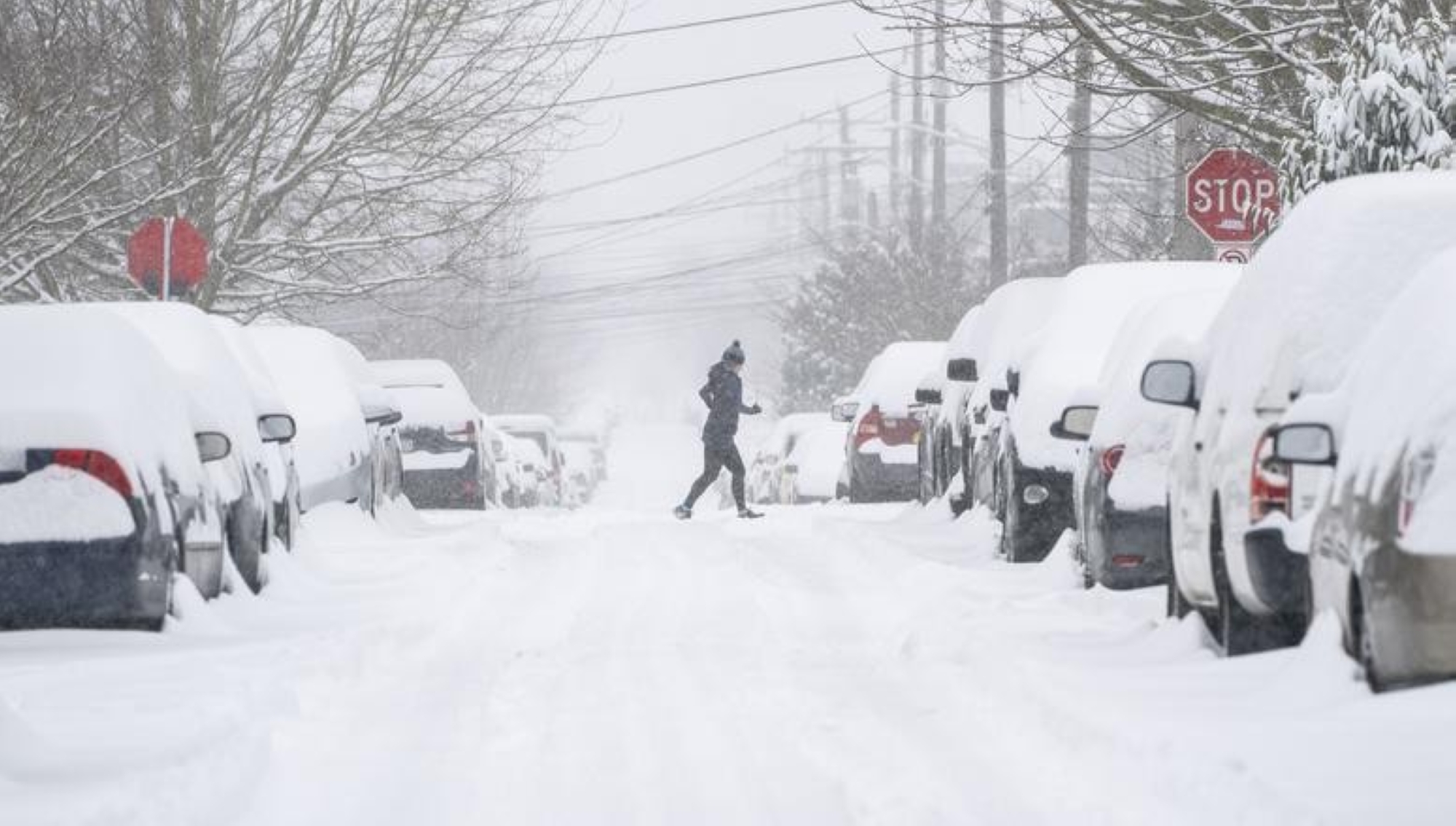
US authorities have declared a state of high alert as a major winter storm, described as one of the strongest this season, approaches, leading to the cancellation of more than 8,000 flights scheduled for the weekend. Severe weather warnings extend to approximately 140 million people, nearly half the country's population, from New Mexico in the south to New England in the northeast, with widespread transportation disruptions and potential power outages expected.
Background of winter storms in America
These widespread winter storms are a frequent occurrence in the United States, especially during the harsh winter months. These complex weather systems typically form when cold, dry polar air masses from the Arctic collide with warm, moist air masses from the Gulf of Mexico. This collision creates ideal conditions for heavy snowfall and ice formation, and the jet stream often drives these storms across vast swaths of the country, affecting dozens of states simultaneously and placing immense strain on infrastructure.
Storm details and weather forecast
The National Weather Service warned of widespread and heavy snowfall, with accumulations expected to reach 50.8 centimeters in the Appalachian Mountains and West Virginia. A band of dangerous ice also stretches from East Texas to North Carolina, making roads hazardous and travel nearly impossible. Brian Hurley, a meteorologist with the Weather Prediction Center, noted that nearly half of all Americans are under some form of weather warning. Major cities such as New York, Boston, and Baltimore are expected to receive between 10 and 25 centimeters of snow, accompanied by a sharp drop in temperatures that could reach as low as -14 degrees Celsius in Boston.
Expected effects and precautionary measures
The storm's impact extends beyond disrupting daily life, posing significant economic and logistical challenges. The cancellation of thousands of flights not only affects travelers but also paralyzes air cargo operations and disrupts supply chains. Regionally, highway closures and ice accumulation hinder emergency services, while power outages in freezing temperatures pose a real threat to residents' lives. Texas Governor Greg Abbott declared a state of emergency, and New York State activated its "Code Blue" alert to ensure shelter for the homeless. Internationally, the disruption of major US airports is causing chaos in the global aviation network, resulting in delays and cancellations worldwide.
Officials expect the storm to begin easing in most areas by late Sunday or early Monday, while continuing to urge citizens to exercise caution and follow the instructions of local authorities.
-

 Local news one day ago
Landslide in Riyadh: Details of the incident in Al-Sahafa neighborhood and containment efforts
-

 Local news two days ago
The death penalty was carried out against a citizen who stabbed another to death in Tabuk
-

 Local News 21 hours ago
Riyadh collapse: Emergency plans to secure water after a main pipeline burst
-
Sports 17 hours ago
Controversy surrounds Al-Hilal's goal against Al-Riyadh: A refereeing expert reveals a major error
-

 Culture and Art 6 days ago
Ramez Galal in Ramadan 2026: Details of the bloody prank show
-

 Local News 3 days ago
First birth on the Riyadh train: A heartwarming story at Andalus station
-
Sports 20 hours ago
Al-Nassr's absences against Al-Taawon in the Roshan League and their impact on the team
-

 Culture and Art 15 hours ago
Haifa Wehbe's absence in Riyadh: A photo crisis or a strained relationship with the media?