Reports
Winter storm hits America: Thousands of flights canceled and widespread warnings issued
A powerful winter storm is hitting large areas of the United States, leading to the cancellation of more than 8,000 flights and placing 140 million people under severe weather warnings.

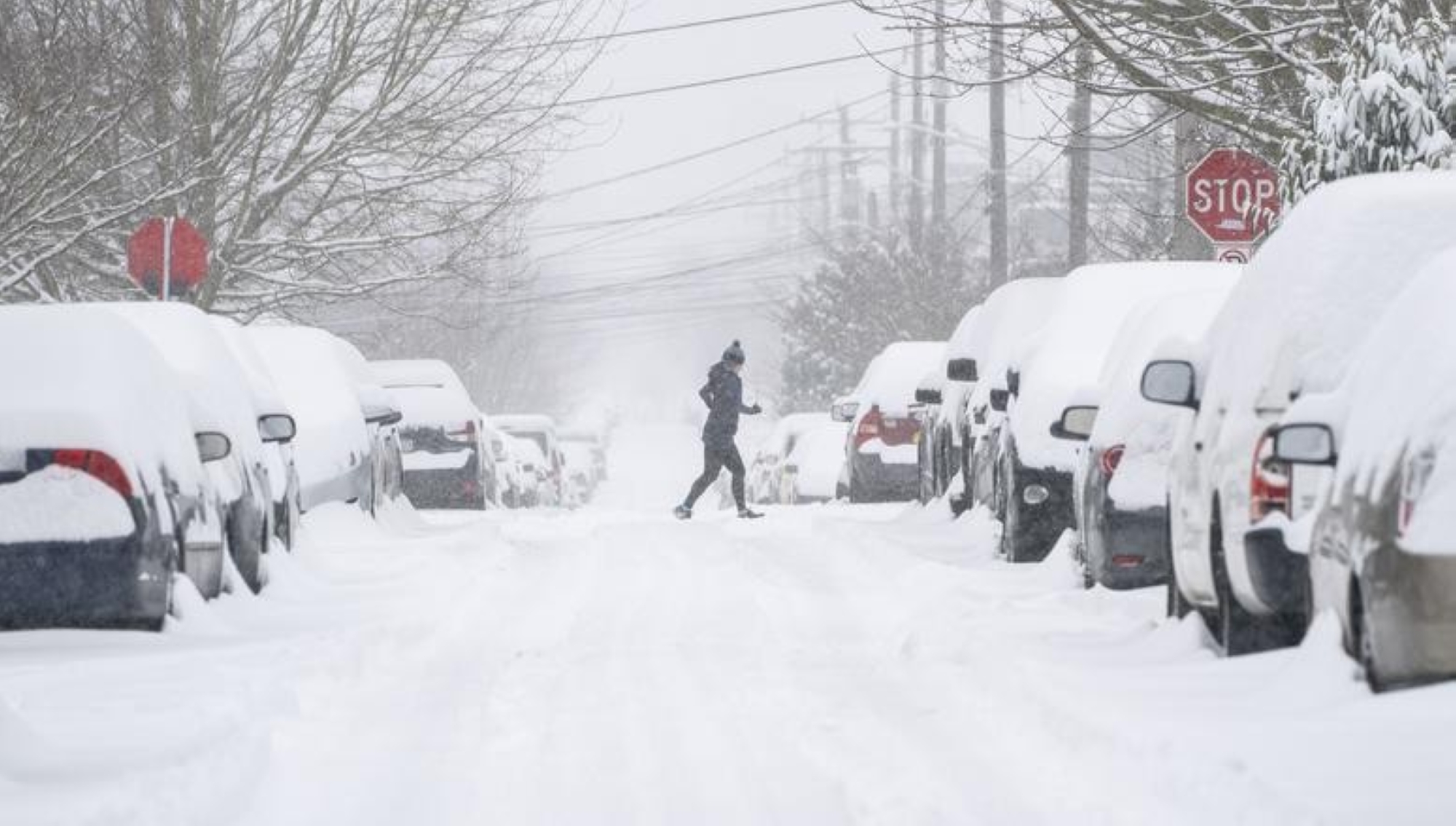
US authorities have declared a state of high alert as a major winter storm, described as one of the strongest this season, approaches, leading to the cancellation of more than 8,000 flights scheduled for the weekend. Severe weather warnings extend to approximately 140 million people, nearly half the country's population, from New Mexico in the south to New England in the northeast, with widespread transportation disruptions and potential power outages expected.
Background of winter storms in America
These widespread winter storms are a frequent occurrence in the United States, especially during the harsh winter months. These complex weather systems typically form when cold, dry polar air masses from the Arctic collide with warm, moist air masses from the Gulf of Mexico. This collision creates ideal conditions for heavy snowfall and ice formation, and the jet stream often drives these storms across vast swaths of the country, affecting dozens of states simultaneously and placing immense strain on infrastructure.
Storm details and weather forecast
The National Weather Service warned of widespread and heavy snowfall, with accumulations expected to reach 50.8 centimeters in the Appalachian Mountains and West Virginia. A band of dangerous ice also stretches from East Texas to North Carolina, making roads hazardous and travel nearly impossible. Brian Hurley, a meteorologist with the Weather Prediction Center, noted that nearly half of all Americans are under some form of weather warning. Major cities such as New York, Boston, and Baltimore are expected to receive between 10 and 25 centimeters of snow, accompanied by a sharp drop in temperatures that could reach as low as -14 degrees Celsius in Boston.
Expected effects and precautionary measures
The storm's impact extends beyond disrupting daily life, posing significant economic and logistical challenges. The cancellation of thousands of flights not only affects travelers but also paralyzes air cargo operations and disrupts supply chains. Regionally, highway closures and ice accumulation hinder emergency services, while power outages in freezing temperatures pose a real threat to residents' lives. Texas Governor Greg Abbott declared a state of emergency, and New York State activated its "Code Blue" alert to ensure shelter for the homeless. Internationally, the disruption of major US airports is causing chaos in the global aviation network, resulting in delays and cancellations worldwide.
Officials expect the storm to begin easing in most areas by late Sunday or early Monday, while continuing to urge citizens to exercise caution and follow the instructions of local authorities.





Reports
Landmines in Yemen: Project Masam removes 837 mines in one week
As part of the King Salman Relief Center’s efforts, the Masam project has successfully removed 837 mines and unexploded ordnance from Yemeni lands, contributing to the protection of civilians and the restoration of life.

The King Salman Humanitarian Aid and Relief Center's "Masam" project for clearing Yemeni lands of mines announced a new achievement in its humanitarian mission. During the third week of January, it successfully removed 837 mines and unexploded ordnance from several Yemeni governorates. These included one anti-personnel mine, 104 anti-tank mines, 729 pieces of unexploded ordnance, and three improvised explosive devices (IEDs), bringing the total number of mines removed in January alone to 2,700.
Background to the tragedy of landmines in Yemen
The landmine problem in Yemen is one of the most serious consequences of the years-long conflict. Houthi militias have indiscriminately planted hundreds of thousands of mines in residential areas, agricultural lands, roads, schools, and water sources, without any clear maps. These mines, which include anti-tank and anti-personnel mines as well as improvised explosive devices (IEDs), make no distinction between combatants and civilians, turning vast areas of the country into death traps that will threaten the lives of Yemenis for decades to come, even after the conflict ends.
The devastating impact on civilian lives
The humanitarian impact of these deadly weapons is catastrophic. They have killed and injured thousands of civilians, including a large number of women and children, who are the most affected. They have also caused permanent disabilities, amputations, and profound psychological trauma. Economically, landmines have paralyzed the movement of people, prevented farmers from accessing their land, and hindered the delivery of humanitarian aid to affected areas, exacerbating the humanitarian crisis and increasing the suffering of a people struggling to survive.
Details of “Masam” field efforts
The MASAM engineering teams continue their tireless work across various governorates. In Aden Governorate, 242 unexploded ordnance were removed. In Hodeidah Governorate, two unexploded ordnance were cleared from Hays District. Efforts also extended to other districts, such as Al-Yatima in Al-Jawf Governorate and Midi in Hajjah Governorate, where 91 anti-tank mines and 167 pieces of unexploded ordnance were removed. In Lahj, Marib, Shabwa, and Taiz, intensive clearance operations continued, addressing anti-tank and anti-personnel mines and improvised explosive devices, highlighting the scale of the challenges faced by the teams on the ground.
The importance of the project and its role in restoring life
Launched in 2018, the Masam Project is a vital humanitarian response to this catastrophe. Since its inception, the project has successfully removed over 532,700 landmines and unexploded ordnance, directly contributing to saving countless lives. The project's importance extends beyond military clearance; it also includes restoring hope to affected communities, enabling displaced persons to return safely to their homes, revitalizing agricultural and economic activity, and securing safe passage for aid teams. These efforts, undertaken by the Kingdom of Saudi Arabia through its humanitarian arm, the King Salman Humanitarian Aid and Relief Centre, represent a cornerstone for achieving peace and stability and empowering Yemenis to build a secure and dignified future.
Reports
Two trains collide in Spain: 39 killed in Andalusia disaster
A tragedy has struck Spain after two trains collided in Andalusia, killing 39 and injuring 123. Authorities have launched an investigation into the worst rail disaster the country has seen in years.
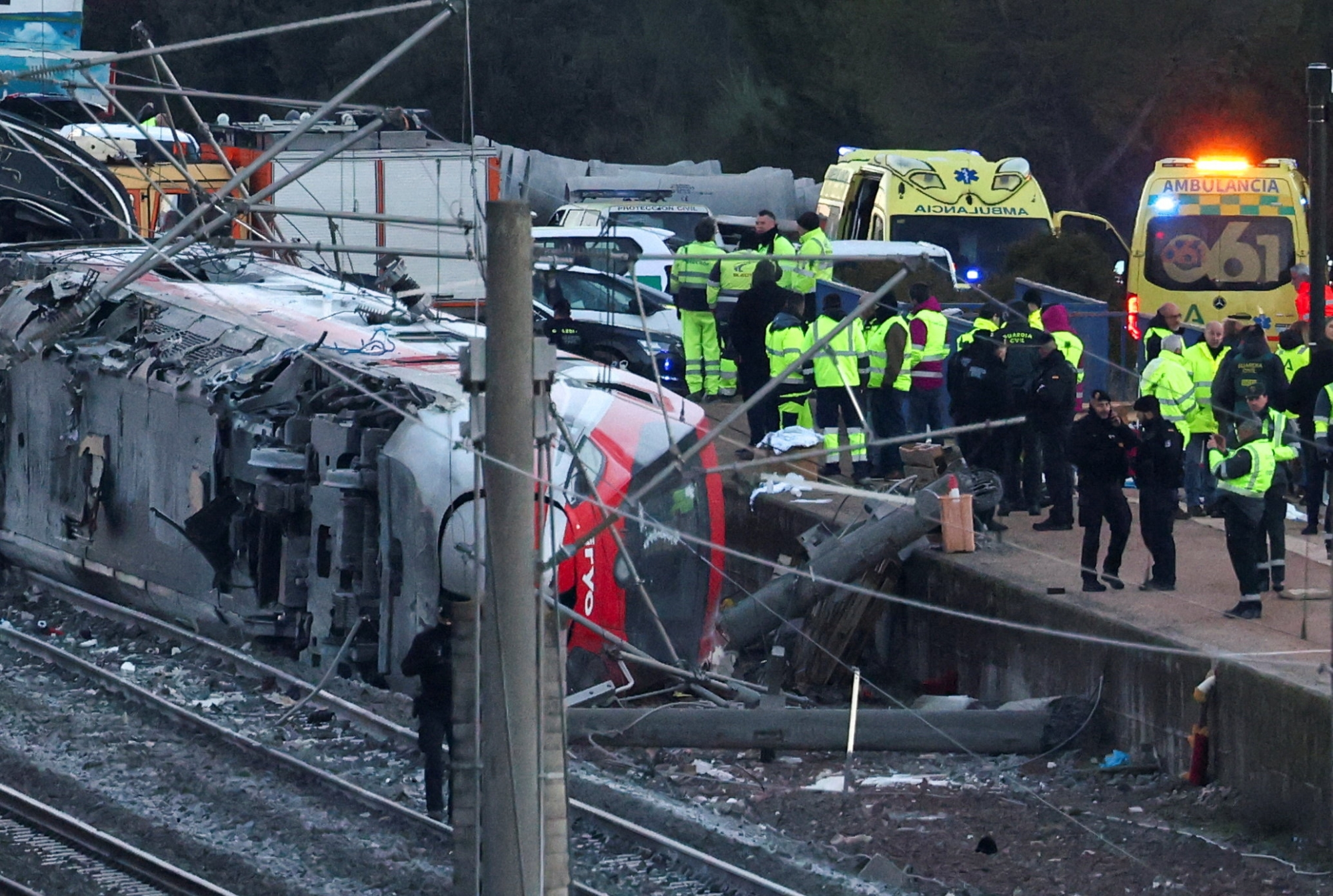
A horrific tragedy struck the Andalusia region of southern Spain on Sunday evening when a train collision killed at least 39 people and injured 123 others, in what has been described as one of the worst rail disasters in the country in years. Spanish public broadcaster RTVE announced the updated death toll, which has risen significantly from the initial estimate of 24 fatalities, reflecting the scale of the disaster.
The accident occurred approximately 200 kilometers north of the coastal city of Malaga, when a Renfe high-speed train traveling from Malaga to Madrid derailed and collided with another train bound for Huelva. According to Spanish Transport Minister Oscar Puente, the force of the impact caused the front two carriages of the high-speed train to completely derail, resulting in the high number of casualties.
Large-scale emergency response
Immediately after the accident, emergency and ambulance teams rushed to the scene, which was described as chaotic and distressing. The Andalusian ambulance service confirmed via its X platform that rescue operations continued around the clock. Due to the scale of the incident, Spanish authorities deployed a military emergency unit to support medical teams in evacuating the injured. A field hospital was also set up nearby to provide initial treatment to critical cases before their transfer. The injured, including five in extremely critical condition and 24 in serious condition, were transported to hospitals in the nearby cities of Córdoba and Andújar.
Historical context and questions about safety
This incident brings to mind the 2013 Santiago de Compostela train disaster, which claimed 80 lives and was the worst train accident in Spain in decades. Although the Spanish railway network, and especially its high-speed rail lines (AVE), enjoys a good reputation and an excellent safety record worldwide, this tragedy inevitably raises questions about safety standards and maintenance procedures. The relevant authorities have launched an urgent investigation to determine the precise causes of the derailment, whether it was due to human error, a technical malfunction, or a problem with the signaling and control system.
Local and international impact
Locally, the accident caused widespread shock throughout Andalusia and Spain, with official mourning declared in several municipalities. Rail services in the south of the country are expected to be disrupted for several days as teams work to clear the wreckage of the two trains and repair the damage to infrastructure. Internationally, news of the accident made global headlines, and messages of condolence and sympathy poured into Spain from world leaders, highlighting the profound human impact of this disaster that struck one of Europe's most sophisticated transport systems.
Reports
Achievements of Saudi government sectors in 2025
A comprehensive review of the most prominent achievements of the government sectors in Saudi Arabia for the year 2025, and their impact on the economy and society within the objectives of the Kingdom’s Vision 2030.

the introduction
This report reviews the most prominent achievements of the government sectors in the Kingdom of Saudi Arabia during the year 2025, highlighting the tangible progress achieved in various vital areas, as a result of clear strategic plans and effective integration between government agencies.
The content reflects the scale of efforts made to enhance quality of life, improve the efficiency of services, support sustainable economic growth, and empower people, in line with the objectives of Saudi Vision 2030.
This presentation also provides a comprehensive picture, with figures and indicators, of the progress achieved in the education, transportation, health, economy, security, municipal services, and other sectors, confirming the path of national transformation and the tangible results it has produced on the ground.
Education sector
Global scholarship
Sending 1,080 male and female students to the best universities in the world to enhance competencies.
Academic expansion
Establishing 4 new scientific and technical colleges to support future specializations.
Intensive training
Training more than 55,000 male and female students in the latest skills.
Technology graduates
5,335 trainees graduated from specialized technical training programs.
International Awards
Achieving more than 400 international awards in various fields.
Comprehensive initiatives
Implementation of 45 educational and sports initiatives across the Kingdom.
Chinese language
Chinese language teaching in public schools to 55,916 students .
Achievements in international forums
Achieving more than 400 international awards and advanced positions in many international forums and Olympiads.
Infrastructure and Transport Sector
Huge investments
Launching infrastructure projects with investments exceeding 3.5 billion riyals .
International airports
Three Saudi airports ranked among the top 100 global airports .
Traveler service
Serving over 8.3 million passengers through enhanced services.
national air carrier
A national low-cost airline has been awarded a contract at King Fahd International Airport to enhance competitiveness and expand travel options.
Localization of transport and logistics
Empowering 49,000 citizens in transportation and logistics activities.
Self-driving vehicles
Launch of the first practical phase of operating self-driving vehicles in Riyadh.
Economic Resources Sector
- Increase the production of desalinated water to more than 16 million cubic meters per day .
- Adding 10,000 factories to the industrial sector to support economic diversification.
- More than 84,500 seabirds .
- Stimulating 40 quality investments worth 320 billion riyals .
- Receiving 240,000 international visitors to tourist and heritage sites.
- -Documenting more than endangered species
Additional indicators
- 16 educational and training institutions have received international accreditation in tourism education.
- More than 240,000 visitors to Al-Ula city, with an average expenditure of 2,100 riyals .
- Discovery of 13 new oil and gas fields and 12 new reservoirs.
- Achieving a score of 84.2% in the water security index.
Health and Social Development Sector
Advanced healthcare services
Expanding the provision of health services to more than 200 million electronic prescriptions via “Wasfati”.
an age-friendly city
Jeddah has been designated an age-friendly city.
Increased capacity
Adding more than 5,000 beds to health facilities.
community participation
860,000 volunteers benefited from community engagement programs.
social support
Empowering 77,000 beneficiaries of social support programs, by empowering them and developing their skills and capabilities.
Military sector
Military Industries Sector
Training 661 trainees within advanced military industries programs.
Global technical readiness
Achieving ninth place globally in the Geospatial Infrastructure Readiness Index (GKI).
Localization of industries
Promoting the localization of military industries and supporting national companies.
Colleges of the Future
Prince Sultan Military College of Health Sciences is among the top 100 research universities globally .
Supporting maritime security
Operating 5 combat vessels to support maritime security and border protection.
Security Sector and Administrative Regions
- Developing competencies through 9 new security courses .
- Launch of the Unified Security Operations Center (911) in Madinah.
- Launch of the “Tasreeh” to regulate Hajj and Umrah services.
- Launch of the Cyber Innovation Center to enhance digital security.
Public Administration Sector
Virtual Court
Activating the first phase of the virtual court.
Digital integration
Launching digital systems and services, including the electronic system for managing mosque affairs and documentation services via the “Najiz” application.
Customer service
The service provides 150,000 beneficiaries with AI-powered instant translation for more than 100 languages via the “Nesk” app.
Visa facilitation
More than 17 million visas during 2025.
Access
Allowing entry to citizens of 31 countries without a visa in support of the strength of the Saudi passport.
Municipal Services Sector
16M+
beneficiaries of municipal services
(housing and municipal)
90K+
families supported with housing support products
107K+
residential units and developed land
- Developing public spaces and historical sites to preserve heritage.
- 120 km of afforestation projects to enhance the urban environment.
- Developing the sacrificial animal and ritual system and operating 7 complexes throughout the year.
- Creating and developing parks with more than 2.5 million square meters .
-

 Reports one week ago
Achievements of Saudi government sectors in 2025
-
Local News 3 weeks ago
FDA warns of contaminated Nestle infant formula | Recall details
-
Technology 3 weeks ago
Saudi Arabia launches the world's largest government data center, 'Hexagon'
-
Technology 4 weeks ago
Merging KSA Map and Baladi Plus: A step towards Saudi digital sovereignty
-
Technology 3 weeks ago
Hexagon: Saudi Arabia strengthens its data sovereignty with the world's largest government center
-
Technology 3 weeks ago
European banks and artificial intelligence: A plan to lay off 200,000 employees
-
Politics 4 weeks ago
The coalition destroys smuggled Emirati weapons in Mukalla in a qualitative strike
-
Local News 4 weeks ago
Saudi Arabia's 2026 Decisions: Major Transformations in Real Estate and Logistics