Reports
18 killed in mine explosion in India: Details of the disaster
A new tragedy has struck India, with 18 people killed in a mine explosion. A detailed report examines the incident, the troubled occupational safety record in India's mining sector, and the repercussions of the disaster.

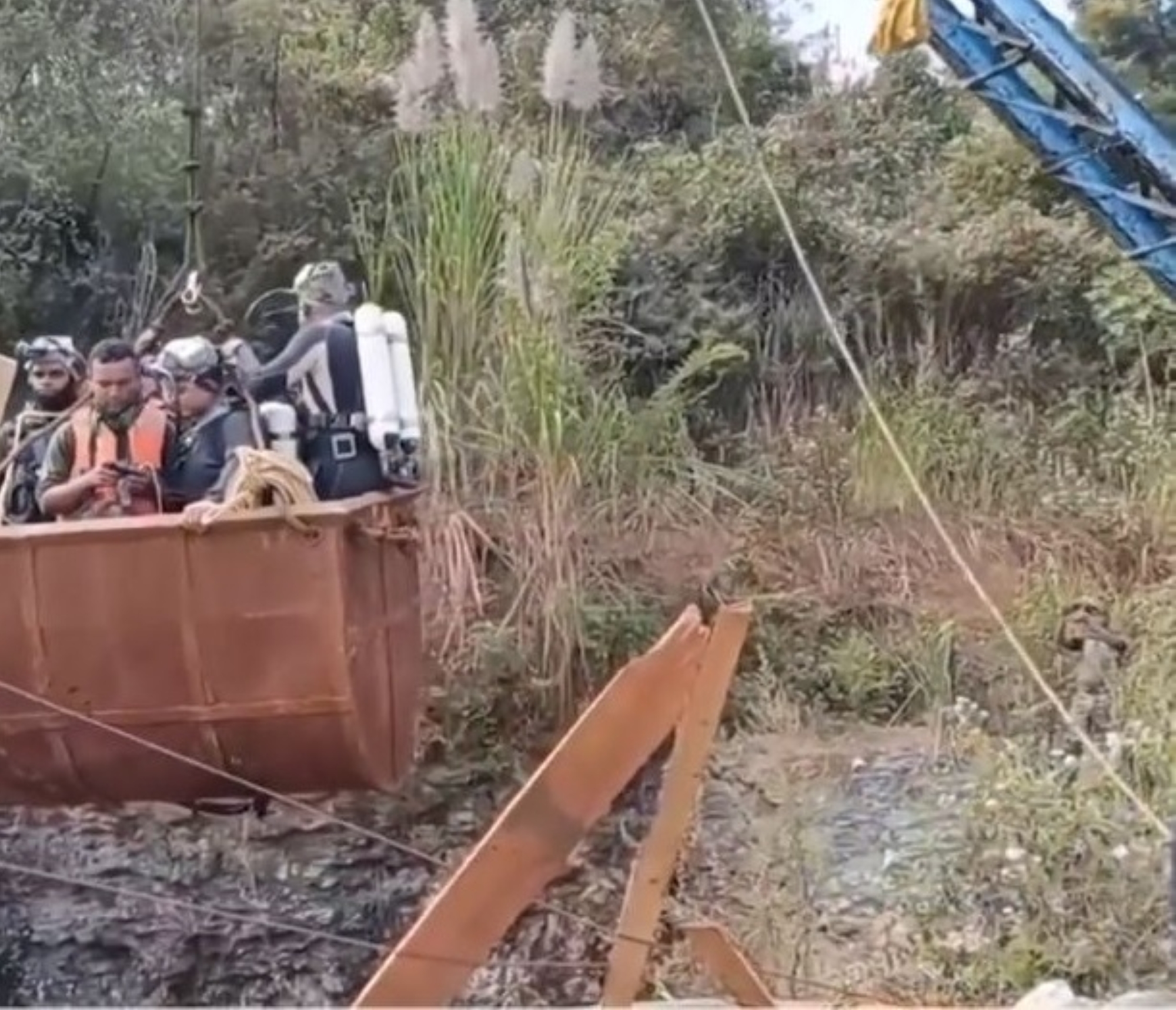
In yet another human tragedy added to the record of industrial disasters, at least 18 people were killed in a massive explosion at a mine in India. This horrific incident not only resulted in a heavy loss of life but also brought renewed attention to the occupational safety crisis and the serious risks faced by workers in the mining sector, one of the most vital and dangerous industries in the world.
Details of the terrifying moments and rescue efforts
According to initial reports from the scene, the explosion occurred suddenly, causing partial collapses and trapping workers under tons of rubble and in an atmosphere saturated with toxic gases. The disaster immediately claimed the lives of 18 workers, while rescue teams and local authorities continue their race against time to recover bodies and secure the site. Emergency teams are facing significant logistical challenges due to the terrain and the risk of further collapses, amid growing concern that the death toll could rise as there are still missing persons.
The Indian mining sector: A history of risks and challenges
To understand the scale of this disaster, it is necessary to consider the broader context of India’s mining sector. India is one of the world’s largest producers of coal and minerals, and its energy infrastructure is almost entirely dependent on this sector. However, this massive production often comes at a heavy human cost. Historically, the sector has suffered from a troubled safety record, with frequent incidents of roof collapses, flash floods, and explosions caused by methane gas leaks. Despite legislation such as India’s Mining Act, a significant gap remains between legal provisions and their practical application, particularly in older mines that lack modern ventilation systems and early warning technologies.
The difficult balancing act: Economy versus lives
Mining is the lifeblood of the Indian economy and a key driver of industrial growth, providing the fuel needed to generate electricity for millions of homes and factories. This strategic dependence creates immense pressure to increase production rates, sometimes leading operators to disregard strict safety protocols or operate mines beyond their safe capacity to cut costs. The tragic deaths of 18 people raise pressing ethical and economic questions about the need to reassess the balance between meeting rapidly evolving economic needs and guaranteeing workers' fundamental right to a safe working environment that protects their dignity and lives.
Expected repercussions and social responsibility
This explosion is expected to have widespread repercussions both domestically and internationally. Domestically, union and public demands will intensify for a comprehensive criminal investigation to hold those responsible accountable and ensure fair and swift compensation for the victims' families. Internationally, such incidents place India under the scrutiny of global human rights organizations, which consistently call for the adoption of stricter international safety standards. This disaster is not merely a statistic; it is a wake-up call demanding urgent action to modernize mine infrastructure and impose harsher penalties for safety violations to prevent the recurrence of such tragedies, for which ordinary workers pay the price.




Reports
Project Masam removes 2,100 landmines in Yemen: January 2026 report
A detailed report on the achievements of the Masam project in Yemen during the fourth week of January 2026, in which 2,100 mines and ammunition were removed in several governorates, bringing the total to more than 534,000.
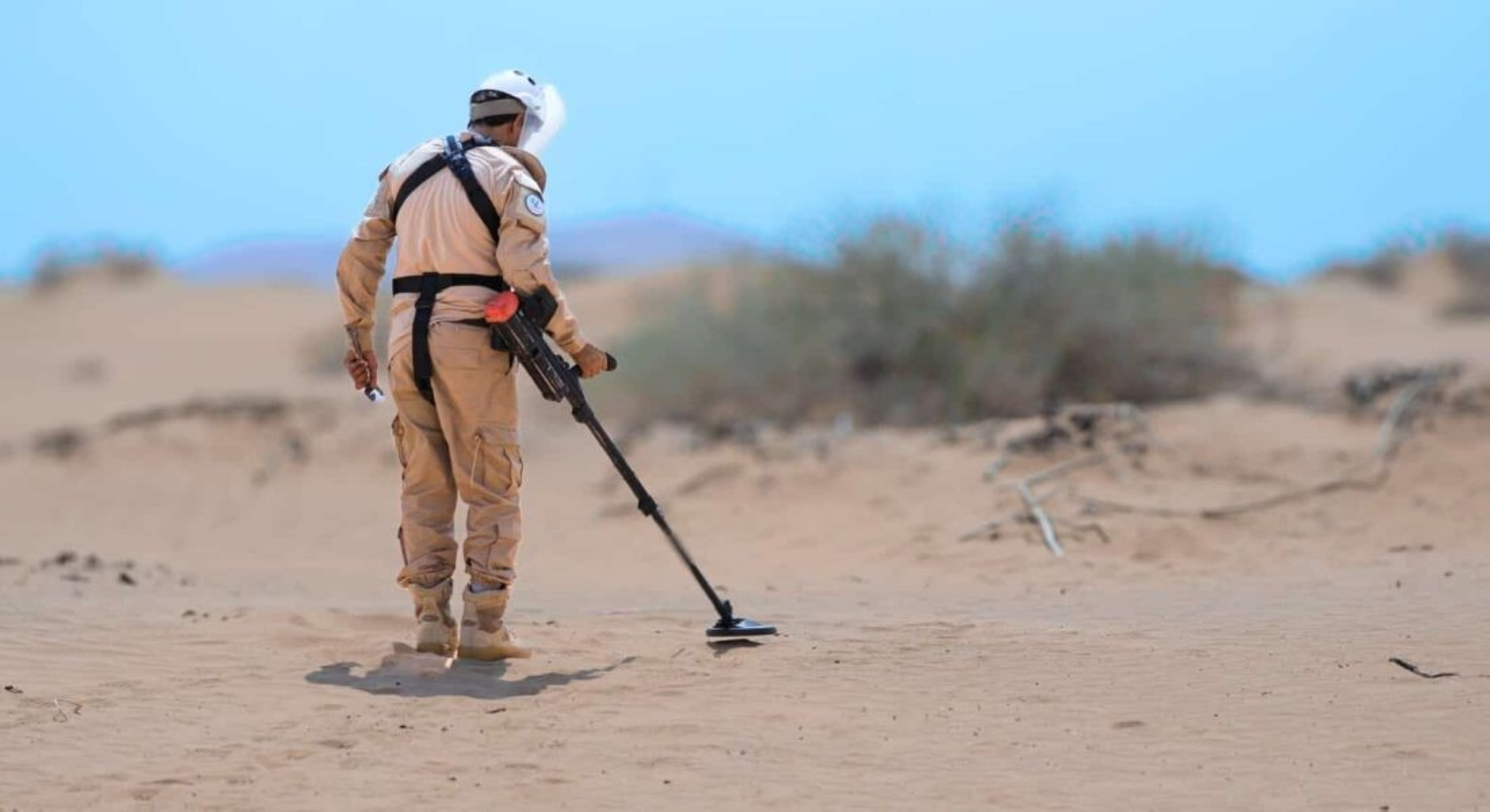
The King Salman Humanitarian Aid and Relief Center's "Masam" project continued its tireless efforts to clear Yemeni lands of war remnants, achieving new field successes that reflect its unwavering commitment to ensuring the safety of civilians. In its latest report, the project announced that its engineering teams, during the fourth week of January 2026, removed a total of 2,100 landmines, unexploded ordnance, and improvised explosive devices (IEDs) planted in various areas of liberated Yemeni governorates, thus increasing security levels and enhancing the prospects for restoring normalcy to these areas.
Context of the crisis and efforts to confront it
These operations come at a time when Yemen remains one of the most heavily mined countries in the world, a heavy legacy of years of conflict. These indiscriminately planted mines pose an existential threat to the lives of thousands of innocent people, especially women and children, and hinder development and the delivery of humanitarian aid. This underscores the importance of the MASAM project as a cornerstone of the humanitarian response led by the Kingdom of Saudi Arabia. Its role extends beyond the immediate removal of explosives to include securing vital roads, agricultural areas, and residential zones, thus paving the way for the return of displaced persons and reconstruction efforts.
Details of field operations and their geographical distribution
The project's technical reports detailed the materials handled and neutralized this week, including 31 anti-personnel mines, 7 anti-tank mines, and, most significantly, 2,000 pieces of unexploded ordnance and two high-explosive devices. These efforts were spread across a wide geographical area. In the interim capital, Aden, the Khormaksar district and other areas were cleared of hundreds of munitions. On the west coast, teams focused their efforts in Hodeidah Governorate, specifically in the districts of Hays and Al-Khawkhah, where they removed large quantities of ordnance and mines.
The MASAM project extended its reach to the eastern governorates, with Hadramawt witnessing intensive activity in the Al-Mukalla district, resulting in the removal of dozens of anti-personnel and anti-tank mines and a thousand pieces of unexploded ordnance. Operations also covered Hajjah Governorate (Midi district), Lahj (Al-Mudharabah district), and Ma'rib (Raghwan district), reaching as far as Taiz, where the districts of Dhubab and Salah were cleared of mines and various types of ordnance, reflecting the comprehensiveness of the project's operational plan.
Sustainable developmental and humanitarian impact
The significance of these figures extends beyond security considerations to achieve a tangible economic and social impact. Every mine removed means saving a life, reopening a road to a school or market, and enabling a farmer to safely return to cultivating his land. This meticulous engineering effort contributes to enhancing local food security and supporting the psychological well-being of Yemeni society.
Total accumulated achievements
In terms of overall figures, the number of explosive devices removed in January alone reached 2,800, while the total number since the launch of Project Masam has reached 534,800 mines, unexploded ordnance, and improvised explosive devices. This record number highlights the scale of the disaster that has been averted in Yemen and underscores the pivotal role played by the Kingdom of Saudi Arabia, through the King Salman Humanitarian Aid and Relief Center, in fostering hope and ensuring a secure future for our brotherly nation of Yemen.
Reports
Achievements of Saudi government sectors in 2025
A comprehensive review of the most prominent achievements of the government sectors in Saudi Arabia for the year 2025, and their impact on the economy and society within the objectives of the Kingdom’s Vision 2030.

the introduction
This report reviews the most prominent achievements of the government sectors in the Kingdom of Saudi Arabia during the year 2025, highlighting the tangible progress achieved in various vital areas, as a result of clear strategic plans and effective integration between government agencies.
The content reflects the scale of efforts made to enhance quality of life, improve the efficiency of services, support sustainable economic growth, and empower people, in line with the objectives of Saudi Vision 2030.
This presentation also provides a comprehensive picture, with figures and indicators, of the progress achieved in the education, transportation, health, economy, security, municipal services, and other sectors, confirming the path of national transformation and the tangible results it has produced on the ground.
Education sector
Global scholarship
Sending 1,080 male and female students to the best universities in the world to enhance competencies.
Academic expansion
Establishing 4 new scientific and technical colleges to support future specializations.
Intensive training
Training more than 55,000 male and female students in the latest skills.
Technology graduates
5,335 trainees graduated from specialized technical training programs.
International Awards
Achieving more than 400 international awards in various fields.
Comprehensive initiatives
Implementation of 45 educational and sports initiatives across the Kingdom.
Chinese language
Chinese language teaching in public schools to 55,916 students .
Achievements in international forums
Achieving more than 400 international awards and advanced positions in many international forums and Olympiads.
Infrastructure and Transport Sector
Huge investments
Launching infrastructure projects with investments exceeding 3.5 billion riyals .
International airports
Three Saudi airports ranked among the top 100 global airports .
Traveler service
Serving over 8.3 million passengers through enhanced services.
national air carrier
A national low-cost airline has been awarded a contract at King Fahd International Airport to enhance competitiveness and expand travel options.
Localization of transport and logistics
Empowering 49,000 citizens in transportation and logistics activities.
Self-driving vehicles
Launch of the first practical phase of operating self-driving vehicles in Riyadh.
Economic Resources Sector
- Increase the production of desalinated water to more than 16 million cubic meters per day .
- Adding 10,000 factories to the industrial sector to support economic diversification.
- More than 84,500 seabirds .
- Stimulating 40 quality investments worth 320 billion riyals .
- Receiving 240,000 international visitors to tourist and heritage sites.
- -Documenting more than endangered species
Additional indicators
- 16 educational and training institutions have received international accreditation in tourism education.
- More than 240,000 visitors to Al-Ula city, with an average expenditure of 2,100 riyals .
- Discovery of 13 new oil and gas fields and 12 new reservoirs.
- Achieving a score of 84.2% in the water security index.
Health and Social Development Sector
Advanced healthcare services
Expanding the provision of health services to more than 200 million electronic prescriptions via “Wasfati”.
an age-friendly city
Jeddah has been designated an age-friendly city.
Increased capacity
Adding more than 5,000 beds to health facilities.
community participation
860,000 volunteers benefited from community engagement programs.
social support
Empowering 77,000 beneficiaries of social support programs, by empowering them and developing their skills and capabilities.
Military sector
Military Industries Sector
Training 661 trainees within advanced military industries programs.
Global technical readiness
Achieving ninth place globally in the Geospatial Infrastructure Readiness Index (GKI).
Localization of industries
Promoting the localization of military industries and supporting national companies.
Colleges of the Future
Prince Sultan Military College of Health Sciences is among the top 100 research universities globally .
Supporting maritime security
Operating 5 combat vessels to support maritime security and border protection.
Security Sector and Administrative Regions
- Developing competencies through 9 new security courses .
- Launch of the Unified Security Operations Center (911) in Madinah.
- Launch of the “Tasreeh” to regulate Hajj and Umrah services.
- Launch of the Cyber Innovation Center to enhance digital security.
Public Administration Sector
Virtual Court
Activating the first phase of the virtual court.
Digital integration
Launching digital systems and services, including the electronic system for managing mosque affairs and documentation services via the “Najiz” application.
Customer service
The service provides 150,000 beneficiaries with AI-powered instant translation for more than 100 languages via the “Nesk” app.
Visa facilitation
More than 17 million visas during 2025.
Access
Allowing entry to citizens of 31 countries without a visa in support of the strength of the Saudi passport.
Municipal Services Sector
16M+
beneficiaries of municipal services
(housing and municipal)
90K+
families supported with housing support products
107K+
residential units and developed land
- Developing public spaces and historical sites to preserve heritage.
- 120 km of afforestation projects to enhance the urban environment.
- Developing the sacrificial animal and ritual system and operating 7 complexes throughout the year.
- Creating and developing parks with more than 2.5 million square meters .
-

 Local News 4 days ago
Saudi Arabia approves regulations for the continued presence of Gulf vehicles: duration and penalties
-
Local News 7 days ago
The Ministry of Interior begins procedures for a royal pardon for common law prisoners
-
Local news two days ago
Jeddah Airport alerts for travelers due to airspace closure and flight disruptions
-
Politics, one week ago
Trump plans to create a $2 billion alternative to the World Health Organization
-
Local News 6 days ago
The deadline for property registration in Hail and Riyadh is Thursday
-
Sports one week ago
Tickets for the Al-Ahli vs. Al-Hilal King's Cup match postponed: New date
-
Local News 6 days ago
Under the patronage of the Minister of Information, an agreement was signed between the Ministry of Information and Waves Marketing Company
-
Culture and Art 5 days ago
The Devil's Prisons series was halted: The full story of "The Emperor's" being moved to YouTube