Reports
Abdullah Diaby: Details of a fashion model being accused of stealing from a Soho store
Learn the details of the case of model Abdallah Diaby, accused of robbing the 4Gseller store in Soho, New York. The robbery, carried out while disguised as a construction worker, has sparked controversy in the fashion world.


In a dramatic turn of events reminiscent of a movie, young model Abdallah Diaby went from the spotlight and photo shoots to facing justice, after the New York Police Department announced his formal arrest in connection with a daring robbery targeting a luxury store in Manhattan's famous Soho neighborhood.
Details of the operation: 4 minutes of daring
US authorities arrested Diaby, 21, and charged him with serious offenses including first-degree aggravated robbery, burglary, and possession of stolen property. The arrest followed an extensive investigation, reported by the New York Post, citing high-ranking law enforcement sources, which revealed Diaby's involvement in a burglary at the 4Gseller store on Spring Street.
According to the criminal complaint and CCTV footage, the entire operation took only four minutes. The suspects arrived at dawn in a silver Ford, disguised as construction workers. The group, of which Diaby is believed to have been one of three, stormed into the store and seized a large quantity of jackets, bags, and belts from luxury international brands.
Hollywood scene in the heart of New York
Tommy Macari, the owner of the damaged store, described the incident as resembling "a scene from an action movie." In his testimony, he explained that the perpetrators didn't just commit a typical robbery; they threw the stolen goods from the store's balcony directly onto the street, where a car was waiting to load the loot and escape within minutes, demonstrating both premeditation and audacity.
Soho: A fashion hotspot and a target for thieves
This incident cannot be separated from its context; Manhattan's SoHo district is one of the world's premier luxury shopping destinations. Characterized by its historic buildings with cast-iron architecture, the district is home to some of the world's most prestigious fashion houses. This renown has made it a magnet not only for fashion enthusiasts and tourists, but also for organized crime groups targeting high-end goods that are easily resold on the black market.
This incident comes at a time when major American cities, including New York, are suffering from an escalating rate of organized retail crime, which poses an increasing security and economic challenge to both authorities and business owners, as stores incur huge annual losses that are pushing them to strengthen security measures to an unprecedented degree.
Legal path and uncertain future
On the legal front, Abdallah Diaby appeared before the Manhattan Criminal Court, where he pleaded not guilty to the charges against him. The court granted him bail, with the next hearing scheduled for March 18. The case has garnered significant media attention, particularly given the defendant's professional background and his previous employment with a modeling agency, which has remained silent and has not yet issued any official statement.
Between the glamour of the fashion world he belonged to, and the reality of the courts and criminal charges, the young man now finds himself facing a crucial turning point and a difficult legal test that may completely redraw the features of his future and end his career before it has even truly begun.


Reports
The United Nations warns of the dangers of electronic and plastic waste
A UN report reveals the health and environmental repercussions of the illegal trade in electronic and plastic waste, and calls for unifying laws and tightening penalties to combat smuggling.
The United Nations has issued a strong warning about the catastrophic consequences of illegal waste flows, specifically electronic, plastic and metal waste, pointing to the serious health and environmental damage inflicted on developing and low-income countries as a result of these practices.
In a recent and comprehensive report issued by the United Nations Office on Drugs and Crime entitled “Waste Crimes and Trafficking,” the organization highlighted five main categories that form the backbone of this illicit trade: electrical and electronic waste, plastic waste, used vehicles and engines, metal waste, and unclassified waste mixtures.
Reasons for the worsening crisis and loopholes in the law
The UN report concluded that a range of factors have transformed this illicit trade into a multi-billion dollar industry for criminal groups. Among the most prominent of these factors are significant legislative loopholes in international and domestic laws, limited law enforcement capacity to track shipments, the lack of accurate traceability of materials, and insufficient penalties for offenders.
In this context, Candice Welch, Director of Policy Analysis and Public Affairs at the United Nations Office on Drugs and Crime, stated: “Waste smuggling remains a very difficult challenge to detect, investigate and prosecute. This is not a theoretical challenge, but has serious consequences for public health, as it leads to toxic pollution of drinking water, oceans, soil and other areas.”.
International context and historical background
These warnings come at a time when the world is experiencing an unprecedented increase in consumption rates, leading to a surge in global waste. Despite international agreements such as the Basel Convention, which aim to limit the movement of hazardous waste between countries, traffickers exploit weak controls at ports and borders to smuggle toxic shipments under the guise of used goods or recycling materials.
The report noted that the lack of uniform laws and penalties worldwide makes it easier for potential traffickers to choose areas with less stringent laws and lighter penalties, turning some developing countries into dumping grounds for the developed world.
Health, environmental and economic impacts
The damage caused by this phenomenon is not limited to the environmental aspect, such as soil and groundwater contamination with heavy metals like lead and mercury, but extends to direct health risks. This waste is often burned or dismantled using rudimentary methods in receiving countries, exposing workers and local residents to toxic fumes that cause respiratory illnesses and chronic cancers.
The report highlighted a glaring economic and moral paradox: although illegal dumping, burning, and transportation of waste occurs worldwide, less valuable or more difficult and expensive waste to dispose of is systematically transferred from high-income to low-income areas, exacerbating the burdens on countries already suffering from weak health infrastructure.
Welch concluded by emphasizing that improving communication and data sharing regarding suspected routes, identifying weaknesses in the waste trade chain, and harmonizing crimes and penalties internationally are crucial for predicting and preventing illegal waste flows before disaster strikes.
Reports
Masam removes 2,676 landmines in Yemen: Week 3 of February
Project Masam successfully removed 2,676 landmines and unexploded ordnance in Yemen in one week, bringing the total to over 544,000. Learn more about the operations and the efforts of the King Salman Humanitarian Aid and Relief Center.
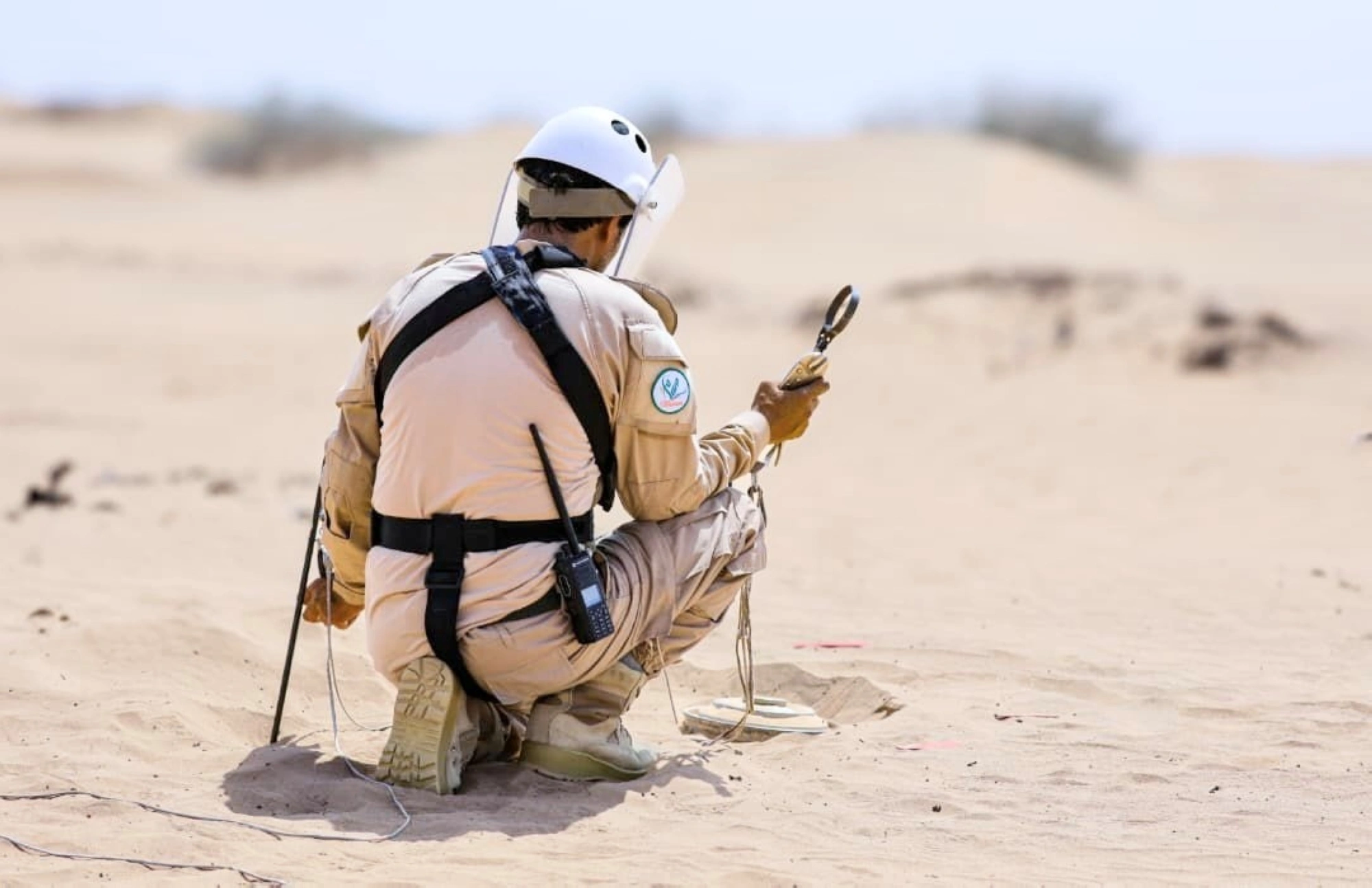
The King Salman Humanitarian Aid and Relief Center's "Masam" project for clearing Yemeni lands of mines continues to achieve its field successes, setting new records in protecting civilians and securing populated areas. In a new tally reflecting the scale of the efforts, the project's engineering teams were able to remove 2,676 mines, unexploded ordnance, and improvised explosive devices in various liberated Yemeni governorates during the third week of February.
Details of field operations and types of seizures
The project's operations room revealed details of the materials handled and neutralized during this period, encompassing a wide range of threats planted by hostile entities. The list included the removal of 17 anti-personnel mines, 149 anti-tank mines, 2,484 pieces of unexploded ordnance, and 26 improvised explosive devices, highlighting the dangerous diversity of deadly weapons encountered by engineering teams daily.
Geographical distribution of cleanup efforts
The efforts of the MASAM teams were concentrated in several vital governorates. In Aden Governorate, 246 pieces of unexploded ordnance were removed, while areas in Hays District, Hodeidah Governorate, were cleared of an anti-tank mine. In Hadramawt Governorate, specifically in Al-Mukalla District, the team achieved a significant accomplishment by removing 15 anti-personnel mines, two anti-tank mines, and 1,887 pieces of unexploded ordnance. Intensive activity also took place in Midi District, Hajjah Governorate, resulting in the removal of 141 anti-tank mines, 326 pieces of unexploded ordnance, and 26 improvised explosive devices.
The operations extended to include the Ragwan district in Marib and the Ain district in Shabwa. In Taiz governorate, one of the areas most affected by landmines, teams were able to clear mines and unexploded ordnance in the districts of Mocha, Dhubab, and Al-Salw, thus contributing to opening roads and ensuring the safe return of displaced persons.
Project importance and humanitarian context
These figures are particularly significant when considered within the broader context of the Yemeni crisis, where landmines and improvised explosive devices (IEDs) pose one of the most serious challenges to civilians and hinder the return to normalcy. The efforts of the MASAM project are a cornerstone of international humanitarian work in Yemen, as its role extends beyond direct mine clearance to include securing agricultural areas, schools, and water sources, thus paving the way for reconstruction and sustainable development.
Record tally enhances security and stability
With this weekly achievement, the total number of mines removed in February alone has risen to 6,682. Since its inception, the MASAM project has successfully cleared Yemeni lands of more than 544,000 mines and unexploded ordnance, which had been planted indiscriminately and camouflaged to target innocent women, children, and the elderly. This impressive figure underscores the commitment of the Kingdom of Saudi Arabia, through its humanitarian arm, the King Salman Humanitarian Aid and Relief Center, to continue this noble mission until a mine-free Yemen is achieved, enabling the Yemeni people to live in a safe and stable environment.
Reports
King Salman Relief Center's Ramadan aid includes 9 countries
The Kingdom continues its humanitarian efforts through the King Salman Relief Center by distributing thousands of food baskets and dates in 9 Arab, Islamic and friendly countries during the month of Ramadan in 2026.
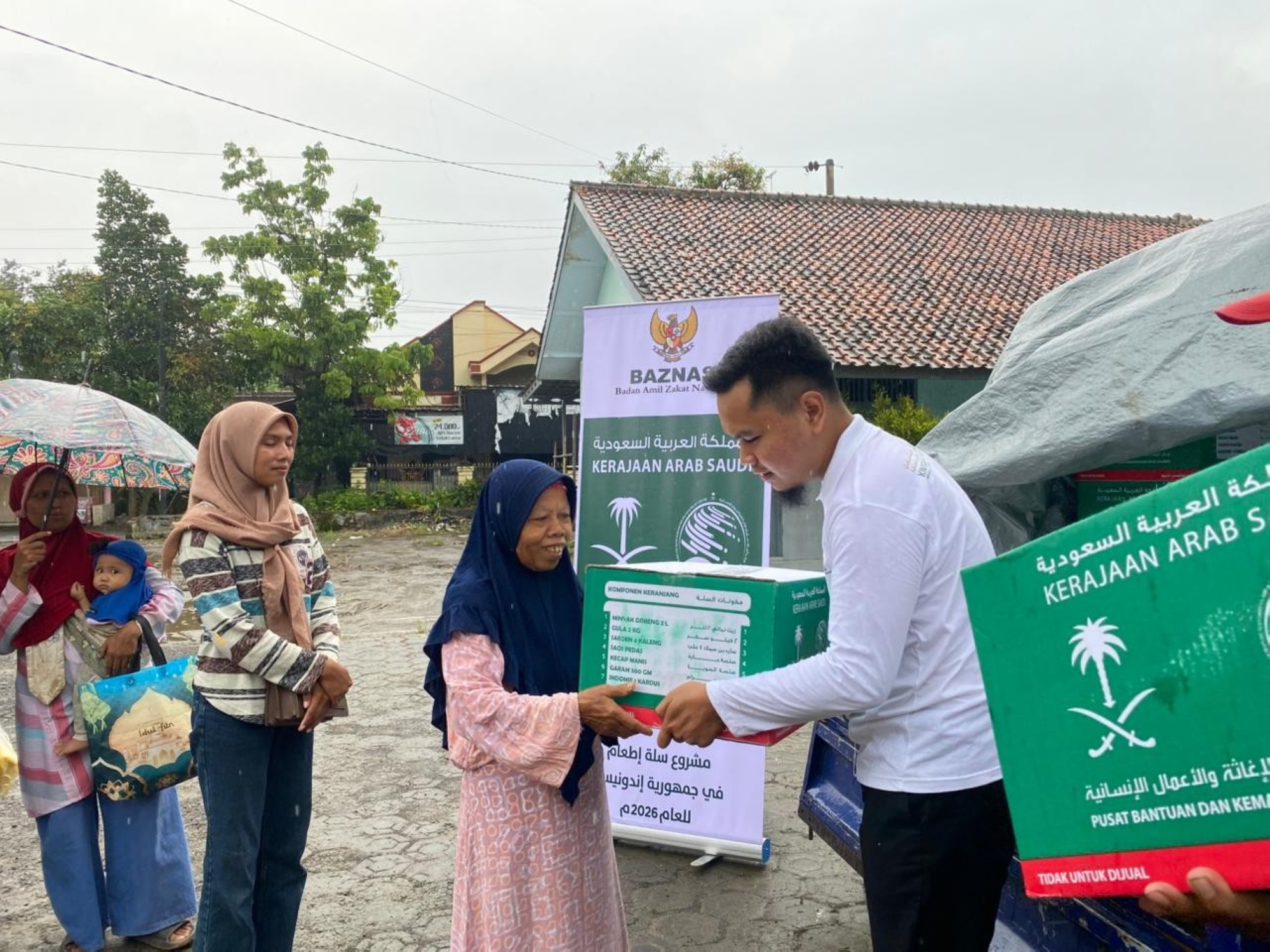
As part of its leading global role in humanitarian work, the Kingdom of Saudi Arabia continued to strengthen its relief efforts during the holy month of Ramadan 2026 through its humanitarian arm, the King Salman Humanitarian Aid and Relief Center. These efforts are an extension of the Kingdom's long history of generosity and giving towards Arab, Islamic, and friendly nations. The Center implemented a wide range of food initiatives targeting the most vulnerable groups in nine countries across Asia, Africa, Europe, and South America.
Saudi strategy to support global food security
This aid is not merely a seasonal initiative, but rather part of a comprehensive strategy through which the Kingdom aims to enhance food security and combat hunger in affected or high-risk areas. This move reflects the Kingdom's commitment to international conventions and Islamic values that promote solidarity, as the King Salman Humanitarian Aid and Relief Center operates according to precise mechanisms to ensure that aid reaches its intended beneficiaries, thus strengthening the bonds of friendship and brotherhood between the Kingdom and these countries.
Details of aid in Asia and Europe
The center has been very active in Asia and Europe. In Indonesia , it distributed 51 food baskets in Depok, West Java, benefiting 158 individuals as part of its "Food Basket" project. In Uzbekistan , 410 food baskets were distributed in the Sanat Gelar neighborhood of Urgench, benefiting 1,650 individuals, as part of a larger project aiming to distribute 6,060 baskets across 14 provinces.
In Europe, specifically in the Republic of Kosovo , 550 food baskets were distributed in the city of Mitrovica, benefiting 2,750 individuals, in addition to 200 baskets in the city of Klina in the province of Peja, benefiting 1,000 individuals, as part of the “Food Basket 5” project.
Bridges of goodwill extend to Africa
The African continent benefited greatly from this aid, with the center distributing 1,200 food baskets in Kumasi Province, Ghana Benin , 1,650 food baskets were distributed in the provinces of Koulen, Dangga, Borgo, Oyeme, and Mono, covering the needs of 9,900 people. The aid also extended to Niger, with the distribution of 898 baskets in the city of Maradi, benefiting 6,286 individuals.
Distributing dates: A symbol of Saudi generosity
Continuing its tradition of distributing dates, the Kingdom's generosity extended to Brazil , where the center distributed 1,504 cartons of dates in Mogí das Cruzes, São Paulo, benefiting 188 families from the host community and refugees, as part of a project to distribute 200 tons. In Chad , 345 cartons of dates were distributed in the N'Djamena region, benefiting 2,070 individuals.
In a related context, the Ministry of Islamic Affairs, Call and Guidance reinforced this movement by delivering the Custodian of the Two Holy Mosques’ gift of dates to Azerbaijan , amounting to 5 tons, benefiting about 500,000 people, which confirms the comprehensiveness and diversity of Saudi support channels.
-
Local news one week ago
Human Resources sets the date for the 2026 Founding Day holiday for both sectors
-

 Culture and Art, 1 week ago
The ban on the Hamdiya series in Iraq: Reasons and official response
-
Sports one week ago
Al-Shabab crushes Hadramout Solidarity 13-0 and qualifies for the Gulf Cup semi-finals
-
Sports one week ago
Club Brugge vs Atletico Madrid: Match date and Champions League play-off details
-
Local News 4 days ago
The Ministry of Interior begins procedures for a royal pardon for common law prisoners
-
Culture and Art, 1 week ago
Ramez Level the Monster promo: Prank details and list of victims this Ramadan
-
Culture and Art, 1 week ago
The series "Taht El Ard" (Underground) has been postponed and will not air during Ramadan 2026
-
Reports one week ago
King Salman Relief Center's Ramadan aid includes 9 countries