Politics
The Yemeni presidency supports the government in exercising its full powers
The Yemeni Presidential Leadership Council supports the government in achieving economic and security stability, with a focus on comprehensive reforms and improving public services.

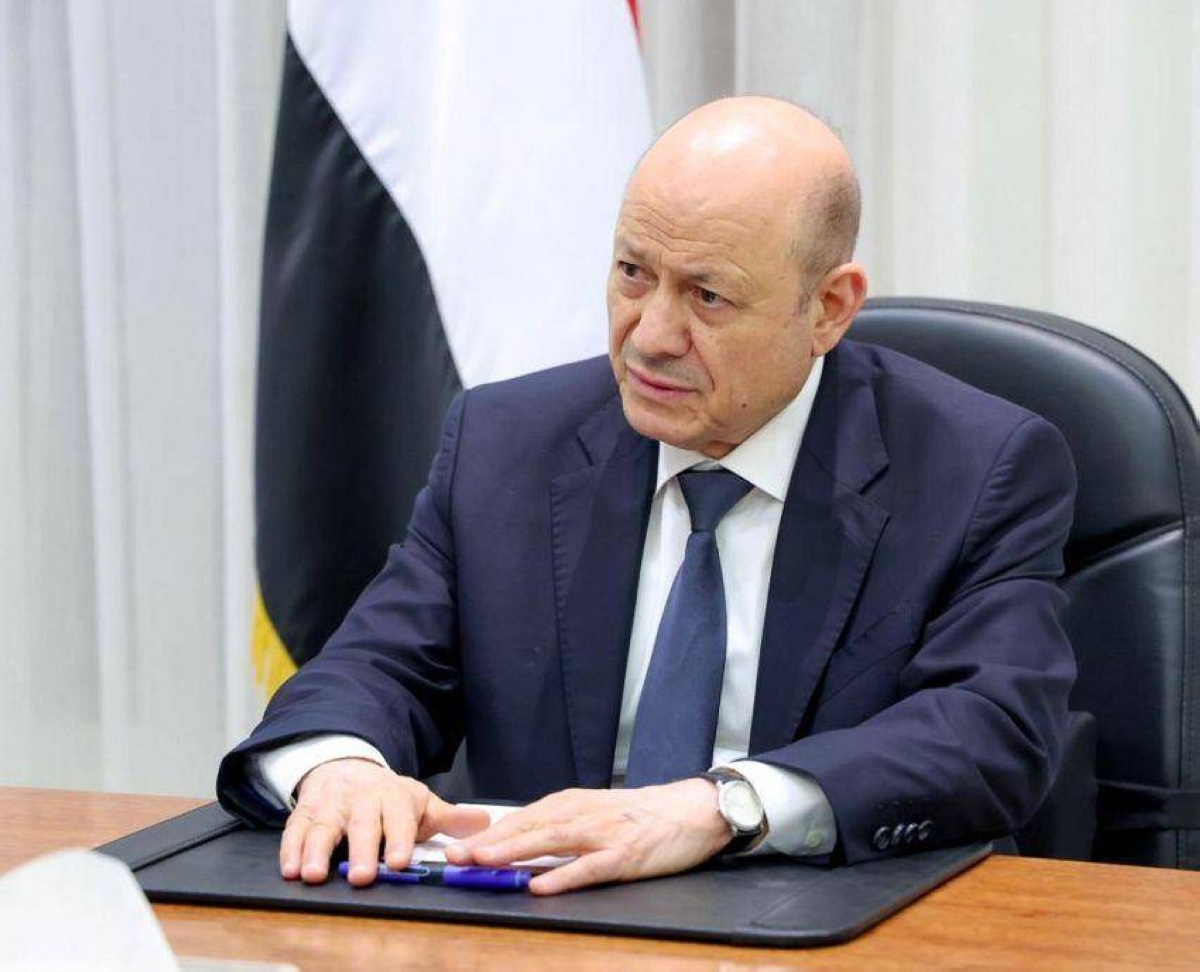
Yemen: The Presidential Leadership Council reviews economic and security developments
The Yemeni Presidential Leadership Council held an extraordinary meeting to discuss the latest developments in the country, focusing on the economic and security situation and the progress of comprehensive reforms. In this context, the Council commended the measures taken by the government and the Central Bank to achieve monetary and financial stability, as well as the efforts made to ensure the regular payment of state employees' salaries and improve the level of public services.
National recovery plan and strengthening donor confidence
These measures are part of a national recovery plan aimed at strengthening the donor community's confidence in the government and its institutions. This was demonstrated by the International Monetary Fund's announcement of the resumption of its activities in Yemen after an 11-year hiatus, reflecting a marked improvement in the country's economic and political environment.
The Council affirmed its support for the government's efforts to continue its reform program and enable it to exercise its full constitutional and legal powers. This support aims to enhance the government's ability to access all resources and improve the living conditions of citizens.
Commitment to partnership and national consensus
In a related context, the Presidential Leadership Council reaffirmed its commitment to the principle of partnership and national consensus, in accordance with the framework of the transitional phase, ensuring unity and strengthening the legal standing of the state. This commitment is part of the Declaration on the Transfer of Power and the rules governing the Council's work.
Regional support: The role of Saudi Arabia and the United Arab Emirates
The Presidential Leadership Council expressed its appreciation for the sincere and fraternal support of the Kingdom of Saudi Arabia and the United Arab Emirates for the economic and financial reform process and the implementation of recovery and development programs. It specifically noted the recent Saudi support for the general budget, which reflects the Kingdom's leadership's commitment to strengthening economic stability and alleviating the suffering of the Yemeni people.
This regional support clearly demonstrates the pivotal role that Saudi Arabia plays in supporting stability and development efforts in Yemen, enhancing its position as a reliable strategic partner in the region.
Analysis of the current situation and future prospects
Recent developments indicate tangible progress in Yemen's economic and political reform process, supported by close cooperation with brotherly nations and the international community. While security and economic challenges persist, the commitment to implementing reforms and achieving stability remains a key objective for the Yemeni government and the Presidential Leadership Council.
Achieving success requires concerted local and international efforts to support development and political and economic stability. Given these circumstances, optimism regarding Yemen's long-term future and stability remains cautious.




Politics
Jordanian Foreign Ministry summons Iranian chargé d'affaires to protest violations
The Jordanian Ministry of Foreign Affairs summoned the Iranian chargé d'affaires and handed him a strongly worded protest note, stressing that it would take all measures to protect the Kingdom's sovereignty and security.
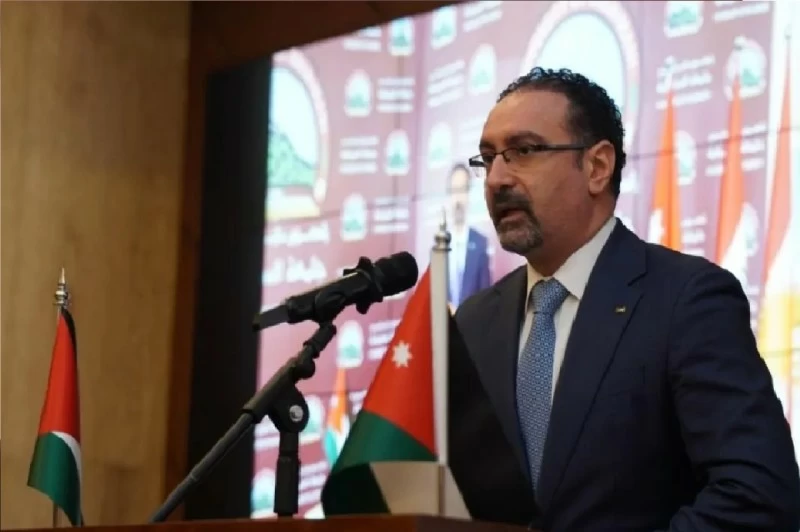
In a firm diplomatic move reflecting the Kingdom's unwavering stance on protecting its national security, the Jordanian Ministry of Foreign Affairs and Expatriates summoned the Chargé d'Affaires of the Embassy of the Islamic Republic of Iran in Amman yesterday (Sunday). During the summons, he was handed a strongly worded letter of protest addressed to his government, regarding the recent attacks targeting Jordanian territory and several other Arab states.
The Ministry, in its official statement, affirmed its absolute condemnation of these blatant violations, emphasizing that any infringement upon the sovereignty of Jordan or any Arab state is a red line that cannot be tolerated. The Ministry clarified that these attacks constitute a flagrant and clear breach of international law and the UN Charter, and represent a dangerous and unacceptable escalation that threatens the safety of innocent civilians and undermines the foundations of security and stability at both the regional and international levels.
In detailing the diplomatic meeting, the Ministry's official spokesperson, Ambassador Fouad Majali, stated that the Ministry informed the Iranian chargé d'affaires of the necessity for an immediate and complete cessation of all attacks and actions targeting Jordan, whether directly or indirectly. Majali emphasized the need for Tehran to respect the Kingdom's sovereignty, territorial integrity, and airspace, and to fully adhere to the rules of international law and the principles of good neighborliness that should govern relations between the countries of the region.
This Jordanian diplomatic move comes amid a highly tense regional context, as the Hashemite Kingdom of Jordan strives to distance itself from regional conflicts and consistently affirms that it will not become a battleground for any party. Amman views with grave concern attempts to drag the region into open conflicts, emphasizing that protecting Jordanian airspace and territory is a top priority for the Jordanian Armed Forces and security services.
Ambassador Majali concluded his remarks by stating that the Ministry had informed the Chargé d'Affaires in a decisive and unequivocal manner that Jordan would not hesitate to take all available steps and measures, including diplomatic, legal and security measures, to ensure the protection of its sovereignty and the security of its citizens, and would not allow its stability to be jeopardized under any pretext whatsoever, calling on the international community to assume its responsibilities in stopping the escalation that threatens global peace.
Politics
The Gulf Cooperation Council Ministerial Council: We reserve the right to respond to Iran
The Gulf Cooperation Council Ministerial Council, in an extraordinary meeting, affirmed its legal right to respond to Iranian threats, stressing that all measures will be taken to preserve Gulf security and sovereignty.
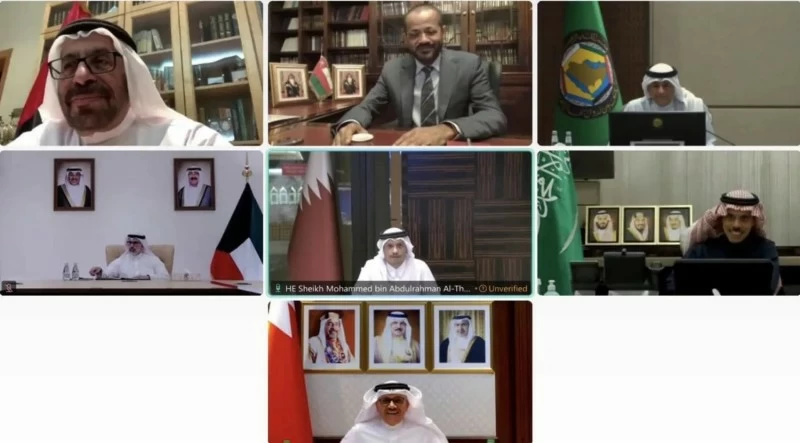
The Ministerial Council of the Cooperation Council for the Arab States of the Gulf affirmed, in a firm stance reflecting the unity of the Gulf ranks, that the member states of the Council retain their full legal right to respond to any attacks, and to take all necessary measures to ensure the preservation of their sovereignty, security and regional stability.
This came during the 50th extraordinary meeting of the Ministerial Council, held via video conference yesterday (Sunday), chaired by Dr. Abdul Latif Al-Zayani, Bahraini Foreign Minister and current chair of the Council. The meeting witnessed high-level participation, including Saudi Foreign Minister Prince Faisal bin Farhan, UAE Minister of State for Foreign Affairs Khalifa Shaheen Al Marar, Omani Foreign Minister Badr Al Busaidi, Qatari Prime Minister and Foreign Minister Sheikh Mohammed bin Abdulrahman bin Jassim Al Thani, Kuwaiti Foreign Minister Sheikh Jarrah Al-Jaber Al-Ahmad Al-Sabah, and the Secretary-General of the Gulf Cooperation Council.
Regional context and security challenges
This extraordinary meeting comes at a highly sensitive time for the Middle East, where geopolitical tensions are escalating, necessitating joint Gulf coordination at the highest levels. The Gulf Cooperation Council (GCC) states have consistently emphasized in their previous statements the importance of adhering to the principles of good neighborliness and international law, rejecting foreign interference in the internal affairs of states, and condemning any threats to maritime navigation and global energy security. This statement serves as a strongly worded diplomatic message affirming that legal and political options are available and guaranteed to defend the national and collective interests of the GCC states.
The importance of joint Gulf coordination
This unified stance is of paramount strategic importance, not only domestically but also regionally and internationally. Regionally, this declaration reinforces the principle of "collective security" upon which the Gulf Cooperation Council (GCC) was founded, which considers any threat to a member state a threat to the entire organization. Internationally, the stability of the Gulf region is a cornerstone of the global economy, given its pivotal role in energy markets. Therefore, the Council's assertion of its right to respond and maintain stability reassures the international community of a wise and decisive leadership capable of managing crises with prudence and competence, while adhering to international law as the fundamental framework for conflict resolution.
Politics
Trump calls on the Iranian military to surrender, and Central Command strikes 1,000 targets
Trump gives the Iranian Revolutionary Guard a choice between immunity or death, and the US Central Command announces the destruction of 1,000 targets and the killing of 3 US soldiers in a dangerous military escalation.
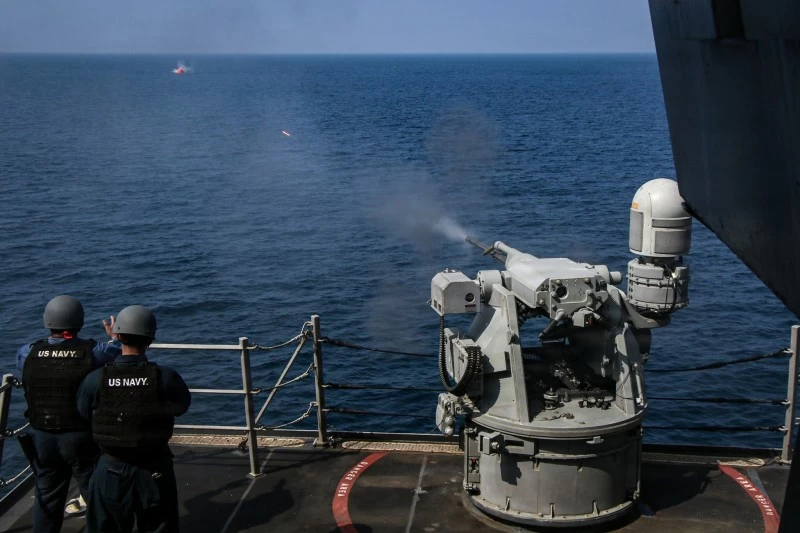
In an unprecedented escalation of direct confrontation, US President Donald Trump delivered a strongly worded message to Iranian military forces, giving them a choice between laying down their arms and gaining immunity or facing "certain death." These statements come as the US Central Command announced it had carried out large-scale strikes targeting Tehran's military infrastructure.
Direct message via "Truth Social"
In a speech broadcast on his platform, Truth Social, Trump addressed members of the Revolutionary Guard, the Iranian army, and the police directly, urging them to defect from the current regime. In his video message, Trump said, "America stands with you, and I call on the Iranian people to seize this historic moment and reclaim their country from the grip of the regime," adding that the opportunity for change is now greater than ever before.
American losses and vows of revenge
On the ground, the US president affirmed that military operations against Iran would continue until all strategic objectives were achieved. Trump revealed the human cost of these operations, noting the deaths of three US soldiers, with the likelihood of further casualties among American forces. Despite these losses, Trump emphasized in a resolute tone, "America will avenge its dead," asserting that the response would be severe and sustained.
Details of the large-scale military strike
In conjunction with the political threats, the US Central Command revealed the scale of the military strike, with reports indicating that US forces targeted more than a thousand vital sites. The list of targets included facilities belonging to the Islamic Revolutionary Guard Corps (IRGC), advanced air defense systems, and the destruction of nine warships and a major Iranian naval headquarters, suggesting a significant crippling of Tehran's naval and air capabilities.
Context of the conflict and historical background
This dangerous escalation marks the latest chapter in the ongoing tensions between Washington and Tehran, which have included multiple phases of economic sanctions and proxy wars. The United States has long considered the Iranian Revolutionary Guard Corps (IRGC) the most powerful arm of the Tehran regime, responsible for implementing its expansionist policies in the region. Trump's direct call for the regular forces to lay down their arms represents a shift in US strategy from economic pressure to direct incitement to dismantle the military establishment from within.
Potential regional and international repercussions
This development is expected to cast a long shadow over the regional landscape in the Middle East. Observers believe that targeting more than a thousand Iranian military sites could push the region to the brink of open conflict, directly impacting maritime security in the Arabian Gulf and global energy supplies. Furthermore, the message to the Iranian people could fuel internal unrest, placing the Iranian regime between the hammer of external military pressure and the anvil of internal turmoil.
-

 Local News 4 days ago
Saudi Arabia approves regulations for the continued presence of Gulf vehicles: duration and penalties
-
Local News 7 days ago
The Ministry of Interior begins procedures for a royal pardon for common law prisoners
-
Local news two days ago
Jeddah Airport alerts for travelers due to airspace closure and flight disruptions
-
Politics, one week ago
Trump plans to create a $2 billion alternative to the World Health Organization
-
Local News 6 days ago
The deadline for property registration in Hail and Riyadh is Thursday
-
Sports one week ago
Tickets for the Al-Ahli vs. Al-Hilal King's Cup match postponed: New date
-
Local News 6 days ago
Under the patronage of the Minister of Information, an agreement was signed between the Ministry of Information and Waves Marketing Company
-
Culture and Art 4 days ago
The Devil's Prisons series was halted: The full story of "The Emperor's" being moved to YouTube