Politics
Washington and Tel Aviv's plan for war on Tehran and targeting Khamenei
The New York Times revealed details of Washington and Tel Aviv's plan for war on Tehran, indicating the possibility of targeting Khamenei and Pezeshkian in a military operation that could last several days to strike the leadership.

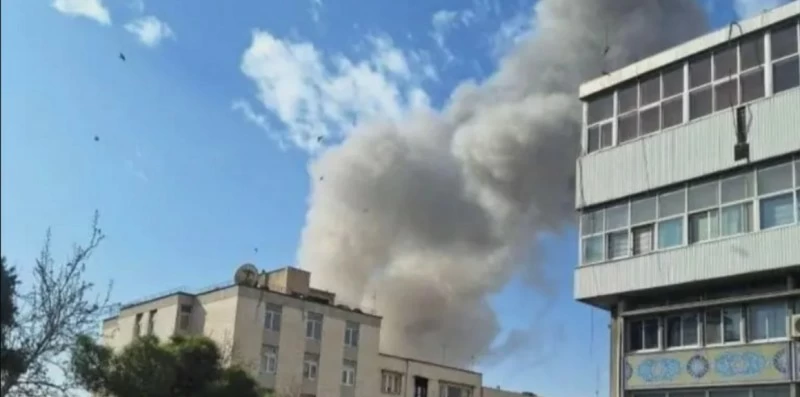
International press reports, citing information from The New York Times, have revealed detailed and serious aspects of military and intelligence coordination between Washington and Tel Aviv regarding a potential confrontation with Iran. According to Israeli officials, the military scenarios being considered for a war against Tehran are not limited to swift strikes; rather, the military operation is expected to last for at least several consecutive days, reflecting the complexity and extensive preparations required for this confrontation.
Sources confirmed that the meticulously drawn-up target bank included sites and locations described as extremely sensitive. These targets were not limited to military or nuclear facilities, but extended to top-tier figures in the Iranian regime. Reports mentioned high-profile names, most notably Supreme Leader Ali Khamenei and Iranian President Masoud Pezeshkian, indicating the adoption of a "decapitation" strategy aimed at crippling Tehran's command and control system from the outset.
First strike strategy and the element of surprise
In discussing the tactics employed, the American newspaper revealed that the central and pivotal objective of the initial wave of the attack was to target and neutralize as many Iranian political and military leaders as possible. This plan was based on an intelligence and military assessment that the element of surprise is the decisive factor in the battle, and that it diminishes very quickly after the initial strike. Therefore, the planners relied on launching an early, focused, and extremely violent attack before Tehran could absorb the shock, tighten security measures, or relocate its leadership to more fortified bunkers.
Informed Israeli sources expressed cautious optimism about the results of this strategy in its first wave, confirming the existence of initial "positive indicators," despite the lack of a definitive conclusion to the final results in light of the ambiguity of the military situation.
Background to strategic cooperation and repercussions of conflict
To understand the dimensions of this development, it is essential to consider the broader context of US-Israeli relations. Washington and Tel Aviv have long been partners in monitoring Iranian ambitions, with US Central Command (CENTCOM) and the Israeli military conducting regular exercises simulating multi-front war scenarios. This deep coordination stems from years of a "shadow war" waged between the two countries and Iran, encompassing cyberattacks, assassinations of scientists, and attacks on ships, now escalating into a direct and open confrontation.
These plans carry enormous geopolitical implications. Targeting the Iranian leadership is not merely a tactical military action; it represents a fundamental shift in the rules of engagement that could ignite the entire region. Analysts believe such moves could prompt Tehran to activate all its proxies and allies in the region in retaliation, threatening international maritime security and energy supplies, and placing the Middle East at a dangerous historical crossroads that could redraw the map of influence and power for years to come.




Politics
Kuwait summons Iranian ambassador to protest missile attacks
The Kuwaiti Foreign Ministry summoned the Iranian ambassador and handed him a strongly worded protest note in response to the targeting of Kuwaiti territory and Kuwait International Airport, affirming its full right to respond.
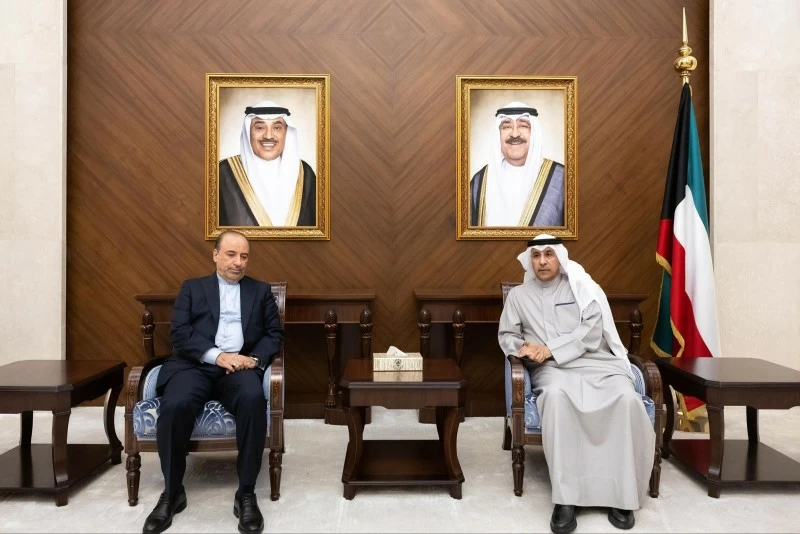
In a significant diplomatic and security development, the Kuwaiti Ministry of Foreign Affairs, represented by Acting Deputy Foreign Minister Ambassador Aziz Rahim Al-Daihani, summoned the Ambassador of the Islamic Republic of Iran to Kuwait, Mohammad Tutunji, on Saturday. This summons was to deliver a formal protest note in which Kuwait expressed its strong condemnation and denunciation of the attacks, which it described as heinous, targeting Kuwaiti territory with ballistic missiles and drones—a dangerous precedent that threatens the security and stability of the region.
Violation of sovereignty and international agreements
During the meeting, the Kuwaiti Ministry of Foreign Affairs affirmed that these attacks constitute a blatant violation of Kuwait's sovereignty and the inviolability of its territory and airspace. They also represent a clear breach of the UN Charter and the principles of international law governing relations between states and mandating respect for the sovereignty of neighboring countries. This Kuwaiti diplomatic move comes within the framework of official steps to document the attacks and reaffirm Kuwait's position rejecting any infringement upon its national security. Summoning the ambassador is considered one of the strongest diplomatic tools for expressing official outrage and demanding urgent clarifications and guarantees against recurrence.
Targeting civilians and Kuwait International Airport
In its protest note, the Ministry emphasized the gravity of targeting vital civilian facilities, specifically Kuwait International Airport. It explained that endangering civilian air traffic and targeting infrastructure serving civilians constitutes a clear and serious violation of international humanitarian law and the Geneva Conventions, which categorically prohibit attacks on civilian objects and criminalize endangering civilian lives. Targeting international airports carries serious implications that transcend political disputes, threatening the safety of global air transport and thus necessitating a firm international stance.
Regional dimensions and the legitimate right of reply
These developments are of paramount importance given Kuwait's strategic location in the Arabian Gulf region and its pivotal role in global energy markets. Any threat to Kuwait's security not only has domestic repercussions but also casts a shadow on regional stability and the security of energy supplies. In closing, the Ministry of Foreign Affairs reiterated Kuwait's full and inherent right to defend itself and protect its territory and citizens, in accordance with Article 51 of the UN Charter, which guarantees states the right of self-defense. The Ministry affirmed that it will take all necessary legal and diplomatic measures to deter such attacks and safeguard the country's security.
Politics
Regional war in the Middle East: Iran bombs the Gulf and the confrontation widens
Comprehensive coverage of the first day of the regional war in the Middle East. Iran launches missile strikes against five Gulf states with US and Israeli involvement in an escalation that surpasses the events of 2025.
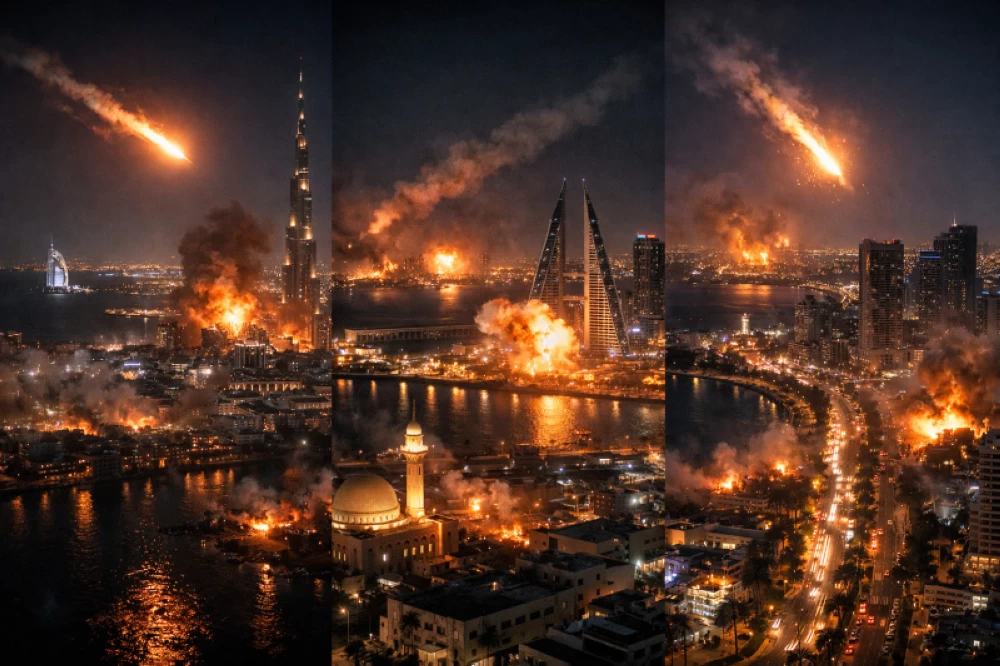
With the first hours of the new military confrontation in the Middle East, the region entered a pivotal phase, described as the most extensive and dangerous in many years. Field data and initial indicators suggest that the region is on the brink of an open confrontation that could extend for weeks, according to strategic sources monitoring the rapidly escalating situation. The conflict is no longer confined to the usual skirmishes; on its first day, the war took on a clear and comprehensive regional character, with the flames spreading to ten major countries: the United States, Israel, Iran, Iraq, Jordan, Saudi Arabia, the United Arab Emirates, Kuwait, Bahrain, and Qatar.
A qualitative shift in the rules of engagement
The most significant and dangerous development on the first day was Iran's direct missile strikes against five Gulf states, a move considered a radical shift in the rules of engagement and the context of the open confrontation with Israel and the United States. This direct Iranian escalation against the Gulf states moves the conflict from a phase of proxy wars or limited border skirmishes to a phase of full-scale war that threatens global energy security and the stability of the entire region.
Post-2025 context: Unprecedented escalation
This military escalation surpasses in intensity and scale all previous confrontations witnessed in 2025, as it appears that accumulated tensions and unresolved issues have reached a point of no return. The direct entry of the United States into this complex equation, alongside Israel and the Gulf states in confronting the Iranian axis, is redrawing the geopolitical map of the region. Analysts indicate that this broad military alignment reflects the failure of previous diplomatic solutions to contain the expansionist ambitions and mutual security concerns among regional powers.
Potential regional and international repercussions
This conflict is expected to cast a dark shadow over the global economy, particularly given the targeting of Gulf states that serve as the world's energy lifeline. The involvement of countries like Iraq and Jordan in the conflict expands the geographical scope of the confrontation, leaving the region facing a range of possible scenarios. Sources confirm that initial assessments indicate the military operations will not be swift but rather protracted, necessitating international mobilization to contain the crisis before it spirals completely out of control, amid fears of catastrophic consequences for international peace and security.
Politics
Saudi sovereignty: A statement of strength and the right to defend the homeland
An analytical reading of the Kingdom's statement on protecting its airspace and territory. Saudi Arabia asserts its sovereignty and rejects any infringement on its national security amidst escalating regional tensions.

The recent Saudi statement came as a declaration of a firm sovereign stance at a moment of widespread regional escalation. With the rise in military tensions, the recent transgressions have placed Saudi territory within the scope of the repercussions of military operations. At this critical juncture, the Kingdom's official discourse shifted from monitoring developments and calling for restraint to asserting its legitimate right to defend the state, its borders, and its airspace against any violation.
This shift takes on paramount importance when viewed within the context of the region's complex geopolitical landscape. Saudi Arabia, which has spearheaded intensive diplomatic efforts in recent years to resolve outstanding issues and focus on development within the framework of Vision 2030, now finds itself facing security challenges imposed by regional power struggles. The statement did not merely condemn the attack; it defined its nature as a direct aggression, a characterization carrying significant political and military weight in international law. It places the attack within the framework of a direct threat to national security, thus granting the Saudi leadership full legitimacy and the right to use all available means of force to protect its territory, population, and strategic and vital installations.
Historically, Riyadh has always sought to distance itself from direct military involvement in conflicts between regional powers (such as the Iranian-Israeli tensions), previously emphasizing the neutrality of Saudi airspace and territory from any military action. However, recent developments have demonstrated that neutrality does not equate to accepting violations of sovereignty. The state here speaks the language of sovereignty, the language of independent decision-making, and the language of organized power that will not compromise on the security of its citizens and residents.
On both regional and international levels, this stance sends multiple messages. Domestically, it reinforces confidence in the capabilities and readiness of the Saudi defense system. Regionally, it deters any party that might consider using Saudi airspace as a staging ground for settling scores, establishing a new deterrent equation: the Kingdom is not a corridor for military operations. Internationally, it reminds the international community of its responsibilities toward maintaining international peace and security, emphasizing that the Kingdom's stability is a cornerstone of the stability of energy supplies and the global economy, and that any threat to it will be met with a firm response guaranteed by international law.
-

 Local News 3 days ago
Saudi Arabia approves regulations for the continued presence of Gulf vehicles: duration and penalties
-
Local News 6 days ago
The Ministry of Interior begins procedures for a royal pardon for common law prisoners
-
Local news one week ago
19 requirements to reduce dust from projects in Riyadh and fines for violators
-
Politics, one week ago
Trump plans to create a $2 billion alternative to the World Health Organization
-
 Local news one week ago
Three billion riyals deposited as Ramadan aid for social security beneficiaries
-
Culture and Art, 1 week ago
Amr Diab appears with his four sons and a highly anticipated concert in Türkiye
-
Local News 5 days ago
The deadline for property registration in Hail and Riyadh is Thursday
-
Local news 12 hours ago
Jeddah Airport alerts for travelers due to airspace closure and flight disruptions