Politics
America announces the decapitation of the snake and the targeting of Khamenei and the Revolutionary Guard
The US Central Command announced the execution of a large-scale strike against the Iranian Revolutionary Guard and the targeting of the headquarters of Supreme Leader Ali Khamenei, describing the operation as cutting off the head of the snake.

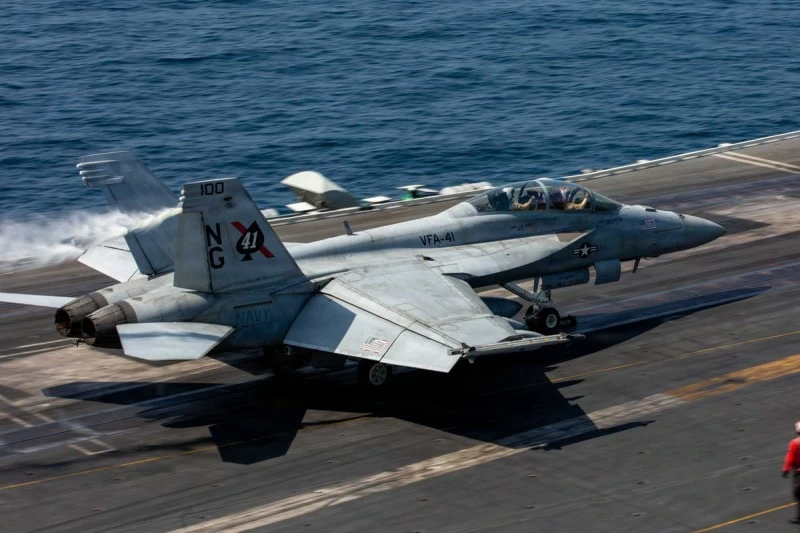
In an unprecedented military development signaling a radical shift in the rules of engagement, the US Central Command announced today (Sunday) the execution of a large-scale military operation dubbed "Decapitating the Snake." This announcement coincided with Iranian media reports confirming that Basij militia sites in Tehran had been subjected to intense attacks, signaling a dangerous escalation in the regional landscape.
Details of the US strike and the announcement of the Supreme Leader's death
In its official statement, U.S. Central Command detailed the operation, noting that the Iranian Revolutionary Guard Corps (IRGC) was responsible for the deaths of more than 1,000 American citizens over the past 47 years. The statement emphasized that yesterday's U.S. strike was decisive and wide-ranging, with the Command declaring: "America has the strongest military in the world, and the IRGC no longer has a command center.".
In a show of force, U.S. Central Command released a video on its official social media accounts documenting the bombing of the compound of Iranian Supreme Leader Ali Khamenei, confirming his death in the operation. The footage showed a barrage of precision missiles launched from U.S. warships and fighter jets, targeting a massive complex consisting of four security zones, resulting in the complete destruction of several key buildings within the compound.
The context of the historical conflict between Washington and Tehran
This operation comes within the context of a long history of tension between the United States and Iran spanning nearly five decades, specifically since 1979. Washington has long considered the Iranian Revolutionary Guard Corps (IRGC) the primary instrument for implementing Iranian policies in the region, and the United States previously designated it as a foreign terrorist organization. Successive US administrations accuse the IRGC of supporting armed groups in the Middle East and destabilizing the region, which explains the reference to "47 years" in the US statement as a symbol of the duration of the conflict since the Iranian Revolution.
Strategic importance and implications of the event
The term “decapitating the snake” carries profound strategic implications in military doctrine, referring to targeting the enemy’s top leadership to cripple its decision-making capacity. Targeting the Supreme Command headquarters in Tehran and Basij sites is not merely a military strike; it represents a shift in the regional balance of power. This event is expected to have seismic repercussions across the Middle East, potentially including changes in political alliances, direct impacts on global energy markets, and the possibility of widespread retaliation from Tehran’s regional allies.




Politics
Texas attack: 3 dead, 14 injured, gunman wearing Iranian flag
Details of a shooting in Austin, Texas, that left 3 dead and 14 injured. Police and the FBI are investigating a suspected terrorist act by a perpetrator wearing an Iranian flag. Here are the details.

The city of Austin, Texas, witnessed a bloody day, with at least three people killed and 14 others seriously injured in a horrific shooting on Sunday. Security forces were deployed to the scene, and initial assessments from the city's police and the FBI suggest the attack may have been an act of terrorism, given its nature and surrounding circumstances.
Details of the attack and the identity of the suspect
Western media outlets and multiple news reports indicated that the gunman who carried out the attack was wearing a shirt bearing the Iranian flag, immediately raising questions about the motives behind the attack. Fox News quoted law enforcement and FBI sources as saying that initial indications pointed to terrorism as a motive. Authorities identified the attacker as a 53-year-old American citizen of Senegalese descent. Media outlets and social media platforms circulated a photo of the suspect holding a rifle, suggesting that the attack was premeditated.
The security context and the challenges of armed violence
This incident comes at a time of heated and ongoing debate in the United States regarding gun control laws and the rising frequency of mass shootings. Texas is one of the states that has experienced several similar incidents in recent years, placing significant pressure on police and local authorities to ensure community safety. The FBI's early involvement in the investigation reflects the seriousness of the incident, as the agency typically handles cases involving national security or those with a domestic or international terrorist dimension.
Symbolic meanings and ongoing investigations
The fact that the perpetrator wore a shirt bearing the Iranian flag presents a complex challenge to the investigation, especially given the well-known geopolitical tensions. Investigators are currently examining the suspect's digital and social media background to determine whether he belongs to any extremist groups, or if this was an isolated act reflecting personal motives cloaked in political symbolism. Such investigations typically take time to ascertain the true motives and distinguish between individual criminal acts and organized terrorism. For now, medical efforts are focused on saving the lives of the 14 injured, while authorities continue to collect forensic evidence from the scene to uncover all the circumstances.
Politics
Urgent security measure: Israeli Wings of Zion plane moved to Berlin
Amid escalating regional tensions, German sources revealed that Israel has moved its official aircraft, "Wings of Zion," to Berlin Airport as a precautionary measure to ensure its safety from any attacks.

Amid an unprecedented escalation in the Middle East and strained relations between Iran, the United States, and Israel, German government sources revealed today (Sunday) that the official Israeli government plane known as "Wing of Zion" had arrived at Berlin Airport, in a move described by the sources as a precautionary security measure.
This move comes at a time when the region is in turmoil, especially with the news circulating about the killing of Iranian Supreme Leader Ali Khamenei, which has prompted Israeli authorities to take precautionary measures to protect their strategic assets.
Flight details and air route
According to multiple media reports, citing precise data from the global flight tracking service Flightradar24, the plane departed Israeli airspace on Saturday afternoon. Radar tracked the aircraft flying over the Mediterranean Sea, taking a safe route away from potential conflict zones, before heading north and arriving in Germany in the evening. The data indicated that the Israeli government had pre-booked the flight as part of its contingency plans, and security sources confirmed that the plane was carrying no political officials, only flight crew members.
Background on the "Wing of Zion" aircraft
The aircraft transferred, known in the media and officially as "Wing of Zion," is the Israeli version of the American presidential aircraft, Air Force One. It is a Boeing 767-338ER that has been equipped and modified over the years to serve the Prime Minister and the President on their official trips. The aircraft is fitted with advanced missile defense systems, as well as encrypted communication systems to ensure the Israeli leadership remains in constant contact with the outside world in emergencies.
The project for this aircraft has sparked widespread controversy within Israel for years due to its high cost and the delay in its entry into service. However, the security establishment insists on its importance as a symbol of sovereignty and as a strategic asset that must be protected, which explains the decision to evacuate it from the Nevatim base or Ben Gurion Airport to avoid it being targeted directly in the event of a large-scale missile confrontation.
The security and political dimensions of the event
The transfer of the aircraft to Berlin's Berlin Airport (BER) is a strong indication of the seriousness of Israeli concerns about its airports being targeted by ballistic missiles or drones. Countries typically move their valuable air assets to safety when military strikes are imminent. The choice of Berlin as the aircraft's destination also reflects the depth of strategic and security cooperation between Israel and Germany, with the German government providing logistical and security support to protect the aircraft within the hangars of its new airport.
The analysis indicates that this measure falls under the protocols of "continuity of governance," where means of transportation and leadership communication are secured to ensure that the movement of the political leadership is not paralyzed in the event of a deterioration in the security situation and the complete closure of the local airspace.
Politics
The UAE closes its embassy in Tehran and withdraws its ambassador in response to the attacks
The UAE officially announces the closure of its embassy in Tehran and the withdrawal of its diplomatic mission in response to Iranian missile attacks targeting civilian facilities, affirming its right to protect its sovereignty.

The United Arab Emirates announced today (Sunday), in a decisive diplomatic move, the closure of its embassy in the Iranian capital, Tehran, and the immediate withdrawal of its ambassador and all members of the diplomatic mission. This pivotal decision comes in response to what the UAE Ministry of Foreign Affairs described as blatant Iranian missile attacks that directly targeted the country's territory.
The Ministry of Foreign Affairs explained in its official statement that this strict measure was a result of the aggressive attacks targeting vital civilian sites, including populated residential areas, airports, ports, and essential service facilities. The statement indicated that these attacks placed the lives of innocent civilians in grave danger, in a dangerous and irresponsible escalation that constitutes a flagrant violation of Emirati national sovereignty and a clear and explicit breach of international law and the UN Charter, which criminalizes targeting civilian objects.
The context of regional tensions and the importance of the decision
This decision comes at a highly sensitive time for the Middle East, where Gulf-Iranian relations are a cornerstone of regional security. Withdrawing an ambassador and closing an embassy represents the highest level of diplomatic protest, indicating that relations have reached a critical juncture due to direct security threats. Historically, the Gulf Cooperation Council (GCC) states have sought to maintain diplomatic channels to ensure regional stability; however, targeting civilian infrastructure constitutes a crossing of red lines that cannot be tolerated under international norms.
Repercussions of targeting civilian facilities
Targeting airports and seaports poses not only a security threat but also carries global economic and logistical implications, given the UAE's status as a global trade hub and a center for the aviation and maritime transport sectors. International law experts affirm that launching military strikes against residential areas and service facilities constitutes a war crime, warranting widespread international condemnation and action from the UN Security Council to maintain international peace and security.
The UAE's firm stance
The Ministry of Foreign Affairs concluded its statement by affirming that “this decision embodies the state’s firm and unwavering stance in rejecting any aggression against its security and sovereignty.” It stressed that the continued aggressive and provocative approach by the Iranian side undermines any opportunities for de-escalation or dialogue, and pushes the entire region toward a state of instability and uncertainty, necessitating a serious international response to put an end to these practices that threaten energy security, navigation, and regional stability.
-

 Local News 4 days ago
Saudi Arabia approves regulations for the continued presence of Gulf vehicles: duration and penalties
-
Local News 7 days ago
The Ministry of Interior begins procedures for a royal pardon for common law prisoners
-
Local news one day ago
Jeddah Airport alerts for travelers due to airspace closure and flight disruptions
-
Politics, one week ago
Trump plans to create a $2 billion alternative to the World Health Organization
-
Local News 6 days ago
The deadline for property registration in Hail and Riyadh is Thursday
-
Sports one week ago
Tickets for the Al-Ahli vs. Al-Hilal King's Cup match postponed: New date
-
Local News 6 days ago
Under the patronage of the Minister of Information, an agreement was signed between the Ministry of Information and Waves Marketing Company
-
Culture and Art 4 days ago
The Devil's Prisons series was halted: The full story of "The Emperor's" being moved to YouTube