Politics
Britain and the Netherlands summon Iranian ambassadors over Gulf attacks
Diplomatic escalation: Britain and the Netherlands summon Iran's ambassadors in protest against targeting Gulf states, and Washington sets military targets to destroy Tehran's missile and naval capabilities.


In a move reflecting escalating diplomatic tensions between European capitals and Tehran, the British and Dutch foreign ministries summoned their respective Iranian ambassadors on Wednesday to protest what they described as Iran's destabilizing role and recent attacks targeting Gulf states. This coordinated action underscores the international community's growing impatience with Iranian policies in the region.
The British position: Holding Tehran accountable is essential
The British Foreign Office announced in an official statement that the Minister for the Middle East, Hamish Falconer, summoned the Iranian ambassador to London, Seyed Ali Mousavi, to the ministry. The statement explained that this move was a direct response to "Iran's role in recent developments in the Middle East." London asserted that the Iranian regime's actions constitute a "dangerous escalation" and an attempt to drag the entire region into a wider conflict, particularly by targeting countries that have not initiated attacks.
The ministry stressed that this escalation not only threatens the security of the region but also poses a direct danger to hundreds of thousands of British citizens residing in the Gulf states, asserting firmly that “Iran must be held accountable for its actions.” As a precautionary measure, Britain temporarily withdrew some of its staff and their families from its embassy in Bahrain, while confirming that the embassy remains operational—a move reflecting the seriousness of the potential security risks.
European coordination and a firm Dutch stance
In tandem with the British move, the Netherlands took a similar step, with Dutch Foreign Minister Tom Berendsen announcing the summoning of the Iranian ambassador in Amsterdam. This summons came in response to Iranian attacks on Gulf states, demonstrating a high level of European coordination to counter Iranian threats and deliver a unified diplomatic message to Tehran.
United States: Clear military objectives
Across the Atlantic, the American position appeared more assertive and leaning toward a military option. US Secretary of State Marco Rubio stated that the United States was steadily progressing toward achieving its objectives in its military operation in Iran. Rubio, speaking on the “X” platform, precisely defined these objectives, indicating that they included “destroying missile launch sites, missile factories, and the Iranian navy,” to ensure that Tehran could not use these facilities as a cover for developing a nuclear weapon.
Evacuation of citizens and the repercussions of the crisis
Indicating the gravity of the situation on the ground, Assistant Secretary of State for Global Affairs Dylan Johnson revealed staggering figures for evacuations: more than 17,500 American citizens have returned to the United States from the Middle East since February 28, including more than 8,500 who returned yesterday alone. Johnson noted that others have left for Europe and Asia, reflecting growing concern about a full-blown conflict that could have catastrophic consequences for international peace and security.




Politics
Aboul Gheit warns Iran: Your attacks are a strategic mistake that deepens the rift
Ahmed Aboul Gheit condemns Iranian attacks on Arab countries, describing them as a strategic mistake that violates good neighborliness and threatens to expand the circle of conflict in the region.
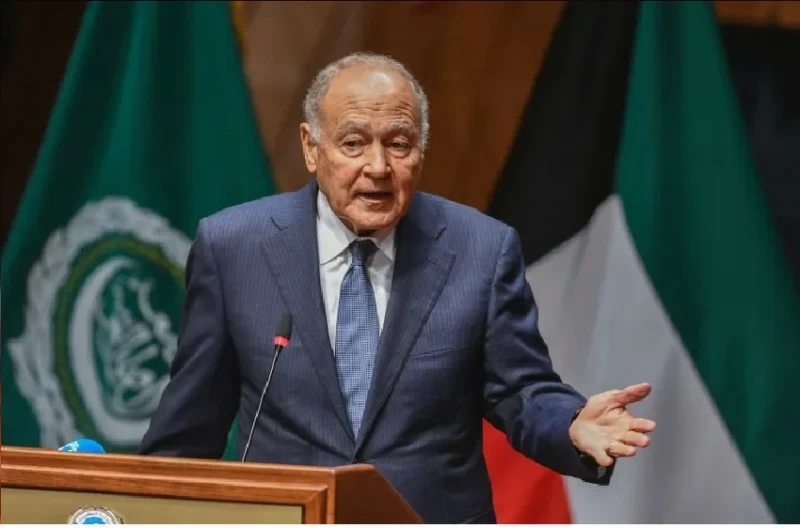
In a significant diplomatic escalation reflecting the extent of Arab concern over recent developments, the Secretary-General of the Arab League, Ahmed Aboul Gheit, issued a strongly worded warning to Tehran, describing the recent Iranian attacks targeting Arab countries as a grave "strategic mistake." These statements, made on Wednesday, express the Arab League's rejection of any infringement upon the sovereignty of its member states, emphasizing that such actions only serve to deepen the existing rift between Iran and its Arab neighbors.
A blatant violation of the principles of good neighborliness
In elaborating on the Arab position, Secretary-General Ahmed Aboul Gheit explained in a press statement published on the “X” platform that the danger of these attacks lies not only in their blatant violation of international law and the UN Charter, but also in their striking at the very heart of the principles of “good neighborliness” that should govern relations between riparian and neighboring states. He pointed out that these practices create an unprecedented level of hostility and tension, making bridging the gap between the two sides extremely difficult in the future. He warned that the repercussions of these attacks will leave deep scars on the memory of regional relations.
Regional context and risks of conflict expansion
Aboul Gheit's remarks come at a time of highly complex geopolitical tensions in the Middle East, with growing international and regional fears of the region sliding into a full-blown war. In this context, Aboul Gheit highlighted a crucial point concerning attempts to "drag the region" into conflicts in which it is not a party. He emphasized that while everyone is aware of the pressures and hardships Iran may face in its current conflicts, this does not give it any moral or political justification to target neighboring Arab states that are striving to distance themselves from the flames of war. Analysts indicate that this stance reflects the Arab League's strategy of keeping Arab states neutral in international conflicts and protecting their national security from any external repercussions.
A call to rectify the situation before it's too late
The Secretary-General of the Arab League concluded his remarks with a clear warning, cautioning against the dangers of widening the current conflict. He stressed that Tehran's continued pursuit of this course without immediate review and course correction with the targeted countries could lead to dire and irreversible consequences. This appeal represents a final opportunity to prioritize reason and shared interests, as Aboul Gheit emphasized the necessity for the Iranian side to "wake up" and immediately cease its attacks to prevent the region from reaching a point of no return in diplomatic and security relations.
Politics
The White House confirms Khamenei's death and is monitoring Mojtaba's succession
The White House announces the killing of Iranian Supreme Leader Ali Khamenei and 49 commanders in Operation Epic Wrath, and confirms that Mojtaba Khamenei is being monitored as a possible successor amid the destruction of military capabilities.

In an unprecedented military and political development, the White House officially announced Wednesday the success of large-scale military operations targeting command and control centers in Iran, resulting in the deaths of 49 high-ranking leaders, including Iranian Supreme Leader Ali Khamenei. This announcement coincided with reports from Iranian media of loud explosions that shook northern Tehran, as well as the cities of Yazd and Tabriz in central and northwestern Iran.
Details of Operation "Epic Wrath" and its results
During a press conference, White House spokeswoman Carolyn Leavitt revealed details of the operation, dubbed "Epic Wrath." Leavitt confirmed that the joint US-Israeli strikes achieved "significant results" and exceeded their planned objectives, inflicting widespread damage on the Iranian regime's leadership structure and military capabilities. She explained that the timing of the strike was extremely precise, based on confirmed intelligence regarding the whereabouts of Supreme Leader Ali Khamenei, leading to his assassination and the end of his long reign.
Mojtaba Khamenei under American scrutiny
In discussing the post-Khamenei era, the spokesperson indicated that the United States is closely monitoring internal developments in Tehran, noting intelligence reports suggesting that Mojtaba Khamenei, the late Supreme Leader's son, is the most likely candidate to succeed his father. She emphasized that US intelligence agencies are observing this matter with extreme caution, given its significance in shaping the future of Iranian politics and the regime's direction.
The diplomatic track has failed, and confrontation is inevitable
The White House addressed the background to this military escalation, with Levitt explaining that American negotiators had reached an impasse after Tehran rejected all US offers regarding its nuclear program. She stated that the Iranian regime categorically refused to abandon uranium enrichment or engage in a genuine peace process, reinforcing Washington's conviction that Tehran was less interested in a settlement than in buying time to develop a nuclear weapon, thus necessitating a decisive response.
The Trump administration's stance and the future of the region
The US administration, through its spokesperson, emphasized that President Donald Trump will not allow Iran to rebuild its military capabilities or pose a new threat to the United States and its allies. It indicated that the military operation was a preemptive step taken after detecting Iranian offensive intentions, asserting that the strategic objective of eliminating the immediate threats had been achieved. Observers suggest that this event will trigger a geopolitical earthquake in the Middle East, as the killing of the head of the Iranian regime presents the region with open-ended scenarios and reshapes the regional and international balance of power for years to come.
Politics
Kuwaiti Interior Ministry arrests individuals who insulted the army and international relations
The Kuwaiti Ministry of Interior announced the arrest of 3 people on charges of insulting the armed forces and air defense, and publishing content that harms international relations and promotes terrorist organizations.


In a move reflecting security vigilance and firmness in enforcing the law, the Kuwaiti Ministry of Interior announced that the competent security agencies were able to arrest three people involved in cases affecting the internal security of the state and its foreign relations, by exploiting social media platforms to publish legally criminalized content.
Details of the abuse against the military establishment
In the first incident, authorities successfully identified and apprehended two individuals who had posted videos on their personal accounts containing explicit statements and images that mocked and belittled the efforts of the Kuwaiti Armed Forces. The content specifically focused on attempting to diminish the efficiency and efforts of the Kuwaiti air defense system in fulfilling its sacred national duty of protecting the country's airspace.
Following immediate investigations, the suspects were identified and apprehended. When confronted with the evidence, they confessed to filming and publishing the material, leading to their detention pending referral to the appropriate authorities for legal proceedings.
Exploiting social media to harm international relations
In a related incident, security forces apprehended a third individual after monitoring his suspicious activity on social media. The suspect used one of his accounts to post statements that were offensive and damaging to Kuwait's international relations, a clear violation of laws criminalizing actions that disrupt relations with sisterly and friendly nations.
Moreover, the profile of the accused's account included pictures of leaders of organizations classified as terrorist, which adds a serious security dimension to his behavior and requires firm intervention to deter such extremist tendencies.
The legal context and the importance of preserving the prestige of the state
These security measures are part of Kuwait's commitment to enforcing its cybercrime law and state security laws, which establish red lines that cannot be crossed, particularly concerning the military, the nation's shield and impregnable fortress. Maintaining the prestige of the armed forces is not merely a legal procedure, but a national imperative to ensure the stability of the home front and bolster the morale of the soldiers stationed on the front lines.
The swift action against those who abuse international relations also reflects Kuwait’s unwavering commitment to its balanced foreign policy and its categorical rejection of using its territory or digital platforms as a launching pad for insulting other countries or promoting extremist ideology.
Official warnings and national responsibility
The Ministry of Interior concluded its statement by emphasizing the necessity for all citizens and residents to adhere to the laws and regulations governing the use of social media. The Ministry warned against the consequences of publishing or sharing any content that could harm military and security institutions or damage the state's higher interests and diplomatic relations, urging everyone to bear their national responsibilities, especially in light of the current regional circumstances that require solidarity and a high level of public awareness.
-

 Local News 7 days ago
Saudi Arabia approves regulations for the continued presence of Gulf vehicles: duration and penalties
-
Local news one week ago
The Ministry of Interior begins procedures for a royal pardon for common law prisoners
-
Local news one week ago
The deadline for property registration in Hail and Riyadh is Thursday
-
Local News 6 days ago
The Food and Drug Administration is recalling Bebelac and Aptamil milk due to potential contamination
-
Culture and Art, 1 week ago
The Devil's Prisons series was halted: The full story of "The Emperor's" being moved to YouTube
-
Local news one week ago
Under the patronage of the Minister of Information, an agreement was signed between the Ministry of Information and Waves Marketing Company
-
Local News 6 days ago
Saudi Energy: A new identity for electricity that aligns with Vision 2030
-
Local news one week ago
Registration is now open for domestic pilgrims for the 1447 AH season: Dates and conditions via Nusuk