Politics
Partial closure of UAE airspace: Details of the decision and its impact
The General Civil Aviation Authority announced the partial closure of UAE airspace as a precautionary measure. Learn more about the decision and its impact on flights in light of the security developments.



The UAE General Civil Aviation Authority (GCAA) has announced a decisive decision to temporarily and partially close the country's airspace as an exceptional precautionary measure. This strategic decision aims to ensure the highest levels of safety for flights and crews, as well as to protect the country's territory and sovereignty, in light of the recent escalation of security developments in the region.
Comprehensive security risk assessment
The authority confirmed in its official statement that this decision was not made arbitrarily, but rather based on a comprehensive and thorough assessment of current security and operational risks. This step was taken in full and continuous coordination with all relevant local and international entities. The authority emphasized that the safety of the UAE's airspace and its air sovereignty are of paramount importance and cannot be compromised, and that the standards in place exceed the basic requirements to ensure the airspace remains free of any potential threats.
Regional context and importance of the decision
This measure comes in a tense regional context, where geopolitical developments pose significant challenges to the civil aviation sector in the Middle East. Historically and legally, states are obligated under the International Civil Aviation Organization (ICAO) conventions to take immediate measures to protect civil aviation whenever there are indications of instability in the surrounding airspace. This decision reflects the UAE's commitment to its international responsibilities as one of the world's leading aviation hubs, prioritizing the safety of lives above all commercial or operational considerations.
The impact of the decision and the UAE's position as a global hub
Given the UAE’s strategic location as a vital link between East and West, and as home to some of the world’s largest airlines, any modification to airspace protocols receives widespread international attention. This precautionary measure reflects the high level of transparency with which UAE authorities engage with the international community and the aviation sector, reinforcing confidence in the country’s air safety and security system despite surrounding regional challenges.
Guidelines for travelers and the public
In its commitment to passenger comfort, the authority clarified that it will continue to keep relevant parties and the public informed of any developments as soon as they occur, with complete transparency. It reiterated its call for all passengers to contact their airlines directly to stay updated on any changes to flight schedules.
The authority also reassured the public, confirming that airlines and local authorities will provide necessary accommodation and sustenance for affected passengers, reflecting a high level of preparedness to handle emergency situations. In closing, the authority emphasized that the safety of passengers and flight crews remains its top priority, expressing its appreciation for everyone's cooperation and understanding during these exceptional circumstances, and urging the public to obtain information only from official and accredited sources to avoid rumors.




Politics
Qatar intercepts missile attacks and affirms internal security stability
The Qatari Ministry of Defense announced that it had thwarted attacks targeting its territory, coinciding with regional tensions, while the Ministry of Interior confirmed the stability of the situation and called for not being swayed by rumors.

The Qatari Ministry of Defense announced today (Saturday) that its armed forces successfully thwarted a number of attacks targeting the country's territory, confirming that the defense systems dealt with the threats with high efficiency and were able to neutralize them before they reached their targets, amid escalating military tensions in the region.
High defensive readiness and immediate response
The Ministry explained in an official statement that the interception was achieved thanks to high combat readiness and continuous security vigilance, in addition to effective joint coordination among all relevant authorities in the country. It noted that the threat was addressed immediately upon detection by radars and early warning systems, in accordance with the pre-approved security plan for dealing with such scenarios. All hostile missiles were intercepted outside populated areas and before reaching Qatari territory, thus preventing any damage.
A tense regional context and the repercussions of events
This security incident comes at a highly sensitive time for the Middle East, as reports indicate that these attempts coincided with the US-Israeli attack on the Islamic Republic of Iran. The region is experiencing a state of heightened anticipation and caution due to the escalating military tensions, posing security challenges to neighboring countries. Qatar's success in countering these attacks underscores the importance of investing in advanced air defense systems and providing continuous training for its armed forces to protect national sovereignty and ensure the stability of energy supplies and maritime navigation in this vital region of the world.
Interior Ministry assurances and stability of the home front
For its part, the Qatari Ministry of Interior moved quickly to reassure the public, announcing that the security situation in the country is stable and completely secure at present. The Ministry affirmed that it is monitoring regional and local developments around the clock, in full coordination with the armed forces and other security agencies. In its statement, the Ministry emphasized that there are no indications that warrant concern regarding internal security, and that life is proceeding normally throughout the country.
The Ministry of Interior added that the relevant authorities are working within a comprehensive field and operational system to ensure the maintenance of public security and the safety of all citizens, residents, and visitors, while guaranteeing the continuity of all vital services without any disruption. The Ministry urged the public to obtain information only from official sources and to avoid being misled by rumors or sharing videos and messages of unknown origin that may aim to destabilize the community.
US Embassy warnings
In a related development, diplomatic missions reacted to the events, with the US Embassy in Doha issuing a warning to its citizens and staff, urging them to remain at home until further notice. The embassy explained that it was implementing a "stay-at-home" policy as a precautionary measure for all its employees, and advised American citizens to follow the same procedures to ensure their safety in light of the evolving regional situation.
Politics
Israel launches preemptive strike against Iran: Details of the new escalation
Israel announces a preemptive strike against Iran amid explosions in Tehran. Defense Minister Israel Katz confirms the operation, and a US official reveals preparations for further strikes.
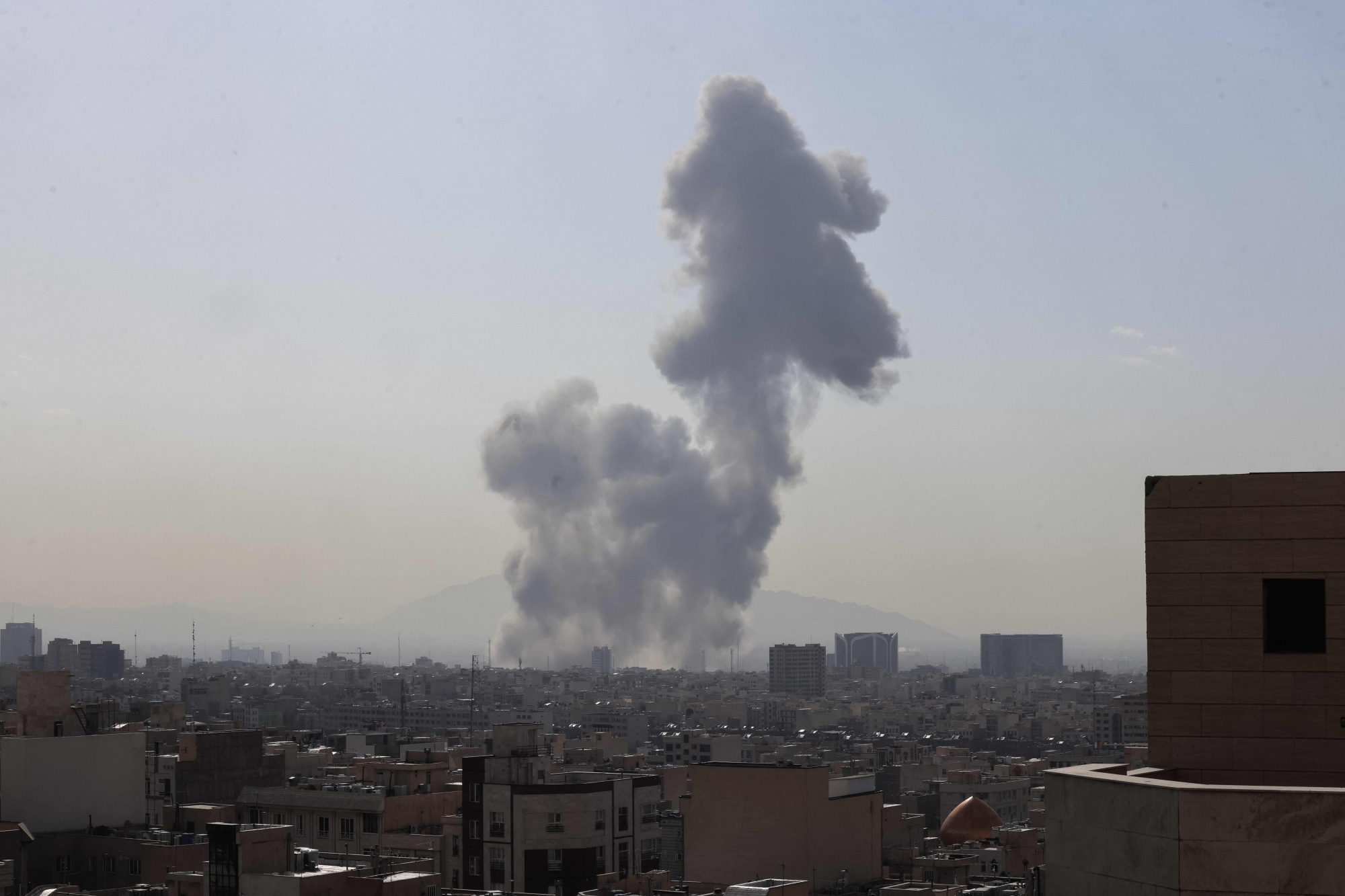
In a dangerous military escalation that threatens to alter the security landscape in the region, Israel officially announced today (Saturday) that it had carried out a military strike, described as "preemptive," against targets inside Iran. This move renews direct confrontation in the Middle East, significantly diminishing the chances of reaching a diplomatic solution to the years-long crisis between Tehran and the West over its controversial nuclear program.
Details of the attack and the Iranian response
Iranian media reported hearing loud explosions that shook the capital, Tehran, today, an initial indication that the strikes reached deep inside Iran. In the first official comment, Israeli Defense Minister Yisrael Katz stated, "Israel launched a preemptive strike against Iran to counter the threats it faces." This statement leaves no doubt about Tel Aviv's responsibility for the operation, confirming Israel's determination to prevent Tehran from developing its military capabilities.
US official: Washington is preparing additional strikes against Iran
Background to the conflict and the failure of the diplomatic track
This attack cannot be separated from the tense context that preceded it; it comes after a fierce 12-day air war between the two sides in June 2015. Although the United States and Iran resumed negotiations this February in an effort to resolve the dispute and avoid descending into chaos, the gap between the two sides remains wide. Israel has insisted that any agreement must include the complete dismantling of Iran's nuclear infrastructure, not just a freeze on enrichment, and has continued to press for the inclusion of its ballistic missile program in the restrictions—a demand Tehran vehemently rejects.
The American role and regional concerns
In a related development, a US official revealed that the United States is also preparing to launch strikes against Iran, recalling the scenario of last June when Washington joined an Israeli military campaign against Iranian nuclear facilities, which was considered at the time the largest direct US military intervention against the Islamic Republic. For its part, Iran warned neighboring countries hosting US bases that they would be legitimate targets for its missiles if Washington participated in the attack, citing its previous targeting of the Al Udeid airbase in Qatar.
The repercussions of the escalation on international security
This escalation is raising widespread international concerns about the region sliding into a full-blown war that could disrupt global energy supplies and threaten international shipping. Western powers view Iran's ballistic missile program with grave concern, believing it could be used to deliver nuclear warheads in the future, while Tehran continues to deny seeking nuclear weapons, asserting its right to defend itself against any external aggression.
Politics
The foreign minister and his Afghan counterpart discuss de-escalating regional tensions
Foreign Minister Prince Faisal bin Farhan received a call from his Afghan counterpart, Amir Khan Muttaqi, during which they discussed regional developments and efforts to reduce escalation and achieve security and stability.


His Royal Highness Prince Faisal bin Farhan bin Abdullah, the Saudi Minister of Foreign Affairs, received a telephone call yesterday, Friday, from His Excellency Amir Khan Muttaqi, the Afghan Minister of Foreign Affairs. This call comes within the framework of ongoing consultations between the Kingdom of Saudi Arabia and Islamic and regional countries to strengthen frameworks for joint cooperation and discuss issues of common interest.
During the call, a comprehensive review of current regional and international developments took place. The two sides focused primarily on discussing diplomatic and political efforts to de-escalate tensions and the necessity of joint action to prevent further escalation that could negatively impact international peace and security. They agreed on the importance of continued coordination to contribute to achieving security and stability for all the peoples of the region.
The Kingdom's leading role in promoting regional stability
These talks reaffirm the pivotal role played by the Kingdom of Saudi Arabia, under the leadership of the Custodian of the Two Holy Mosques and His Royal Highness the Crown Prince, in spearheading diplomatic efforts to achieve peace. Saudi diplomacy consistently prioritizes dialogue and political solutions in addressing crises, as the Kingdom is a cornerstone of regional security and works tirelessly with all relevant actors to ensure stability in the Middle East and Central Asia.
The importance of joint coordination in light of current challenges
This contact is of particular importance given the delicate circumstances the region is experiencing, as current security and political challenges necessitate a high level of coordination and consultation among Islamic countries. The Afghan issue and stability in Afghanistan are integral to broader regional security, and the Kingdom consistently supports efforts that serve the interests of the brotherly Afghan people and help them achieve their aspirations for development and prosperity, free from conflict.
At the end of the call, both sides stressed the need to intensify diplomatic efforts to contain any emerging crises, emphasizing that constructive dialogue is the best way to overcome obstacles and achieve the aspirations of peoples to live in lasting safety and stability.
-

 Local news two days ago
Saudi Arabia approves regulations for the continued presence of Gulf vehicles: duration and penalties
-
Culture and Art, 1 week ago
The ban on the Hamdiya series in Iraq: Reasons and official response
-
Local News 5 days ago
The Ministry of Interior begins procedures for a royal pardon for common law prisoners
-
Reports one week ago
King Salman Relief Center's Ramadan aid includes 9 countries
-
Local news one week ago
19 requirements to reduce dust from projects in Riyadh and fines for violators
-
Culture and Art, 1 week ago
Details of the first episode of the series "Al-Maddah 6: The Legend of the End"
-
Sports one week ago
Dates for the Al-Nassr vs. Al-Wasl match in the 2026 AFC Champions League quarter-finals
-
Politics, one week ago
Trump plans to create a $2 billion alternative to the World Health Organization