Politics
UAE intercepts Iranian missiles and drones: Ministry of Defense statement and details of the response
The UAE Ministry of Defense announces the interception of 3 ballistic missiles and 121 drones as part of an Iranian attack, and reveals the toll of human and material losses and affirms its right to respond and protect its sovereignty.

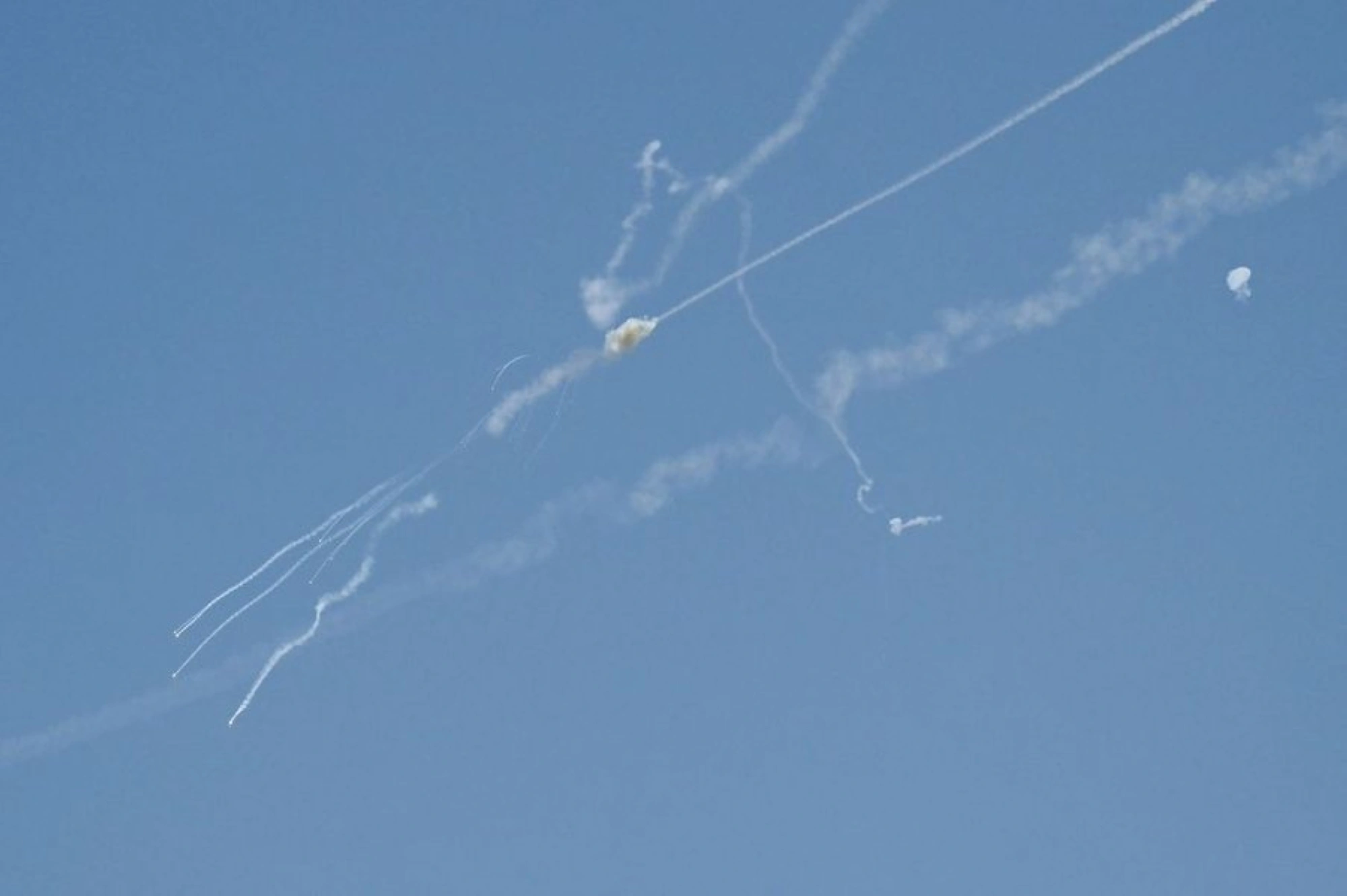
The UAE Ministry of Defense announced in an official statement on Wednesday that its air defense systems successfully countered a large-scale air attack, intercepting and destroying three ballistic missiles, in addition to dealing with a large swarm of hostile drones.
Details of the air attack and the effectiveness of the defenses
In the operational details of the operation, the Ministry explained that radars and monitoring equipment tracked 129 drones launched towards the country's territory. Air defenses demonstrated high efficiency in dealing with the threat, intercepting and shooting down 121 drones before they reached their targets, while 8 drones crashed in various locations within the country. The Ministry confirmed that the loud noises heard by residents in different areas were caused by the aerial interception of missiles and fighter jets that pursued the drones, resulting in debris scattering that caused minor to moderate material damage to some civilian properties.
Statistics on Iranian escalation and aggression
In a related context, the ministry revealed comprehensive statistics on what it described as “blatant Iranian aggression” since its inception, highlighting the scale of the threats the country has faced. It reported the launch of 189 ballistic missiles, of which 175 were successfully intercepted by defenses, while 13 fell into the sea and only one landed on land. Regarding drones, a total of 941 Iranian drones were detected, 876 of which were successfully intercepted, while 65 landed within Iranian territory. Additionally, eight cruise missiles were destroyed.
Human losses and legal position
On the humanitarian front, these attacks resulted in civilian casualties, with the Ministry recording three deaths of residents of Pakistani, Nepalese, and Bangladeshi nationalities. It also recorded 78 minor injuries among civilians of various nationalities, including Emirati, Egyptian, Sudanese, Ethiopian, Filipino, Pakistani, Iranian, Indian, Bangladeshi, Sri Lankan, Azerbaijani, Yemeni, Ugandan, Eritrean, Lebanese, and Afghan.
Official condemnation and commitment to protecting national security
The Ministry of Defense strongly condemned this military attack, describing it as a blatant violation of national sovereignty and international humanitarian law, which prohibits targeting civilian areas. The Ministry emphasized that the UAE reserves its full right to respond to this military escalation, affirming that it will take all necessary measures to protect its territory, its people, and its residents, thereby ensuring the preservation of its sovereignty and stability.
The ministry concluded its statement by emphasizing the complete readiness of the armed forces to deal with any future threats, urging the public to obtain information only from official sources and not to be swayed by rumors, in order to preserve community security.


Politics
Tehran explosions and the Gulf intercepts hundreds of missiles and drones
Comprehensive coverage of the Tehran explosions, the UAE and Qatar's response to hundreds of Iranian missiles and drones, and details of a security incident in Iraq amid a dangerous regional escalation.


In a rapid and remarkable military development as the war entered its fifth day, the Iranian capital, Tehran, witnessed a series of powerful explosions on Wednesday, coinciding with the announcement by the Arab Gulf states that their defense systems had successfully intercepted intense waves of Iranian ballistic missiles and drones, reflecting a new peak in the state of regional tension.
Details of the UAE's response to the air attacks
The UAE Ministry of Defense released detailed data demonstrating the scale of security challenges and the effectiveness of the country's air defense systems. The Ministry announced that it successfully intercepted three ballistic missiles and detected 129 drones, successfully intercepting 121 of them. Only eight drones crashed within UAE territory, though the initial statement did not specify the extent of the damage.
In reviewing the operational situation since the start of what it described as the "blatant Iranian aggression," the ministry presented comprehensive statistics indicating that 189 ballistic missiles were launched toward the country. Of these, 175 were destroyed, 13 fell into the sea, and only one reached land. Regarding drones, 941 were detected, 876 were intercepted, and 65 reached Iranian territory. Additionally, eight cruise missiles were destroyed. The ministry noted some collateral damage resulting from these intensive attacks.
Qatari defenses protect the airspace
On the other hand, the Qatari Ministry of Defense affirmed the readiness of its armed forces across all branches, announcing that it had intercepted a complex attack involving 10 drones and two cruise missiles launched from Iran. The statement detailed the combat roles, explaining that air defense forces engaged six drones, while the Emiri Air Force successfully shot down two drones and two cruise missiles. The navy dealt with the remaining two drones, demonstrating the high level of coordination among the various branches of the Qatari armed forces.
Security repercussions in Iraq
In Iraq, a country often affected by regional tensions, the Joint Operations Command announced a serious security incident involving a force from the Karbala Operations Command. The force was subjected to an airstrike and gunfire while conducting a search operation in the desert area between the governorates of Karbala and Najaf, resulting in the death of one soldier and injuries to two others.
The Iraqi authorities quickly formed a high-level investigation committee to determine the circumstances of the incident, describing the recurrence of such incidents against security forces inside Iraqi territory as a "violation and an unjustified act," and stressing that this breach represents an unacceptable transgression that will be dealt with in accordance with the applicable military laws and customs.
Regional context and importance of the event
This large-scale military escalation reinforces international concerns about the widening scope of the conflict in the Middle East. The Gulf states' success in intercepting this massive number of missiles and drones confirms their possession of advanced and integrated air defense systems, and their high capacity for monitoring and responding immediately to various aerial threats.
This exchange of fire carries serious strategic implications, as the continuation of these attacks threatens the security of air and sea navigation in one of the most vital regions for global energy supplies, which could cast a shadow on international markets and economic stability, as well as directly impact regional security and peace.
Politics
Khamenei and Mojtaba, the closest to the caliphate, are being buried amid Israeli threats
Details of the funeral of Iranian Supreme Leader Ali Khamenei and speculation that his son Mojtaba will succeed him. Israel threatens the new leader with assassination and targets the Assembly of Experts in Qom.

In a pivotal moment in the history of the Islamic Republic, two well-informed Iranian sources announced that Mojtaba Khamenei, son of the late Iranian Supreme Leader, survived a joint US-Israeli airstrike that targeted his father's compound and several influential military figures last Saturday. This news coincides with the start of the funeral procession for Supreme Leader Ali Khamenei, amid international and regional anticipation regarding the identity of his successor, with Mojtaba considered the most likely candidate to assume the highest office in the country.
Funeral and public mourning ceremonies begin
The head of Iran's Coordinating Council for Islamic Propagation, Mohammad Hossein Mousapour, announced the schedule for the final farewell ceremonies. According to official statements, the funeral procession for the late Supreme Leader will begin today, Wednesday, at 10:00 PM local time and is scheduled to continue for three consecutive days. Mousapour explained that the Imam Khomeini Mosque will open its doors to accommodate the large crowds of mourners, with ceremonies being held in the main prayer hall around the clock. This reflects the extensive logistical and security preparations undertaken to accommodate the expected large numbers for this momentous event.
Mojtaba Khamenei: The Road to Leadership
Reuters, citing informed sources, reported that the ruling establishment in Tehran views Mojtaba Khamenei as the likely successor to his father, especially after his survival of the recent assassination attempt. Mojtaba wields considerable influence within the regime, particularly due to his close ties with the leadership of the Revolutionary Guard and the Basij militia, making him a pivotal figure in ensuring the continuation of the current regime's approach. In this context, Iranian state television confirmed that the Assembly of Experts, the constitutional body tasked with selecting the Supreme Leader, is close to making its final decision, a move aimed at quickly filling the leadership vacuum and resolving the ongoing debate.
Unprecedented Israeli threats
In a striking development reflecting the intensity of the conflict, Israeli Defense Minister Yisrael Katz explicitly threatened to assassinate any figure who assumes the position of Supreme Leader following Khamenei if they continue the same policies. Katz wrote in a strongly worded statement on the “X” platform: “Any leader appointed by the Iranian regime to continue the plan to destroy Israel and threaten the United States and the free world will become a legitimate target for elimination without any conditions.” This verbal escalation presents the new Iranian leadership with existential security challenges from the outset.
Military escalation and targeting of decision-making centers
On the ground, military operations continued; on Tuesday, Israel launched an attack targeting the Assembly of Experts office in the holy city of Qom, a sensitive spiritual and political center in Iran. Although Iranian authorities confirmed that there were no casualties thanks to the building being evacuated beforehand, the strike carries a clear political message of penetrating deep into Iranian territory. An Israeli military spokesperson confirmed the attack, stating that an assessment of the results was still underway.
Context of open confrontation
These rapid developments follow a large-scale military operation launched by Israel and the United States on February 28, which resulted in the deaths of several of Iran's top leaders, including the Supreme Leader, the commander of the Revolutionary Guard's ground forces, Mohammad Pakpour, and the Chief of Staff of the Armed Forces, Abdolrahim Mousavi. This significant leadership vacuum in the military and political hierarchy presents Tehran with a historic test of its ability to maintain domestic cohesion and confront escalating external threats.
Politics
Qatar intercepts Iranian drone and cruise missile attack: Details of the operation
The Qatari Ministry of Defense announces the interception of 10 Iranian drones and two cruise missiles. Learn details of the air, naval, and air defense forces' response to the attack and the forces' readiness.

The Qatari Ministry of Defense announced on Wednesday that its armed forces, across all branches, successfully intercepted a complex aerial attack targeting the country early that morning. The attack, which involved 10 drones and two cruise missiles, was launched from Iranian territory. This announcement underscores the high level of readiness of Qatar's defense system in dealing with various aerial threats.
Details of the defensive interception operation
In detailing the precise military operation, the Ministry explained that air defense systems and combat formations worked in perfect harmony to thwart the attack. The Qatari Emiri Air Defense Forces detected, intercepted, and destroyed six drones before they reached their targets. Simultaneously, Qatari Emiri Air Force successful interception sorties, resulting in the downing of two drones and two cruise missiles, highlighting the advanced combat capabilities of the Qatari Air Force.
The response was not limited to the Air Force and Air Defense, but the Qatari Emiri Naval Forces effectively in the operation, as its units succeeded in intercepting and destroying the two remaining drones, thus completing the downing of all hostile targets with a 100% success rate.
Development of Qatari military capabilities
This field success reflects the significant development the Qatari Armed Forces have undergone in recent years. Doha has modernized its military arsenal with the latest global defense systems, including early warning systems and integrated missile defense networks, in addition to bolstering its air fleet with modern fighter jets. This operation demonstrates the efficiency of training and joint coordination between the main branches (air, naval, and air defense) in managing complex aerial battles involving targets of varying speeds and altitudes, such as drones and cruise missiles.
Regional context and the importance of security vigilance
This event comes at a time when the Middle East region is facing increasing security challenges related to the proliferation of drone and cruise missile technology. The successful interception underscores the importance of investing in Gulf security and protecting sovereign airspace from any violations. This action sends a clear deterrent message, affirming the state's ability to protect its vital installations and territorial borders against any external threat, regardless of its nature.
Messages of reassurance and guidance for citizens
In closing, the Ministry of Defense emphasized that the armed forces possess the full capabilities and resources to safeguard the nation's sovereignty and territory, and to resolutely confront any attempt to undermine national security. The Ministry also issued an important appeal to citizens, residents, and visitors to remain calm and continue their daily lives as normal, while adhering to the instructions issued by the relevant security authorities.
The ministry urged everyone not to be swayed by rumors or to circulate false information that may be intended to cause concern, stressing the need to obtain information only from official sources and data issued by accredited government agencies.
-

 Local News 6 days ago
Saudi Arabia approves regulations for the continued presence of Gulf vehicles: duration and penalties
-
Local news one week ago
The Ministry of Interior begins procedures for a royal pardon for common law prisoners
-
Local news one week ago
The deadline for property registration in Hail and Riyadh is Thursday
-
Culture and Art 7 days ago
The Devil's Prisons series was halted: The full story of "The Emperor's" being moved to YouTube
-
Local news one week ago
Under the patronage of the Minister of Information, an agreement was signed between the Ministry of Information and Waves Marketing Company
-
Local News 6 days ago
Saudi Energy: A new identity for electricity that aligns with Vision 2030
-
Local News 6 days ago
The Food and Drug Administration is recalling Bebelac and Aptamil milk due to potential contamination
-
Local news one week ago
Registration is now open for domestic pilgrims for the 1447 AH season: Dates and conditions via Nusuk