Politics
Two killed and two injured in an explosion of a bomb inside a delivery truck in Baghdad
Two people, one of them a soldier, were killed and two others were wounded on Tuesday when a bomb exploded near a military checkpoint northwest of the Iraqi capital

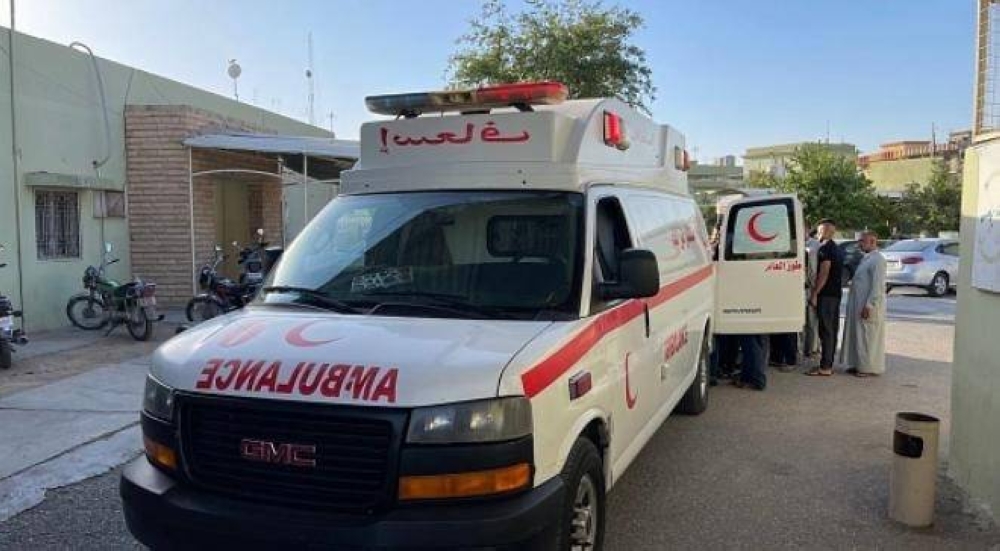
Two people, one of them a soldier, were killed and two others were wounded on Tuesday when a bomb exploded near a military checkpoint northwest of the Iraqi capital, Baghdad. According to Iraqi security authorities, the incident was criminal, not terrorist, and stemmed from personal problems.
A security official said that two people were killed, one of whom was a soldier who was near the military checkpoint and died of his wounds in the hospital, and the owner of the tuk-tuk. A civilian and a soldier were injured at the military checkpoint.
The Iraqi News Agency quoted Baghdad Operations Commander Lieutenant General Walid al-Tamimi as saying that an explosive device, placed inside a gift (box), was sent with a delivery service via a tuk-tuk motorcycle to a citizen who was waiting to receive it near a military checkpoint in the al-Salamiyat area. The device exploded during delivery. He indicated that the security services formed a team to uncover the threads of the crime and pursue its perpetrators.




Politics
The succession of the Iranian Supreme Leader: The struggle for inheritance and the future of the regime
An analysis of the succession scenarios for the Iranian Supreme Leader and the mechanisms of the Assembly of Experts. Will the position pass to Mojtaba Khamenei or Hassan Khomeini? And what impact will this have on Tehran's regional policies?.

The question of succession to the Supreme Leader in Iran is one of the most sensitive issues within the political system, as constitutional provisions intertwine with the power dynamics within the religious and security establishment. While no official candidate has been declared, the legal process is clear, and the names circulating reflect a silent struggle between the logic of continuity and the logic of revolutionary symbolism.
Constitutional mechanism for selecting the Supreme Leader
Articles 107 and 111 of the Iranian Constitution stipulate that the Supreme Leader is chosen by the Assembly of Experts, a body composed of 88 Shiite clerics elected by popular vote every eight years, after their eligibility is approved by the Guardian Council. The Assembly of Experts has the power to appoint the Supreme Leader, oversee his performance, and even dismiss him if he loses any of the qualifications for leadership. However, observers believe that the final decision does not depend solely on the Assembly's vote, but is subject to complex agreements involving key power centers in Tehran.
Historical context and the 1989 experience
To understand the complexities of the current situation, it is necessary to go back to 1989, when the founder of the Islamic Republic, Ruhollah Khomeini, died. At that time, the constitution was amended to remove the requirement of "Marja'iyya" (that the Supreme Leader be a Marja' Taqlid), paving the way for Ali Khamenei to come to power despite not holding the rank of Grand Ayatollah at the time. This historical precedent opens the door to similar scenarios, where the most politically and militarily powerful figure can prevail over the most learned in Islamic jurisprudence, thus enhancing the chances of figures who may not be at the top of the clerical hierarchy but who wield considerable influence.
Mojtaba Khamenei and Hassan Khomeini: A struggle for influence and symbolism
Behind the scenes in Tehran, a "son and grandson" dichotomy is emerging. On one hand, the name of Mojtaba Khamenei , the current Supreme Leader's second son, is frequently mentioned. He is believed to wield considerable influence within the "Supreme Leader's household" and the security apparatus, making him a representative of the continuity and status quo. On the other hand, the name of Hassan Khomeini , the founder's grandson, is also mentioned. He embodies revolutionary symbolism but is politically aligned with the reformist and moderate factions, making him a difficult choice given the conservatives' dominance, unless a consensus figure is needed to appease public opinion.
The pivotal role of the Revolutionary Guard and its effects
The succession of the Supreme Leader cannot be discussed without considering the role of the Iranian Revolutionary Guard Corps (IRGC), which has transformed over the past decades into a formidable economic, military, and political force. Analysts believe that the next Supreme Leader must have the blessing of the IRGC leadership to ensure the regime's stability. This growing influence of the military may favor the candidate who safeguards the interests of this institution and the continuation of its regional policies, potentially diminishing the chances of reformist-leaning candidates.
Expected regional and international repercussions
The identity of the new Supreme Leader will not only shape Iran's domestic policies but will also have repercussions across the Middle East and the world. The Supreme Leader holds the ultimate authority on strategic issues such as the nuclear program, relations with the West, and support for armed groups in the region. The arrival of a hardliner could mean a continuation of the "resistance" policy and escalation, while the arrival of a pragmatist could open new avenues for diplomacy, making the world watch this development with great caution.
Politics
Three US soldiers killed and five wounded in operations against Iran – Details
The US Central Command announced that three soldiers were killed and five others wounded in military operations against Iran. Learn more about the statement and the implications of the escalation in the Middle East.

The U.S. Central Command (CENTCOM) announced Sunday evening in an official statement that three American soldiers were killed and five others seriously wounded in ongoing military operations against Iranian targets. This announcement marks a significant development in the course of events on the ground, casting a shadow over the security and political landscape in the region.
Details of the military statement and the withholding of information
In a brief statement posted on its social media platform X (formerly Twitter), U.S. Central Command explained that the casualties occurred during specific military operations. However, it did not provide any further details about the precise nature of these operations or the specific geographic locations where the clashes took place. In accordance with strict U.S. Department of Defense (Pentagon) protocols, the command declined to release the identities of the soldiers killed or wounded, pending formal notification of their families before releasing their names to the media and the public.
Regional context and escalating tensions
This incident comes at a time of escalating tensions and sharp polarization in the Middle East. The US military presence in the region, overseen by US Central Command (CENTCOM), is strategically aimed at protecting American interests and those of its allies, and ensuring the security of waterways and energy supplies. Relations between the United States and Iran have long been a source of significant security and political tension, with Washington repeatedly accusing Tehran of destabilizing the region, while Tehran views the US presence as a direct threat to its national security.
Strategic importance and potential repercussions
The killing of American soldiers in direct combat carries serious implications that could affect the balance of power and the rules of engagement in the region. Historically, casualties among American forces have been a red line for successive US administrations, and such incidents often lead to comprehensive reviews of military plans and may pave the way for more robust military or diplomatic responses. This event could increase domestic pressure in Washington to take decisive action and raise the level of alert among all regional actors, who fear a wider escalation.
Injury management protocols
Regarding the five injured soldiers, initial reports indicate that their injuries are serious, typically necessitating urgent medical evacuations to advanced military medical facilities, either in neighboring countries or to major US bases in Europe (such as Germany), for treatment. Political and military circles are closely monitoring updates expected from the Pentagon in the coming hours, which are anticipated to reveal further details about the incident once the necessary security and administrative procedures are completed.
Politics
Saudi Arabia supports Yemen's budget with 1.3 billion riyals
The Saudi Program for the Development and Reconstruction of Yemen signs an agreement worth 1.3 billion riyals with the Yemeni Ministry of Finance to address the budget deficit, support salaries, and enhance economic stability.
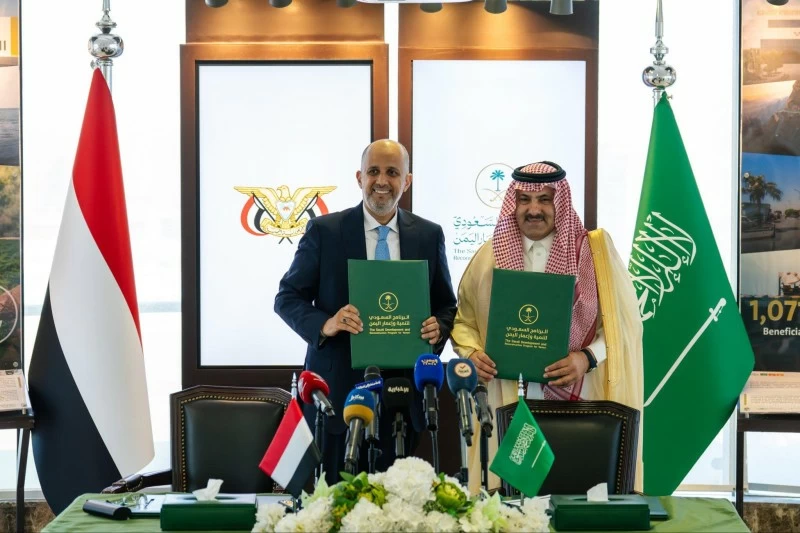
In a strategic move aimed at rescuing the Yemeni economy from its mounting challenges, the General Supervisor of the Saudi Development and Reconstruction Program for Yemen, Ambassador Mohammed Saeed Al Jaber, and Yemeni Finance Minister Marwan Faraj Saeed bin Ghanem signed a significant agreement to begin depositing new economic support amounting to 1.3 billion Saudi riyals. This agreement serves as a lifeline to address the existing deficit in the Yemeni government's general budget, in addition to supporting operational expenses and ensuring the continued payment of salaries to public sector employees.
This generous support comes in response to the urgent needs facing the Yemeni government amidst challenging economic conditions, and aims directly to establish the foundations for economic and financial stability in the country. This financial injection is expected to contribute to stabilizing citizens' incomes, thereby boosting purchasing power and curbing inflation, as well as enabling government service institutions to continue performing their duties efficiently. This, in turn, will positively impact macroeconomic stability and propel a sustainable recovery.
Contextually, this support is not an isolated event, but rather an extension of a long series of economic and development initiatives that Saudi Arabia has provided to Yemen over decades, which have intensified significantly in recent years through the Saudi Program for the Development and Reconstruction of Yemen. Previous Saudi deposits in the Central Bank of Yemen played a pivotal role in curbing the collapse of the local currency (the Yemeni rial) against foreign currencies, thus helping to secure essential food imports and prevent widespread famine.
At the regional and international levels, this support carries significant implications, underscoring the Kingdom of Saudi Arabia's continued commitment to supporting the legitimate Yemeni government not only militarily and politically, but also economically and developmentally. The stability of the Yemeni economy is considered a cornerstone of regional security, as the collapse of its financial institutions could lead to chaos affecting the entire region. This step reaffirms the Kingdom's keenness to achieve stability and prosperity for the brotherly Yemeni people and to help them overcome the current crises and reach a stage of comprehensive reconstruction.
In conclusion, the 1.3 billion riyal agreement represents a fundamental pillar in the wall of Yemeni economic resilience, as it will provide the necessary liquidity to cover inevitable expenses, giving the Yemeni government room to breathe and plan to improve its own resources, and reducing the budget deficit that threatened to stop basic services.
-

 Local News 3 days ago
Saudi Arabia approves regulations for the continued presence of Gulf vehicles: duration and penalties
-
Local News 6 days ago
The Ministry of Interior begins procedures for a royal pardon for common law prisoners
-
Local news one day ago
Jeddah Airport alerts for travelers due to airspace closure and flight disruptions
-
Politics, one week ago
Trump plans to create a $2 billion alternative to the World Health Organization
-
 Local news one week ago
Three billion riyals deposited as Ramadan aid for social security beneficiaries
-
Local News 5 days ago
The deadline for property registration in Hail and Riyadh is Thursday
-
Sports one week ago
Tickets for the Al-Ahli vs. Al-Hilal King's Cup match postponed: New date
-
Local News 6 days ago
Under the patronage of the Minister of Information, an agreement was signed between the Ministry of Information and Waves Marketing Company