Politics
Trump inaugurates the Peace Council for the reconstruction of Gaza and threatens Iran with a 10-day deadline
Trump inaugurates the Peace Council in Washington with the participation of 47 countries to discuss the reconstruction of Gaza with $17 billion in funding. The meeting addresses the deployment of international forces and issues a strongly worded warning to Iran.

In a move reflecting a major shift in international policy toward the Middle East, US President Donald Trump inaugurated the first meeting of the "Peace Council" in Washington, D.C., on Thursday. This newly established council aims primarily to lead reconstruction efforts in the Gaza Strip, as well as to work toward resolving complex international conflicts, with broad international participation reflecting global interest in the region's stability.
Details of the meeting and the massive funding
The meeting witnessed a strong diplomatic presence, with representatives from 47 countries participating, along with the European Union as an observer. Discussions focused on the implementation mechanisms for revitalizing the Palestinian sector after the devastating war that crippled its infrastructure. Regarding financial support, Trump announced substantial pledges, with several countries—mostly from the Gulf—committing over $7 billion specifically for Gaza's reconstruction. Simultaneously, the US president announced a $10 billion contribution to the Peace Council fund, bringing the initial funding to record levels and reflecting the seriousness of the international effort.
The security context and tensions with Iran
The meeting was not limited to economic and humanitarian issues; it also carried strongly worded political and security messages. Amidst the ongoing tensions between Washington and Tehran, and despite the existence of indirect channels of negotiation, Trump used the platform to issue an ultimatum to Iran, giving it only 10 days to reach a "viable deal," and threatening "bad consequences" if it failed to comply, thus leaving the region facing a range of unpredictable scenarios.
New security arrangements in Gaza
On the ground in Gaza, the participants discussed unprecedented security plans that include deploying thousands of troops to form an "international stabilization force," as well as establishing a new police force to maintain internal security. These arrangements are intended to ensure a secure environment that will allow reconstruction efforts to begin. Ali Shaath's name emerged prominently at the meeting, as he is the head of the Palestinian National Committee that will administer Gaza's affairs under the direct supervision of the "Peace Council.".
The importance of the event and its regional impact
This event is of exceptional importance given Trump's absolute powers as president of the council, as he has the exclusive right to invite heads of state or cancel their participation. Observers note that the formation of this council represents an attempt to reshape security and political arrangements in the Middle East by integrating reconstruction efforts with a regional de-escalation strategy and attempting to contain Iranian influence through diplomatic pressure and the threat of force, making the outcomes of this meeting a potential turning point for the region's future.




Politics
Trump inaugurates Peace Council for Gaza Reconstruction with $17 billion in funding
Trump opens the Peace Council in Washington to rebuild Gaza with $17 billion in funding and discuss the deployment of international forces, issuing a strongly worded warning to Iran with a 10-day deadline.
In a significant diplomatic move aimed at reshaping the political and security landscape of the Middle East, US President Donald Trump inaugurated the first meeting of what he called the “Peace Council” in Washington, D.C., on Thursday. This new entity is primarily concerned with the reconstruction of the Gaza Strip, as well as developing comprehensive strategies for resolving existing international conflicts. The meeting was attended by a broad international audience, including representatives from 47 countries, in addition to the European Union, which participated as an observer.
This event is of exceptional importance given the critical timing of its convening, following a devastating war in the Palestinian territories that left immense destruction of infrastructure and vital facilities. Through this council, the United States seeks to mobilize international efforts to prevent a recurrence of the conflict and secure a stable environment. This reflects a shift in US strategy toward direct and leading involvement in shaping post-war arrangements and attempting to impose a new vision for regional stability.
On the financial front, Trump unveiled massive financial pledges aimed at ensuring the success of the Council's challenging mission. He stated that several countries, mostly from the Gulf region, had committed to providing more than $7 billion specifically for the reconstruction of Gaza. In a move underscoring Washington's significant influence on this issue, the US president announced a $10 billion contribution to the "Peace Council" fund, bringing the total initial funding to approximately $17 billion, although the precise details of the Council's operations and the disbursement of funds remain somewhat unclear.
Regarding the complex security arrangements, the participants discussed ambitious plans that included deploying thousands of troops to form an “international stabilization force” in Gaza to fill the security vacuum, along with establishing a new police force to maintain internal security. The name of Ali Shaath, head of the Palestinian National Committee, emerged at the meeting. He was tasked with managing Gaza’s affairs under the direct supervision of the “Peace Council,” indicating the development of a new administrative structure separate from the previous, traditional authorities.
The meeting was not without its sharp geopolitical messages, as Trump used the platform to deliver a stern warning to Tehran amid ongoing tensions between the two countries. Despite the existence of a channel for indirect negotiations, Trump gave the Iranian regime only 10 days to reach a "viable deal," threatening "bad consequences" if it failed to comply, thus placing the region at a critical crossroads between escalation and de-escalation.
It is worth noting that the Council’s organizational structure grants Donald Trump absolute and unprecedented powers; he is the sole president of the Council and has the exclusive right to invite heads of state and government to participate or cancel their membership, reflecting the desire of the American administration to take full control of the political and security initiative in this thorny issue and to direct the international compass according to the American vision.
Politics
Trump gives Iran 10 days: nuclear deal or dire consequences
Trump gives Iran a 10-day deadline to reach a viable deal amid a US military buildup. Learn about the details of the Geneva negotiations and the mutual threats between Washington and Tehran.

In a remarkable development and an indication of escalating tensions between Washington and Tehran, US President Donald Trump issued a strongly worded warning to the Iranian leadership, giving them a deadline of no more than ten days to reach what he described as a “viable deal,” otherwise Tehran would be exposed to “bad things” and dire consequences, coinciding with the continued US military buildup in the Middle East region.
Details of the deadline and US threats
President Trump's remarks came during the inaugural meeting of the "Peace Council" in Washington, D.C., where he expressed the difficulty of reaching a quick agreement with Iran, noting that history has proven negotiations with Tehran are not easy. Trump stated clearly, "We have to make a worthwhile deal, or bad things will happen... We may have to go a step further, or we may not. You'll probably find out in the next ten days." This statement has put the region on tenterhooks, awaiting developments in the coming days.
Behind the scenes of the Geneva negotiations and the Iranian position
These threats coincide with the second round of indirect talks between the United States and Iran in Geneva, which concluded with both sides declaring their intention to continue the dialogue despite the complexities. For its part, Tehran revealed that it had prepared a draft framework to advance these negotiations, while simultaneously maintaining its sovereign right to uranium enrichment, an issue that has long been a stumbling block to international understandings with the Islamic Republic.
General context: Maximum pressure policy
This warning cannot be separated from the general context of US policy towards Iran, which has been characterized by a “maximum pressure” strategy since Washington’s unilateral withdrawal from the 2015 nuclear agreement. Through this strategy, the US administration seeks to force Tehran to sit at the negotiating table under new conditions that address not only the nuclear program, but also the ballistic missile program and Iran’s regional influence, which Tehran rejects outright, considering it an infringement on its national security.
Military buildup and the language of force
To bolster its negotiating position, Washington went beyond diplomatic pronouncements, resorting to a show of military force. Reports confirmed the deployment of an aircraft carrier hundreds of kilometers from the Iranian coast, the dispatch of another carrier to the region, and the deployment of squadrons of advanced warplanes and tens of thousands of troops to surrounding regional bases. This military buildup sends a clear message: the military option remains on the table should diplomacy fail.
The repercussions of this situation on the stability of the region
This escalation is raising widespread concerns both regionally and internationally, as any potential military confrontation, or even the “bad things” Trump has threatened, could destabilize the vital Gulf region, a crucial hub for global energy supplies. Political and economic circles are watching the ten-day deadline with bated breath, as its outcome could shape the relationship between the two countries and the future of security in the Middle East for a long time to come.
Politics
The Foreign Minister receives a message from Russia on the occasion of the centenary of relations
The Foreign Minister received a message from his Russian counterpart on the occasion of 100 years of Saudi-Russian relations. Learn more about the meeting and the history of the strategic partnership between the two countries.
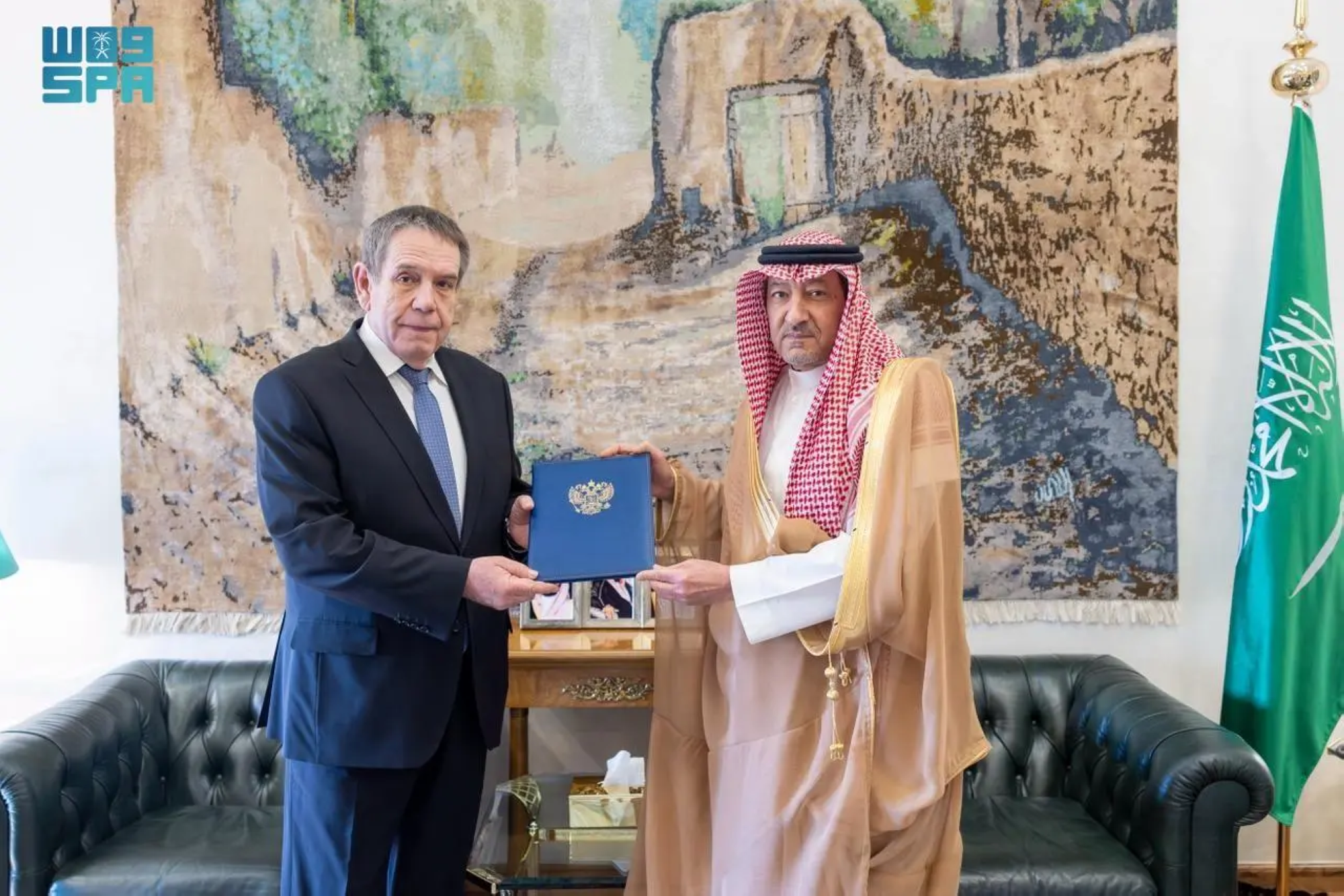
In a move to strengthen the historic diplomatic ties between the Kingdom of Saudi Arabia and the Russian Federation, His Royal Highness Prince Faisal bin Farhan bin Abdullah, Minister of Foreign Affairs, received a written message from His Excellency Sergey Lavrov, Minister of Foreign Affairs of the Russian Federation. This message comes as the two friendly countries celebrate the 100th anniversary of the establishment of diplomatic relations, reflecting the depth of their partnership and ongoing cooperation over the decades.
Details of the diplomatic meeting in Riyadh
The message was received on behalf of His Royal Highness the Minister of Foreign Affairs by His Excellency the Deputy Minister of Foreign Affairs, Engineer Waleed bin Abdulkarim Al-Khuraiji, during his meeting today, Thursday, at the Ministry's headquarters in Riyadh, with the Ambassador of the Russian Federation to the Kingdom, Sergey Kozlov. The meeting took place in a cordial atmosphere, during which congratulations were exchanged on this important historical occasion, which represents a milestone in the development of relations between Riyadh and Moscow.
A historical depth spanning a century
This occasion is particularly significant given the historical background of relations between the two countries. Russia (formerly the Soviet Union) was the first non-Arab state to recognize the Kingdom of Saudi Arabia (then the Kingdom of Hejaz, the Sultanate of Najd, and its dependencies) in 1926, thus establishing a unique relationship built on mutual respect. Over the past century, these relations have witnessed numerous developments and phases, culminating in the current strategic partnership that encompasses a wide range of fields.
The importance of strategic partnership and its international impact
The celebration of the centenary of relations is not merely a matter of protocol; it reflects the significant weight of both countries on the international stage. The Kingdom and Russia play a pivotal role in stabilizing global energy markets through their leadership of the OPEC+ alliance, in addition to their ongoing coordination on regional and international political issues of mutual interest. The exchange of messages between the two foreign ministers at this time underscores the desire of both sides to leverage this historical legacy to strengthen economic and political cooperation in a way that serves the interests of both nations and supports international peace and security.
The meeting concluded with a review of several bilateral topics and ways to develop them, in addition to discussing issues of common interest, which confirms the continued momentum in Saudi-Russian relations towards broader horizons in the second century of relations.
-

 Culture and Art, 1 week ago
The "Between and Between" exhibition in Jeddah: 5 artists reshape Saudi memory
-
Local News 6 days ago
Saudi Arabia's National Arabic Language Policy: 8 Principles to Promote Identity
-
Culture and Art, 1 week ago
Shakira's concert in Jeddah: Details of the international star's first concert in Saudi Arabia
-
Local News 5 days ago
Adopting the National Policy for the Arabic Language: Strengthening Identity and Vision 2030
-
Local News 6 days ago
The Riyadh-Rin-Bisha dual carriageway, spanning 559 km, has been completed
-
Local news two days ago
Human Resources sets the date for the 2026 Founding Day holiday for both sectors
-
Culture and Art, 1 week ago
Ramez Level the Monster: Details of Ramez Galal's program in Ramadan 2026
-
Local News 5 days ago
The Supreme Court calls for the sighting of the crescent moon of Ramadan 1447 on Tuesday evening