
Politics
The Shura Council demands that the Real Estate Development Fund reduce financing profits
The Shura Council issued a resolution calling on the Real Estate Development Fund to expand its program to reduce mortgage interest rates. The Council also called for..

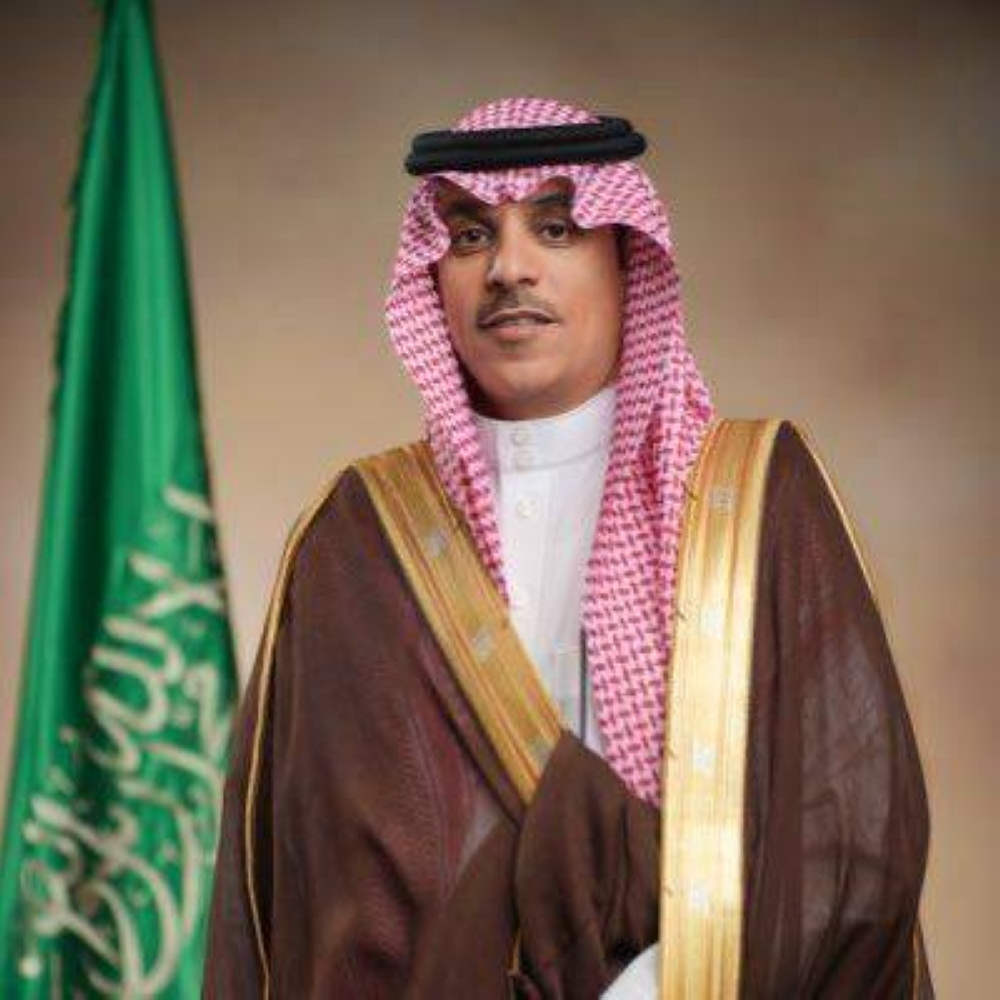
The Shura Council issued a resolution calling on the Real Estate Development Fund to expand its program to reduce profits from real estate financing.
In its 12th regular session of the first year of the ninth term, chaired by the Vice President of the Council, Dr. Meshaal Al-Sulami, the Council called on the Fund to provide appropriate solutions to develop the self-build product to achieve its objectives, and to coordinate with the Central Bank and relevant authorities to study the rescheduling of real estate loans after the borrower is referred to retirement according to his retirement salary, and to coordinate with the Ministry of Municipalities and Housing to encourage the adoption of modern building methods.
The Council issued a resolution regarding the contents of the annual report of King Abdulaziz University for the academic year 1444 AH, in which it called on King Abdulaziz University to develop a comprehensive plan to enhance cooperation with local and regional universities, increase the efficiency of existing international partnerships, and enhance its international presence in the field of open education, through expanding the provision of digital educational programs that rely on digital innovation and modern technologies, and enhancing funding for research activities to achieve higher ambitions in the field of marketing patents and turning them into commercial products.
The council issued a resolution calling on King Khalid University to diversify its revenue sources and expand its investments in order to achieve its financial sustainability and support its future aspirations, and to coordinate with relevant authorities to support its efforts in improving the scientific research and innovation system at the university, and to market patents commercially.
The council discussed the annual report of the Human Resources Development Fund, and council member Dr. Abdullah Al-Waqdani asked the fund to study the reasons why national workforce training facilities have not applied for funding, as well as technical and administrative advice from the fund. Council member Dr. Rashid Al-Sharif called on the fund to make efforts to adopt effective administrative solutions in order to overcome the challenges facing the fund.
The council discussed the annual report of the Cultural Development Fund for the fiscal year 1444/1445 AH, and council member Dr. Bushra Al-Hammad inquired about the establishments operating in the cultural sector that benefited from the guarantees program, which is one of the programs of the Cultural Development Fund.
Council member Dr. Abdullah Omar Al-Najjar called on the Human Resources Development Fund to coordinate with relevant authorities to intensify efforts to enable sustainable employment for young Saudi men and women, especially in critical professions, to reduce and limit occupational exposure.
In his remarks on the Human Resources Development Fund's report, Al-Najjar considered unemployment a major concern at both the global and local levels, as it is a phenomenon present in every society. He pointed out that the General Authority for Statistics, through its Labor Market Bulletin for the second quarter of 2024, confirmed a decrease in the unemployment rate among Saudis to 3.3% in that quarter. This means that these rates are approaching the natural unemployment rates targeted by Vision 2030, which range between 7.00% and 4.00%. Al-Najjar commended the Human Resources Development Fund's role in this decrease through its new strategy (the sectoral strategy) and its development initiatives that align with the goals of the Kingdom's Vision 2030. These initiatives are also consistent with the National Development Fund's objectives of increasing employment rates for Saudis, developing the private sector, particularly small and medium-sized enterprises (SMEs), contributing to improving the productivity of the Saudi economy, and the Fund's commitment to building and providing effective and sustainable strategic partnerships with all economic sectors in the Kingdom.
He pointed out that the recommendation to localize and replace expatriate workers with national manpower is general and not strategic, and does not address the actual problem that needs to be solved in the subject of replacement or localization, since one of the goals is to enable sustainable employment in the private sector for high-risk beneficiary categories. However, the actual reality confirms that the Fund supports replacement and localization in sectors where the nature of the work is (temporary station) for job seekers from young Saudis (of both genders), such as the profession of salesman, cashier, or worker in a restaurant or cafe… and so on, while the strategy to enable sustainable jobs, or critical professions (such as nursing, in which the number of non-Saudis is more than 70%) is absent.
Dr. Fahd Al-Takhaifi, a member of the Shura Council, called on the Human Resources Development Fund to develop initiatives and programs to improve the efficiency of national workforce training facilities, and to develop effective mechanisms to make labor market observatory data available to beneficiaries in order to support decision-making.
Council member Dr. Hassan Hijab Al-Hazmi argued that the strategic objectives presented by the Fund in its report were unclear, and that they were formulated in a literary and poetic language that is not appropriate for objectives that are supposed to be clear, direct, and understandable, enabling the targeted entity’s own staff to understand them and work towards achieving them, and enabling others to understand them and measure the indicators of what has been achieved. Al-Hazmi suggested that the Shura Council discuss this with the Fund and request that the strategic objectives be reformulated in a clearer, more understandable, and measurable manner.
Al-Najjar: Empower young people with critical professions to reduce vulnerability
Al-Maliki to the Cultural Fund: Activate workshops and promote your services
Shura Council member, Engineer Abdulaziz Al-Maliki, called on the Cultural Development Fund to hold workshops in all regions of the Kingdom, given the rich cultural resources in each region, in accordance with its characteristics and relative advantages. He also called for coordination with the relevant authorities to invite all beneficiaries in those regions to attend these workshops to introduce the Fund’s services, programs, and the 16 cultural sectors it supports.
Shurayun to the Resource Fund: Your strategic goals are unclear




Politics
Saudi Arabia offers condolences to Congo for the victims of the Rubaya mine collapse
The Kingdom expresses its solidarity with the Democratic Republic of Congo and offers condolences for the victims of the Rubaya mine collapse, which left more than 226 dead, affirming its support for the Congolese people.
The Kingdom of Saudi Arabia expressed its sincere condolences and heartfelt sympathy to the Democratic Republic of Congo, its leadership, government and people, for the tragic incident of the collapse of a mining mine in the city of Rubaya, located in the east of the country, which resulted in hundreds of victims and injuries in a humanitarian disaster that shook local and international circles.
In its official statement, the Kingdom affirmed its full support and solidarity with the Democratic Republic of Congo in this painful tragedy, expressing its hope that this ordeal will be overcome, and wishing safety and security for the friendly Congolese people, and mercy for the victims, whose number exceeded 226 workers, in a heavy toll that reflects the magnitude of the disaster that befell the region.
Details of the disaster and the mining context in Congo
This incident once again highlights the numerous risks facing the mining sector in the Democratic Republic of Congo, particularly in the mineral-rich eastern regions. Rubaya is a vital center for the extraction of strategic minerals such as coltan and manganese, but mining operations are often carried out using traditional (artisanal) methods that lack even the most basic occupational safety standards, leaving workers vulnerable to frequent landslides, especially during the rainy season when the soil becomes increasingly fragile.
Human and economic dimensions
Mine accidents in the Democratic Republic of Congo are a chronic challenge for the country, where a large part of the local economy and population depends on artisanal mining as a primary source of livelihood, despite the high risks. Observers point to the high number of casualties in the Rubaya accident as being due to severe overcrowding at the excavation sites and the poor infrastructure of the tunnels, which turned the site into a death trap immediately after the collapse.
The Kingdom's diplomatic and humanitarian role
The statement of condolence and solidarity issued by the Kingdom of Saudi Arabia reflects its unwavering commitment to the principles of human fraternity and proactive diplomacy during times of crisis. The Kingdom consistently strives to extend bridges of communication and support to sisterly and friendly nations facing natural disasters and humanitarian crises, thereby reaffirming its leading role in strengthening international solidarity and bolstering the psychological and moral well-being of affected populations.
Politics
The Saudi Foreign Minister discusses regional developments with his Ethiopian counterpart
Prince Faisal bin Farhan received the Ethiopian Foreign Minister in Riyadh to discuss strengthening bilateral relations and to discuss developments in the Horn of Africa and issues of common interest.
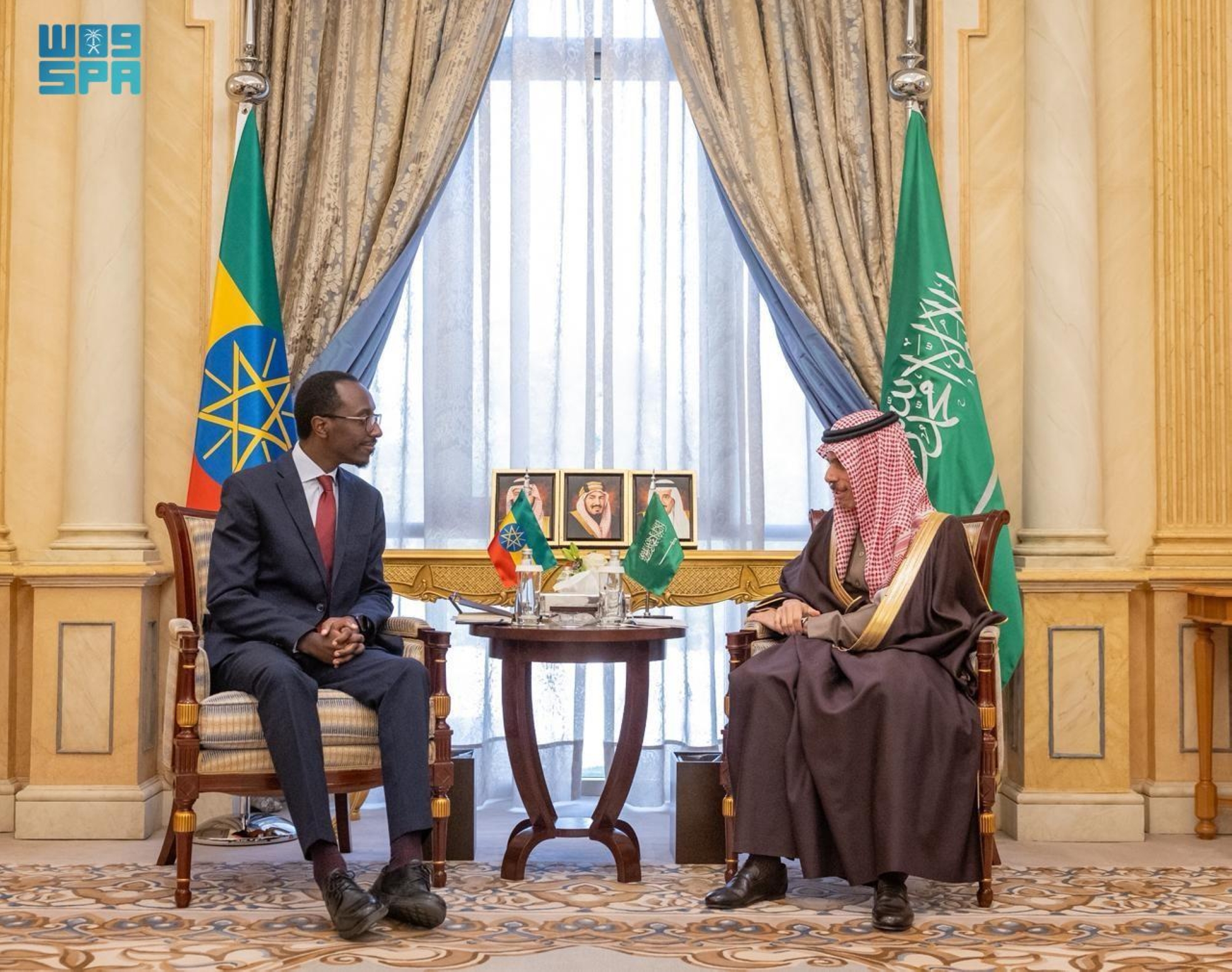
His Highness Prince Faisal bin Farhan bin Abdullah, the Saudi Minister of Foreign Affairs, received at the Ministry’s headquarters in Riyadh today (Monday), His Excellency Dr. Gedion Timotheos, Minister of Foreign Affairs of the Federal Democratic Republic of Ethiopia, on an official visit aimed at strengthening cooperation frameworks between the two friendly countries.
During the reception, an official meeting was held, during which the strong bilateral relations between the Kingdom of Saudi Arabia and the Republic of Ethiopia were reviewed, and ways to strengthen and develop them in various political, economic and security fields, in a way that serves the interests of the two peoples and countries.
Discussions on regional security and the Horn of Africa
During the meeting, the two sides discussed the latest developments in the region, particularly in the Horn of Africa and the Red Sea basin. These talks reflect the Kingdom of Saudi Arabia's commitment to strengthening security and stability in this vital region, given Ethiopia's significant strategic and geographical influence in East Africa.
The two ministers also discussed a number of regional and international issues of common interest, stressing the importance of continued political coordination and consultation between Riyadh and Addis Ababa on matters of concern to both countries, and supporting all efforts aimed at establishing the foundations of peace and development.
The importance of Saudi-Ethiopian relations
Relations between the Kingdom and Ethiopia are of particular importance due to their geographical proximity across the Red Sea and the historical and human ties that bind the two peoples. The Kingdom plays a pivotal role in supporting stability and development in Africa, and Ethiopia, as a key gateway to East Africa and the headquarters of the African Union, is essential for coordinating with it to address shared challenges such as combating terrorism and securing international shipping lanes.
The reception was attended on the Saudi side by His Excellency the Deputy Minister of Foreign Affairs, Engineer Waleed bin Abdulkarim Al-Khuraiji, and His Excellency the Undersecretary of the Ministry of Foreign Affairs for Political Affairs, Ambassador Dr. Saud bin Mohammed Al-Sati, reflecting the high-level interest in developing the course of relations with the Ethiopian side.
Politics
Faisal bin Farhan congratulates the new Kuwaiti Foreign Minister and they discuss regional issues
Saudi Foreign Minister Faisal bin Farhan congratulated his Kuwaiti counterpart, Sheikh Jarrah Al-Sabah, on his appointment. The two discussed strengthening fraternal relations, recent regional developments, and Gulf cooperation.
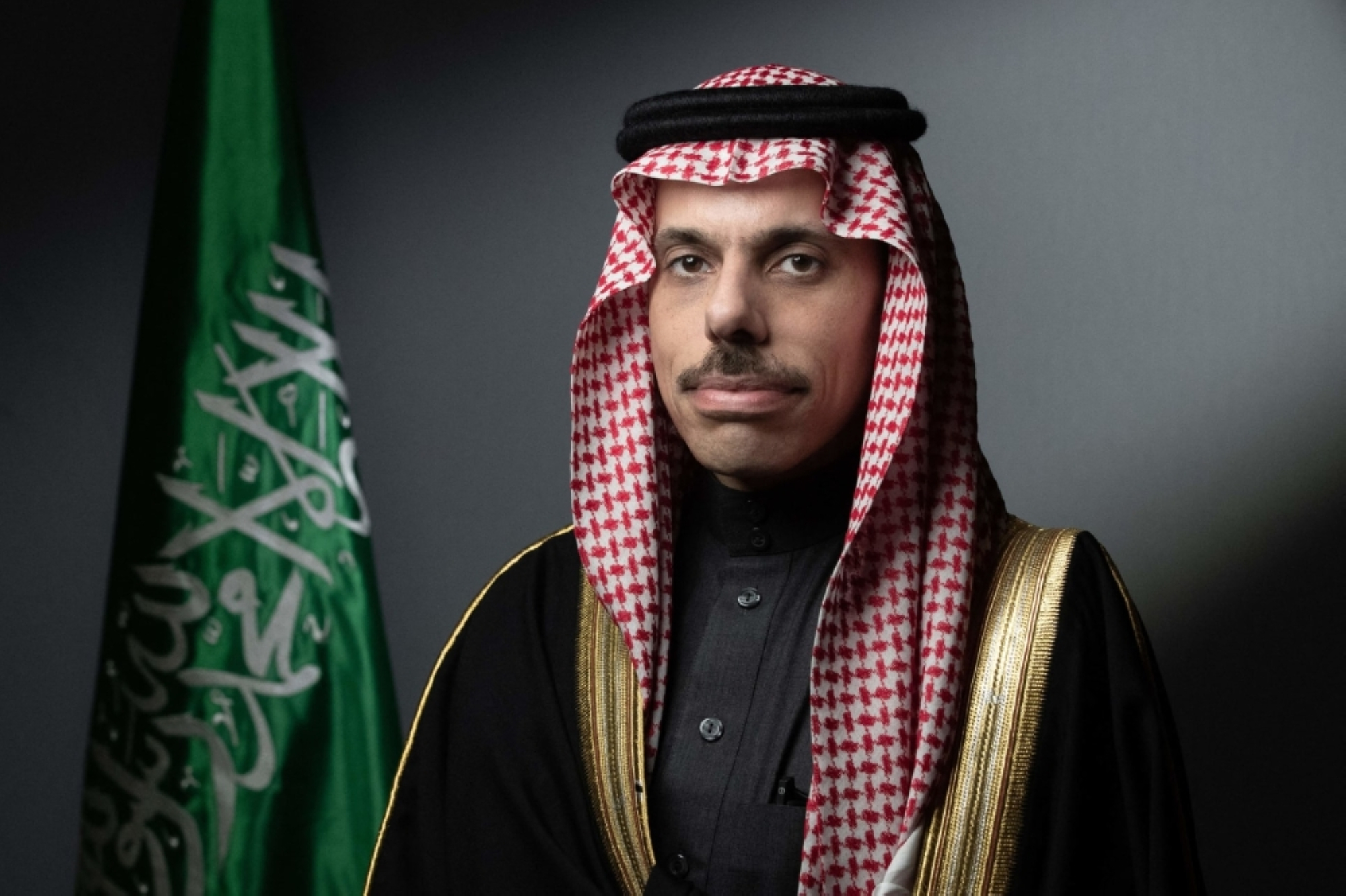
His Highness Prince Faisal bin Farhan bin Abdullah, the Saudi Minister of Foreign Affairs, made a telephone call today, Monday, to the Minister of Foreign Affairs of the sisterly State of Kuwait, Sheikh Jarrah Jaber Al-Ahmad Al-Sabah, as part of the ongoing communication and continuous coordination between the leaderships and officials of the two sisterly countries.
At the outset of the call, His Highness the Minister of Foreign Affairs congratulated Sheikh Jarrah Al-Sabah on the Amiri trust bestowed upon him and his appointment as Minister of Foreign Affairs, expressing his sincere wishes for his success in his new duties and for the continued progress and prosperity of the brotherly Kuwaiti people. During the call, His Highness emphasized his eagerness for close and collaborative work with his Kuwaiti counterpart to further strengthen the deep-rooted and fraternal relations between the Kingdom of Saudi Arabia and the State of Kuwait.
Strengthening the Gulf Cooperation Council's work process
During the call, both sides emphasized the importance of advancing joint Gulf cooperation towards broader horizons, in order to fulfill the aspirations of the leaders of the Gulf Cooperation Council (GCC) states and the peoples of the region. This high-level diplomatic exchange reflects the depth of the strategic ties that bind Riyadh and Kuwait, ties that serve as a model for relations between nations, based on a long historical legacy of brotherhood, shared destiny, and the bonds of kinship and close relations that unite the two peoples.
Coordinating positions on regional issues
The call also addressed a number of regional and international issues of mutual interest. The two ministers discussed the importance of continued coordination and consultation on pressing regional issues to ensure regional security and stability. The Kingdom of Saudi Arabia and the State of Kuwait play a pivotal role in shaping policies aimed at resolving conflicts peacefully and promoting international peace and security.
Depth of historical relations
Saudi-Kuwaiti relations are uniquely characterized by a convergence of visions and stances on various issues and challenges facing the Arab and Islamic world. Bilateral cooperation between the two countries' foreign ministries forms a cornerstone of unifying the Gulf and Arab ranks in international forums. The appointment of Sheikh Jarrah Jaber Al-Ahmad Al-Sabah at this crucial juncture reinforces the continuity of Kuwait's balanced diplomatic approach, complementing Saudi Arabia's proactive diplomacy in addressing current global political and economic challenges.
-

 Local news one week ago
Landslide in Riyadh: Details of the incident in Al-Sahafa neighborhood and containment efforts
-
 Local news one week ago
The death penalty was carried out against a citizen who stabbed another to death in Tabuk
-

 Culture and Art, 1 week ago
Haifa Wehbe's absence in Riyadh: A photo crisis or a strained relationship with the media?
-
 Local news one week ago
Riyadh collapse: Emergency plans to secure water after a main pipeline burst
-

 Culture and Art, 1 week ago
City Kitchen series: A drama of conflict and the middle class during Ramadan
-

 Culture and Art, 1 week ago
The series "Kasra": Dawood Hussein in a moving social drama this Ramadan
-

 Local news one week ago
Applying for the 1447 Opportunities Program for Teachers via the Fares System
-

 Local News 5 days ago
Ramadan 2026 discounts in Saudi Arabia: Offers valid for 54 days