Politics
The Ministers of Islamic Affairs and Education launch the Moderation and Tolerance Fellowship Program for scholarship students
The Minister of Islamic Affairs, Call and Guidance, Sheikh Dr. Abdul Latif Abdulaziz Al-Sheikh, and the Minister of Education, Youssef Abdullah, inaugurated

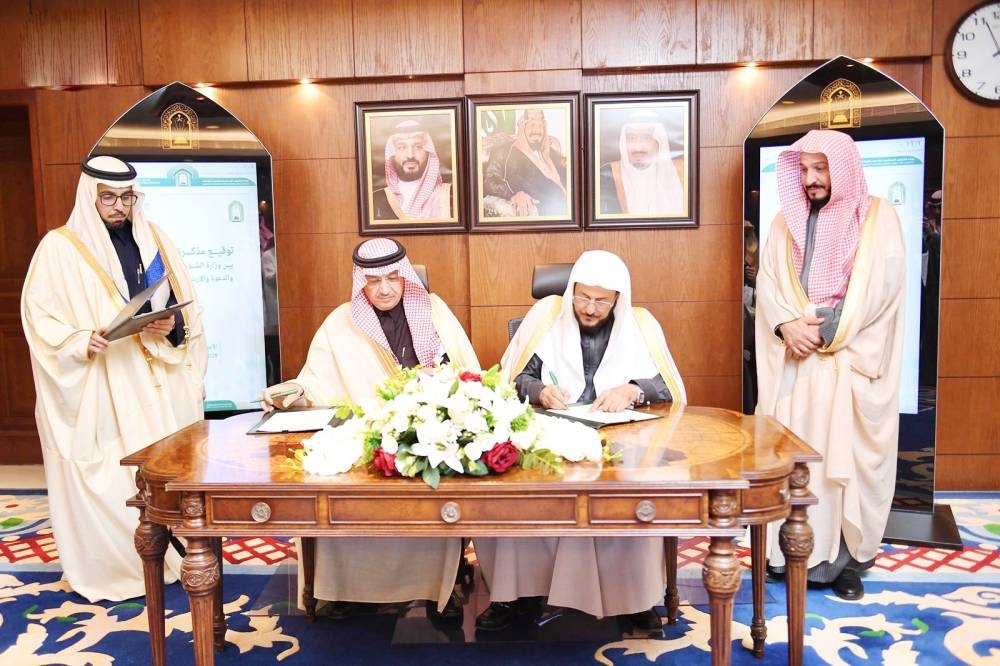
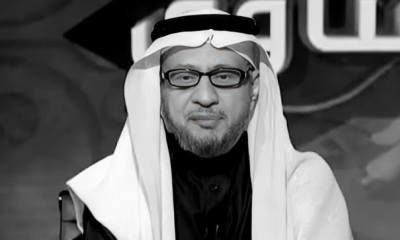
The Minister of Islamic Affairs, Call and Guidance, Sheikh Dr. Abdul Latif Abdulaziz Al-Sheikh, and the Minister of Education, Yousef Abdullah Al-Bunyan, launched yesterday at the headquarters of the Ministry of Islamic Affairs in Riyadh, the Moderation and Tolerance Fellowship Program, which is supervised and implemented by the Ministry of Islamic Affairs, Call and Guidance for scholarship students in partnership with the Ministry of Education, Saudi universities and granting institutions in the non-profit sector in the Kingdom.
During his speech, the Minister of Islamic Affairs explained that the launch of the Moderation and Tolerance Fellowship Program stems from the Kingdom’s leading position in serving Islam and Muslims and translates its clear vision of spreading the values of moderation and tolerance based on firm principles and authentic constants. He pointed out that the program combines a sound scientific methodology with advanced practical application, with the aim of qualifying an elite group of international students in Saudi universities to be ambassadors of moderation and tolerance in their societies.
Al-Sheikh explained that this fellowship, which is implemented under the supervision of the Ministry of Islamic Affairs, Call and Guidance, represents an integrated training system that charts new paths for cognitive and leadership excellence, as it goes beyond traditional training to be a comprehensive system that prepares qualified graduates capable of absorbing contemporary challenges and creating a more cooperative and prosperous future.
For his part, the President of King Abdulaziz University, Dr. Tarif Yousef Al-Aama, delivered a speech in which he indicated that the “Fellowship of Moderation and Tolerance” program was launched in the summer of this year with the support of the King Abdullah Endowment for his parents, and with the direct supervision of the Ministry of Islamic Affairs, as it witnessed an exceptional interaction, with about 300 male and female students of different nationalities applying to register for it, and after a careful nomination and selection process, 60 distinguished participants were chosen representing 40 countries of the world.
It was also announced that 10 scholarship chairs have been allocated in the name of the Minister of Islamic Affairs, Call and Guidance in the Moderation and Tolerance Fellowship Program for Muslim minority students in various countries of the world, targeting distinguished students from Muslim communities and societies, in appreciation of his contributions to spreading moderation and tolerance and confronting hatred and extremism.
The Endowments Authority, the King Abdullah bin Abdulaziz Foundation for Developmental Housing for his Parents, and the Saleh Al-Rajhi Endowments announced donations totaling nearly 4 million riyals to the Moderation and Tolerance Fellowship Program, coinciding with the launch.





Politics
The European Union suspends trade measures against the US for six months
The European Commission has decided to extend the suspension of a package of retaliatory trade measures against the United States, in a move to promote dialogue and avoid a trade war that could affect the global economy.
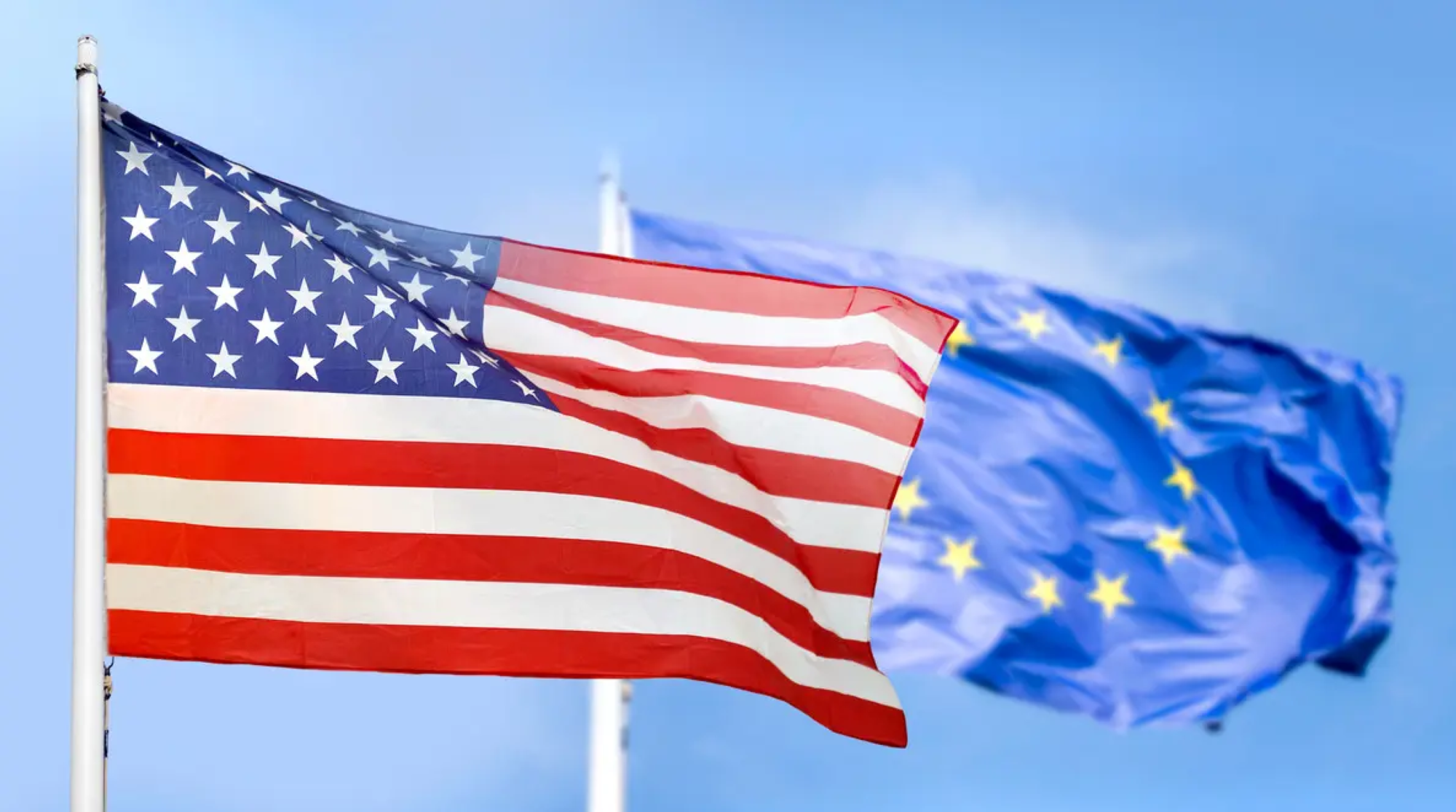
In a move aimed at easing transatlantic trade tensions, the European Commission intends to propose a six-month extension of the suspension of a package of retaliatory trade measures against the United States. This package, valued at €93 billion, was scheduled to take effect on February 7, but the new decision postpones its implementation and allows more time for diplomatic negotiations.
Background and historical context of the trade dispute
This tension stems from the trade policies adopted by the previous US administration under President Donald Trump, which included imposing tariffs on steel and aluminum imports from several countries, including traditional allies in the European Union, under Section 232 of the Trade Expansion Act of 1962, ostensibly to protect US national security. The European Union responded by preparing a list of countermeasures targeting symbolic US goods, such as motorcycles and agricultural products, with the aim of exerting political and economic pressure to force a reconsideration of the tariffs.
The importance of the suspension decision and its expected impact
The decision to extend the suspension is of paramount importance both regionally and internationally. At the European level, it spares European industries, particularly the automotive sector, from a costly trade war that could negatively impact economic growth and employment rates. At the American level, it provides a much-needed boost to US exporters to Europe and helps maintain market stability. Internationally, this move is seen as a positive signal toward a return to a rules-based global trading system, one based on dialogue rather than confrontation and unilateral tariffs, sending a reassuring message to a global economy already grappling with uncertainty.
Joint statement and the future of trade relations
This retaliatory package was first suspended last August after Brussels and Washington reached a joint statement aimed at defusing the crisis and working towards a negotiated solution. Olof Gill, the Commission's spokesperson, explained that with the US threats of new tariffs receding, it was now possible to focus on "the important work of implementing the joint statement." He added that the Commission would soon submit a formal proposal to extend the suspension of the measures, while emphasizing that "the EU reserves the right to lift this suspension in the future if necessary," thus keeping all options open should circumstances change.
Politics
Saudi Arabia strengthens its role in the Organization for the Prohibition of Chemical Weapons
Ambassador Shaher Al-Khunaini presented his credentials as Saudi Arabia’s representative to the Organization for the Prohibition of Chemical Weapons, affirming the Kingdom’s commitment to supporting disarmament and global security efforts.
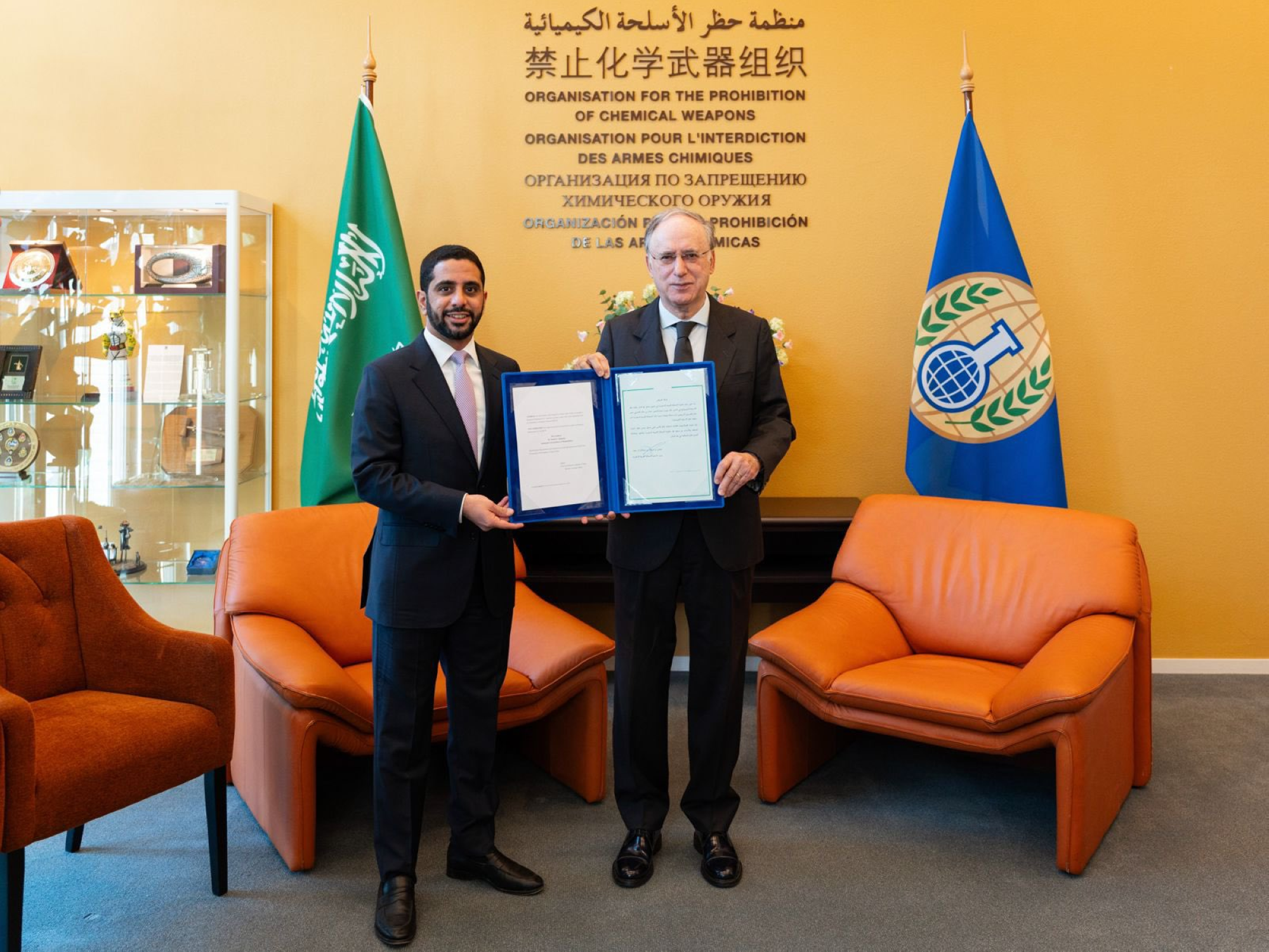
In a diplomatic move reflecting the Kingdom of Saudi Arabia's commitment to supporting international peace and security, the Ambassador of the Custodian of the Two Holy Mosques to the Kingdom of the Netherlands, Mr. Shaher bin Khalid Al-Khunaini, presented his credentials as the Kingdom's Permanent Representative to the Organisation for the Prohibition of Chemical Weapons (OPCW). The credentials presentation ceremony took place at the OPCW headquarters in The Hague, where he was received by the Director-General, Mr. Fernando Arias.
General context and role of the Organisation for the Prohibition of Chemical Weapons
The Organisation for the Prohibition of Chemical Weapons (OPCW), established in 1997, is the implementing body of the Chemical Weapons Convention, an international treaty aimed at eliminating an entire class of weapons of mass destruction. The OPCW verifies the destruction of declared stockpiles of chemical weapons and prevents their re-emergence anywhere in the world. For its tireless efforts in this area, the OPCW was awarded the Nobel Peace Prize in 2013, underscoring its pivotal role in the contemporary global security architecture.
The importance of the step and its expected impact
This appointment underscores the active role played by the Kingdom of Saudi Arabia in international organizations and its commitment to contributing to global efforts aimed at disarmament and non-proliferation. As a State Party to the Chemical Weapons Convention, the Kingdom consistently supports the Organization's activities and programs, believing in the importance of multilateral action to address global challenges. The presence of a permanent representative of the Kingdom enhances coordination and cooperation with the Organization and its member states, and contributes to conveying the Kingdom's vision and positions on issues related to chemical security.
Regional and international repercussions
Regionally, this step is of particular importance, as it reaffirms the Kingdom's ongoing call to make the Middle East a region free of all weapons of mass destruction, a cornerstone for achieving stability and sustainable security in the region. Internationally, this high-level diplomatic representation enhances Saudi Arabia's standing as a responsible and reliable international partner, actively participating in shaping international policies related to security and disarmament. It is worth noting that Ambassador Al-Khunaini presented his credentials to His Majesty King Willem-Alexander of the Kingdom of the Netherlands on Wednesday, as the Kingdom's ambassador, embodying the dual role of Saudi diplomacy in strengthening bilateral relations and supporting international collective action.
Politics
Al-Khunaini appointed as Saudi Arabia's representative to the Organization for the Prohibition of Chemical Weapons
Ambassador Shaher Al-Khunaini presented his credentials as the Permanent Representative of Saudi Arabia to the Organization for the Prohibition of Chemical Weapons, reinforcing the Kingdom’s commitment to international peace and security.
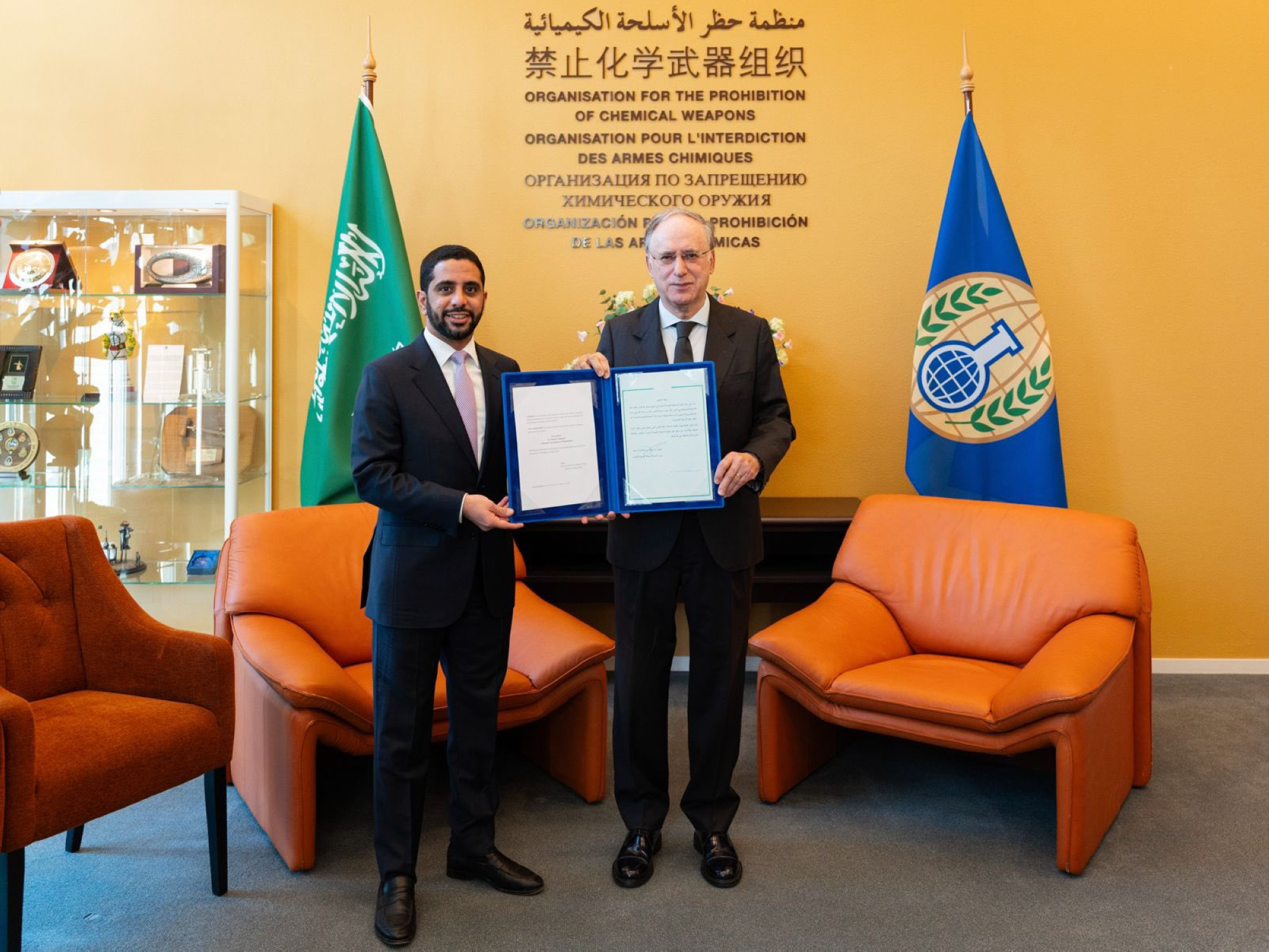
In a diplomatic move underscoring the Kingdom of Saudi Arabia's unwavering commitment to supporting international peace and security, the Ambassador of the Custodian of the Two Holy Mosques to the Kingdom of the Netherlands, Mr. Shaher bin Khalid Al-Khunaini, presented his credentials as the Kingdom's Permanent Representative to the Organisation for the Prohibition of Chemical Weapons (OPCW). The ceremony took place in The Hague, where he was received by the OPCW Director-General, Mr. Fernando Arias.
This step comes just two days after Ambassador Al-Khunaini presented his credentials to the King of the Kingdom of the Netherlands, His Majesty King Willem-Alexander, at Noordeinde Palace in the Dutch capital, thus establishing the beginning of his official diplomatic duties in the Netherlands and at the level of international organizations based there.
Historical background and role of the Organisation for the Prohibition of Chemical Weapons
The Organisation for the Prohibition of Chemical Weapons (OPCW) is an independent international body established in 1997 that serves as the implementing agency for the Chemical Weapons Convention (CWC). Its primary objective is to achieve a world free of chemical weapons by destroying existing stockpiles and preventing their re-emergence. The OPCW was awarded the Nobel Peace Prize in 2013 in recognition of its extensive efforts in this field. Saudi Arabia has been a signatory to and ratified the CWC since its accession in 1997 and is an active and influential member of the OPCW's efforts to prevent the proliferation of these deadly weapons.
The importance of the event and its expected impact
The appointment of Al-Khunaini and the presentation of his credentials carry significant weight on several levels. Domestically, this appointment reflects the Saudi leadership's confidence in the competence of its diplomats to represent the Kingdom in vital international forums, in line with the goals of Vision 2030, which focuses on strengthening effective international partnerships. Regionally, the presence of a permanent representative of the Kingdom at this organization reinforces its role as a force for stability in the Middle East, a region that has witnessed the tragic use of chemical weapons in the past, and underscores its unwavering position on the necessity of making the region free of all weapons of mass destruction.
Internationally, this high-level diplomatic representation contributes to strengthening cooperation between the Kingdom and the Organization, and supports global efforts to address the challenges of chemical weapons proliferation, particularly in light of current geopolitical tensions. Ambassador Al-Khunaini is expected, through his position, to convey the Kingdom's vision and actively participate in shaping policies and procedures that ensure the full and effective implementation of the Chemical Weapons Convention worldwide.
-

 Reports one week ago
Achievements of Saudi government sectors in 2025
-
Local news two weeks ago
FDA warns of contaminated Nestle infant formula | Recall details
-
Technology 3 weeks ago
Saudi Arabia launches the world's largest government data center, 'Hexagon'
-
Technology 3 weeks ago
Merging KSA Map and Baladi Plus: A step towards Saudi digital sovereignty
-
Technology 3 weeks ago
Hexagon: Saudi Arabia strengthens its data sovereignty with the world's largest government center
-
Technology 3 weeks ago
European banks and artificial intelligence: A plan to lay off 200,000 employees
-
Politics 4 weeks ago
The coalition destroys smuggled Emirati weapons in Mukalla in a qualitative strike
-
Local News 4 weeks ago
Saudi Arabia's 2026 Decisions: Major Transformations in Real Estate and Logistics