Politics
Al-Baha Mayor: Municipalities contributed to the distortion and ignored humanization
The Secretary of the Baha Region, Dr. Ali Muhammad Al-Suwat, held the municipalities and secretariats responsible for the pollution that has affected the environment and public spaces


The Secretary of the Baha Region, Dr. Ali Muhammad Al-Sawat, held the secretariats and municipalities responsible for the pollution and visual distortion that has befallen the environment and the public space over the past decades. During his talk to the media, in the media salon of the Journalists Association branch, in a dialogue evening in Baljurashi Municipality, he revealed violations that were committed unintentionally by the municipal sector, including cutting and removing trees, opening roads in forests, dumping debris in random locations, and neglecting humanization. He pointed out that everyone assumed responsibility in 2021, to become the year of improving the urban landscape and removing distortion, stressing that the Baha region achieved a good percentage in the stages of removing distortion and improvement through the cooperation of all service sectors.
Al-Sawat explained to his colleagues that the Governor of Al-Baha region, Prince Dr. Hussam bin Saud bin Abdulaziz, is following the development process, personally overseeing the progress, discussing delays, and proposing solutions for those facing obstacles by following up on them and opening discussions and communication with the relevant ministers.
In discussing the media's handling of some shortcomings and the exaggeration of some errors to increase the readership of published material, Al-Sawat expressed his understanding of the good intentions of editors who are concerned about their region. He described the official as a person who walks barefoot on dangerous ground, exposed to stings and pains that the journalist, soaring on the wings of hopes and aspirations to achieve what everyone aspires to in terms of ideals, does not feel or sense. He described the official as entrenched and apprehensive, while the journalist is enthusiastic and driven, motivated by love and belonging. He pointed to the great transformation that our country is experiencing, as there are no longer open budgets, and work has become transparent and everything is out in the open, as he said. He called on the media partner to deal with service institutions, the secretariat, and municipalities objectively.
Al-Sawat stressed that the historical era of the Kingdom has compelled everyone to work and deal with transparency, under governance, and the automation of systems and sectors, recalling a time when the journalist exerted his utmost effort to obtain news or information, while today the lines are open and the official must respond to the journalist and clarify what he has of facts and information about projects, implementation, the flaw that has affected any work, and the possible shortcomings, given that human beings who work, are right and wrong.
He considered development to be a continuous and evolving process of modernization, noting that the custom of the pre-technological era required that development be planned, adopted, and implemented behind the scenes, while today's development is in the spotlight, starting with the state budget and passing through press releases of sectors and tweeting via social media platforms about everything the administration does, adopts, and expects.
Al-Sawat agreed with the suggestion of some that the Raghadan Resort project was delayed in issuing permits, and explained that they were notified by letters, so they responded by taking possession of the site and starting to fence it off, hoping that the permits would be issued before the month of Ramadan, as the project is the largest investment project that renews the hope of the people, in sustainable quality development.
Al-Sawat stressed that development has inputs and outputs, and that it does not succeed if it does not have a media support base. He looked forward to activating and expanding the common spaces between media and development, according to the philosophy of development and its circumstances, expressing openness to accepting constructive criticism, provided that the positive achievements are not overlooked. He called for overcoming the estrangement and apprehension, and raising the aspirations of society, through media that leads, evaluates, corrects, and raises the ceiling of ambitions without exaggerations or idealism.
Al-Sawat pointed to the attention the region receives from the Custodian of the Two Holy Mosques and his Crown Prince, and the adoption of a strategic development office, in addition to a strategic plan adopted by the Prince of Al-Baha region, noting that stirring up public opinion is neither an achievement nor a journalistic scoop.
Al-Sawat explained that malicious complaints hinder development, stressing that the municipality is proceeding according to the vision of the region’s governor, and is dealing daily with the strategic planning process in which all sectors are involved. He expressed his regret that the center of Al-Baha city is experiencing rapid aging, explaining that work is underway to repair what can be repaired without expropriating properties. He added that the official does not want his region or his city to be a copy of other cities and regions, as each city and region has its own identity.
Al-Sawat denied any intention to change the names of the villages, as each village has an identity, history, and memory. However, the new organization requires the inclusion of a number of villages in neighborhoods, with each village retaining its name. He pointed out the importance of naming and numbering neighborhoods due to their vital connection to postal services, safety, and security.
Al-Sawat described the municipal councils as an experiment with its own advantages and disadvantages; he said they are currently suspended until further notice, and revealed studies and reports that addressed the possibility of the duplication of the regional council and the local and municipal council, suggesting the possibility of merging into one council.
Regarding complaints about changes to building facades, the regulatory authority said the building code applies to all facilities, adding that cities are like women, some are naturally beautiful and some only acquire beauty through dyes, decorations and makeup. He attributed the problem of stray animals to a conflict of jurisdictions in several entities, including the environment, agriculture and municipalities, and did not deny that some public relations departments do not establish developmental media.
The evening, presented by colleague Abdulrahman Abu Rayah, witnessed several interactive interventions, and the mayor of Baljurashi, Engineer Awad Al-Qahtani, colleague Omar Al-Ghamdi, Ibrahim Abu Fayyah, and Mansour bin Musbah contributed to organizing the dialogue.


Politics
The Crown Prince receives a message from the President of Kazakhstan to enhance bilateral cooperation
Crown Prince Mohammed bin Salman received a written message from the President of Kazakhstan concerning bilateral relations, which was received by Foreign Minister Prince Faisal bin Farhan in Riyadh.
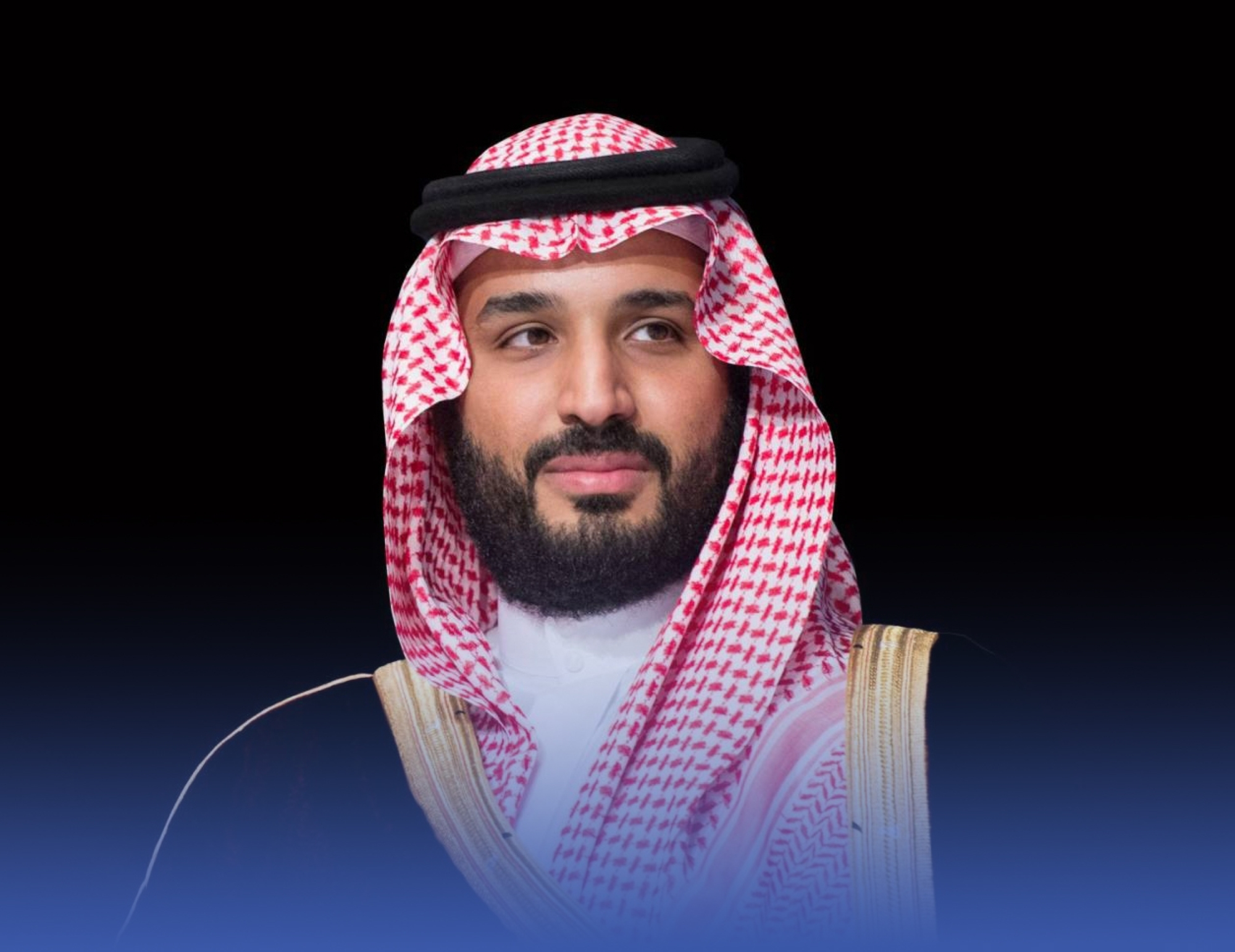
His Royal Highness Prince Mohammed bin Salman bin Abdulaziz Al Saud, Crown Prince and Prime Minister, received an important written message from His Excellency President Kassym-Jomart Tokayev of the Republic of Kazakhstan. The message focused on ways to strengthen and develop the close bilateral relations between the two brotherly countries and to propel them towards broader horizons in various fields.
His Highness Prince Faisal bin Farhan bin Abdullah, Minister of Foreign Affairs, received the message during his official meeting today at the Ministry's headquarters in Riyadh with His Excellency Yermek Kosherbayev, Minister of Foreign Affairs of the Republic of Kazakhstan. During the meeting, they reviewed aspects of joint cooperation and ways to enhance them in a manner that serves the interests of both countries and their friendly peoples.
The depth of Saudi-Kazakh relations
This message comes amidst the active diplomatic efforts underway in relations between the Kingdom of Saudi Arabia and the Republic of Kazakhstan, two countries bound by deep-rooted historical ties based on shared values and mutual respect. These relations are gaining increasing importance in light of global geopolitical and economic shifts, as Kazakhstan is the largest country in Central Asia and a key strategic partner for the Kingdom in this vital region.
Prospects for economic and investment cooperation
Economically, the two countries possess tremendous potential for cooperation, particularly in the energy sector. Both Saudi Arabia and Kazakhstan are major global oil producers and active members of the OPEC+ alliance, which strengthens their joint coordination to ensure the stability of global energy markets. Furthermore, Saudi Arabia's Vision 2030 opens up vast opportunities for mutual investments in mining, infrastructure, food security, and renewable energy, aligning with Kazakhstan's development goals.
The importance of political coordination
On the political front, the exchange of messages between the two leaderships reflects a mutual commitment to continued consultation and coordination on regional and international issues of common interest. The Kingdom plays a pivotal role in promoting stability in the Middle East, while Kazakhstan serves as a vital bridge between Asia and Europe, making the strengthening of their partnership a cornerstone of security and stability in both regions.
The reception was attended on the Saudi side by the Undersecretary of the Ministry of Foreign Affairs for Political Affairs, Dr. Saud Al-Sati, and the Ambassador of the Custodian of the Two Holy Mosques to the Republic of Kazakhstan, Faisal Al-Qahtani, reflecting the high-level diplomatic interest in the outcomes of this meeting and the future steps that will result from it to strengthen the strategic partnership.
Politics
New Mexico investigation into Epstein's ranch: details of the historic decision
New Mexico opens a formal investigation into Jeffrey Epstein's Zorro Ranch. Learn about the legislative committee's efforts to uncover human trafficking networks.

In a decisive legal and legislative move, lawmakers in the US state of New Mexico passed new legislation aimed at launching a comprehensive and extensive investigation into the events that transpired behind the walls of Zorro Ranch, the sprawling estate associated with the late disgraced sex offender Jeffrey Epstein. This step comes in response to growing demands from human rights groups and the public for transparency regarding the network Epstein operated in secrecy.
Bipartisan fact-finding committee
Under the new legislation, a special bipartisan commission will be formed in the state legislature. This commission will have broad powers to gather evidence, subpoena witnesses, and, most importantly, provide a secure platform for survivors to testify about the egregious abuse they suffered at the ranch. The ranch is located in a remote area about 48 kilometers south of Santa Fe, which for many years kept it largely out of scrutiny.
"Zorro Ranch": The Mysterious Castle
This ranch holds particular significance in the context of federal and local investigations, as it spans thousands of acres and includes a sprawling mansion and a private airstrip. The property has long been suspected of being a major hub for the human trafficking operations with which Epstein was accused. This move is the first of its kind at the state level to directly target activities that took place on the property, aiming to determine whether local individuals or others facilitated or covered up these crimes.
A complex historical and legal context
This investigation comes at a time when the Jeffrey Epstein case continues to generate widespread international controversy, particularly following his death in his Manhattan jail cell in 2019, officially ruled a suicide. This effectively prevented a trial that would have revealed many secrets. However, the recent release of court documents related to Virginia Giuffre's lawsuit against Epstein's associate, Ghislaine Maxwell, has brought the case back into sharp focus, revealing a vast network of connections involving politicians, financiers, and celebrities.
The importance of the investigation and its expected impact
Observers believe the New Mexico investigation holds immense symbolic and legal significance. It not only seeks to hold accountable potential perpetrators who may have escaped federal scrutiny, but also aims to close the legal loopholes that allowed these abuses to continue for years. Furthermore, the investigation sends a powerful message of support to the victims, affirming that justice does not expire and that the death of the main suspect does not mean the case is closed as long as there are survivors demanding their rights.
Politics
Saudi Arabia and seven other countries condemn the escalation of settlement activity in the West Bank
Saudi Arabia and seven other countries issued a joint statement condemning Israel's classification of lands in the West Bank as "state lands," warning of the undermining of the two-state solution and calling for urgent international intervention.
In a unified diplomatic move reflecting the seriousness of the situation in the occupied Palestinian territories, the foreign ministers of eight countries – the Kingdom of Saudi Arabia, the Hashemite Kingdom of Jordan, the United Arab Emirates, the State of Qatar, the Arab Republic of Egypt, the Republic of Turkey, the Republic of Indonesia, and the Islamic Republic of Pakistan – issued a joint statement expressing their strong condemnation of the recent Israeli decisions concerning the Palestinian territories.
Unprecedented escalation of settlement activity since 1967
The ministers condemned in the strongest terms Israel’s move to designate large areas of land in the occupied West Bank as “state land.” The statement noted that these actions include approving the commencement of land registration and settlement procedures, a dangerous step being taken for the first time since the occupation of the West Bank in 1967. The ministers considered this move a flagrant violation of international law and an escalation aimed at legitimizing and expanding settlements at the expense of the rights of the Palestinian people.
Violation of international laws and resolutions
The joint statement affirmed that these measures fundamentally violate international humanitarian law, specifically the Fourth Geneva Convention, which prohibits an occupying power from transferring its own population into the territory it occupies or altering its geographic and demographic character. The ministers also stressed that these practices constitute a blatant challenge to relevant UN Security Council resolutions, foremost among them Resolution 2334, which affirms the illegality of settlements in the Palestinian territories occupied since 1967, including East Jerusalem.
In a related context, the ministers pointed out that the Israeli decision contradicts the advisory opinion issued by the International Court of Justice, which clarified the legal implications of Israeli policies, stressing the illegality of any measures aimed at changing the historical and legal status of the occupied territory, and the need to end the occupation and prohibit the seizure of land by military force.
Risks of undermining the two-state solution
The foreign ministers of the eight countries warned of the political and security repercussions of these steps, emphasizing that they aim to impose a new administrative and legal reality that entrenches permanent Israeli control. They explained that the continued confiscation of land and the accelerated pace of settlement construction effectively undermine the two-state solution and eliminate any political prospect for the establishment of an independent, viable, and geographically contiguous Palestinian state. They cautioned that these policies pose a real threat to the chances of achieving a just and comprehensive peace in the region and exacerbate tension and instability in the Middle East.
A call for the international community to assume its responsibilities
The ministers concluded their statement with a clear call for the international community to take immediate action and fulfill its legal and moral responsibilities. They demanded decisive and clear steps to halt these ongoing violations and ensure Israel's respect for international law. They reaffirmed their full support for the inalienable rights of the Palestinian people, foremost among them their right to self-determination, an end to the occupation, and the establishment of their independent state on the June 4, 1967 borders, with East Jerusalem as its capital, as the only way to achieve lasting stability in the region.
-

 Culture and Art 6 days ago
The "Between and Between" exhibition in Jeddah: 5 artists reshape Saudi memory
-
Local News 4 days ago
Saudi Arabia's National Arabic Language Policy: 8 Principles to Promote Identity
-
Culture and Art, 1 week ago
Shakira's concert in Jeddah: Details of the international star's first concert in Saudi Arabia
-
Local News 3 days ago
Adopting the National Policy for the Arabic Language: Strengthening Identity and Vision 2030
-
Culture and Art, 1 week ago
The truth about Nancy Ajram's video and Epstein Island, and her legal response
-
Local News 4 days ago
The Riyadh-Rin-Bisha dual carriageway, spanning 559 km, has been completed
-
Local news one week ago
Launch of the new Dammam project with investments of 98 billion riyals
-
Culture and Art, 1 week ago
The truth about Wael Awni's conversion to Islam... The artist responds sarcastically to the rumors