
Politics
The Governor of Tabuk reviews the 4 billion riyal projects and affirms: They are promising
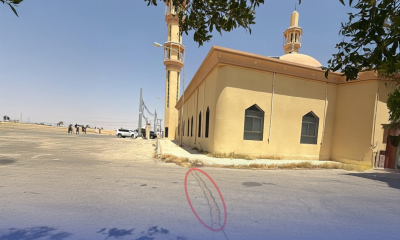
The Governor of Tabuk Region, Prince Fahd bin Sultan bin Abdulaziz, accompanied by his deputy, Prince Khalid bin Saud, reviewed a number of municipal projects


Prince Fahd bin Sultan bin Abdulaziz, the Governor of Tabuk Region, accompanied by his deputy Prince Khalid bin Saud, reviewed a number of municipal and housing projects implemented by the Ministry of Municipalities and Housing in the region. These projects included infrastructure projects, road paving, square development, urban beautification, rainwater drainage, flood control, as well as housing, investment, environmental, and future infrastructure projects, with a total estimated cost of 4.335 billion riyals.
The Governor of Tabuk stressed the importance of completing these projects in a way that contributes to enhancing sustainable development, improving the quality of life, and fulfilling the aspirations of the residents of the Tabuk region within the objectives of the Kingdom's Vision 2030. He said: "These projects are promising and serve the citizens, providing them with the necessary services." He noted the attention and care that the wise leadership gives to all development projects that serve the nation and its citizens, contribute to raising the level of quality of life, and enhance the great civilizational transformation that the region is experiencing. He called on investors and businessmen to take advantage of the promising investment opportunities offered by the region's secretariat and its affiliated municipalities in the governorates.
This came during his meeting yesterday evening at the Government Palace with citizens, heads of courts, judges, tribal sheikhs, and directors of government departments in the region. The meeting reviewed the most prominent municipal, housing, investment, and service projects, which were presented by the Mayor of Tabuk, Engineer Hussam bin Muwaffaq Al-Yousef, in a brief presentation via video screens. The presentation included more than 43 projects, some of which are currently being implemented and others which have been awarded, with a total value of 674 million riyals. These projects cover various sectors, including public bus transportation, paving of allocated land plots, and the development of the region's main roads. Additionally, the presentation highlighted improving road efficiency by constructing two bridges at the intersection of King Faisal Road with Prince Fahd bin Sultan Road (Sahari Roundabout) and at the intersection of Prince Mohammed bin Salman Road with King Fahd Road. The presentation also addressed the urban development of several mosque courtyards, the implementation of stormwater drainage networks that will address 32 small and 3 large collection points, bringing the total number of large collection points addressed to 20 out of 24, the implementation of flood mitigation projects, and future projects with an estimated cost exceeding 2.6 billion riyals. Riyal.
On the investment side, Engineer Al-Yousef reviewed the investment projects currently being implemented, which number more than 48 projects with an estimated construction cost exceeding one billion and two hundred million riyals, including medical, educational, sports, entertainment and logistics sectors, in order to meet the needs of residents and visitors, and open new horizons for direct and indirect job opportunities. Among these projects are: Dr. Sulaiman Al-Habib Hospital with a capacity of 200 beds and 100 medical clinics, Alfa Medical Center which includes four specialized clinics, a pharmacy and hotel apartments (90 rooms), Vision Medical Center which contains 18 departments and a free kidney dialysis center, in addition to the Meridien Hotel project which includes 150 hotel rooms and suites, and a center to house more than 2,000 heavy equipment to ensure that it does not break down inside residential neighborhoods.
On the environmental front, the presentation addressed the new environmental landfill project, which represents a qualitative leap in waste management in the region. It was built with more than 35 million riyals east of Tabuk city, upwind, and with modern European equipment that ensures the treatment of solid waste in an advanced scientific manner. The project includes a station with a capacity of up to 80 tons per hour, engineered insulating cells to prevent the leakage of leachate, in addition to an integrated system for sorting waste and recycling usable materials, and converting organic waste in the future into alternative energy and organic fertilizer.
Related News
The Prince of the region and the attendees were also shown a model of the Valley Tabuk waterfront, which is located on a total area of approximately 778,000 square meters and includes 874 residential units, 4 mosques and prayer halls, 5 gardens and parks, 5 commercial centers and educational complexes containing 5 schools.





Politics
Saudi Defense Minister discusses regional developments with the Emir of Qatar
Following directives from the leadership, Defense Minister Prince Khalid bin Salman met with the Emir of Qatar in Doha. The two sides discussed bilateral relations and regional developments to enhance security and stability.
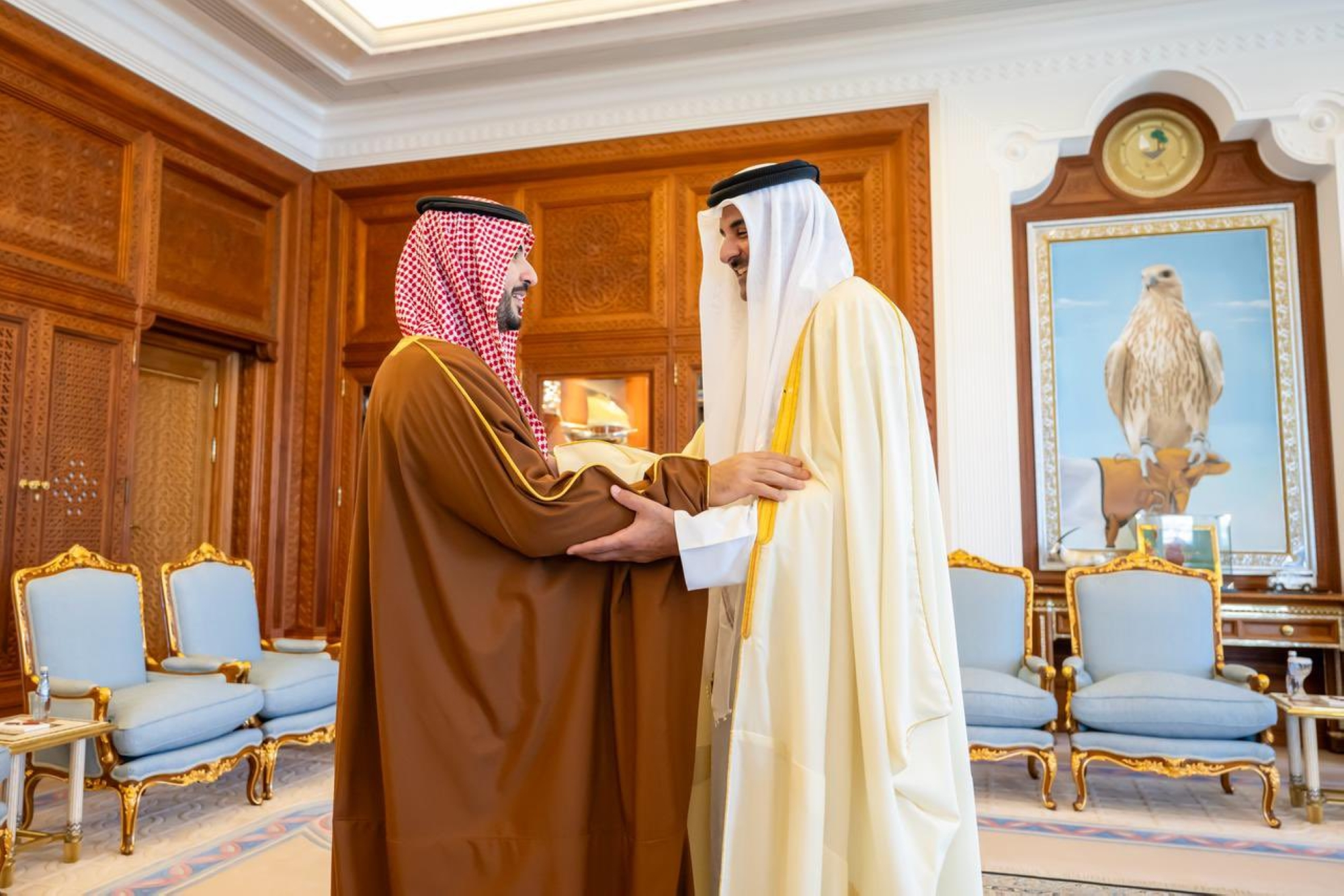
With the generous guidance of the Custodian of the Two Holy Mosques, King Salman bin Abdulaziz Al Saud, and His Royal Highness Prince Mohammed bin Salman bin Abdulaziz, Crown Prince and Prime Minister - may God protect them - His Royal Highness Prince Khalid bin Salman bin Abdulaziz, Minister of Defense, arrived today (Wednesday) in the Qatari capital, Doha, where he met with His Highness Sheikh Tamim bin Hamad Al Thani, Emir of the State of Qatar.
Conveying greetings from the Saudi leadership
The Minister of Defense began the meeting by conveying the greetings of the Custodian of the Two Holy Mosques, King Salman bin Abdulaziz, and His Royal Highness Crown Prince Mohammed bin Salman, to their brother, His Highness the Emir of the State of Qatar, and their wishes for continued progress and prosperity for the brotherly State of Qatar, its government, and its people. For his part, Sheikh Tamim bin Hamad Al Thani asked Prince Khalid bin Salman to convey his greetings and appreciation to the Saudi leadership, emphasizing the deep ties that bind the two countries.
Review of fraternal relations and defense cooperation
During the meeting, the strong fraternal relations between the Kingdom of Saudi Arabia and the State of Qatar were reviewed, relations which are based on a long history of neighborliness and shared destiny. The two sides discussed ways to enhance bilateral cooperation in various fields, particularly in defense and military affairs, in a manner that serves the interests of both brotherly countries and strengthens the joint Gulf security system.
Discussion of regional and international developments
The meeting addressed at length current regional and international developments, with both sides discussing efforts to address several pressing issues in the region. This meeting comes at a sensitive time, as the Middle East region faces rapidly escalating geopolitical challenges, necessitating enhanced coordination and ongoing consultation among the Gulf Cooperation Council (GCC) states to ensure security and stability.
The importance of Saudi-Qatari coordination
The visit of Saudi Defense Minister Prince Khalid bin Salman to Doha is of particular importance, reflecting the advanced level of Saudi-Qatari coordination achieved recently. These meetings are an extension of the outcomes of the Saudi-Qatari Coordination Council, which aims to institutionalize and expand cooperation to encompass all political, security, and economic spheres. Observers emphasize that the convergence of visions between Riyadh and Doha is a fundamental pillar for regional stability, especially given the pressing need to unify Gulf and Arab positions on critical issues and matters of common interest.
Politics
US-Iran nuclear talks in Oman: Details of Friday's round
US-Iranian nuclear talks kicked off in Oman on Friday after the Trump administration agreed to move them from Türkiye, amid reports of Arab countries participating in the anticipated negotiations.
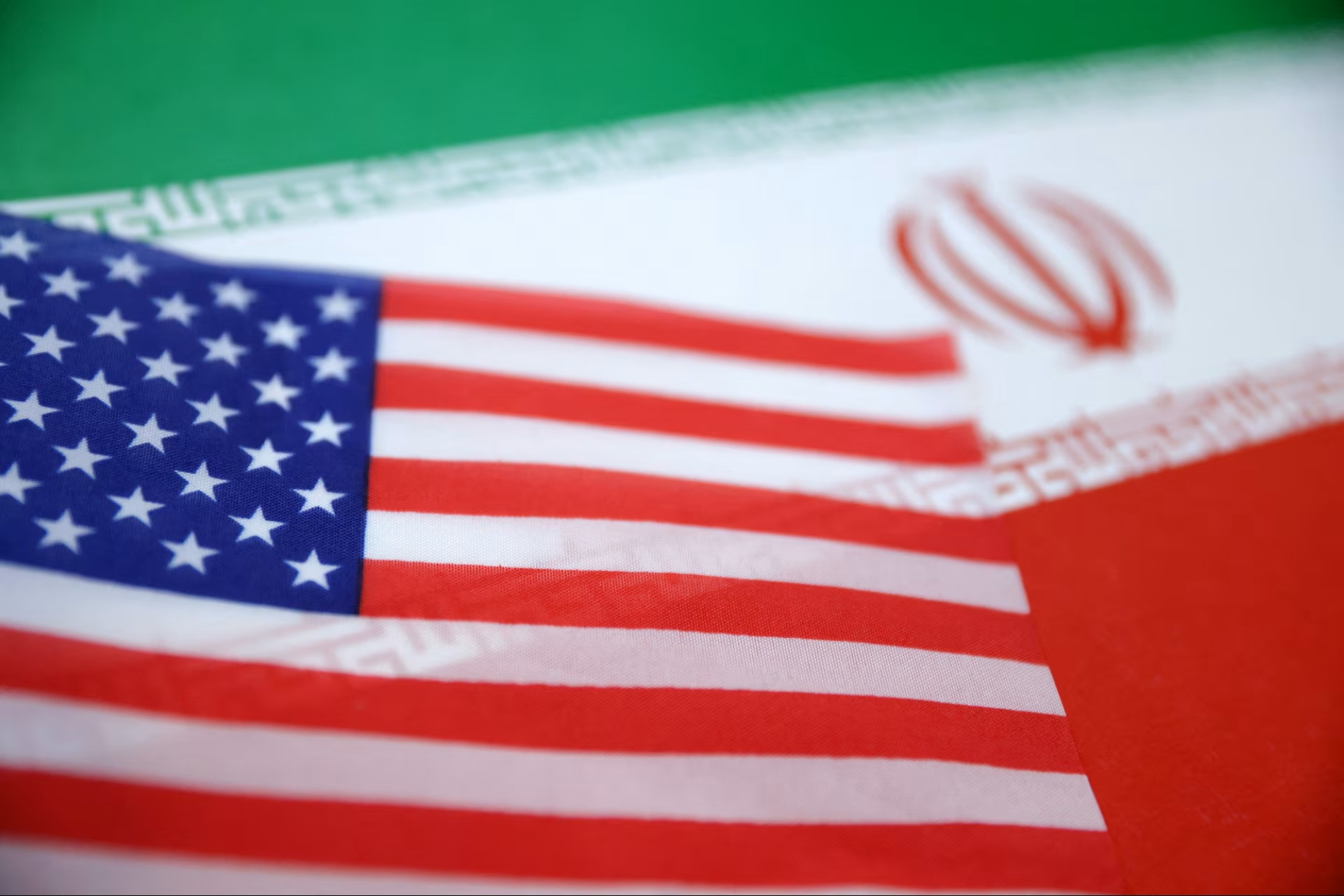
American media reports have revealed significant developments in the Iranian nuclear file. The Axios website, citing a well-informed Arab source, reported that a new round of nuclear talks between the United States and Iran will be held in the Omani capital, Muscat, next Friday. This move comes after the Trump administration agreed to Tehran's request to change the venue from Turkey to Oman, reflecting a shift in the logistical and political arrangements surrounding this complex issue.
Details of the transfer and potential Arab participation
The source indicated that the shift to Muscat was not merely a procedural step, but rather stemmed from an Iranian desire and American approval, highlighting the mutual trust in Omani mediation. In a related context, discussions are still ongoing behind the scenes regarding the possibility of expanding participation to include Arab and Islamic countries in this round, a demand long advocated by countries in the region to ensure their security concerns are taken into account, although the names of the countries considered for participation have not yet been officially disclosed.
The Sultanate of Oman: A history of mediation and positive neutrality
The choice of Oman to host these talks comes as no surprise to observers, as Muscat has a long and distinguished history of playing the role of "honest broker" in the Middle East. The Sultanate served as the back channel that hosted the secret talks between Washington and Tehran, paving the way for the landmark 2015 nuclear agreement (the Joint Comprehensive Plan of Action). Omani foreign policy is characterized by positive neutrality and the ability to maintain balanced relations with all conflicting parties, making it the most acceptable venue for bridging differences in complex crises.
Strategic importance and timing of the talks
This round of talks is of paramount importance given the sensitive timing in the Middle East. With regional tensions escalating, the international community views the Iranian nuclear issue as a key to regional stability. The return to the negotiating table, specifically in Muscat, indicates a desire among the parties to de-escalate tensions and avoid military escalation. Furthermore, the discussion of involving Arab states reflects a growing understanding that any lasting agreement must have broad regional acceptance to ensure the security of navigation in the Gulf and the Strait of Hormuz, and to comprehensively address the issues of nuclear proliferation and ballistic missiles.
All eyes will remain on Muscat on Friday, to see what this round of talks will bring, and whether Omani diplomacy will once again succeed in breaking through the wall of the ongoing crisis between Washington and Tehran, especially in light of an American administration whose decisions are characterized by surprise and decisiveness.
Politics
Details of the joint statement regarding Erdogan's visit to Saudi Arabia and his meeting with the Crown Prince
We are publishing the text of the joint statement issued following the Turkish President's visit to Saudi Arabia. The statement focused on strengthening economic and defense cooperation, and reaching an agreement on the issues of Gaza, Syria, and Yemen within the framework of Vision 2030.
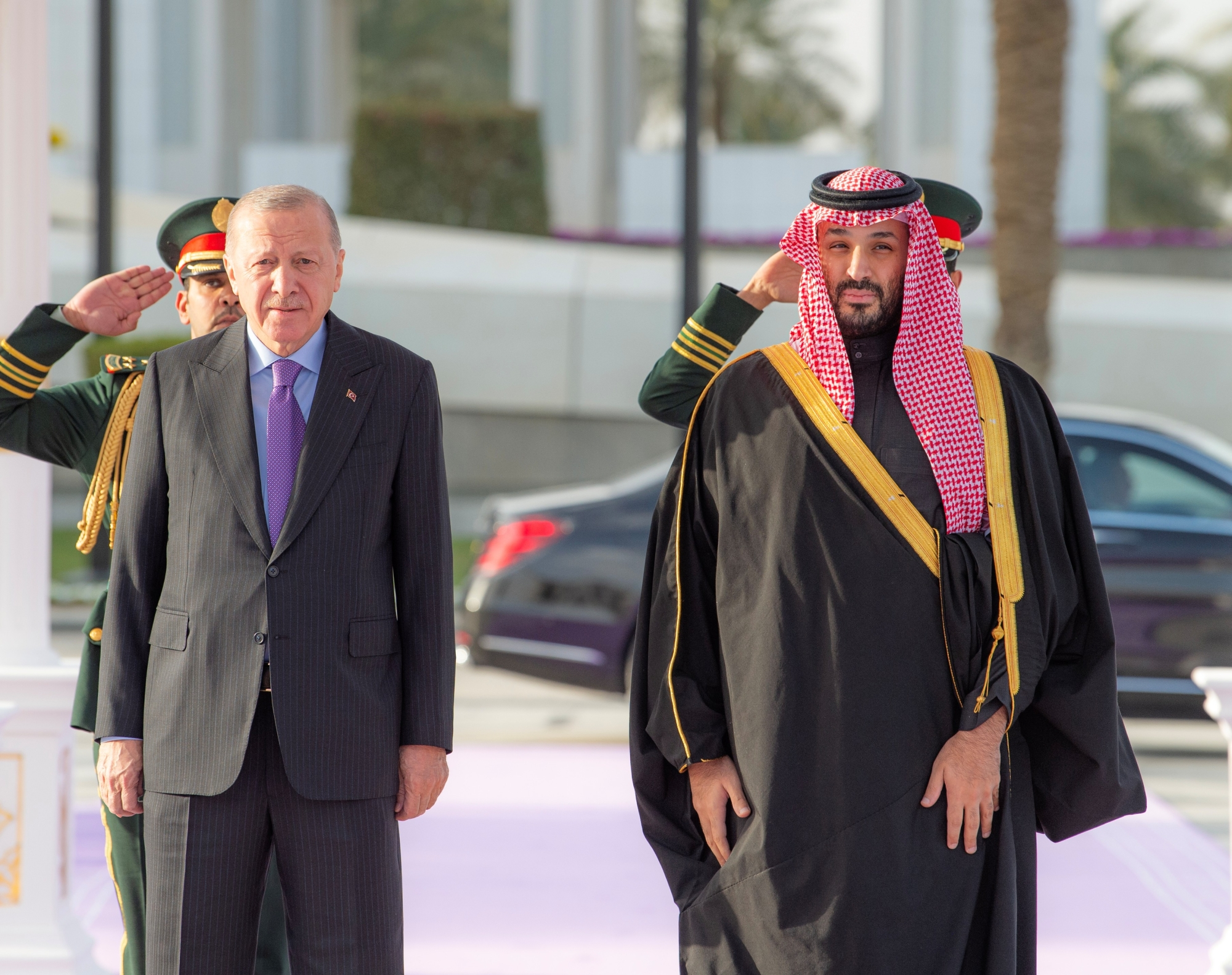
In a move reflecting the depth of the historical and strategic relations between the two countries, a joint statement was issued at the conclusion of the official visit of His Excellency Turkish President Recep Tayyip Erdoğan to the Kingdom of Saudi Arabia, where he held extensive talks with His Royal Highness Prince Mohammed bin Salman bin Abdulaziz, Crown Prince and Prime Minister, at Al-Yamamah Palace in Riyadh.
A new era of strategic cooperation
This visit, which took place in February 2026, comes as a continuation of the path of developing relations that witnessed a qualitative leap since the visit of His Royal Highness the Crown Prince to Turkey in June 2022, and the visit of President Erdogan to the Kingdom in July 2023. The two sides affirmed that these mutual visits established a solid foundation for joint cooperation, which contributed to expanding the scope of the partnership to include various vital fields, in a way that serves the interests of the two brotherly peoples and enhances stability in the region.
Integration of economic and investment visions
The economic file formed a cornerstone of the discussions, with the joint statement emphasizing the importance of aligning Saudi Arabia’s Vision 2030 with Turkey’s Vision 2030. Both sides commended the outcomes of the Saudi-Turkish Investment Forum held in Riyadh, which saw broad participation from the private sector, stressing the need to increase non-oil trade and expedite negotiations for a free trade agreement between the Gulf Cooperation Council (GCC) countries and Turkey. They also agreed to enhance cooperation in the infrastructure, contracting, tourism, and defense industries sectors.
Energy and Climate Partnership
In the energy sector, both sides agreed to enhance cooperation in the fields of electricity and renewable energy, including studies on electricity interconnection and the development of clean hydrogen technologies. Regarding climate action, the Kingdom welcomed Turkey's hosting of the Conference of the Parties (COP31), scheduled to be held in Antalya in November 2026, and affirmed their commitment to implementing the principles of a circular carbon economy to address environmental challenges.
Political consensus on regional issues
Regional and international issues occupied a large part of the statement, as both sides showed complete agreement in their visions regarding crucial issues:
- On the Palestinian issue, both sides stressed the need for an immediate ceasefire in Gaza, an end to the occupation, and support for the establishment of an independent Palestinian state. They also welcomed current international efforts and the endeavors of the Peace Council, emphasizing the pivotal role of UNRWA.
- The Syrian issue: Both sides expressed their support for the Syrian government’s efforts to maintain the security, stability and unity of Syrian territory, and rejected foreign interference or Israeli attacks on its sovereignty.
- Yemen, Sudan and Somalia: The statement affirmed support for legitimacy in Yemen, and the unity and sovereignty of Sudan and Somalia, rejecting any attempts to divide these countries or create parallel entities that threaten their stability.
The statement concluded by affirming the shared determination to continue coordination in the defense and security fields, and in combating terrorism, in order to ensure regional and international peace and security, with an exchange of invitations for future visits that will strengthen the bonds of brotherhood between the two leaderships and peoples.
-

 Culture and Art, 1 week ago
Haifa Wehbe's absence in Riyadh: A photo crisis or a strained relationship with the media?
-

 Culture and Art, 1 week ago
City Kitchen series: A drama of conflict and the middle class during Ramadan
-

 Culture and Art, 1 week ago
The series "Kasra": Dawood Hussein in a moving social drama this Ramadan
-

 Local news one week ago
Applying for the 1447 Opportunities Program for Teachers via the Fares System
-

 Local news one week ago
Ramadan 2026 discounts in Saudi Arabia: Offers valid for 54 days
-
 Culture and Art 6 days ago
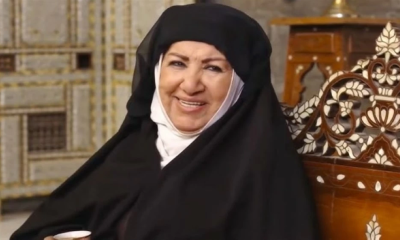
The death of artist Huda Shaarawi “Umm Zaki” and her funeral in Damascus
-

 Technology 6 days ago
ICAN 2026 Conference Conclusion: Initiatives to Enhance Saudi Arabia's Leadership in Artificial Intelligence
-

 Local news one week ago
Saudi Arabia halts perennial fodder cultivation to conserve groundwater