Politics
Foreign Minister: Prolonging the war deepens the suffering of the Palestinian people and threatens international peace and security
Foreign Minister Prince Faisal bin Farhan bin Abdullah participated today in the second meeting of foreign ministers of the G20 countries

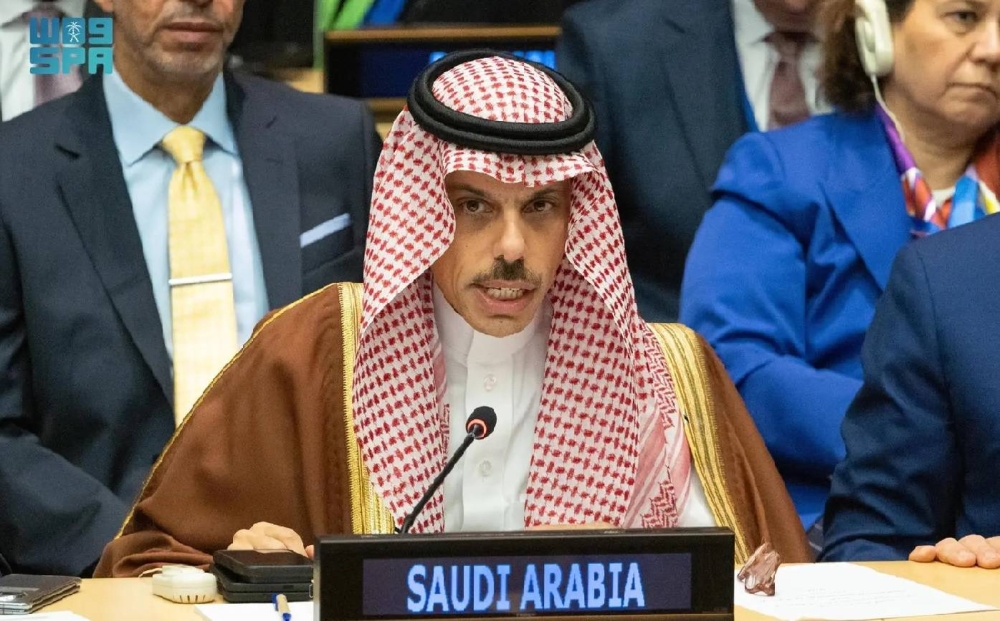
Foreign Minister Prince Faisal bin Farhan bin Abdullah participated today in the second meeting of foreign ministers of the G20 countries, chaired by Brazil, on the sidelines of the high-level week of the United Nations General Assembly in its seventy-ninth session in New York City, USA.
At the beginning of his speech, the Foreign Minister praised the efforts of the Federative Republic of Brazil in promoting global cooperation, and said: “Perhaps the fact that our meeting is being held on the sidelines of the United Nations General Assembly is indicative of the importance of the G20 and its leadership in ensuring the health of the global economy, promoting multilateral cooperation, and finding innovative solutions to common challenges.”.
The Foreign Minister stressed the urgent need to adhere to successful models of collective action and the importance of striving to develop and reform international institutions. He said: “The repercussions of wars and political conflicts undermine efforts to establish international peace and security and cast a shadow over all aspects of multilateral action. When these institutions fail to perform their basic duties towards these crises, this creates a gap in international action and a crisis of confidence that undermines their legitimacy. This is what we are witnessing today in the way some international institutions are dealing with the humanitarian catastrophe in Palestine.”.
He stressed that prolonging and expanding the war deepens the suffering of the Palestinian people, threatens international peace and security, and undermines the chances of achieving comprehensive peace in the region.
He added: “The G20 countries must intensify their joint efforts to overcome the international failure to address Israel’s grave violations of international laws and norms, and enable a ceasefire and the adoption of a credible and irreversible path to the establishment of an independent Palestinian state.”.
Regarding the reform of the United Nations system, particularly the Security Council, he noted the urgent need for fundamental reform to address shortcomings in its response to crises, meet the needs of peoples, and keep pace with international developments and requirements. He stated, “The Kingdom affirms that the goal of reforming the Security Council is to enhance its credibility and effectiveness, based on its belief in the importance of this for confronting contemporary crises and challenges, thereby contributing to a more just, secure, and stable world.”.
He noted the Kingdom’s emphasis on the importance of the G20’s efforts to enhance the effectiveness of multilateral development banks in bridging the gap, including developing a roadmap for banks affiliated with the group’s countries, implementing the G20 Capital Adequacy Framework recommendations, and putting in place measures that could open the door to the possibility of increasing lending by $357 billion over the next decade.
He stressed that close cooperation among the group’s countries contributes to strengthening the legitimacy of the multilateral trading system, increasing confidence in the international financial architecture, and formulating a flexible, inclusive and sustainable international financial and trade system.
He concluded his speech by affirming the Kingdom’s commitment to strengthening joint action within the G20, saying: “Our cooperation has proven its ability to enhance an effective response to the needs of the global economy, and to pave the way towards a fair and sustainable future.”.
The meeting was attended by the Kingdom’s Permanent Representative to the United Nations in New York, Ambassador Dr. Abdulaziz Al-Wasil, and the Director General of the Office of the Minister of Foreign Affairs, Abdulrahman Al-Dawood.




Politics
New York Times: Israel destroyed half of Iran's ballistic missiles
The New York Times revealed that Israel destroyed 200 Iranian ballistic missile launchers and disrupted explosives manufacturing facilities, representing a major blow to half of Tehran’s missile arsenal.

A recent report by The New York Times revealed detailed information about the extent of the damage inflicted on Iran's military arsenal, confirming that the Israeli army destroyed approximately 200 Iranian ballistic missile launchers and disabled dozens more. The report indicates that this number represents nearly half of Tehran's total launchers since the 12-day war.
A strategic blow to manufacturing facilities
The newspaper explained that the Israeli airstrikes were not limited to launch sites alone, but also targeted, in the current attack and a previous one carried out last summer under the name "Operation Rising Lion," Iran's central explosives manufacturing facility. This facility is considered the main artery supplying Iran with the materials needed for missile warheads, in addition to supporting other strategic weapons programs, including solid rocket fuel, drones, and cruise missiles.
The context of the conflict and the development of intelligence capabilities
These developments come amid a qualitative shift in the confrontation between Israel and Iran, where the conflict has moved from a "shadow war" involving cyberattacks and targeting proxies to direct confrontations and precision airstrikes targeting military infrastructure. Prior to Israel's 12-day air campaign against Iran last summer, Israeli intelligence had reached accurate assessments indicating that Iran was actively seeking to increase its ballistic missile production to bolster its deterrent capabilities.
The strategic importance of Iranian ballistic missiles
Ballistic missiles are the backbone of Iranian military doctrine, given Tehran's lack of a modern air force comparable to Western or Israeli capabilities. Therefore, destroying half of Iran's launch sites would significantly reduce its ability to launch ripple attacks or respond immediately to external threats, at least temporarily altering the balance of power in the region.
The repercussions of the strike on the regional balance
Military observers believe that targeting solid fuel mixers and manufacturing facilities is more dangerous than targeting the platforms themselves, as replacing the precision manufacturing equipment requires considerable time and complex technologies that may be difficult to import under international sanctions. This Israeli intelligence and military success sends a strong message about the vulnerability of Iran's infrastructure and may prompt Tehran to reassess its strategic calculations regarding its weapons program and regional influence in the coming period.
Politics
Kuwaiti Defense Ministry: Details of US aircraft crashes and crew survival
The Kuwaiti Ministry of Defense announced the downing of American warplanes and the complete survival of their crews, coinciding with air defenses intercepting hostile targets amid regional tensions and ongoing escalation.

The Kuwaiti Ministry of Defense officially announced the downing of a number of US military aircraft in Kuwaiti airspace, confirming in an urgent statement the survival of all military crews on board, coinciding with the escalation of security events in the Arabian Gulf region and the continuation of Iranian strikes for the third day in a row.
In a statement detailing the incident, the Kuwaiti Army General Staff issued a clarification today (Monday), stating that "this morning, a number of American warplanes crashed, and their crews all survived." The statement emphasized that joint military coordination between the Kuwaiti and American sides contributed to the swift response to the situation, with the relevant authorities immediately commencing search and rescue operations at the crash site.
Evacuation and medical care
The General Staff explained that the aircrews were successfully evacuated and immediately transported to the hospital for necessary medical examinations and to ensure their well-being. Initial medical reports confirm their condition is stable and they are receiving the necessary care. This swift action reflects the readiness of the emergency and rescue teams in handling urgent military incidents.
Background of strategic military cooperation
This incident comes within the context of the close and historic military cooperation between the State of Kuwait and the United States of America. The two countries are bound by decades-long strategic defense and security agreements aimed at enhancing regional security and stability. Kuwait hosts a number of US military bases and units that conduct regular training exercises and air patrols, resulting in a high level of air and operational coordination between the two countries, which explains the rapid response to the rescue operation.
Regional tensions and air defense response
This incident coincides with a highly tense regional situation, with reports indicating that Iran launched a new wave of missile and drone attacks targeting several Gulf capitals and cities, including Doha, Kuwait City, Dubai, Abu Dhabi, and Bahrain. In this regard, military sources reported that Kuwaiti air defense systems proved their effectiveness and intercepted hostile targets in the airspace along the coastline, after sirens sounded warning of the impending threat.
Observers believe that these rapid developments pose significant security challenges to the region, necessitating the highest levels of preparedness to protect airspace and vital facilities, while the relevant authorities continue to closely monitor the situation on the ground to ensure the safety of citizens and residents.
Politics
A joint Gulf-Jordanian-American statement condemns Iran's destabilizing actions
A joint Gulf-Jordanian-American statement strongly condemns the Iranian missile and drone attacks, stressing that they threaten regional stability, violate the sovereignty of states, and endanger civilians.

The United States, the Gulf Cooperation Council (GCC) countries, and the Hashemite Kingdom of Jordan issued a strongly worded joint statement asserting that recent Iranian actions constitute a direct and explicit threat to regional stability in the Middle East. The statement emphasized that Iran's targeting of civilians and infrastructure in countries not involved in hostilities is a reckless act that violates international norms and laws.
The Kingdom of Saudi Arabia, the Kingdom of Bahrain, the State of Qatar, the State of Kuwait, the United Arab Emirates, the Sultanate of Oman, the Hashemite Kingdom of Jordan, and the United States of America strongly condemned Iran’s indiscriminate attacks. The statement noted Tehran’s use of ballistic missiles and drones in attacks targeting sovereign territories across the region, including Bahrain, Iraq (including the Kurdistan Region), Jordan, Kuwait, Oman, Qatar, Saudi Arabia, and the United Arab Emirates.
Context of regional tensions
This statement comes at a time of heightened anticipation and caution in the region due to escalating geopolitical tensions. The issue of Iranian ballistic missiles and drones has long been a central point of discussion in security talks between the Gulf states and their international allies. This diplomatic consensus among the Gulf states, Jordan, and the United States signals a shared understanding of common security threats and sends a clear message about the need to curb activities that could undermine security and peace in this vital global corridor.
Violation of sovereignty and threat to civilians
The joint statement asserted that these unjustified attacks not only violated the sovereignty of states but also endangered the lives of innocent civilians and caused material damage to civilian infrastructure unrelated to any military conflict. The signatories emphasized that such actions constitute a dangerous escalation that threatens to undermine efforts to de-escalate tensions in the region.
The importance of a unified stance
Observers believe that the issuance of this statement in its collective form reflects the depth of the strategic partnership between the United States and its partners in the region, and underscores the mutual commitment to defending shared interests. The statement also highlights the importance of collective action in confronting transnational security challenges, as the security of the Gulf Cooperation Council states and Jordan is considered an integral part of the regional and international security system.
The statement concluded by emphasizing that Iranian actions require a firm international stance to prevent the recurrence of such violations that threaten the safety and sovereignty of states, and place the entire region before open scenarios of instability.
-

 Local News 4 days ago
Saudi Arabia approves regulations for the continued presence of Gulf vehicles: duration and penalties
-
Local news two days ago
Jeddah Airport alerts for travelers due to airspace closure and flight disruptions
-
Local news one week ago
The Ministry of Interior begins procedures for a royal pardon for common law prisoners
-
Local News 6 days ago
The deadline for property registration in Hail and Riyadh is Thursday
-
Sports one week ago
Tickets for the Al-Ahli vs. Al-Hilal King's Cup match postponed: New date
-
Local News 6 days ago
Under the patronage of the Minister of Information, an agreement was signed between the Ministry of Information and Waves Marketing Company
-
Culture and Art 5 days ago
The Devil's Prisons series was halted: The full story of "The Emperor's" being moved to YouTube
-
Local news one week ago
Saleh Al-Maghamsi appointed Imam of the Prophet's Mosque: Details of the Royal Decree