
Politics
Foreign Minister: We reject linking the entry of aid into Gaza to a ceasefire
Foreign Minister Prince Faisal bin Farhan announced today (Friday) his rejection of linking the entry of aid into Gaza to a ceasefire


Foreign Minister Prince Faisal bin Farhan announced today (Friday) his rejection of linking the entry of aid into Gaza to a ceasefire, stressing that using aid as a tool of war is contrary to all norms and principles of international law.
At a press conference following the meeting of the ministerial committee tasked with international action to stop the war on Gaza in Antalya, Turkey, today, Prince Faisal bin Farhan said: “We must return to a sustainable ceasefire, which should be a path to alleviate the suffering of the people of Gaza and a gateway to a final political solution to the Palestinian issue through the establishment of a Palestinian state.” He added: “I would like to emphasize that it is neither possible nor permissible under any circumstances to link the entry of aid to Gaza to a ceasefire. This is completely contrary to all the foundations of international law. The necessary aid must reach the civilians in Gaza and they must not be deprived of it, as using aid as a tool of war is contrary to all the norms and foundations of international law.”.
Prince Faisal called on the international community to exert all pressure to ensure that aid reaches civilians in Gaza without interruption and in sufficient quantities, and he rejected linking this to other considerations, including a ceasefire, stressing: “We categorically reject any proposal related to the displacement of Palestinians from their lands, and this extends to all forms of this displacement. There are some who seek to characterize the Palestinian departure as voluntary, and it is impossible to talk about voluntaryness while Palestinians in Gaza are deprived of the most basic necessities of life.”.
He added: If aid, food, water, and electricity do not enter, and civilians are threatened every day with military bombardment, and even if some of them are forced to leave, this is not voluntary but rather a form of coercion. Therefore, we must be clear that any displacement of Palestinians in Gaza under any pretext is absolutely rejected, and any proposal that attempts to portray the departure of Palestinians under these circumstances as merely cleverness and a circumvention of the truth. The truth is that Palestinians in Gaza are being deprived of the most basic necessities of life, and therefore we must continue to acknowledge this fact and work steadily. We hope that this message is clear to everyone.
The Emir praised the Egyptian and Qatari efforts made within the framework of the ceasefire negotiations in Gaza.
For their part, the foreign ministers in Antalya announced in a joint statement their support for the United Nations Relief and Works Agency for Palestine Refugees (UNRWA), stressing their firm and unequivocal rejection of any displacement or expulsion of the Palestinian people from their lands in Gaza or the West Bank, including East Jerusalem.
The ministers called for the unification of the Gaza Strip with the West Bank, including East Jerusalem, under the authority of the Palestinian government, stressing an immediate and permanent ceasefire, in accordance with UN resolutions, as well as a halt to Israeli violations of international law in the West Bank, including settlement activity, house demolitions, and land confiscation.
Prince Faisal bin Farhan participated today in the coordination meeting of the ministerial committee tasked by the extraordinary joint Arab and Islamic summit regarding developments in the Gaza Strip, which is being hosted by the Turkish city of Antalya.
During the meeting, developments in Palestine were discussed, particularly the latest developments in the Gaza Strip, the efforts being made to achieve an immediate and sustainable ceasefire, and the imperative of allowing more relief and humanitarian aid into the Strip without hindrance.
The meeting discussed intensifying joint action to address all Israeli violations of international law and international humanitarian law and grave violations against the Palestinian people, and rejected all attempts at displacement, including through the policy of creating unlivable conditions suffered by the Palestinian people as attempts at forced displacement. It also emphasized the continuation of efforts aimed at enabling the Palestinian people to exercise their inherent rights, foremost among them the establishment of their independent state on the 1967 borders with East Jerusalem as its capital, within the framework of the work of the Global Alliance for the Implementation of the Two-State Solution and the Peace Conference chaired by the Kingdom of Saudi Arabia and the French Republic, which will be held from June 17 to 20 in New York City.
The meeting was attended by the Ambassador of the Custodian of the Two Holy Mosques to the Republic of Turkey, Fahd bin Asaad Abu Al-Nasr, and the Advisor at the Ministry of Foreign Affairs, Dr. Manal Radwan.
Related News




Politics
Peace Winds 2026 naval exercises between Saudi Arabia and Oman
The “Peace Winds 2026” naval exercises between Saudi and Omani forces have begun to enhance maritime security and protect navigation in the Sea of Oman, with the participation of warships and aircraft.
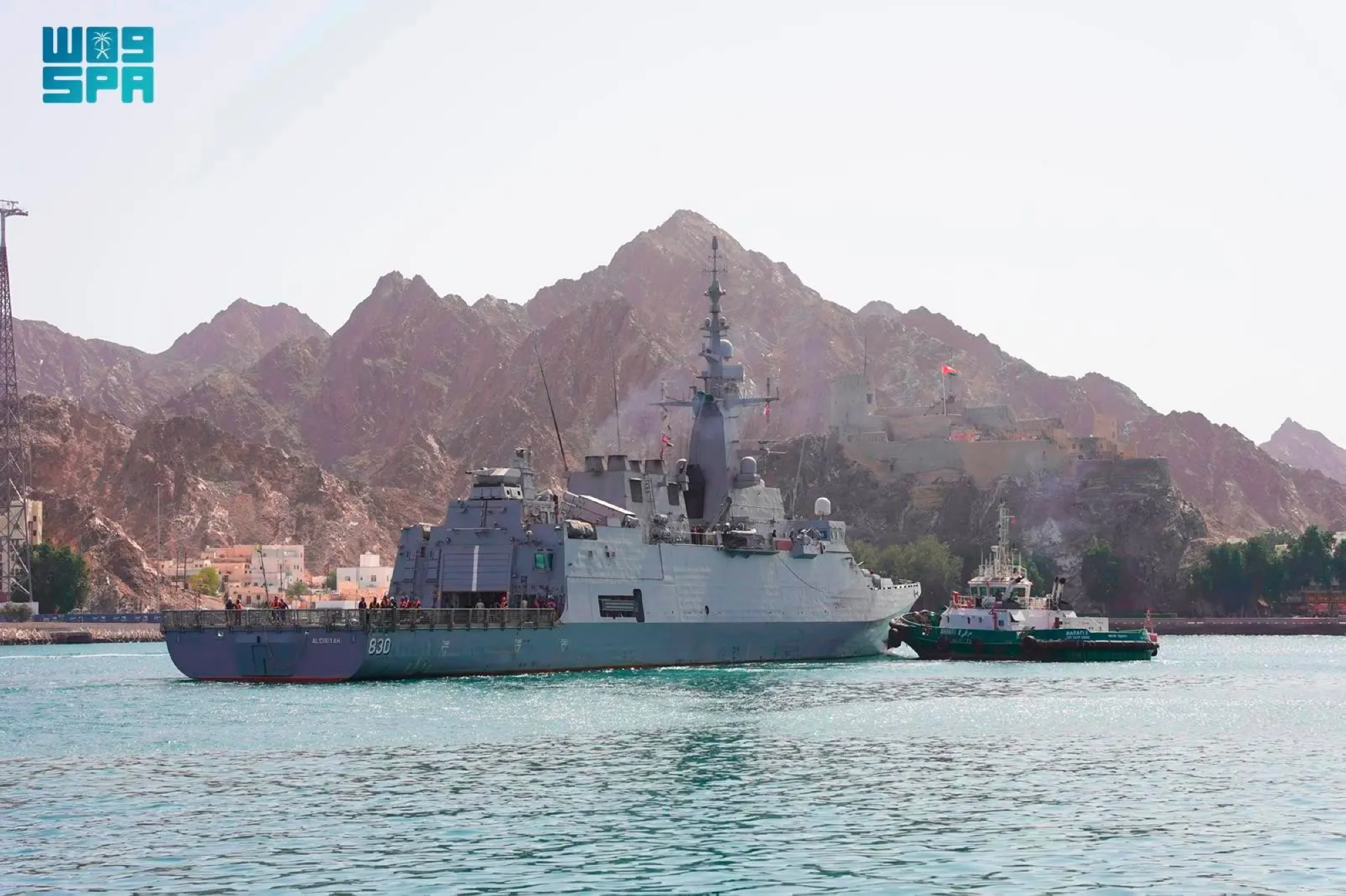
The joint bilateral naval exercise “Winds of Peace 2026,” bringing together the Royal Saudi Naval Forces and their counterparts in the Royal Navy of Oman, has commenced in the Sultanate of Oman. This exercise comes within the framework of strengthening military cooperation and integrating defense efforts between the two brotherly countries, and reaffirming their shared commitment to maintaining the security and stability of the region.
In this regard, the exercise commander, Rear Admiral Mohammed bin Ayed Al-Otaibi, explained that “Winds of Peace 2026” primarily aims to enhance combat readiness and exchange expertise in the areas of naval operations and maritime security. He added that the exercise seeks to unify operational concepts in the preparation, planning, and execution phases, thereby strengthening the two navies' ability to protect vital maritime shipping lanes and secure waterways.
The exercise features extensive participation from naval and air assets, including 10 advanced warships, helicopters, and two platoons of special naval security units. The Royal Air Force of Oman is also supporting the exercise, adding a complementary dimension to the joint operations. The maneuvers encompass a range of scenarios simulating modern maritime challenges, including specialized joint operations training, live-fire missile exercises, and advanced training for special security units and naval aviation.
Strategic context and regional importance
This exercise is of particular importance given the deep-rooted strategic and historical relations between the Kingdom of Saudi Arabia and the Sultanate of Oman. These maneuvers are an extension of a series of joint military exercises aimed at strengthening joint Gulf defense efforts and enhancing the capabilities of the armed forces of the Gulf Cooperation Council (GCC) member states. Furthermore, the Sultanate of Oman's strategic location overlooking the Sea of Oman and the Strait of Hormuz, a vital artery for global trade and energy supplies, lends these exercises an additional strategic dimension in securing one of the world's most important waterways.
Expected impact and international dimensions
At both the regional and international levels, the “Peace Winds 2026” exercise sends a clear message about the readiness and capability of both countries to confront shared security challenges, particularly those related to piracy, smuggling, and illicit maritime activities. The exercise contributes to enhancing regional stability by demonstrating joint deterrence capabilities and reassures the international community and trading partners of the continued security and safety of navigation in this vital region. The high level of coordination between Saudi and Omani forces reflects an advanced level of trust and cooperation and contributes to building an integrated security system capable of addressing various threats.
It is worth noting that the first phase of the exercise was conducted at King Faisal Naval Base in the Western Fleet in April 2025, focusing on planning and scenario development using advanced simulation systems. The current phase translates those plans into practical training exercises in the maritime theater of operations in the Sea of Oman and at the Said bin Sultan Naval Base, ensuring maximum benefit and enhancing the operational efficiency of the participating forces.
Politics
Peace Winds 2026 maneuvers between Saudi Arabia and Oman to enhance maritime security
The “Peace Winds 2026” naval exercise between Saudi Arabia and Oman has been launched to enhance combat readiness and secure shipping lanes in the Sea of Oman and the Gulf.
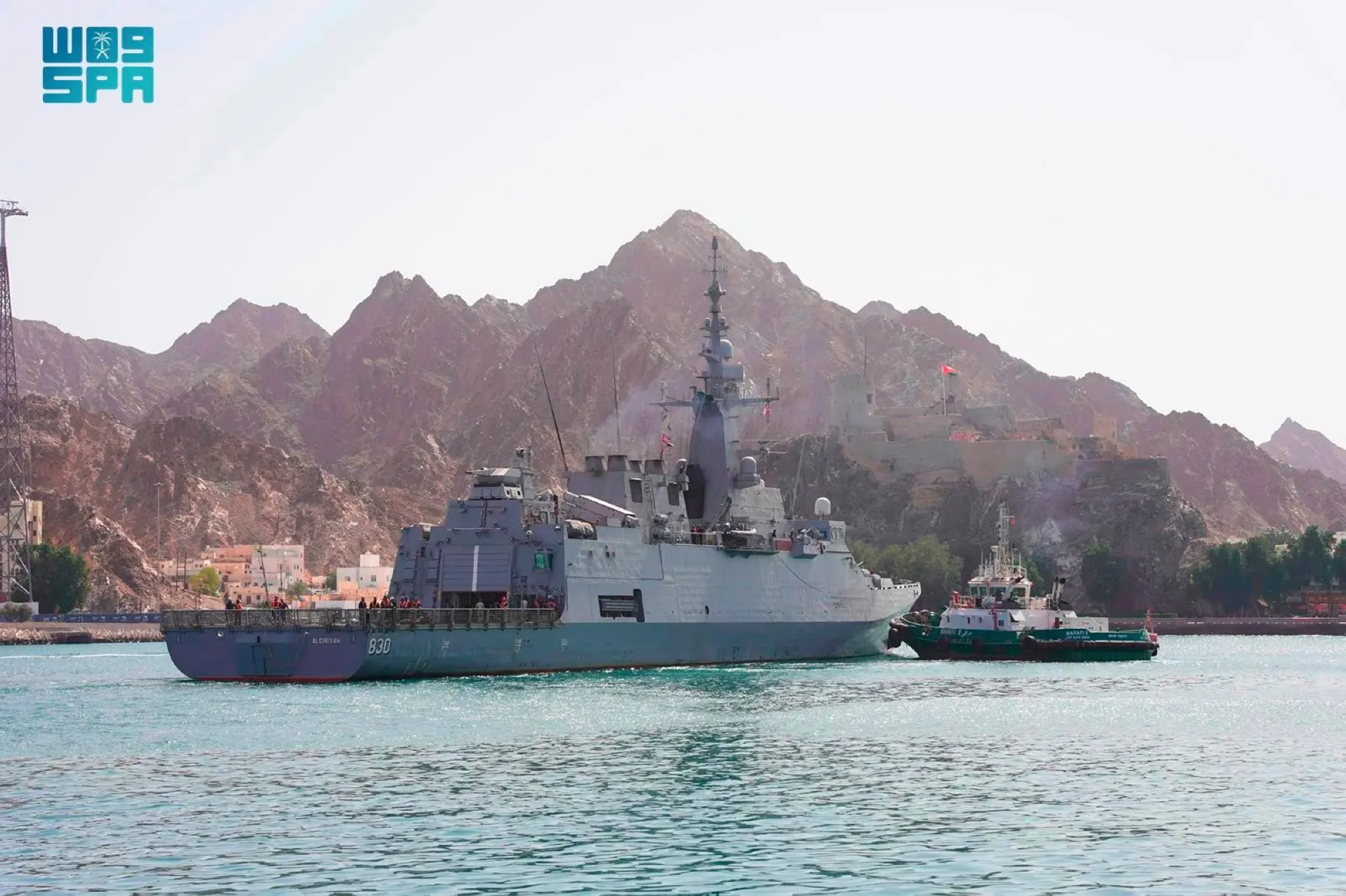
The joint bilateral naval exercise “Winds of Peace 2026” has commenced in the Sultanate of Oman, bringing together the Royal Saudi Naval Forces and the Royal Omani Naval Forces, in a move that reflects the depth of military cooperation and strategic partnership between the two brotherly countries, and aims to enhance maritime security in one of the most important maritime regions in the world.
Strategic objectives and deterrence messages
The exercise commander, Rear Admiral Mohammed bin Ayed Al-Otaibi, explained that “Winds of Peace 2026” aims to achieve a number of vital objectives, most notably raising the level of combat readiness and exchanging expertise in the areas of naval operations and maritime security. He added that the exercise seeks to unify operational concepts in the preparation, planning, and execution phases, thereby enhancing the two navies’ ability to protect maritime shipping lanes, confront shared security challenges, and send a clear message about their readiness to defend regional interests.
Advanced military capabilities
The exercise features extensive participation from naval, air, and special forces units, including 10 advanced warships, helicopters, and two platoons of special naval security units. The Royal Air Force of Oman is also participating, adding an integrated dimension to the joint operations. The drills include complex operational scenarios simulating modern maritime threats, encompassing live-fire missile and ammunition exercises, special forces operations, and naval aviation training, all aimed at honing the skills of the participating forces and enhancing their ability to operate effectively together.
Geostrategic importance at the heart of global waterways
These maneuvers are of particular importance given their location in the Sea of Oman, the gateway to the strategic Strait of Hormuz, a vital artery through which a significant portion of the world's energy supply passes. This military cooperation is part of the ongoing efforts of the Gulf Cooperation Council (GCC) states to secure these vital waterways and ensure freedom of navigation, which positively impacts the stability of the global economy. Strengthening joint action between Saudi Arabia and Oman is a cornerstone of the collective Gulf security system and underscores the ability of the region's countries to protect their resources and sovereignty.
Integrated planning and multiple stages
Brigadier General Al-Otaibi indicated that His Majesty's ships will conduct their maneuvers in the waters of the Sea of Oman, while special naval security units will conduct training exercises at the Said bin Sultan Naval Base. This exercise complements the first phase, which was carried out at the King Faisal Naval Base in the Western Fleet in April 2025. That phase focused on planning, preparation, and testing operational plans using advanced simulation systems, demonstrating a long-term vision and integrated approach to enhancing joint defense capabilities between the two countries.
Politics
Saudi-Polish Coordination Council: Strengthening Economic and Political Partnership
Saudi Arabia and Poland signed a memorandum of understanding to establish a coordination council aimed at deepening relations, increasing trade exchange which exceeded $12 billion, and enhancing cooperation in various fields.
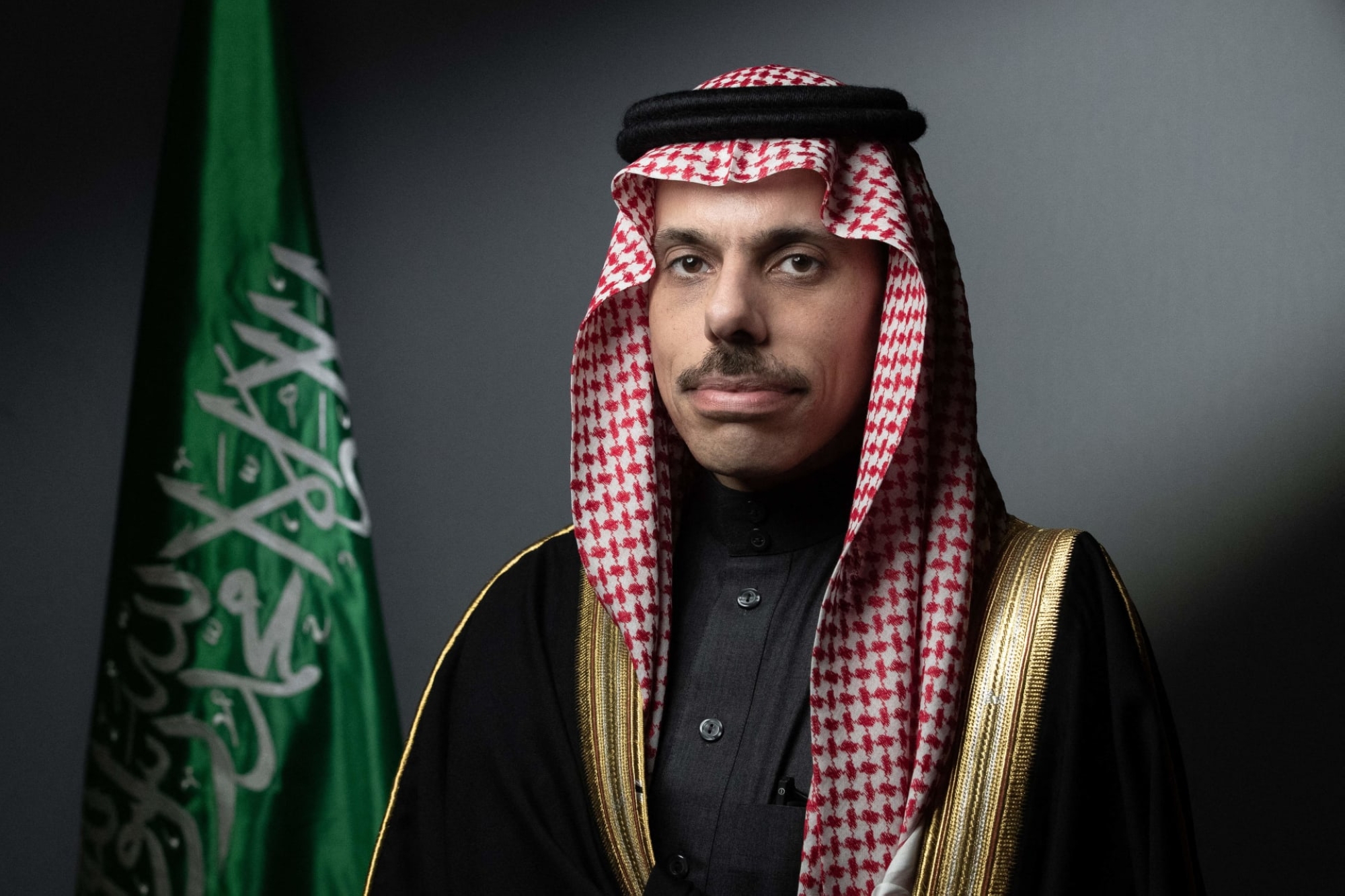
In a diplomatic move aimed at deepening bilateral relations and placing them within a comprehensive institutional framework, the Polish capital, Warsaw, witnessed the signing of a memorandum of understanding to establish the Saudi-Polish Coordination Council . This announcement came during a joint press conference held on Monday by Saudi Foreign Minister Prince Faisal bin Farhan and his Polish counterpart, Radosław Sikorski, where both ministers emphasized the importance of this new mechanism in expanding the partnership between the two countries.
Historical background and growing context
The Kingdom of Saudi Arabia and the Republic of Poland have enjoyed diplomatic relations since their official establishment in 1995, and these relations have witnessed remarkable development over the past decades. The establishment of the Coordination Council is the culmination of a long history of mutual cooperation and high-level visits aimed at strengthening ties across various fields. This council represents a qualitative leap from traditional relations to a structured strategic partnership, ensuring the continuity of dialogue and the follow-up on the implementation of joint initiatives, all in service of the best interests of the two friendly nations.
Growing economic and commercial importance
Foreign Minister Prince Faisal bin Farhan explained that the council represents a vital mechanism for ensuring continuous follow-up and enhancing cooperation. The importance of this partnership is reflected in the growing trade figures, with both ministers noting that the volume of trade between the two countries has exceeded $12 billion in recent years, reflecting strong economic momentum. The council aims to explore new opportunities to increase mutual investments, particularly in the energy, technology, defense, and agriculture sectors, in line with the goals of Saudi Vision 2030, which seeks to diversify the economy and attract quality investments, while simultaneously opening new markets for Polish companies in the heart of the Middle East.
Political coordination and convergence of visions
The dialogue was not limited to economic matters but also included regional and international issues of common interest. The two ministers affirmed their shared perspectives on several issues, most notably the Palestinian question, where they commended the common position supporting a two-state solution and the achievement of a just peace. The situations in Yemen and Sudan were also discussed, with emphasis placed on the importance of supporting political solutions. Regarding the Russian-Ukrainian crisis, the Kingdom reiterated its support for international peace efforts, a position that aligns with the Polish and European vision seeking to end the conflict through dialogue. This reinforces the role of both countries as forces supporting stability on both the regional and international stages.
-

 Local news two days ago
Landslide in Riyadh: Details of the incident in Al-Sahafa neighborhood and containment efforts
-
 Local News 3 days ago
The death penalty was carried out against a citizen who stabbed another to death in Tabuk
-

 Local News 4 days ago
First birth on the Riyadh train: A heartwarming story at Andalus station
-

 Culture and Art 7 days ago
Ramez Galal in Ramadan 2026: Details of the bloody prank show
-
 Local news two days ago
Riyadh collapse: Emergency plans to secure water after a main pipeline burst
-

 Culture and Art 2 days ago
Haifa Wehbe's absence in Riyadh: A photo crisis or a strained relationship with the media?
-

 Culture and Art 2 days ago
City Kitchen series: A drama of conflict and the middle class during Ramadan
-

 Culture and Art 2 days ago
The series "Kasra": Dawood Hussein in a moving social drama this Ramadan