Politics
The Emir of the city sponsors the opening ceremony of the 45th session of the Al-Baraka Symposium on Islamic Economics
Prince Salman bin Sultan bin Abdulaziz, Governor of Madinah Region, sponsored the opening ceremony of the 45th Al-Barakah Economic Symposium


Prince Salman bin Sultan bin Abdulaziz, Governor of Madinah Region, sponsored the opening ceremony of the 45th Al-Baraka Symposium on Islamic Economics, under the slogan (Islamic Banking in Fifty Years: Achievements of the Past and Hopes for the Future), with the participation of a select group of experts and specialists in the fields of economics, finance and investment, hosted by Prince Muqrin bin Abdulaziz University, over two days in Madinah.
During the ceremony, the advisor at the Royal Court, Sheikh Saad bin Nasser Al-Shathri, a member of the Council of Senior Scholars, delivered a speech in which he explained that God Almighty has bestowed upon the Islamic nation and the entire world the blessing of this great entity, the Kingdom of Saudi Arabia, which is today a beacon of goodness and growth for Arabs, Muslims, and all of humanity. He pointed out that among the manifestations of this goodness is what has been achieved in the field of Islamic banking, as the Kingdom adopted this approach many years ago, until it became a global leader in this field.
He pointed out that the Kingdom of Saudi Arabia has adopted Islamic banking through the enactment of many regulations governing this field, and through the widespread dissemination of banking operations in the Kingdom, as more than 85% of banking operations fall within the scope of Islamic banking, a percentage that is unparalleled globally. Moreover, most of the banks operating in the Kingdom have pledged to fully adhere to the principles of Islamic banking in all their transactions, which is not available with this comprehensiveness in any other country.
He expressed his gratitude to the leadership for their continued support of this blessed initiative, and to the Prince of Madinah Region, for his well-known love of knowledge and keenness for good.
After that, Abdullah bin Saleh Kamel, Chairman of the Board of Trustees of the Al Baraka Forum for Islamic Economics, delivered a speech in which he stressed that this year’s forum meeting has an exceptional character, as it coincides with the passing of half a century since the launch of the Islamic banking journey, which began at the hands of exceptional men who were characterized by sincerity, vision and insight, so they established this unique economic edifice, and instilled its principles derived from the teachings of the Holy Qur’an and the guidance of our chosen Prophet, peace and blessings be upon him.
He explained that these efforts resulted in a distinguished banking model that spread throughout the world, achieving a great economic and social impact, noting that Islamic banking today is considered one of the most prominent achievements of that pioneering generation, which started its journey from scratch with deep faith and boundless ambition.
The launch of the first edition of the (Saleh Kamel Award for Islamic Economics) was announced, in honor of the pioneers of this sector, in commemoration of their memory, and in continuation of the journey of giving and influence, noting that the award will constitute a qualitative addition with a global dimension, and will be launched from Madinah, to confirm the principles on which Islamic banking was founded, which are (commitment, benefiting people, and rational investment).
He concluded his speech by emphasizing that this celebration does not mean dwelling on the past, but rather it is a moment of loyalty and reflection, and a renewed launch towards a brighter future led by young, faithful, and ambitious generations.
Following that, the President of Darul Uloom Karachi University in Pakistan, Chairman of the Sharia Council of the Accounting and Auditing Organization for Islamic Financial Institutions (AAOIFI), Sheikh Muhammad Taqi Usmani, delivered a speech in which he spoke about the role of Islamic banking as a civilized solution that balances adherence to the objectives of Sharia and the requirements of the times, pointing out that this financial system is not only an alternative to traditional systems, but is a comprehensive ethical project characterized by justice and equality.
Related News
Al-Othmani stressed that Islamic banking represents more than just a financial instrument, pointing out that it is a living embodiment of the values of Islamic Sharia, which emphasizes social justice and sustainable development. He considered the significant expansion of Islamic banks around the world an important achievement, and the real challenge lies in preserving the essence of the ethical system, ensuring its sustainability and enhancing its positive impact on societies. He praised the role of the Al-Baraka Symposium in promoting Islamic economic thought by guiding scientific and religious discussions on how to develop sustainable financial solutions.
Following that, the attendees watched a visual presentation entitled: (Glimpses of Islamic Banking from its Origins to Contemporary Reality), which documents the most prominent milestones that this sector has gone through since its early beginnings. The presentation included highlighting the position of Islamic banking today, within the global financial system, in terms of growth and influence.
Following that, the topics for nomination for the Saleh Kamel Award for Islamic Economics were announced. The award was launched to encourage research and intellectual excellence in this field. The award aims to support specialized scientific production and highlight promising talents among thinkers and researchers in issues of Islamic economics and jurisprudence of finance, in a way that contributes to developing the knowledge system and enhancing the global impact of Islamic banking.
In the same context, the Governor of the Madinah Region sponsored the signing ceremony of three bilateral memoranda of understanding, the first of which was between the Non-Profit Sector Center in the region, represented by the General Supervisor of the Center, Engineer Muhammad Abbas, and the Saleh Kamel Humanitarian Foundation, represented by the Executive Director of the Foundation, Hammam Zare. The agreement aims to develop social and developmental work in the region and build the capacities of workers in the non-profit sector.
The second agreement, the Sustainability Index, and the signing of the Islamic ESG Project Memorandum were signed by Faraz Khan, CEO and co-founder of SpectrEco, and Yousef Hassan Khallawi, Secretary General of the Al Baraka Islamic Economic Forum. The Islamic Sustainability Index aims to integrate Sharia compliance with global environmental, social, and governance (ESG) standards to provide a distinctive ethical investment framework.
The third agreement included the signing of a memorandum of cooperation between the Al Baraka Forum for Islamic Economics and the University of Jordan. The forum was represented by the Secretary-General of the forum, Youssef Hassan Khalawi, and the University of Jordan was represented by the Dean of the Faculty of Sharia, Dr. Abdul Rahman Al-Kilani. The agreement aims to develop scientific content and enhance cooperation in academic and training aspects in multiple fields.
At the conclusion of the ceremony, the Prince of Madinah honored a number of leading figures in the Islamic banking sector, including scholars, thinkers, pioneering founders, and executives.




Politics
Al-Sharaa and Trump discuss the future of Syria, the fight against ISIS, and the country's unity
Syrian President Ahmed al-Sharaa discussed with US President Donald Trump the developments in Syria, emphasizing the unity of the country, the fight against terrorism, and guaranteeing the rights of the Kurds.
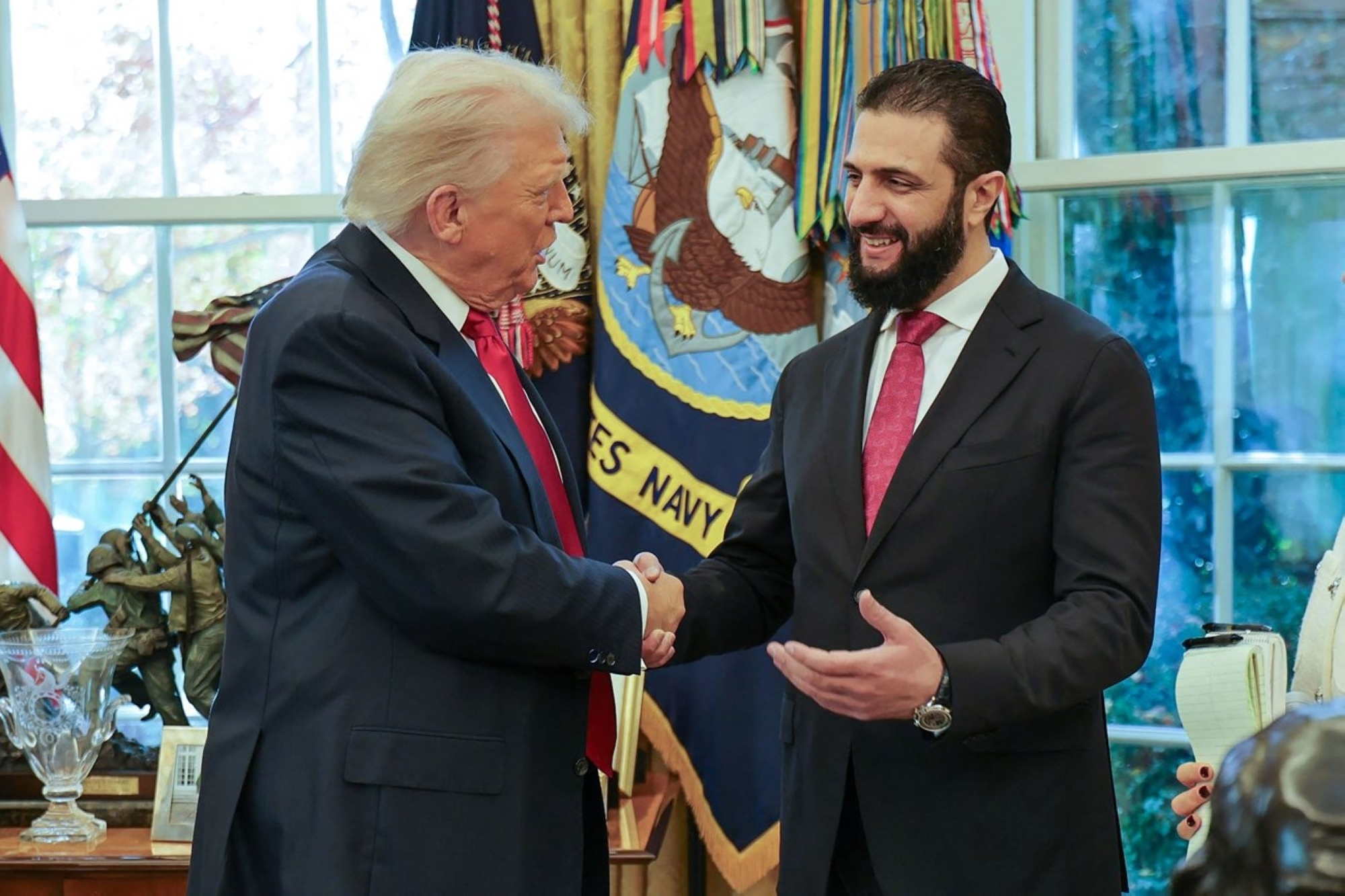
The head of Syria's interim government, Ahmed al-Sharaa, held a telephone conversation with US President Donald Trump in a notable diplomatic move to discuss the latest developments in Syria following the country's radical changes. The call focused on key issues including support for Syrian territorial integrity, continued counterterrorism efforts, and shaping Syria's future on the regional and international stage.
Historical background and new political context
This contact comes in the wake of the sudden collapse of Bashar al-Assad’s regime in December 2014, which ended decades of Assad family rule and ushered Syria into an entirely new political phase. After years of devastating civil war that began in 2011, the United States and the international community found themselves facing a new reality in Damascus. American policy in Syria had long rested on two main objectives: combating ISIS through the international coalition and supporting a political solution to end the conflict. With a new transitional government now in power, establishing direct channels of communication became essential to understanding its direction and ensuring shared interests related to regional stability.
The importance of communication and its potential impact
The significance of this contact lies in its being the first high-level communication between the new Syrian administration and the United States, potentially paving the way for gradual international recognition. During the talks, both sides emphasized the need to preserve Syria's territorial integrity and independence, a fundamental requirement to prevent the country from descending into further fragmentation. The issue of protecting the rights of the Kurdish people within the framework of a unified Syrian state was also a central point of discussion, given the long-standing US support for the Syrian Democratic Forces (SDF) in their fight against ISIS.
Regionally, this rapprochement is viewed with caution and anticipation by key players in the region. Countries such as Turkey, Jordan, Russia, and Iran, which have played influential roles in the Syrian conflict, are closely monitoring the nature of the future relationship between Damascus and Washington. The new government's commitment to combating terrorism, particularly the remnants of ISIS, represents a strong common ground for cooperation and enhances the prospects for building trust with the international community. This rapprochement opens a new door for Syria to embark on a path toward a better future, rebuild what the war has destroyed, and reintegrate into its Arab and international environment.
Politics
170 people kidnapped in Nigeria: Escalating security crisis in Kaduna
Gunmen have abducted more than 170 worshippers from two churches in Nigeria's Kaduna state, highlighting the country's escalating kidnapping-for-ransom crisis in the northwest.
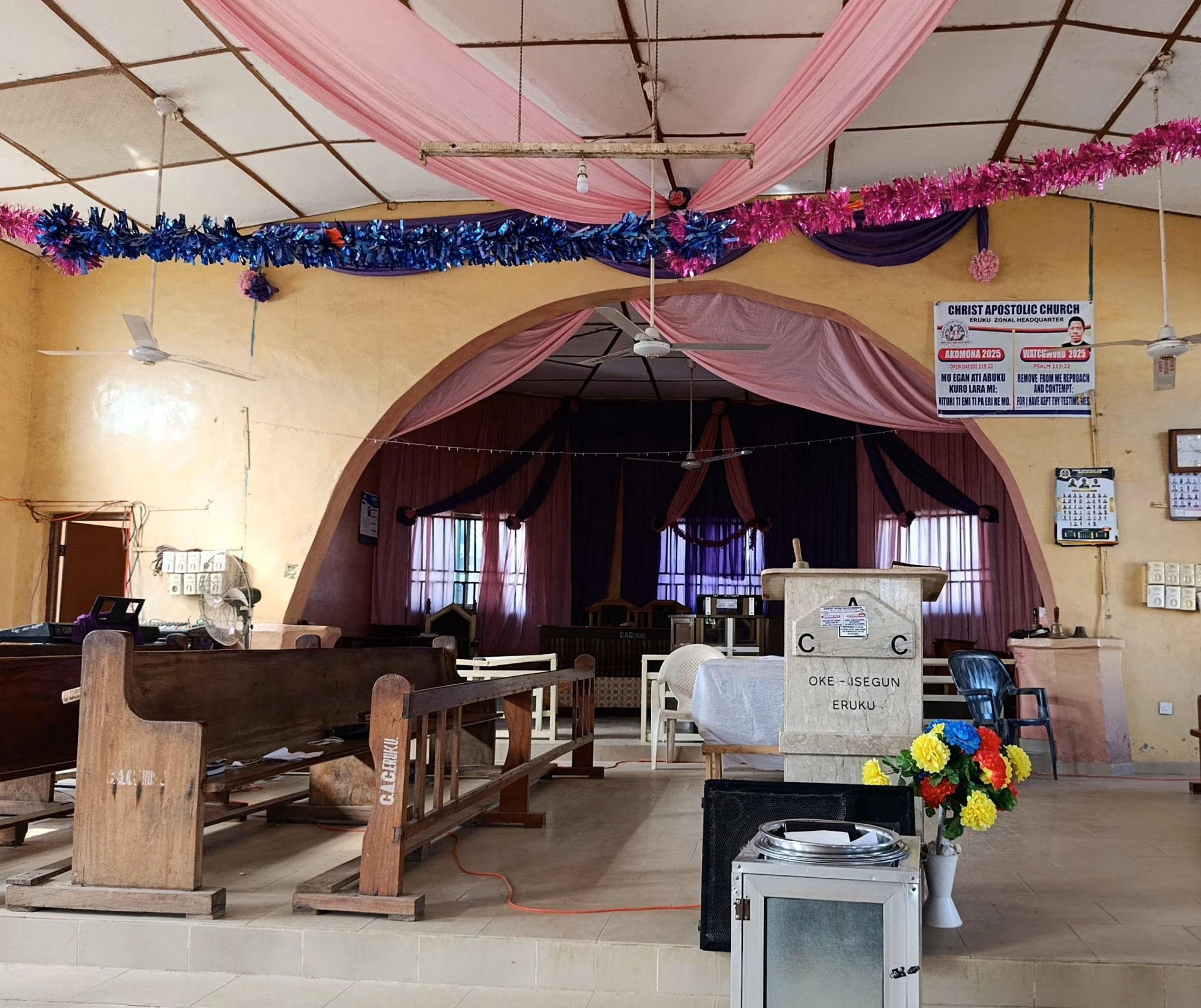
Nigerian authorities have announced a horrific mass kidnapping in which gunmen attacked two churches in Kaduna state in the northwest of the country, abducting at least 172 worshippers. The attack occurred on Monday, targeting worshippers during their religious services, and sparked widespread panic and shock in the region. Among those abducted was a prominent religious figure, Reverend John Hiyap, head of the Kaduna branch of the Christian Association of Nigeria.
According to a statement from the state police, the attackers, described as “bandits,” were heavily armed with sophisticated weapons and carried out their coordinated assault on the two churches, located in a remote area difficult for security forces to reach quickly. In a glimmer of hope, Pastor Hayab later confirmed that nine of the abductees had managed to escape and reach safety. In response to the incident, Nigerian authorities deployed military forces and specialized security teams to the area to pursue the perpetrators, determine the exact number of victims, and launch search and rescue operations.
A broader context of a worsening security crisis
This incident is not isolated, but rather part of a deteriorating security situation in northwestern Nigeria. States such as Kaduna, Zamfara, Katsina, and Niger are plagued by frequent attacks by armed criminal gangs. These gangs operate from the vast forests and ungoverned areas, engaging in mass kidnappings for ransom, cattle rustling, and village looting. Kidnapping has become a lucrative industry for these criminals, who target schools, universities, highway travelers, and places of worship.
Importance and potential impacts
The targeting of places of worship and the abduction of a religious leader of the stature of Pastor John Hayap carry grave implications. Locally, the attack sows fear in communities and undermines confidence in the state's ability to protect its citizens, threatening to inflame sectarian tensions in a religiously and ethnically diverse country. Nationally, the incident underscores the failure of successive governments to address the security crisis in the northwest, placing increasing pressure on the current administration to take more decisive action. Internationally, such attacks tarnish Nigeria's image as a regional power and raise concerns among human rights organizations and foreign investors about the country's stability.
Politics
Bulgarian president's resignation: repercussions of the political crisis and elections
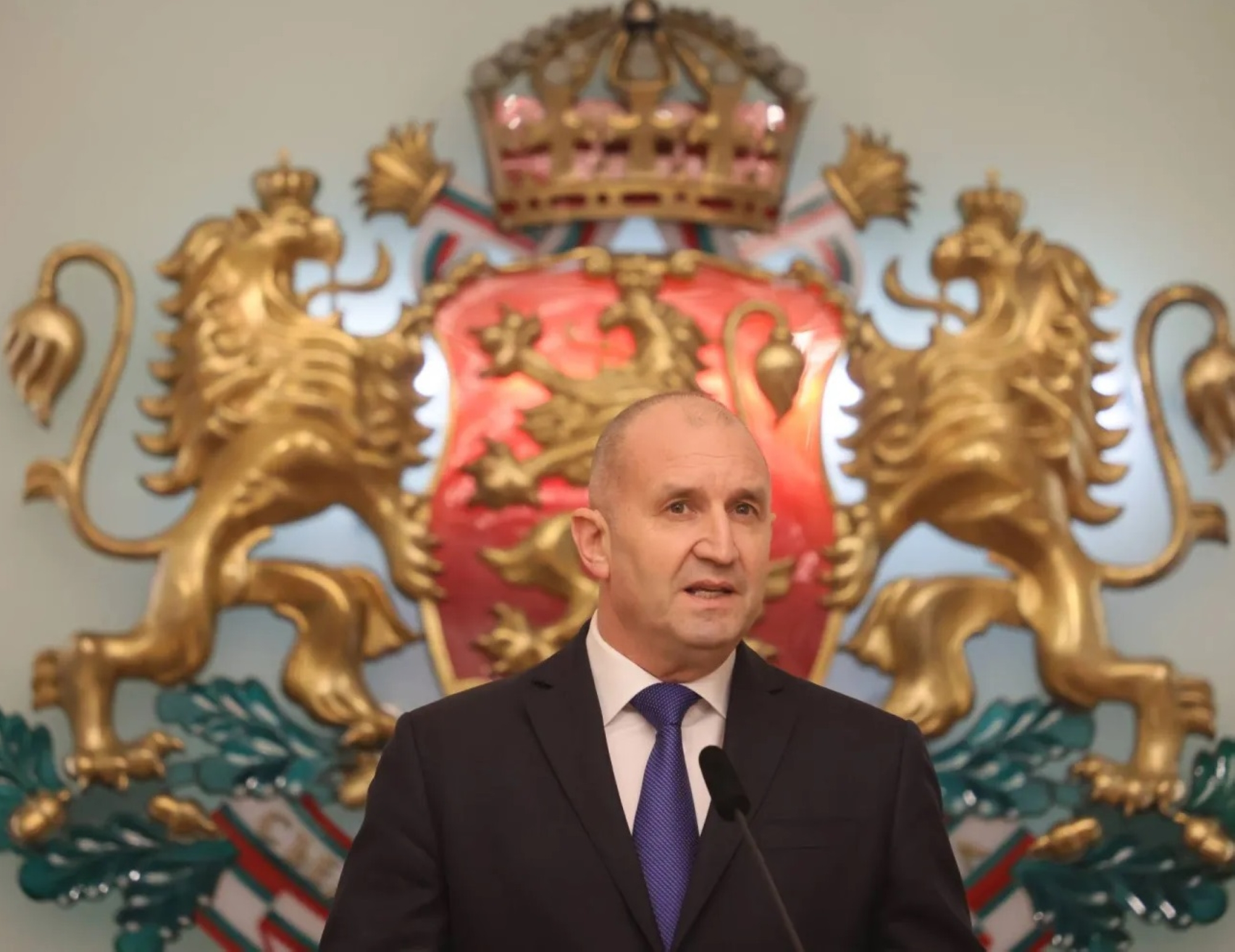
Bulgarian President Rumen Radev announced his resignation in a surprise move that deepens the political crisis. Learn about the historical background and its impact on Bulgaria's stability and future.
A sudden resignation shakes the political scene
In a surprise move that shook the Bulgarian political landscape, President Rumen Radev announced his resignation in a televised address, just before early presidential elections. This shocking decision comes at the height of a protracted political crisis that has gripped the country for years, characterized by governmental instability and repeated failures to form cohesive governing coalitions.
Background of political instability
The current crisis is not a sudden development. Bulgaria, a member of the European Union and NATO, has been experiencing sharp political polarization since widespread anti-corruption protests in 2020. This polarization led to a series of early parliamentary elections that failed to produce a clear parliamentary majority, plunging the country into a cycle of caretaker governments and fragile coalitions. President Radev, a former air force commander who rose to power on a wave of anti-establishment sentiment, is seen as a pivotal figure in this period, using his powers to appoint caretaker governments and playing a leading role in criticizing the traditional political class.
Constitutional significance and local impact
According to the Bulgarian constitution, the resignation will take effect immediately upon acceptance, and the president's powers will be temporarily transferred to the vice president until a new president is elected. This move is unprecedented in Bulgaria's modern political history, reflecting the immense pressure facing state institutions. Domestically, this resignation exacerbates uncertainty and could lead to a complete reshuffling of the political landscape. Observers fear that this power vacuum will deepen divisions and fuel conflicts between political parties, making the task of forming a stable government after the elections even more difficult.
Regional and international repercussions
The impact of this crisis extends beyond Bulgaria's borders to the regional and international arenas. Bulgaria's stability is of strategic importance given its geographical location on the eastern flank of Europe and in the vital Black Sea region, particularly in light of current geopolitical tensions. Partners in the European Union and NATO are closely monitoring the situation in Sofia, concerned that prolonged political instability could weaken the country's position on key issues such as energy security, relations with Russia, and the EU's unified policies. The resignation of the head of state at this critical juncture raises questions about Bulgaria's future strategic direction and its ability to play an active and credible role on the international stage.
-

 Reports 5 days ago
Achievements of Saudi government sectors in 2025
-
Local news two weeks ago
FDA warns of contaminated Nestle infant formula | Recall details
-
Technology 4 weeks ago
Artificial intelligence regulations in Saudi education and student data protection
-
Technology 4 weeks ago
US ban on drones: reasons and consequences
-
Technology 4 weeks ago
SRMG and Snapchat partnership: The future of digital media in the Middle East
-
Technology 4 weeks ago
Saudi Arabia's Ministry of Islamic Affairs is employing artificial intelligence in public speaking
-
Sports 4 weeks ago
Salah leads Egypt to a thrilling comeback against Zimbabwe in the Africa Cup of Nations
-
Sports 4 weeks ago
Napoli win the Italian Super Cup in Riyadh for the third time (2025)