
Politics
A magnitude 7 earthquake in Taiwan and its impact on the chip industry
A powerful magnitude 7 earthquake struck off the coast of Taiwan, causing power outages and the evacuation of TSMC facilities, raising concerns about the global semiconductor supply chain.


Taiwan's Central Weather Bureau reported a powerful earthquake measuring 7.0 on the Richter scale, which struck approximately 32 kilometers off the coast of Yilan City in northeastern Taiwan. The bureau stated that the quake occurred at a depth of 73 kilometers below the sea surface, causing strong tremors felt across a wide area, including the capital, Taipei, where high-rise buildings swayed noticeably, sparking widespread concern among residents.
Geological context and historical background
Taiwan lies in a seismically active region known as the Pacific Ring of Fire, where several tectonic plates meet, specifically at the point where the Philippine Sea Plate and the Eurasian Plate converge. This geographic location makes the island prone to frequent earthquakes. These tremors evoke memories of past devastating earthquakes, most notably the 1999 Jiji earthquake, which measured 7.6 on the Richter scale and claimed the lives of more than 2,400 people, prompting the government to adopt stricter building standards and develop early warning and disaster response systems.
Direct impacts and global economic repercussions
Locally, the earthquake caused a temporary power outage affecting more than 3,000 homes in Yilan County, according to Taiwan Power Corporation, whose teams worked to restore service quickly. However, the significance of this event extends far beyond local borders to the global economy, given Taiwan's pivotal role in the advanced technology industry.
Taiwan Semiconductor Manufacturing Company (TSMC), the world's largest chipmaker and a major supplier to tech giants like Apple and Nvidia, announced it had evacuated a limited number of its facilities at the Hsinchu Science and Technology Park as a precautionary measure. While employees have since returned to work after safety was confirmed, the incident underscores the sensitivity of the industry. Semiconductor production is a highly precise process, and even minor vibrations can damage entire batches of chips, potentially causing delays in the global supply chain for electronics, from smartphones to cars and computers. Analysts and global companies are closely monitoring the situation to assess any potential impact on production in the coming weeks.




Politics
Bahrain's Crown Prince arrives in Riyadh: Details of the official reception and the importance of the visit
Bahrain's Crown Prince Salman bin Hamad arrived in Riyadh today. Learn about the details of the official reception, the depth of Saudi-Bahraini relations, and the importance of this visit in strengthening cooperation.
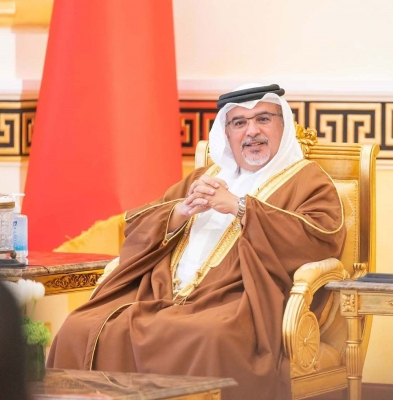
His Royal Highness Prince Salman bin Hamad Al Khalifa, Crown Prince and Prime Minister of the Kingdom of Bahrain, arrived in the Saudi capital, Riyadh, today, accompanied by a high-level official delegation, on a fraternal visit that embodies the strength of the deep-rooted historical ties between the two sister kingdoms.
Upon his arrival at King Khalid International Airport, His Royal Highness Prince Mohammed bin Abdulrahman bin Abdulaziz, Deputy Governor of Riyadh Region, was at the forefront of those welcoming His Highness, reflecting the warm reception and great appreciation the Kingdom holds for its guests from the brotherly Gulf Cooperation Council countries. Also participating in the welcoming ceremony were the Ambassador of the Custodian of the Two Holy Mosques to the Kingdom of Bahrain, Nayef bin Bandar Al-Sudairi, and the Ambassador of the Kingdom of Bahrain to the Kingdom of Saudi Arabia, Sheikh Ali bin Abdulrahman Al Khalifa, in addition to the Acting Regional Police Chief, Major General Mansour bin Nasser Al-Otaibi, the Undersecretary of Royal Protocol, Fahd Al-Sahil, and a number of officials from both sides.
This visit is of particular importance given the overall context of Saudi-Bahraini relations, which serve as an exceptional model of relations between nations, based on a long history of brotherhood, shared destiny, and kinship ties that bind the two brotherly peoples. The visit of the Crown Prince of Bahrain is a continuation of the ongoing consultation and coordination between the leaderships of the two countries on various regional and international issues of mutual interest.
Strategically, the Saudi-Bahraini Coordination Council plays a pivotal role in strengthening bilateral cooperation, with both countries striving, through these reciprocal visits, to advance economic, security, and political integration. These initiatives align with the ambitious development visions of both nations, embodied in Saudi Arabia's Vision 2030 and Bahrain's Economic Vision 2030, reflecting a shared commitment to diversifying income sources and creating promising investment opportunities that benefit the citizens of both countries.
Regionally, such high-level meetings contribute to strengthening the Gulf Cooperation Council's joint action framework and unifying positions on the challenges facing the region, thus bolstering security and stability in the Arabian Gulf. The arrival of Prince Salman bin Hamad in Riyadh today is a further confirmation that relations between Riyadh and Manama are progressing steadily towards greater partnership and integration in all fields.
Politics
The cost of rebuilding Syria: Estimates of $500 billion and investment opportunities
A Syrian official revealed to Akhbar 24 that the cost of rebuilding Syria could reach $500 billion, stressing that the infrastructure needs $100 billion with promising opportunities for investors.
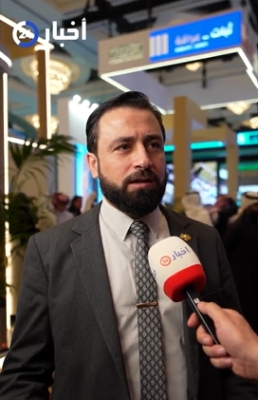
In recent statements highlighting the scale of economic challenges and future opportunities in the region, Syrian Deputy Minister of Local Administration, Zafer al-Omar, revealed huge figures related to the reconstruction file in Syria, indicating that the estimated cost could reach record levels ranging between 300 and 500 billion US dollars.
Timetable and variance of estimates
In an exclusive statement to Akhbar 24, Al-Omar explained that the complex process of rebuilding the real estate sector and the damaged cities could take between three and five years. He emphasized that these timeframes depend on the pace of work and funding, stressing that Syria will emerge stronger than before thanks to the efforts being made and the plans in place.
The Syrian official pointed out that the discrepancy in the estimates of the total cost (between $300 and $500 billion) is due to the enormous scale of the destruction and the different technical assessments of the affected areas, noting a crucial point that the pace of reconstruction of cities and urban centers is usually faster and smoother compared to rural areas, which may require greater logistical efforts.
Infrastructure: The backbone of reconstruction
In detailing the figures, Al-Omar indicated that the cost of rehabilitating the infrastructure alone could reach approximately $100 billion. This includes road networks, electricity, water, and telecommunications—sectors that suffered the most damage during the years of crisis. He emphasized that these figures, despite their enormity, represent fertile ground and an attractive opportunity for Arab and foreign investors, as Syria currently offers vast and unprecedented opportunities in various construction and building sectors.
Context of the crisis and priorities for the next phase
These statements come at a time when Syria is looking to turn the page on a war that has lasted for more than a decade and caused widespread destruction of its infrastructure and economy. Reconstruction is the biggest challenge facing the country in the post-war phase, requiring a massive concerted effort from both local and international actors.
Al-Omar pointed out that the Syrian government has established a clear set of priorities for upcoming projects, giving top priority to essential service sectors that directly impact citizens' lives. This will be followed by a focus on areas that suffered extensive damage from military operations and shelling, specifically in the governorates of Rural Damascus, Aleppo (the country's economic capital), Idlib, Hama, and Homs. Revitalizing these areas means more than just rebuilding infrastructure; it means restarting the economy and enabling residents to return to their homes, which is the cornerstone of restoring the country's social and economic stability.
Politics
A secret training camp for the Rapid Support Forces in Ethiopia, funded by the UAE
Reports have revealed a secret training camp in Ethiopia for the Rapid Support Forces, funded by the UAE. Satellite images confirm the camp's expansion and the training of thousands of fighters for the war in Sudan.
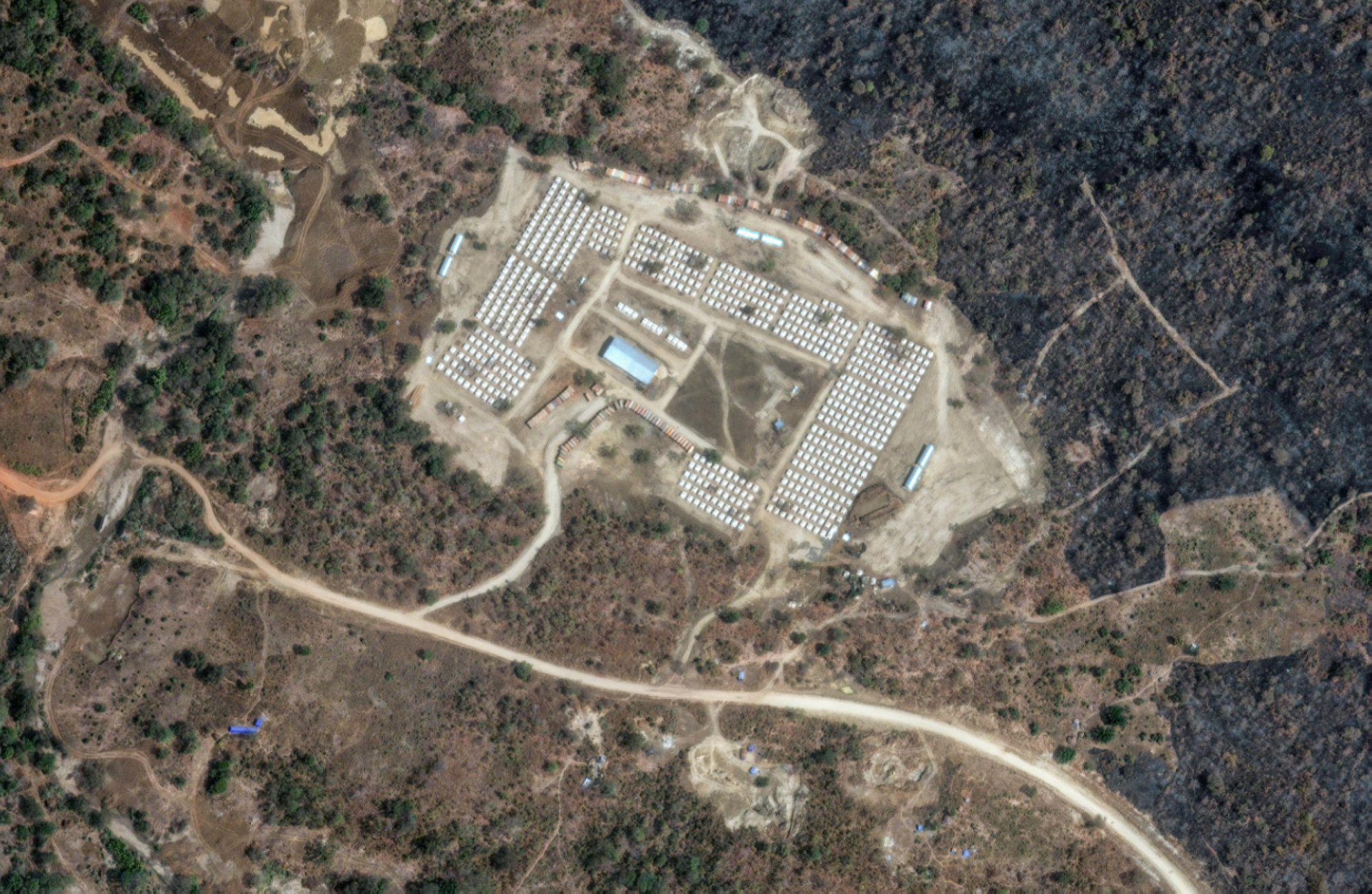
International press reports, based on governmental and diplomatic sources, have revealed a dangerous development in the course of the Sudanese conflict, which is the existence of a secret training camp in Ethiopian territory dedicated to training Rapid Support Forces fighters, with funding and logistical support from the United Arab Emirates.
Details of the camp and military expansion
According to Reuters, citing Ethiopian security sources and satellite imagery, the camp is located in the remote Benishangul-Gumuz region of western Ethiopia, near the Sudanese border. The site has seen increased activity and significant expansion since October 2025, with the construction of hundreds of tents and new logistical facilities observed.
Estimates suggest the camp's capacity could reach approximately 10,000 fighters. Reports indicate that around 4,300 Rapid Support Forces fighters had already received intensive military training at this site by early January 2026. The trainees' nationalities are diverse, including a majority of Ethiopians, as well as citizens of South Sudan and Sudan, and some members of the Sudan People's Liberation Movement.
The UAE's role and the mutual accusations
Sources indicate that the UAE not only funded the camp's construction but also provided military trainers and comprehensive logistical and training support, a fact documented in an Ethiopian security memo and a diplomatic cable. This information reinforces previous accusations by the Sudanese army and UN experts that the UAE supplied the Rapid Support Forces with weapons and equipment—accusations categorically denied by the UAE Ministry of Foreign Affairs, which maintains that it is not a party to the conflict.
Strategic importance and developments on the ground
The camp's activity coincides with suspicious development work at the nearby Assosa airport, including the construction of aircraft hangars and a ground control center, raising concerns about its potential use for operating drones. This development suggests a strategic shift in the course of the war, as these recruits are expected to join the fighting in Blue Nile State, which has become a focal point in the struggle for control of Sudan.
Background of the conflict and its regional repercussions
This revelation is the first direct and tangible evidence of Addis Ababa's involvement in the Sudanese civil war, which erupted in mid-April 2023 between the Sudanese Armed Forces and the Rapid Support Forces. Observers fear this intervention could internationalize the crisis and transform it into a wider regional conflict, threatening the stability of the entire Horn of Africa.
It is worth noting that the war in Sudan has caused one of the world’s largest humanitarian crises, leading to widespread famine and ethnically motivated atrocities, forcing millions to flee to neighboring countries such as Egypt, Chad, Libya and South Sudan, amid ongoing international warnings of a worsening security and humanitarian situation.
-

 Local News 6 days ago
Launch of the city's shuttle bus service in Ramadan 1447 AH: Routes and stations
-
Local news one week ago
Rabigh inaugurates the world's largest water innovation oasis and enters the Guinness World Records
-
Culture and Art, 1 week ago
The series "Rouh OFF" was permanently canceled by a decision of the Actors' Syndicate
-
Culture and Art 6 days ago
Yasser Galal and Radwa El Sherbiny: Details of a new artistic project that brings them together
-
Local news one week ago
Schedule of Taraweeh and Tahajjud prayers at the Two Holy Mosques for Ramadan 1447 AH
-
Local News 6 days ago
The Ministry of Education revokes the licenses of 74 private schools due to safety and quality violations
-
Local news one week ago
Saudi Arabia weather: Rain in Riyadh, the Eastern Province, and Qassim, and dense fog
-
Local News 6 days ago
Mohammed Al-Rasasmeh appointed as official spokesperson for the Ministry of Municipalities and Housing


