
Politics
"Services" and "Women's Empowerment" top the topics of the princes' weekly sessions
The Governor of Tabuk Region, Prince Fahd bin Sultan bin Abdulaziz, received, in the presence of his deputy, Prince Khalid bin Saud bin Abdullah Al Faisal bin Abdulaziz,

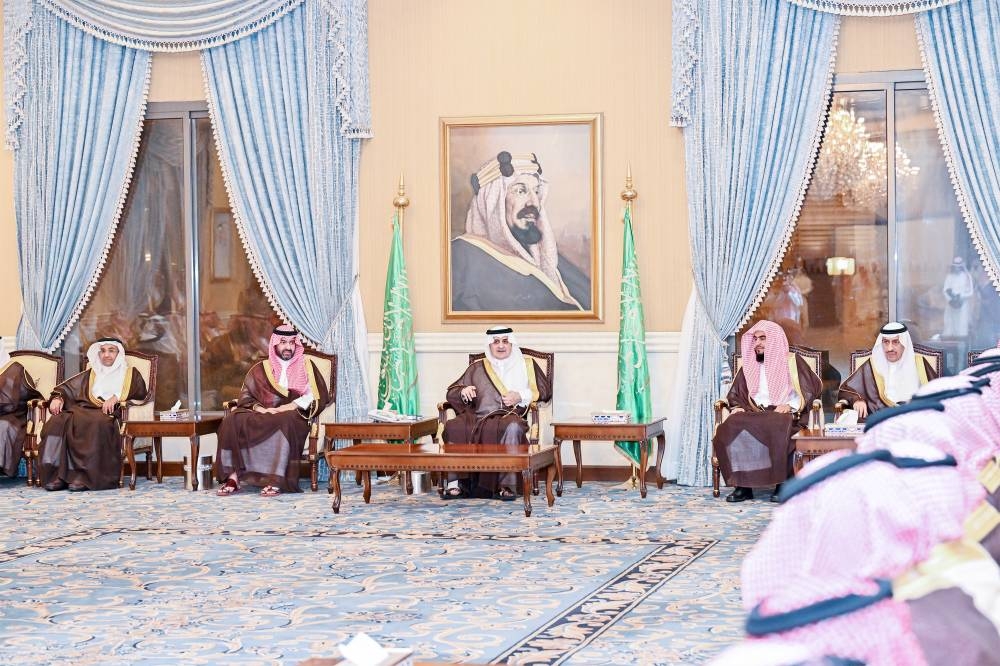
Prince Fahd bin Sultan bin Abdulaziz, Governor of Tabuk Region, accompanied by his Deputy, Prince Khalid bin Saud bin Abdullah Al Faisal bin Abdulaziz, received heads of courts, citizens, and directors of civil and military government departments at the weekly meeting held at the Government Palace in Tabuk. At the beginning of the meeting, he welcomed everyone and discussed with the citizens several topics of importance to the region in various fields, asking God Almighty to perpetuate the security, glory, and stability of the country under the leadership of the Custodian of the Two Holy Mosques, King Salman bin Abdulaziz, and the Crown Prince.
Prince of the Eastern Province: The rapid developments have enabled our country to keep pace with the world
In the Eastern Province, its governor, Prince Saud bin Nayef bin Abdulaziz, received, in his weekly “Monday Majlis” at the Emirate headquarters yesterday, in the presence of his deputy, Prince Saud bin Bandar bin Abdulaziz, and directors of government agencies, the Director General of Education in the region, Dr. Sami Ghazi Al-Otaibi, and a number of education staff, on the occasion of the approaching start of the new academic year.
He said: The successive developments in the education sector have made our country keep pace with the world, and have made our sons and daughters achieve the best results, noting that the beginning of the academic year will witness the joining of more than 900,000 male and female students, who will start the new academic year in the region and its governorates, and 80,000 male and female teachers and administrators who serve them in all educational stages.
He pointed out that about 100,000 male and female students will join the education system, representing about 10% of the number of those currently learning at all levels. Teachers bear a great trust and responsibility, as they perform a noble mission and bear the responsibility of teaching male and female students according to the latest teaching methods and techniques. This has been demonstrated by the excellence of the education departments in the region in achieving international awards.
The Prince of the Eastern Province drew attention to the tangible progress in universities that have achieved advanced positions in global rankings.
For his part, the Director General of Education in the region reviewed the preparations for the start of the school year in all cities and governorates, and the modern educational projects witnessed by the three educational departments of the region, which amounted to 47 educational projects with a capacity of more than 31,000 male and female students, and a total of more than 1,000 classrooms, designed according to the latest engineering designs and school equipment in order to provide attractive educational environments that contribute to developing their abilities and building their personalities, which was blessed by the Prince of the Eastern Region during his visit to inaugurate the building of the General Administration of Education in the Eastern Region.
Prince of Qassim: Generous support from the leadership for development projects
On another note, Prince Dr. Faisal bin Mishaal bin Saud bin Abdulaziz, the Governor of Qassim, received a number of scholars, officials, and citizens from the region during his weekly meeting held at the guest house in Al-Shamasiya Governorate. At the beginning of the meeting, he expressed his appreciation for the generous support provided by the leadership for the development projects witnessed in the region across all sectors, which have had a significant impact on enhancing all services provided to citizens in the region's cities, governorates, and centers. He pointed out that Al-Shamasiya Governorate is experiencing remarkable growth in development projects, contributing to strengthening the infrastructure and raising the level of services provided to citizens. He noted that the governorate has a share in the region's development balance program and is home to unique projects such as the national park project, which includes the world's largest camel farm, a power generation project, and a reclaimed irrigation water project. These projects are part of the objectives of the Kingdom's Vision 2030, which aims to achieve sustainable development in all regions of the Kingdom. He explained that the efforts exerted by all sectors and government agencies contribute to the development of all cities and governorates in the region.
The weekly meeting of the Governor of Al-Qassim region included a speech by the Governor of Al-Shamasiya, Fahd Al-Radi, in which he pointed to the great development of the governorate in implementing development projects and infrastructure and providing the best programs and services provided to citizens.
Dr. Mohammed Al-Mazeed, a member of the local council in Al-Shamasiya Governorate, explained that the governorate is part of the developmental balance program in the region’s emirate, which reflects the pillars of the Kingdom’s Vision 2030.
The Director General of the Ministry of Transport and Logistics branch in the Qassim region, Engineer Muhammad Al-Shammari, indicated that Al-Shamasiya Governorate is currently witnessing the implementation of road projects that will play a role in linking the governorate to many main roads in the region.
The Emir of Hail: Parents have a major role in monitoring their children
In Hail, the region's governor, Prince Abdulaziz bin Saad bin Abdulaziz, emphasized the importance of education in the lives of nations and the noble mission of teachers, who bear a deep sense of responsibility towards their students and the country. He commended the leadership for dedicating all resources to serving education and praised the preparations made by education officials in the region for the new academic year, with teachers returning this week. He also lauded the results achieved by the University of Hail in student admissions this year. He stated, "The region's students should compete with others for admission to the most prestigious colleges, as this is a source of pride for us and the nation, contributing to the development process and strengthening the educational foundation." He stressed the role of parents in closely monitoring their children's progress to achieve the best results and competitive grades that the nation can be proud of.
This came during his reception at Aja Palace, in his weekly session, of a number of scholars, people of the region, writers and businessmen.
At the beginning of the reception, he welcomed all those who came to greet him from all the governorates, villages, and hamlets of the region. A number of dignitaries and residents of the region expressed their appreciation for the development and growth the region is witnessing in various fields.






Politics
Washington returns oil tanker to Venezuela: Will sanctions policy change?
The United States has decided to return the giant oil tanker 'Sophia' to Venezuela, in a move that raises questions about the future of the maximum pressure and sanctions policy on Caracas.
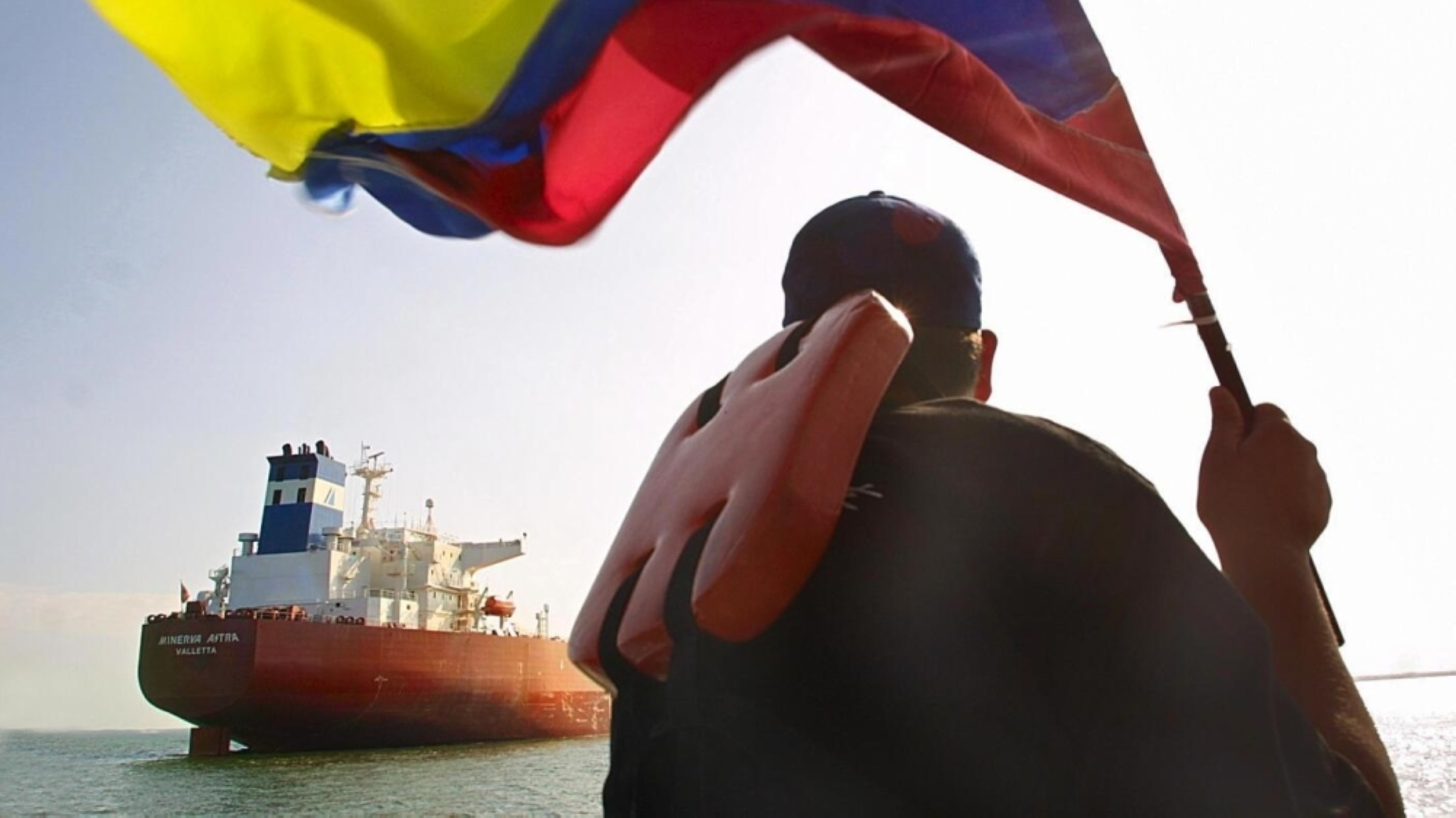
In a significant development amid ongoing tensions between Washington and Caracas, two US officials revealed the United States' intention to return a giant oil tanker it seized earlier this month to Venezuelan authorities. According to Reuters, the officials confirmed that the tanker in question is the "Sophia," a Panamanian-flagged supertanker, raising questions about the dynamics of US pressure tactics.
Background of sanctions and maximum pressure policy
This move comes against the backdrop of the “maximum pressure” campaign imposed on Venezuela by the previous US administration under Donald Trump, a campaign that lasted for years with the aim of overthrowing the government of President Nicolás Maduro. This campaign included imposing harsh economic sanctions primarily targeting the oil sector, the lifeblood of the Venezuelan economy. Through these measures, Washington sought to cut off Maduro’s government’s sources of revenue and bolster the political opposition.
Targeting oil tankers: A US strategy
The seizure of oil tankers linked to Venezuela has been a key part of this strategy. Since late last year, the United States has intensified its efforts to confiscate Venezuelan oil shipments on the high seas, successfully seizing at least seven tankers. These operations aim to prevent Venezuela from exporting its crude oil or importing refined products, further isolating it economically. Former US President Donald Trump has previously hinted at broader plans to control Venezuelan oil resources, proposing a $100 billion investment plan to rebuild the country's crumbling oil sector after regime change.
The importance of re-carrying the tanker and its potential impact
The decision to return the tanker Sofia is an unexpected development that could point to several possibilities. It may stem from legal challenges faced by US authorities in proving the tanker's violation of sanctions, or it may reflect a tactical shift in Washington's policy. Domestically, in Venezuela, the return of a single tanker does little to alter the grim picture of the country's collapsing oil sector, but it could represent a symbolic victory for the Maduro government. Internationally, this move could be interpreted as a small gesture that might open channels for future dialogue, or simply as a reflection of the legal and practical complexities of enforcing a broad maritime sanctions regime. The situation remains complex, as Washington continues its overall policy toward Venezuela, while such exceptional cases add a new layer of uncertainty to the future of relations between the two countries.
Politics
Saudi Arabia denies rumors of refusing to receive Sheikh Tahnoon bin Zayed
Information Minister Salman Al-Dossari confirms that what is being said about the Kingdom refusing to receive Sheikh Tahnoon bin Zayed is untrue, stressing the depth of the brotherly relations between the two countries.
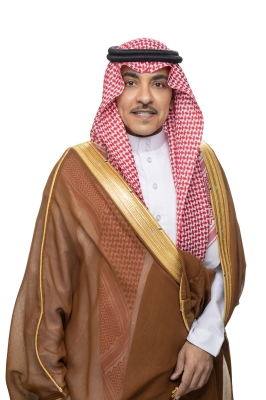
Saudi Minister of Information, Mr. Salman bin Yousef Al-Dossari, categorically confirmed that the news circulating on some media platforms and social media about the Kingdom of Saudi Arabia refusing to receive His Highness Sheikh Tahnoon bin Zayed Al Nahyan, National Security Advisor of the United Arab Emirates, is completely false and has no relation to reality.
In a statement aimed at dispelling rumors, Minister Al-Dossari clarified that Sheikh Tahnoon's relationship with the Kingdom transcends official protocols, emphasizing that "Sheikh Tahnoon bin Zayed comes to the Kingdom whenever he wishes without prior notice; it is his home and its leadership is his family." This statement reflects the depth of the personal and fraternal ties that bind the leadership of the two brotherly countries and puts an end to any attempt to cast doubt on the strength of this relationship.
Historical context of established relations
These rumors come at a time when Saudi-Emirati relations are at their strongest and most robust, with the strategic partnership between Riyadh and Abu Dhabi representing a cornerstone of stability in the Gulf region and the Middle East. This historic relationship is based on a long legacy of joint cooperation and coordination at the highest levels across various political, economic, and security fields, within the framework of the Gulf Cooperation Council and through advanced bilateral mechanisms such as the Saudi-Emirati Coordination Council, which aims to integrate visions and interests.
The importance of the event and its regional impact
His Highness Sheikh Tahnoun bin Zayed Al Nahyan is a pivotal figure in the UAE, holding the sensitive strategic position of National Security Advisor and playing a prominent role in shaping his country's foreign and economic policies. Given his position and the nature of the portfolios he oversees, his visits to the Kingdom and his meetings with Saudi officials carry particular significance. These visits are part of ongoing consultations and close coordination to address shared regional challenges and strengthen mutual interests. The aim of spreading such false information is to undermine trust and disrupt the robust alliance between the two countries, an alliance that has proven its effectiveness in dealing with numerous regional crises. Therefore, the swift and official Saudi denial underscores that this strategic relationship is immune to attempts to sow discord, and that communication channels between the two leaderships remain open, transparent, and characterized by absolute trust. This stance demonstrates the awareness of both countries regarding the importance of protecting their partnership from misleading media campaigns that target the security and stability of the entire region.
Politics
Putin and Sharaa in Moscow: The future of Russian-Syrian relations
Russian President Vladimir Putin and Syrian interim Prime Minister Ahmed al-Sharaa discussed the future of bilateral relations, the fate of Russian forces, and reconstruction in Moscow.
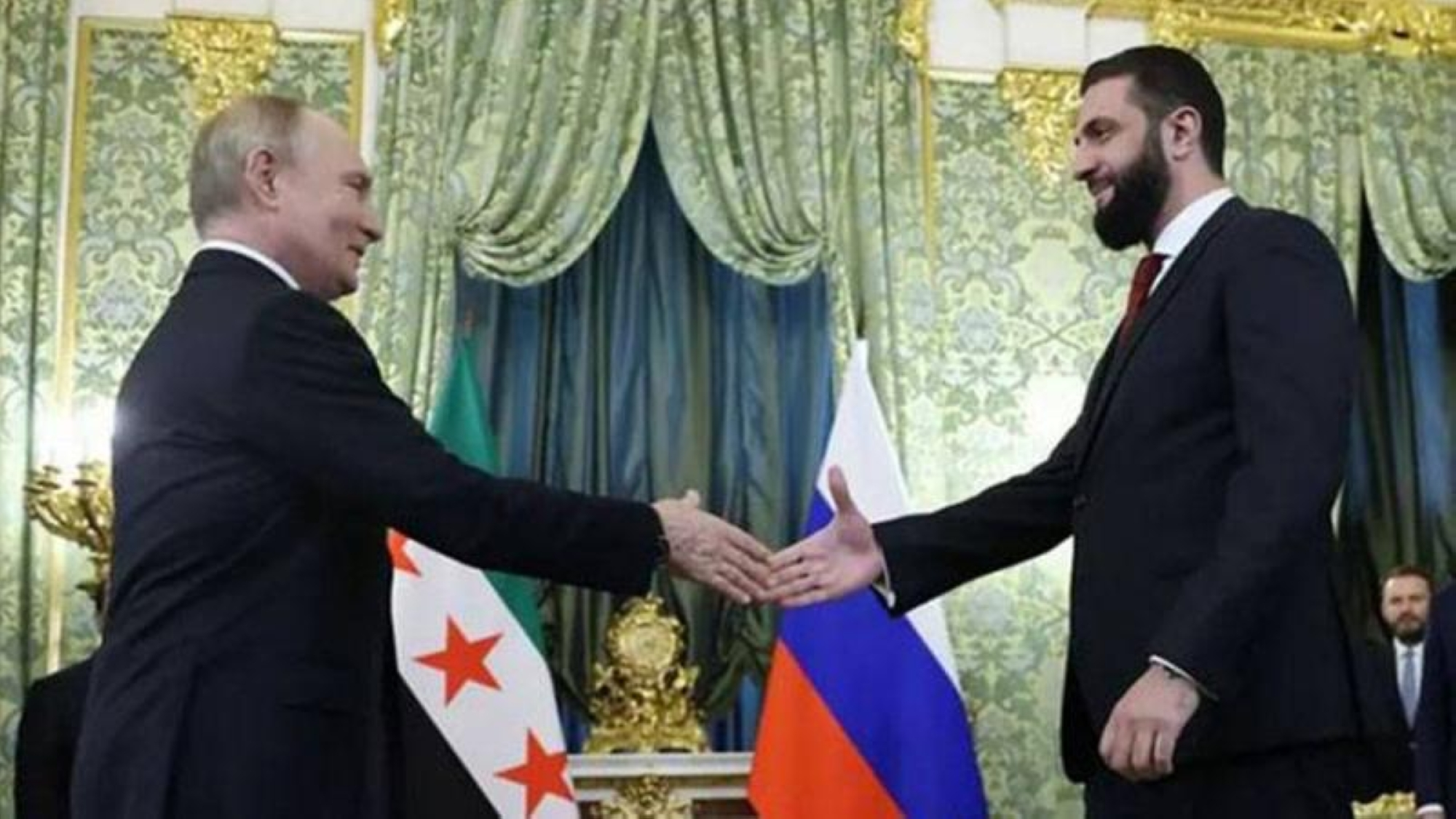
A strategic meeting in the Kremlin shapes the future
In a highly significant diplomatic move, Russian President Vladimir Putin received Syrian interim Prime Minister Ahmed al-Sharaa at the Kremlin on Wednesday. This meeting, the first of its kind since the recent radical political changes in Damascus, focused on the prospects for bilateral relations, the future of the Russian military presence in Syria, and the complex situation in the Middle East.
Historical background: From supporting the previous regime to engaging in dialogue with the new reality
This meeting is taking place against the backdrop of a historic shift in Syria, marked by the collapse of Bashar al-Assad's regime, whose most prominent international backer was Moscow. Since its military intervention in 2015, Russia has played a decisive role in tipping the balance of the conflict in favor of the former regime, establishing strategic military bases in Hmeimim and Tartus. Today, Putin's dialogue with al-Sharaa represents a pragmatic shift in Russian policy, an acknowledgment of the new reality on the ground, and an effort by Moscow to preserve its strategic interests and influence in Syria and the region.
The importance of the meeting and its potential effects
The meeting is of paramount importance to both sides. For the new Syrian government, this visit is a vital step toward gaining international legitimacy and securing the support of a major world power during the reconstruction and stabilization phase. For Russia, the goal is to ensure the continuity of its security and economic interests, safeguard the future of its military bases, and solidify its role as an indispensable mediator in any future political settlement in Syria.
Topics of discussion: From the economy to the military presence
During the meeting, President Putin praised al-Sharaa's efforts to develop relations, emphasizing the success in raising the level of economic cooperation between the two countries. Putin expressed a clear desire for Russian companies, particularly in the construction sector, to play a pivotal role in the reconstruction of Syria, which represents an economic opportunity for Moscow to recoup the costs of its military intervention. For his part, al-Sharaa commended Russia's role in achieving stability, expressing his hope that the Middle East region would witness a new phase of development and prosperity, and noting the numerous commonalities between Damascus and Moscow upon which further cooperation could be built.
The future of the Russian military presence was expected to feature prominently in the discussions, as the new Syrian government seeks to redefine its relationship with foreign forces on its territory, while Russia aims to secure an agreement that guarantees its long-term strategic presence.
-

 Local News 4 days ago
Landslide in Riyadh: Details of the incident in Al-Sahafa neighborhood and containment efforts
-
 Local News 5 days ago
The death penalty was carried out against a citizen who stabbed another to death in Tabuk
-
 Culture and Art, 1 week ago
Ramez Galal in Ramadan 2026: Details of the bloody prank show
-
 Local News 6 days ago
First birth on the Riyadh train: A heartwarming story at Andalus station
-
 Local News 4 days ago
Riyadh collapse: Emergency plans to secure water after a main pipeline burst
-

 Culture and Art 4 days ago
Haifa Wehbe's absence in Riyadh: A photo crisis or a strained relationship with the media?
-
 Culture and Art 4 days ago
City Kitchen series: A drama of conflict and the middle class during Ramadan
-

 Culture and Art 4 days ago
The series "Kasra": Dawood Hussein in a moving social drama this Ramadan