
Politics
Sending Tomahawk missiles to Ukraine: A Russian warning of dire consequences
Russia warns of dire consequences after supplying Tomahawk missiles to Ukraine, amid escalating tensions between Moscow and Washington and significant geopolitical implications.

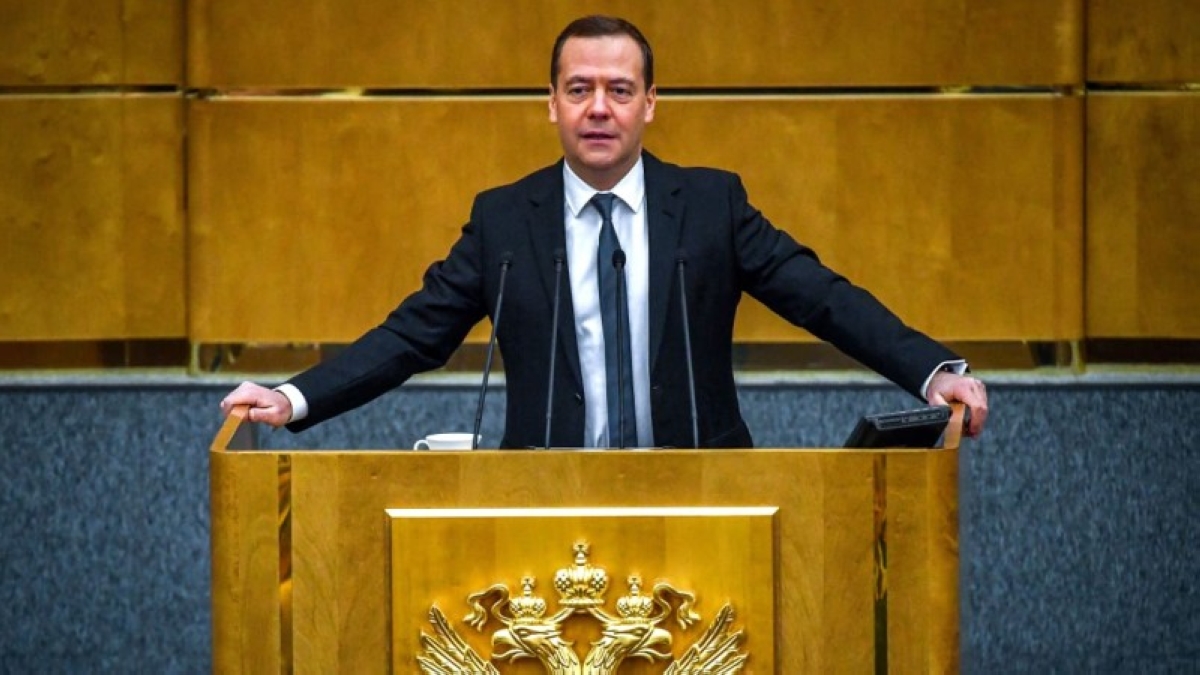
Tensions are escalating between Moscow and Washington over Tomahawk missiles
Amid escalating international tensions, former Russian President Dmitry Medvedev warned that the US supply of Tomahawk missiles to Ukraine could have dire consequences for everyone, specifically mentioning the impact on former US President Donald Trump. These remarks come against a backdrop of increasing geopolitical complexities among the world's major powers.
Russian warnings and American statements
Medvedev explained that distinguishing between conventional Tomahawk missiles and those equipped with nuclear warheads is impossible once launched, raising concerns about how Russia would respond to such a development. He hinted at the possibility of a Russian response of a nuclear nature, reflecting the gravity of the current situation.
For his part, Trump warned that he might send long-range Tomahawk missiles to Ukraine if Moscow did not end the war there soon. He emphasized that he might be prepared to increase pressure on Russian President Vladimir Putin using a substantial weapons system, stressing the power and impact of these offensive missiles.
Talks with Zelensky
Trump's remarks came after a phone call with Ukrainian President Volodymyr Zelensky, during which they discussed strengthening Ukraine's air defenses and long-range capabilities. Zelensky described the call as "very productive," indicating a convergence of views on the importance of bolstering Ukraine's defense capabilities.
International reactions and strategic analysis
Russian President Vladimir Putin has previously warned that the United States supplying Ukraine with long-range missiles would seriously damage relations between Moscow and Washington. This warning reflects Russia's deep concern about any escalatory steps that could worsen the security situation in the region.
Saudi Arabia and its diplomatic role
Amid these escalating tensions, Saudi Arabia is playing a crucial diplomatic role in attempting to de-escalate the situation and promote regional and international stability. Riyadh is relying on its diplomatic strength and strategic balance to achieve peace and stability in the region and the world.
Conclusion and analysis of the international situation
The situation between Russia and the United States remains sensitive and complex, requiring wisdom and diplomacy to avoid any escalation that could lead to disastrous consequences. Continued dialogue and mutual understanding are the best way to resolve conflicts and ensure global security and peace.




Politics
The Gulf Cooperation Council meeting has begun to discuss Iranian aggression
The extraordinary meeting of the Gulf Cooperation Council (GCC) convened today to discuss ways to counter Iranian aggression. Learn more about the meeting and the importance of security coordination to protect the region.

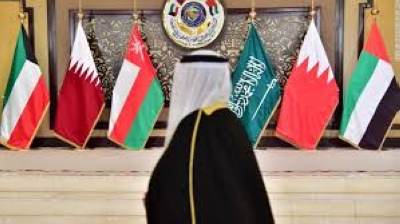
The extraordinary meeting of the Ministerial Council of the Gulf Cooperation Council (GCC) convened today to discuss the rapidly evolving situation and security challenges stemming from the recent Iranian aggression. This meeting comes at a critical juncture, necessitating concerted Gulf efforts to formulate a unified and firm stance against practices that threaten the stability of the region.
Meeting agenda and key issues to be discussed
Their Highnesses and Excellencies, the Foreign Ministers of the GCC states, will review during their session effective mechanisms for responding to these attacks and discuss ways to enhance security, military, and diplomatic coordination among member states. The primary focus of the discussions will be on ensuring the protection of the sovereignty of member states and safeguarding their regional security, as well as preventing any attempts to destabilize or interfere in the internal affairs of GCC states, which constitutes a clear violation of international charters and norms.
Historical context and commitment to collective security
These intensified diplomatic efforts are based on the long-standing principles upon which the Gulf Cooperation Council (GCC) was founded in the early 1980s, namely that the security of its member states is indivisible. In their previous concluding statements, the GCC states have consistently affirmed their complete rejection of continued Iranian interference in the region, whether through support for armed militias or threats to maritime navigation, emphasizing the necessity for Tehran to adhere to the principles of good neighborliness and respect for the sovereignty of states.
Strategic importance and regional and international influence
This meeting is of paramount importance that transcends regional boundaries, given the strategic location of the Arabian Gulf as a major global energy source and a vital corridor for international trade. Any threat to Gulf security directly impacts international peace and security and the stability of global energy markets. The meeting is expected to produce recommendations emphasizing the activation of joint defense agreements and enhanced cooperation with international partners to deter any potential aggression, while also sending a clear message to the international community about its responsibility to maintain security and stability in this vital region of the world.
Politics
Netanyahu threatens Iran with devastating strikes: Details of the military escalation
Netanyahu announced the mobilization of Israeli forces for intensive strikes on Tehran, confirming the continuation of the campaign. Details of the bombing and casualties in Beit Shemesh, and the repercussions of the regional conflict.

In an unprecedented military escalation that threatens radical changes in the Middle East landscape, Israeli Prime Minister Benjamin Netanyahu announced today (Sunday) the full mobilization of Israeli military forces, launching a new phase of direct confrontation with Iran, and pledging to intensify airstrikes on the capital Tehran in the next few days.
Netanyahu's remarks, delivered in a televised address, reflected the gravity of the situation. In a stark tone, he stated, "I have given clear instructions for the military campaign to continue relentlessly. Our forces are now striking the heart of Tehran with tremendous force, and this offensive will intensify significantly in the coming days." He further emphasized the existential nature of the battle, adding, "We are engaged in a fateful campaign in which the Israeli army is mobilizing its full strength as never before, to ensure our existence and our future in this region.".
Losses on the home front
On the home front, which Netanyahu described as experiencing "difficult days," field reports indicated painful casualties. Israeli police announced that rescue teams were still searching for 20 people missing under the rubble of a rocket that struck a shelter in the Beit Shemesh area. According to Israeli media, the attack killed nine people and injured 51 others, increasing public and political pressure to broaden the scope of the military response.
Context of conflict and strategic transformation
This announcement marks a historic turning point in the Israeli-Iranian conflict, which has long been characterized as a "shadow war" waged through cyberattacks, targeted assassinations, or proxy bombings in neighboring countries. The move to directly bomb the "heart of Tehran" signifies a shattering of the traditional rules of engagement that have persisted for decades, and places the entire region on the brink of a conflagration whose lava could engulf other countries in the region.
Air superiority and the deterrence equation
Military experts suggest that Netanyahu's talk of "mobilizing full force" and the superiority of fighter jets in the skies over Tehran hints at Israel's use of its most advanced air arsenal, including F-35 stealth fighters capable of penetrating sophisticated air defense systems. These concentrated strikes aim not only to destroy military infrastructure and missile facilities, but also to instill a sense of formidable power and establish a new deterrent equation: that Israel's long arm can reach any point that threatens its national security, no matter how far away.
As the sirens continue to wail and plumes of smoke rise, the international community is anxiously awaiting the outcome of this open confrontation, amid fears that things could slide into a full-blown regional war whose political, economic and security repercussions may be difficult to control in the near future.
Politics
Trump announces destruction of 9 Iranian ships; Navy headquarters: dangerous escalation
In an unprecedented military escalation, Trump announced the destruction of nine Iranian ships and a naval headquarters, and the killing of 48 officials. Learn more about the operation and its implications for the security of the Gulf and the region.

In a rapidly escalating military development that threatens to change the rules of engagement in the Middle East, US President Donald Trump announced today (Sunday) that he had launched devastating military strikes against Iranian naval capabilities, confirming that US forces had succeeded in destroying a number of strategic naval vessels and a command headquarters, in addition to neutralizing dozens of officials.
Details of the operation and the American threat via "Truth Social"
The US president revealed detailed information about the military operation via his official Truth Social account, stating, "I have just been informed that we have destroyed and sunk nine Iranian naval vessels, ranging from large to medium-sized ships." Trump did not limit himself to listing the material losses, but also issued a direct and strongly worded threat regarding the remainder of the Iranian fleet, adding, "We are going after the rest, and they will soon be at the bottom of the sea too!" This clearly indicates that military operations are ongoing and that Washington has decided to expand its targeting.
In a related context regarding infrastructure, Trump explained, "In a separate attack, we largely destroyed their naval headquarters," adding sarcastically, yet with political undertones, "Otherwise, their navy is in very good shape." This statement confirms that the targeting was not limited to surface vessels but extended to command and control centers responsible for managing naval operations.
Human losses and an accelerated timeline
The losses weren't limited to equipment and buildings; the US president expanded his pronouncements to include casualties among Iranian leadership. In statements to CNN, which were subsequently reported by international media, Trump asserted that US forces had killed 48 Iranian officials in a single strike. The president also highlighted a crucial point regarding the progress of the battles, explaining that the timeline for US military operations against Tehran was proceeding much faster than planned, reflecting the intensity of the firepower and the high level of intelligence capabilities in identifying and executing targets.
Strategic context: The Arabian Gulf is an arena of conflict
These developments are of paramount importance given the geographical and historical context. The waters of the Arabian Gulf and the Strait of Hormuz are among the world's most vital waterways, through which a significant portion of the world's oil supply passes. This region has long been a stage for tensions between the United States and Iran, from the "Tanker War" in the 1980s to more recent skirmishes and ship seizures. The announcement of the simultaneous destruction of nine ships represents a radical shift from a policy of "deterrence" and limited skirmishes to one of "direct neutralization" of military capabilities, leaving the region with a host of unpredictable scenarios.
Expected repercussions: From energy markets to regional security
Targeting the Iranian navy headquarters carries profound military implications, as it strikes at the heart of coordination and communication for Iranian forces, potentially paralyzing their command structure. Internationally, such news often triggers immediate reactions in energy markets, driving up oil prices due to fears of supply disruptions. Regionally, this escalation puts countries in the region on high alert, with Gulf and international capitals closely monitoring the conflict, fearing a slide into a full-blown confrontation that could destabilize the entire Middle East.
-
 Local News 3 days ago
Saudi Arabia approves regulations for the continued presence of Gulf vehicles: duration and penalties
-

 Local News 7 days ago
The Ministry of Interior begins procedures for a royal pardon for common law prisoners
-
 Local news one day ago
Jeddah Airport alerts for travelers due to airspace closure and flight disruptions
-

 Politics, one week ago
Trump plans to create a $2 billion alternative to the World Health Organization
-
 Local News 5 days ago
The deadline for property registration in Hail and Riyadh is Thursday
-
Sports one week ago
Tickets for the Al-Ahli vs. Al-Hilal King's Cup match postponed: New date
-
Local News 6 days ago
Under the patronage of the Minister of Information, an agreement was signed between the Ministry of Information and Waves Marketing Company
-
 Culture and Art 4 days ago
The Devil's Prisons series was halted: The full story of "The Emperor's" being moved to YouTube