
Politics
Sending Tomahawk missiles to Ukraine: A Russian warning of dire consequences
Russia warns of dire consequences after supplying Tomahawk missiles to Ukraine, amid escalating tensions between Moscow and Washington and significant geopolitical implications.

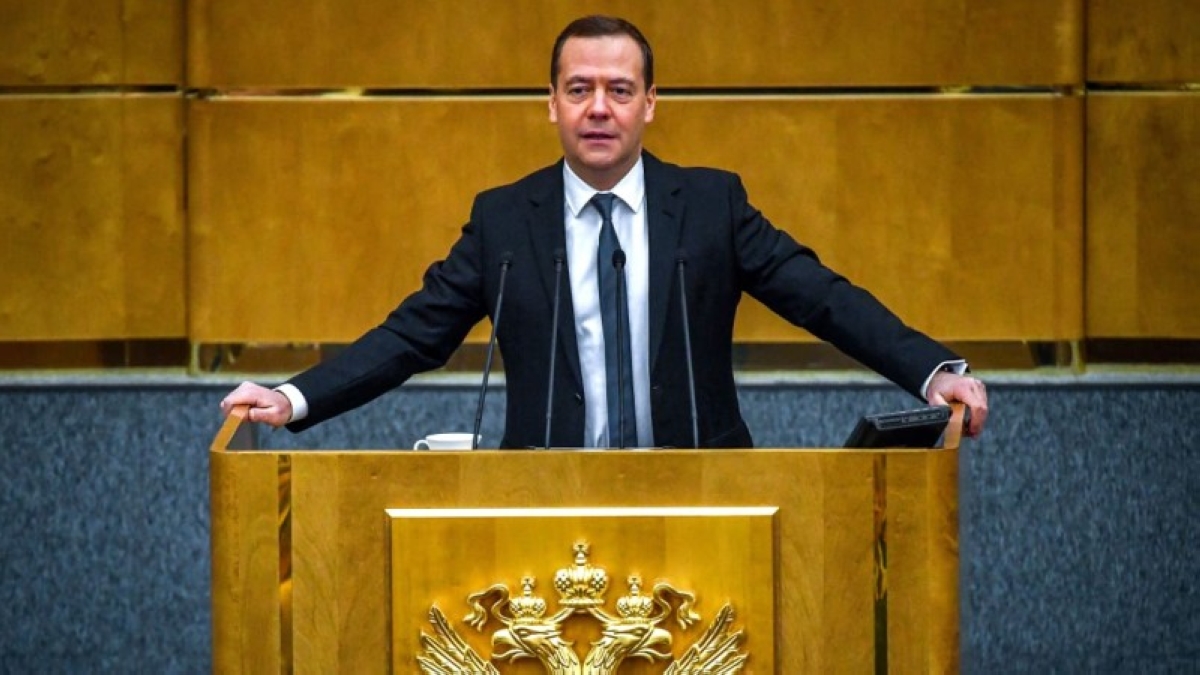
Tensions are escalating between Moscow and Washington over Tomahawk missiles
Amid escalating international tensions, former Russian President Dmitry Medvedev warned that the US supply of Tomahawk missiles to Ukraine could have dire consequences for everyone, specifically mentioning the impact on former US President Donald Trump. These remarks come against a backdrop of increasing geopolitical complexities among the world's major powers.
Russian warnings and American statements
Medvedev explained that distinguishing between conventional Tomahawk missiles and those equipped with nuclear warheads is impossible once launched, raising concerns about how Russia would respond to such a development. He hinted at the possibility of a Russian response of a nuclear nature, reflecting the gravity of the current situation.
For his part, Trump warned that he might send long-range Tomahawk missiles to Ukraine if Moscow did not end the war there soon. He emphasized that he might be prepared to increase pressure on Russian President Vladimir Putin using a substantial weapons system, stressing the power and impact of these offensive missiles.
Talks with Zelensky
Trump's remarks came after a phone call with Ukrainian President Volodymyr Zelensky, during which they discussed strengthening Ukraine's air defenses and long-range capabilities. Zelensky described the call as "very productive," indicating a convergence of views on the importance of bolstering Ukraine's defense capabilities.
International reactions and strategic analysis
Russian President Vladimir Putin has previously warned that the United States supplying Ukraine with long-range missiles would seriously damage relations between Moscow and Washington. This warning reflects Russia's deep concern about any escalatory steps that could worsen the security situation in the region.
Saudi Arabia and its diplomatic role
Amid these escalating tensions, Saudi Arabia is playing a crucial diplomatic role in attempting to de-escalate the situation and promote regional and international stability. Riyadh is relying on its diplomatic strength and strategic balance to achieve peace and stability in the region and the world.
Conclusion and analysis of the international situation
The situation between Russia and the United States remains sensitive and complex, requiring wisdom and diplomacy to avoid any escalation that could lead to disastrous consequences. Continued dialogue and mutual understanding are the best way to resolve conflicts and ensure global security and peace.




Politics
Yemeni Minister of Human Rights: Saudi support is a lifeline and a strategy to deter the Houthis
Yemeni Minister of Human Rights, Mashdal Omar, affirmed that Saudi support is a pillar of the economy, revealing a new digital strategy to document violations and end Houthi blackmail in the prisoners' file.

Yemeni Minister of Human Rights, Mashdal Mohammed Omar, affirmed that the recent Saudi support is the cornerstone for enabling the legitimate government to extend its economic sovereignty and protect citizens' rights, describing this support as a historic "lifeline" for Yemen amidst the country's dire circumstances. The minister explained that the Kingdom of Saudi Arabia has always been and remains a true supporter of Yemen in times of both prosperity and adversity, emphasizing the deep fraternal ties and shared destiny between the two nations.
Saudi support: a pillar of economic stability
In his first interview with the Saudi newspaper Okaz, Mashdal indicated that the economic and political support provided by the Kingdom is not limited to immediate aid, but extends to strengthening the institutional structure of the Yemeni state. This statement comes at a time when the Yemeni economy is suffering from numerous challenges as a result of the ongoing war. Saudi deposits in the Central Bank of Yemen and development projects through the Saudi Program for the Development and Reconstruction of Yemen have contributed to maintaining the stability of the national currency and preventing a complete economic collapse, which directly impacts the living conditions of Yemeni citizens and their basic rights to a decent life.
The issue of prisoners and militia extortion
The minister addressed the more complex humanitarian issue, emphasizing that the Houthi militia is engaging in the most egregious forms of political blackmail regarding prisoners and abductees. He explained that the militia disregards international standards and humanitarian law, exploiting the suffering of detainees and their families as leverage to achieve political and military gains. The prisoner issue is a thorny one that has been the subject of numerous rounds of UN-sponsored negotiations in Geneva and Amman, but the Houthis' intransigence frequently obstructs any tangible progress that could end the suffering of thousands of Yemeni families.
Digitalization and Youth Empowerment Strategy
In discussing the ministry's performance improvement, Mashdal revealed that the Ministry of Human Rights is currently developing a new strategy aimed at transforming monitoring and documentation reports from mere archival data into effective and deterrent government policies. He indicated that the ministry's vision for the next phase is primarily based on digitization and the use of modern technology in documenting violations to ensure that perpetrators do not escape international punishment.
The minister concluded his speech by stressing the importance of involving young talents in the ministry’s work, so that they can be the voice of the citizen and the true conveyor of reality, reviewing a number of essential issues of concern to the Yemeni public, and affirming the government’s determination to move forward in protecting human rights despite all the challenges.
Politics
American soldiers killed in Kuwait: Details of Operation Epic Wrath
Reports have emerged of the deaths of three US soldiers in Kuwait during Operation Epic Wrath against Iran. Learn details of the attack, the targeting of the television building in Tehran, and the aftermath.

In a significant development in the escalating events in the Middle East, prominent American media outlets revealed today (Sunday) the precise location where the American soldiers were killed. NBC News quoted informed officials in Washington confirming that the attack that killed three American soldiers occurred inside Kuwaiti territory, representing a dangerous strategic shift in the course of the confrontation.
Earlier today, U.S. Central Command (CENTCOM) issued a statement announcing that three soldiers were killed and five others seriously wounded during a U.S. military operation dubbed "Epic Wrath" against Iranian targets on Saturday. This announcement marks a direct military escalation that departs from the traditional rules of engagement that have prevailed in the past.
Targeting the Iranian heartland and internal situation
On the other side of the confrontation, Iranian state media reported that the capital, Tehran, was targeted by airstrikes, with parts of the national radio and television headquarters being hit. Despite the damage to the building, Iranian sources confirmed that television broadcasting continued as usual and was uninterrupted, in a message intended to demonstrate internal cohesion.
In a related context concerning the internal situation in Iran, the Iranian Revolutionary Guard issued strongly worded warnings, stressing that any movement in the street that disrupts security will be met with firmness, reflecting the authorities’ fears in Tehran that external tensions will be exploited to ignite internal protests.
The strategic importance of Kuwait and the American presence
The revelation of the attack in Kuwait carries immense geopolitical significance. Kuwait is a major non-NATO ally of the United States and hosts thousands of American troops at key military bases such as Camp Arifjan and Camp Buehring. These bases serve as a vital logistical and operational lifeline for US forces in the region. Targeting American forces in a stable Gulf state like Kuwait risks broadening the scope of the conflict to directly involve the Gulf Cooperation Council (GCC) states, thereby threatening global energy security and maritime stability in the Arabian Gulf.
Background of the conflict and its regional repercussions
This escalation comes within a long history of tension between Washington and Tehran. However, Operation Epic Wrath and the ensuing retaliatory strikes have shifted the conflict from a phase of proxy wars waged through militias in countries like Syria and Iraq to one of direct confrontation targeting sovereign infrastructure and official military bases. Observers believe this development may necessitate broad international intervention to de-escalate the situation before the region descends into a full-blown war with potentially catastrophic consequences for the global economy and oil prices.
Politics
Details of US and Israeli intelligence surveillance of Khamenei
CNN revealed details of the intelligence coordination between America and Israel to monitor the movements of Iranian Supreme Leader Ali Khamenei, and the techniques used to monitor Tehran's leaders and the decision-making process.

In a revealing exposé highlighting the depth of intelligence penetration in the Middle East, American media outlets have circulated detailed accounts of joint operations conducted by US and Israeli intelligence agencies to monitor Iranian Supreme Leader Ali Khamenei. This report, based on information published by CNN, explains how the movements of the highest levels of power in Tehran became an open book to the CIA and Mossad, as they prepared for critical scenarios.
Close surveillance details
According to the American network, the surveillance operation was not a spur-of-the-moment decision, but rather the result of diligent and continuous work. Intelligence agencies had been secretly monitoring Khamenei, tracking his every move and daily activities. This rigorous surveillance included identifying his changing residences, monitoring the people he met, analyzing the communication channels he used, and even determining the safe havens he might seek refuge in during emergencies or in the event of a potential attack.
Context of the shadow intelligence war
This information cannot be separated from the historical context of the escalating intelligence conflict between Tehran on one side, and Washington and Tel Aviv on the other. A "shadow war" has long characterized the relationship between these parties, with Israel and the United States relying on a complex mix of human intelligence (spies on the ground) and advanced electronic intelligence (satellites and signal interception) to monitor high-value targets. This report demonstrates a qualitative improvement in the ability to access the very inner circle of decision-making in Iran, reminiscent of previous operations targeting senior leaders and nuclear scientists, thus confirming that Iran's security apparatus suffers from structural vulnerabilities.
The circle of targeting is expanding
The surveillance wasn't limited to the Iranian Supreme Leader; sources reported that intelligence agencies were also monitoring Iran's elite political and military leadership. These leaders, who rarely meet with Khamenei in person for security reasons, were under intense scrutiny in recent days, as intelligence services awaited a "golden opportunity" or the opportune moment to make critical decisions.
Regional and international repercussions
The disclosure of these details carries serious regional implications; it sends a powerful deterrent message that no one is beyond the reach of surveillance and targeting. The ability of Western and Israeli intelligence to track the Supreme Leader's movements means that the balance of information power is heavily tilted in favor of the US-Israeli alliance. This intelligence superiority not only affects military tactics but also casts a shadow over the political landscape in the region, potentially prompting Tehran to reassess its security calculations and radically alter its leaders' protection protocols to prevent similar breaches in the future.
-

 Local News 3 days ago
Saudi Arabia approves regulations for the continued presence of Gulf vehicles: duration and penalties
-

 Local News 7 days ago
The Ministry of Interior begins procedures for a royal pardon for common law prisoners
-
 Local news one day ago
Jeddah Airport alerts for travelers due to airspace closure and flight disruptions
-

 Politics, one week ago
Trump plans to create a $2 billion alternative to the World Health Organization
-
 Local News 5 days ago
The deadline for property registration in Hail and Riyadh is Thursday
-
Sports one week ago
Tickets for the Al-Ahli vs. Al-Hilal King's Cup match postponed: New date
-
Local News 6 days ago
Under the patronage of the Minister of Information, an agreement was signed between the Ministry of Information and Waves Marketing Company
-
 Culture and Art 4 days ago
The Devil's Prisons series was halted: The full story of "The Emperor's" being moved to YouTube