Politics
Second thieves!
Seconds are all it takes to complete his crime; it might be a fleeting glance or momentary lapse of attention, but its consequences are significant and painful, requiring days of retribution

Seconds are all it takes to complete his crime. It may be a moment of distraction or negligence that does not last long, but its consequences are great and painful, requiring days and days to recover.
The warnings issued by the security services from time to time against leaving vehicles running to prevent thieves from stealing them have not been successful. The security services have warned more than once that leaving the car running may be exploited by thieves, who need only fractions of a minute to drive the vehicle into the unknown and may use it in larger crimes that place the responsibility on its owner.
Security expert Major General (retired) Masoud Al-Adwani warns that laxity and negligence in leaving vehicles running with the buttons unlocked could cost their owners dearly. He explains that vehicle thieves need only a few seconds to complete the theft, and the vehicle owner may see his actions as harmless, as he may get out of the vehicle to buy a specific item or stand near it without knowing that there are eyes monitoring what is happening around it. This is what investigations into theft incidents previously handled by the security services revealed.
Their presence does not prevent crime
Retired Major General Al-Adwani says: Based on investigations and incidents recorded at police stations, it is clear that most thefts occur in front of grocery stores and near fixed ATMs that require the person to get out of the car. He stressed that the thefts are carried out in fractions of a minute and may not exceed 10 seconds.
He explained that the theft process may endanger the car owner if he tries to stop the thief or clings to the car in the hope of preventing him from stealing. Therefore, it is a big mistake to leave the car running with a woman or children inside, as their presence does not prevent the thief from carrying out his crime. Therefore, it must be locked properly and any opportunity for weak-willed people must be missed. If the driver of the vehicle is alone inside it, it must be turned off and not left running.
Punish them and double the punishment
Retired Major General Misfer Al-Jaid believes that the most important reasons for vehicle theft are the actions of their owners in facilitating the theft process by leaving the car running with the key inside and going down to the store, without locking the doors, under the pretext that he is only going down for a few seconds and does not want to turn it off because of the air conditioner or any other excuse.
Al-Juaid hoped to increase the penalty for leaving a car running, and in case of repetition the penalty would be doubled. He recommended that parents raise security awareness among their children and drivers about the dangers of leaving a car running, and called on all citizens and residents to raise their security awareness and increase their interest in safety measures that limit the process of car theft.
The victims in a hurry!
Abdullah Al-Harbi recounts the story of his car theft, which occurred in just 12 seconds. He said, "I got out of my car to buy a drink, unaware that someone was watching the area. As soon as I stepped out, he drove off. The entire theft was captured on video. The moment I walked through the store door, the thief reached the trunk. He was calm and tried to open the unlocked door, giving him the opportunity to drive away. His stolen car was later recovered, severely damaged, as the thief had used it for drifting, costing him a lot of money to repair.".
Al-Harbi expressed his regret for his actions, saying, "It was a painful experience and a lesson for me." Naif Al-Thaqafi recounted how a thief stole his car: "I was watching my vehicle and saw him walking calmly beside it. I didn't expect him to be a thief. He jumped onto it in seconds, and I tried to chase him, but he was faster.".
Al-Thaqafi confirmed that the relevant authorities investigated the case and acknowledged my negligence, which was the main reason for the theft. He pointed out that he recovered the car hours later after losing all its contents, and the thief was later apprehended.
Videos expose the thieves
A video has surfaced showing a shocking incident in Dammam where a car owner was stunned to see his vehicle stolen right before his eyes, with several people nearby. The video shows a car parked in front of a workshop where a worker is performing engine maintenance. Suddenly, a thief sneaks into the vehicle, reverses it, and drives away. The owner tries to chase him, but the thief escapes quickly, even though the hood is open. Dammam police later confirmed the arrest of the perpetrator and that he has been brought to justice.
In Jeddah, a video surfaced showing a thief stealing a running car from in front of a grocery store. The video shows the thief circling the vehicle to ensure the owner was absent and no one was passing by to stop him, before driving off. Jeddah police also arrested a Chadian resident and two Saudi citizens for stealing five running vehicles, which were subsequently recovered.
Public Security explained that the accused were arrested, the necessary legal procedures were taken against them, and they were referred to the Public Prosecution.
Earlier, someone stole a car from in front of a shop in one of the eastern neighborhoods of Riyadh. The owner had left it running, and after the thief got into the car, he was surprised when the owner arrived quickly and opened the door to stop him. However, the car owner was run over, while the thief fled.
Jeddah police announced the arrest of a citizen in his thirties on charges of stealing vehicles left running by their owners. The accused confessed during the investigation to stealing three vehicles.
Traffic authorities issue warnings and alerts
The General Directorate of Traffic has warned against leaving a vehicle unlocked and running after exiting it, noting that this constitutes a traffic violation. It emphasized that leaving a vehicle unlocked and running after exiting it is a traffic violation listed in Schedule of Violations No. (1), and the fine for this violation ranges between 100 and 150 riyals. The Directorate explained that the justification for the penalty is that leaving the car running is negligence on the part of the driver, which warrants a fine.
Follow the rules
The Ministry of Interior warned against the dangers of leaving the car engine running and getting out of it, even for a short time, stressing that this is a violation of traffic safety rules and may endanger the lives of the driver and others.
The ministry explained that leaving a car running could tempt thieves to steal it, especially if the keys are inside. It could also lead to traffic accidents, particularly if the car moves accidentally or is struck by a pedestrian.
The ministry urged all drivers to abide by traffic safety rules and to turn off the car engine before getting out of it for any reason, in order to preserve their safety and the safety of others.
General safety guidelines include putting the vehicle in Park (P) before exiting it, ensuring all doors and windows are properly closed, not leaving any valuables visible inside the vehicle, and parking in a well-lit and busy area whenever possible.
A crime warranting arrest
The Public Prosecution affirmed that car theft is a major crime warranting arrest. It added that the right to vehicle ownership is protected by Sharia and the legal system, and is afforded criminal protection. This protection extends to the vehicle, every part of it, and everything inside it. Violating this right warrants criminal prosecution, and such acts are considered major crimes requiring arrest.
The Public Prosecution stated that, accordingly, anyone who steals a car or part of it, or steals what is inside it, will be detained even if one of the conditions of (theft with a fixed penalty) is not met.
When is compensation due for the stolen item?
Lawyer and legal consultant Majid Al-Ahmari revealed that the vehicle thief is subject to the private right of the vehicle owner in the event of a claim for compensation for damages that may have been inflicted on the vehicle during the theft.
He pointed out that the punishment for theft is between the Hadd punishment and the discretionary punishment for theft. If the elements and conditions of the Hadd punishment for theft are met in the crime of stealing a car, then the prescribed punishment will be, according to the provisions of Sharia, cutting off the hand of the thief. If the conditions of the Hadd punishment for theft are not met in the crime, then the punishment will be discretionary, which is up to the criminal judge looking into the case, and it consists of imprisonment, flogging, or a fine, or all of these punishments together, or two of them.
Lawyer Al-Ahmari explained that the owner of the stolen vehicle has the right to compensation for any damages that may have been inflicted on his vehicle, and he has the right to claim his private right and prove the damage that the vehicle suffered as a result of the theft. He also has the right to compensation for the value of the car if it was involved in an accident and was damaged as a result of its theft. He also has the right to compensation for all the costs he incurs to repair and rehabilitate it after it was stolen. He also has the right to compensation for the loss or lost profit as a result of the theft of the car and its remaining in the possession of the thief for a certain period of time, especially if that car is a working and productive vehicle such as transport vehicles or taxis. He must submit all the necessary documents and papers to obtain compensation according to the type of compensation stipulated.




Politics
Khamenei's wife dies after US-Israeli attack: Details and repercussions
Iran announced the death of Mansoureh Khojasti, Khamenei's wife, from injuries sustained in the US-Israeli attack. Learn details of the assassination and the Revolutionary Guard's escalation in the Strait of Hormuz.

Iranian state media announced on Monday the death of Mansoureh Khojasti Bagherzadeh , wife of Iranian Supreme Leader Ali Khamenei, from injuries sustained in the recent US-Israeli attack. This announcement further heightens the already unprecedented tensions in the region, particularly following reports confirming that the Supreme Leader's residence in Tehran was targeted.
Details of the attack and confirmation of the death
According to the Tasnim news agency and other official sources, Ms. Mansoureh Khojasti passed away two days after the US and Israeli attack last Saturday, which directly targeted the presidential residence and the Supreme Leader's headquarters. This attack, according to the official account, resulted in the death of Supreme Leader Ali Khamenei and several members of his family, in what is considered the most serious incident of its kind in the history of the conflict between Tehran and Washington.
In the context of official procedures, the Iranian authorities declared a period of national mourning for 40 days, in addition to suspending official departments and declaring a 7-day holiday, in honor of the victims and to emphasize the severity of the injury inflicted on the political system in Iran.
Historical background and context of the event
Mansoureh Khojasti Bagherzadeh remained a prominent figure throughout her husband's rule, having married Ali Khamenei in 1964 and stood by him through the Iranian Revolution and subsequent major political events. Her passing, along with her husband, at this time marks a pivotal turning point in the Iranian domestic landscape.
This military escalation comes at a time when international relations are experiencing significant complications, as observers believe that targeting the head of the pyramid in the Iranian regime represents a radical change in the rules of engagement, and shifts the confrontation from proxy wars to direct clashes that could drag the region into unknown scenarios.
Military escalation in the Strait of Hormuz
Coinciding with the announcement of the death, military activity in the territorial waters escalated. The Iranian Revolutionary Guard announced that it had targeted a fuel tanker in the Strait of Hormuz with two drones, causing it to catch fire. The Strait of Hormuz is a vital waterway through which a large portion of the world's oil supply passes, and any tension there has an immediate impact on energy markets and the global economy.
The Revolutionary Guard confirmed launching a new wave of retaliatory attacks, while media reports spoke of the use of new missile models that had not been previously revealed, indicating that the Iranian response may go beyond the traditional boundaries of previous confrontations, amid international fears of the conflict expanding to include international shipping lanes and military bases in the region.
Politics
Araqchi and Woitkov clash: Will it end diplomacy and ignite war?
Details of the heated exchange between Abbas Araqchi and Steve Witkopf regarding Iran's nuclear program. Will it hasten the collapse of talks and the outbreak of a military confrontation? An NBC report reveals the behind-the-scenes details of the clash.
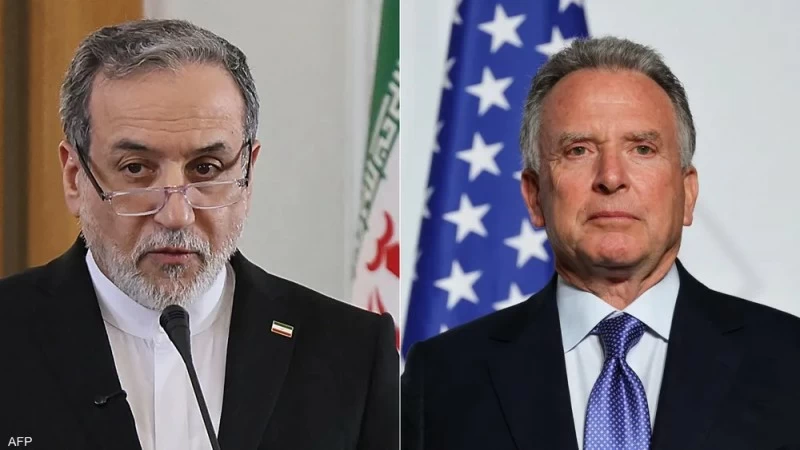
American media reports, citing NBC News, revealed details of a heated and unprecedented verbal exchange that took place behind closed doors between Iranian Foreign Minister Abbas Araqchi and US envoy Steve Wittkopf. This incident, which occurred during sensitive talks, is being interpreted as a dangerous sign that the diplomatic process has reached a dead end, paving the way for more dire scenarios that could include a direct military confrontation.
Details of the diplomatic clash
According to US administration officials, tensions rose at the meeting when the American delegation, led by Wittkopf, presented stringent conditions that Tehran considered a crossing of red lines. The American demand centered on Iran refraining from significant steps in its nuclear program, specifically a complete freeze on uranium enrichment for the next ten years. This proposal was met with firm rejection and strong reservations from the Iranian side.
During the debate, Abbas Araqchi reiterated his country's commitment to what he called its "inalienable right to uranium enrichment" for peaceful purposes, based on national sovereignty. However, the response from US envoy Steve Wittkopf was swift and sharp, as he interrupted his counterpart, stating that the United States also possessed "an inalienable right to defend its national security and prevent the proliferation of nuclear weapons that threaten global stability," thus ending the discussion on a high note.
Background to the nuclear crisis and history of setbacks
This dispute cannot be separated from the complex historical context of US-Iranian relations, particularly since Washington's unilateral withdrawal from the Joint Comprehensive Plan of Action (JCPOA) in 2018. Since then, the pace of Iran's nuclear program has accelerated, with reports from the International Atomic Energy Agency indicating that Tehran has reached enrichment levels close to weapons-grade (60%). This backdrop made the current talks a last chance to salvage the situation. However, the vast gap between US demands for a return to strict restrictions and Iran's insistence on lifting sanctions and preserving the gains of its nuclear program has made a clash inevitable.
The repercussions of failed diplomacy regionally and internationally
This diplomatic impasse carries serious implications that extend far beyond closed-door meetings. The failure of the talks effectively erodes peaceful options, placing the entire region on a knife's edge. Observers believe this clash could be the spark that precipitates military action, whether by Israel, which constantly threatens to strike nuclear facilities, or through a US-led mobilization to impose a suffocating isolation that could escalate into limited clashes. The shift from quiet diplomacy to direct verbal sparring between senior officials reflects Washington's growing strategic impatience and Tehran's readiness for confrontation, foreshadowing a new phase of escalation that could redraw the geopolitical map of the Middle East.
Politics
Trump hints at a ground intervention in Iran: The major strike has not yet begun
In a dangerous escalation, Trump confirms that a major strike against Iran is imminent and threatens a ground invasion. British Prime Minister Keir Starmer comments on the effectiveness of airstrikes for regime change.

In a striking development that portends a new phase of escalation in the Middle East, US President Donald Trump confirmed that the United States has not yet begun to launch its real and powerful strikes against Iran, indicating that what has happened so far is merely a prelude to what is to come.
In a fiery interview with CNN, Trump declared firmly, "We haven't even started hitting Iran hard yet. The big wave hasn't happened yet. The big strike is coming soon." The US president didn't stop at threatening airstrikes; he went further, indicating that he would not hesitate to make the dangerous strategic decision to send ground troops to Iran if necessary. This represents a radical shift in US military doctrine, which in recent years has relied on airstrikes and special operations.
The British position: Doubts about the effectiveness of air strikes
Across the Atlantic, a divergence of views emerged between Washington and London. British Prime Minister Keir Starmer addressed UK lawmakers, outlining his country's cautious stance. Starmer stated unequivocally, "I don't believe that attempting to remove Iran's leadership through airstrikes without a ground invasion will succeed." He explained that this military and political assessment was a key reason why the UK would not join the joint US-Israeli strikes against Iran, adding the deeply significant phrase, "This government does not believe in regime change from the sky," alluding to past lessons from conflicts in the region.
Context of tension and history of conflict
These statements come at a time of unprecedented tension in US-Iranian relations, reminiscent of the era of "maximum pressure." The Iranian issue has long been a major point of contention in international politics, with Washington accusing Tehran of destabilizing the region through its proxies and threatening international shipping. Analysts point out that the threat of a "ground invasion" constitutes a dangerous verbal escalation, given the immense geographical and military challenges posed by Iran's terrain, as well as the high human and material costs of such an intervention.
Regional repercussions and Arab concerns
In his remarks, Trump expressed surprise at the audacity of the Iranian strikes targeting Arab states, reflecting growing American concern about the security of its Gulf allies. Observers believe that any American ground military action against Iran would not only have repercussions for Tehran and Washington, but would ignite the entire region, potentially impacting global energy supplies and oil prices, in addition to the possibility of Iran activating its network of regional alliances to respond to any potential invasion.
-

 Local News 4 days ago
Saudi Arabia approves regulations for the continued presence of Gulf vehicles: duration and penalties
-
Local news two days ago
Jeddah Airport alerts for travelers due to airspace closure and flight disruptions
-
Local news one week ago
The Ministry of Interior begins procedures for a royal pardon for common law prisoners
-
Local News 6 days ago
The deadline for property registration in Hail and Riyadh is Thursday
-
Sports one week ago
Tickets for the Al-Ahli vs. Al-Hilal King's Cup match postponed: New date
-
Local News 7 days ago
Under the patronage of the Minister of Information, an agreement was signed between the Ministry of Information and Waves Marketing Company
-
Culture and Art 5 days ago
The Devil's Prisons series was halted: The full story of "The Emperor's" being moved to YouTube
-
Local news one week ago
Saleh Al-Maghamsi appointed Imam of the Prophet's Mosque: Details of the Royal Decree