Politics
The Saudi leadership congratulates the Sultan of Oman on Oman's National Day
King Salman congratulates the Sultan of Oman on the National Day, praising the brotherly relations between the two countries, and wishing prosperity and well-being to the Omani people.

html
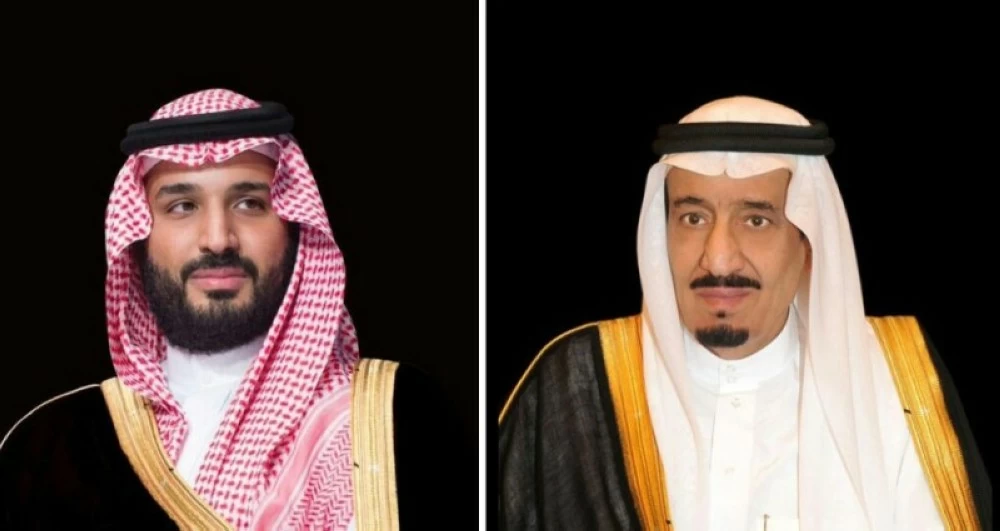
Custodian of the Two Holy Mosques King Salman bin Abdulaziz Al Saud
On the occasion of his country’s National Day, the Custodian of the Two Holy Mosques, King Salman bin Abdulaziz Al Saud, emphasized the importance of congratulations and wishes for continued health and happiness to him, and to the government and people of the brotherly Sultanate of Oman, expressing his best appreciation and prosperity.
Emphasis on fraternal relations
King Salman praised the fraternal relations between the two countries and their brotherly peoples, relations which all strive to strengthen and develop in all fields. Crown Prince Mohammed bin Salman bin Abdulaziz Al Saud, Deputy Prime Minister, also sent a congratulatory cable, expressing his best wishes to the Sultan of Oman for continued health and happiness, and to his people for further progress and prosperity.
Crown Prince's Message
In his message, the Crown Prince affirmed the depth of bilateral relations between the Kingdom and the Sultanate of Oman, emphasizing the two countries' commitment to strengthening joint cooperation in a way that serves the interests of their brotherly peoples and fulfills their aspirations. He expressed his hope that these strong and distinguished relations would continue to achieve further joint accomplishments.




Politics
Egypt denies Israeli claims of informing it of the date of the strike on Iran
An Egyptian source denies Haaretz reports that Tel Aviv notified Cairo of the date of the attack on Iran, stressing Egypt's rejection of military escalation and its commitment to the diplomatic path to resolve crises.
A senior Egyptian official categorically denied on Sunday Israeli media reports claiming that Tel Aviv had informed Cairo of its plans to launch a military attack on Iran approximately 48 hours beforehand. The official asserted that these claims were "completely baseless" and had no connection to reality, emphasizing that Egypt's position was clear and publicly stated.
This official denial came in response to a report published by the Israeli newspaper Haaretz yesterday (Saturday), in which it claimed, quoting unnamed diplomatic sources, that Israel had informed Egypt in advance of the strike plan and its timing, claiming that Cairo did not express an intention to participate but was aware of it, which Cairo categorically denied.
The context of regional tensions and Egypt's firm stance
This denial comes at a highly sensitive time, as the Middle East region witnesses unprecedented geopolitical tensions. Egypt has consistently affirmed, through its diplomatic channels and official statements, its unwavering commitment to resolving regional crises through diplomacy and dialogue, rejecting the principle of military escalation that could drag the region into a full-blown war. Since the outbreak of the current tensions, Cairo has played a pivotal role as a buffer, attempting to mediate and de-escalate the situation, both in the Gaza Strip and in other regional issues related to the Israeli-Iranian conflict.
Dimensions of Egyptian exile and its political impact
The Egyptian denial carries significant political implications on both the regional and international levels. It preempts any attempts to implicate Egypt or suggest the existence of covert security coordination in offensive operations that contradict Egypt's political doctrine of defending Arab national security and refraining from military intervention in the affairs of other countries. This decisive stance also aims to refute the Israeli narrative, which sometimes attempts to portray the existence of implicit regional alliances against Tehran—a notion that clashes with Egypt's foreign policy, which seeks to maintain balanced relations and consistently calls for restraint.
Risks of escalation and its repercussions
Egypt has repeatedly warned of the dangers of sliding into open military confrontations between regional powers, noting that the repercussions of such attacks would not be limited to the warring parties but would extend to affect maritime security, energy prices, and food security in the region and the world. Experts assert that including Egypt's name in such Israeli reports may be an attempt to embarrass Cairo or muddy the political waters. However, Egypt's swift and decisive response reaffirmed its independent decision-making and its rejection of any infringement upon its sovereignty or its declared positions.
Politics
Aoun: The decision of war and peace rests exclusively with the Lebanese state
President Joseph Aoun affirms from Baabda that the decision of war and peace belongs to the state alone, and discusses the repercussions of Khamenei's assassination and its impact on regional stability during a meeting of the Supreme Defense Council.
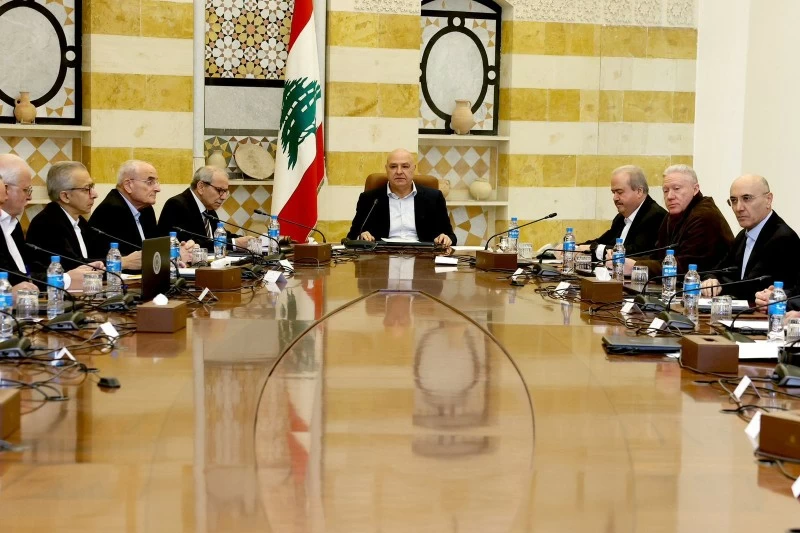
Amid the delicate circumstances the region is experiencing, Lebanese President Joseph Aoun reaffirmed a firm and strategic stance regarding national sovereignty, emphasizing that the decision of war and peace rests solely with the Lebanese state . The President clarified that this sovereign right is exercised exclusively by the state through its legitimate constitutional institutions, noting that this principle is agreed upon by all Lebanese parties and has been clearly articulated by the state in both the presidential oath and the current government's ministerial statement, reflecting a national consensus on the necessity of confining critical decisions to official institutions.
Meeting of the Supreme Defense Council and the challenges of the current phase
President Aoun chaired an emergency meeting of the Supreme Defense Council at Baabda Palace today (Sunday) to discuss the rapidly evolving and dangerous regional developments, specifically the repercussions of the assassination of Iranian Supreme Leader Ali Khamenei. This meeting comes at a highly sensitive time, aiming to safeguard the Lebanese domestic scene from any negative fallout that might result from this major event and its potential shifts in the balance of power or direct impacts on regional stability in the Middle East.
The importance of timing and regional context
This official stance gains added significance given the volatile situation in the region. Emphasizing the exclusive right to decide on war and peace is a cornerstone of the policy of "disassociation" and of preventing Lebanon from being drawn into regional conflicts. Recent developments, most notably the absence of a pivotal figure in the regional landscape like the Iranian Supreme Leader, necessitate that the Lebanese state raise its security and political preparedness levels to ensure that Lebanese territory is not used as a conduit for regional tensions.
Arab solidarity and national responsibility
President Aoun opened the meeting by offering his condolences to all the countries affected by the tragic events, expressing his full fraternal solidarity with the brotherly Arab nations. He also stressed his complete and unequivocal condemnation of any targeting of innocent civilians or civilian infrastructure in the region, affirming that Lebanon is an integral part of Arab national security and that its stability is inextricably linked to the stability of its surroundings.
For his part, the Prime Minister and the relevant ministers stressed during the meeting the need for everyone to rally around the state and its military and security institutions at this critical stage, to ensure that Lebanon reaches safety amidst these regional storms.
Politics
Israel announces Tornado plan to strike Iranian nuclear facilities and ports
Israel's defense minister announces Tornado plan to launch a massive air attack targeting Iran's nuclear project and ports, amid reports of half of Tehran's missile stockpile being destroyed.
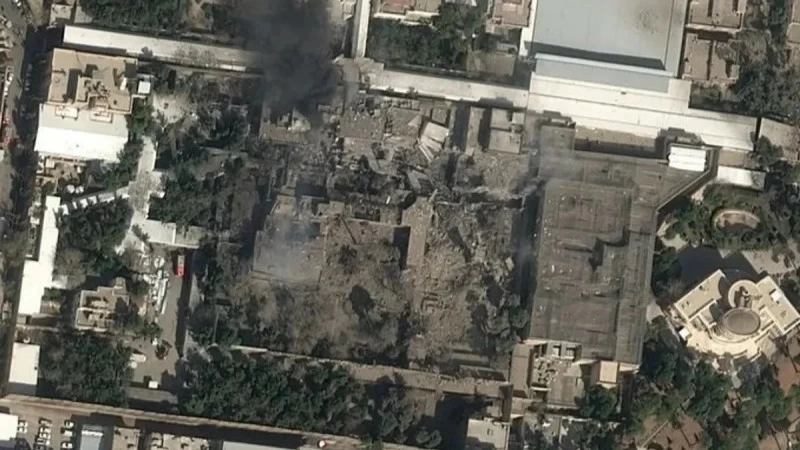
In a remarkable development that indicates a dangerous escalation in the regional scene, Israeli Defense Minister Yisrael Katz announced the start of preparations for a large-scale military operation based on a continuous air bridge, in preparation for launching an intensive attack on vital targets in the Iranian capital, Tehran, under a code name known as “Operation Tornado.”.
Details of the "Tornado" plan and its strategic objectives
The "Tornado" plan represents a qualitative shift in Israeli military doctrine regarding the Iranian threat, as its targets are not limited to traditional military sites. According to official statements, the plan aims to launch a comprehensive and intensive attack targeting the Iranian regime's vital infrastructure. The target bank includes a shift from limited strikes to direct targeting of airports and seaports, as well as the regime's command and control centers, culminating in the most sensitive target: the Iranian nuclear program.
The “Tornado” operations are characterized by tactical diversity, ranging from carrying out precise surgical bombing operations, to aerial interception of counterattacks, and the destruction of large-scale ground targets using a sophisticated arsenal of laser-guided bombs, anti-radar missiles, and anti-ship missiles, reflecting an Israeli intention to cripple Tehran’s economic and military capabilities simultaneously.
Context of the conflict and the destruction of the missile arsenal
In a related development, the Israeli army revealed significant military data today (Sunday) concerning past confrontations, stating that it had succeeded in destroying approximately half of Iran's strategic missile stockpile during what it termed the "June 2025 War." The army indicated that the Islamic Republic had been operating at high production capacity, manufacturing dozens of surface-to-surface missiles monthly to compensate for its losses, but that Israeli strikes had significantly curtailed these capabilities. Army spokesman Avi Defrin confirmed these details in a press statement, emphasizing the continuation of military pressure.
Background of the conflict and regional dimensions
These developments come against the backdrop of a long history of a "shadow war" between Israel and Iran, which has gradually escalated into more open and direct confrontations. Israel has long considered the Iranian nuclear program an existential threat that cannot be tolerated, and has sought to thwart it through diplomatic channels and intelligence operations. However, the announcement of a plan as large as "Tornado" indicates an Israeli conviction that diplomatic solutions have been exhausted and that the direct military option is now firmly on the table.
Observers believe that targeting ports and airports carries serious economic implications, as Israel seeks, through this strategy, to isolate Iran internationally and sever its logistical supply lines, potentially leading to crippling economic consequences for Tehran. Furthermore, the threat of striking nuclear facilities exposes the entire region to a range of unpredictable scenarios that could include widespread reactions, necessitating international monitoring of the escalation's potential impact on the stability of the Middle East and global energy markets.
-

 Local News 3 days ago
Saudi Arabia approves regulations for the continued presence of Gulf vehicles: duration and penalties
-
Local News 6 days ago
The Ministry of Interior begins procedures for a royal pardon for common law prisoners
-
Local news one day ago
Jeddah Airport alerts for travelers due to airspace closure and flight disruptions
-
Politics, one week ago
Trump plans to create a $2 billion alternative to the World Health Organization
-
 Local news one week ago
Three billion riyals deposited as Ramadan aid for social security beneficiaries
-
Local News 5 days ago
The deadline for property registration in Hail and Riyadh is Thursday
-
Local News 5 days ago
Under the patronage of the Minister of Information, an agreement was signed between the Ministry of Information and Waves Marketing Company
-
Sports one week ago
Tickets for the Al-Ahli vs. Al-Hilal King's Cup match postponed: New date