Politics
The Foreign Minister discusses regional developments with China, India, and Indonesia
Foreign Minister Prince Faisal bin Farhan received calls from the foreign ministers of China, India, Indonesia and Romania to discuss regional developments and efforts to enhance international security and stability.

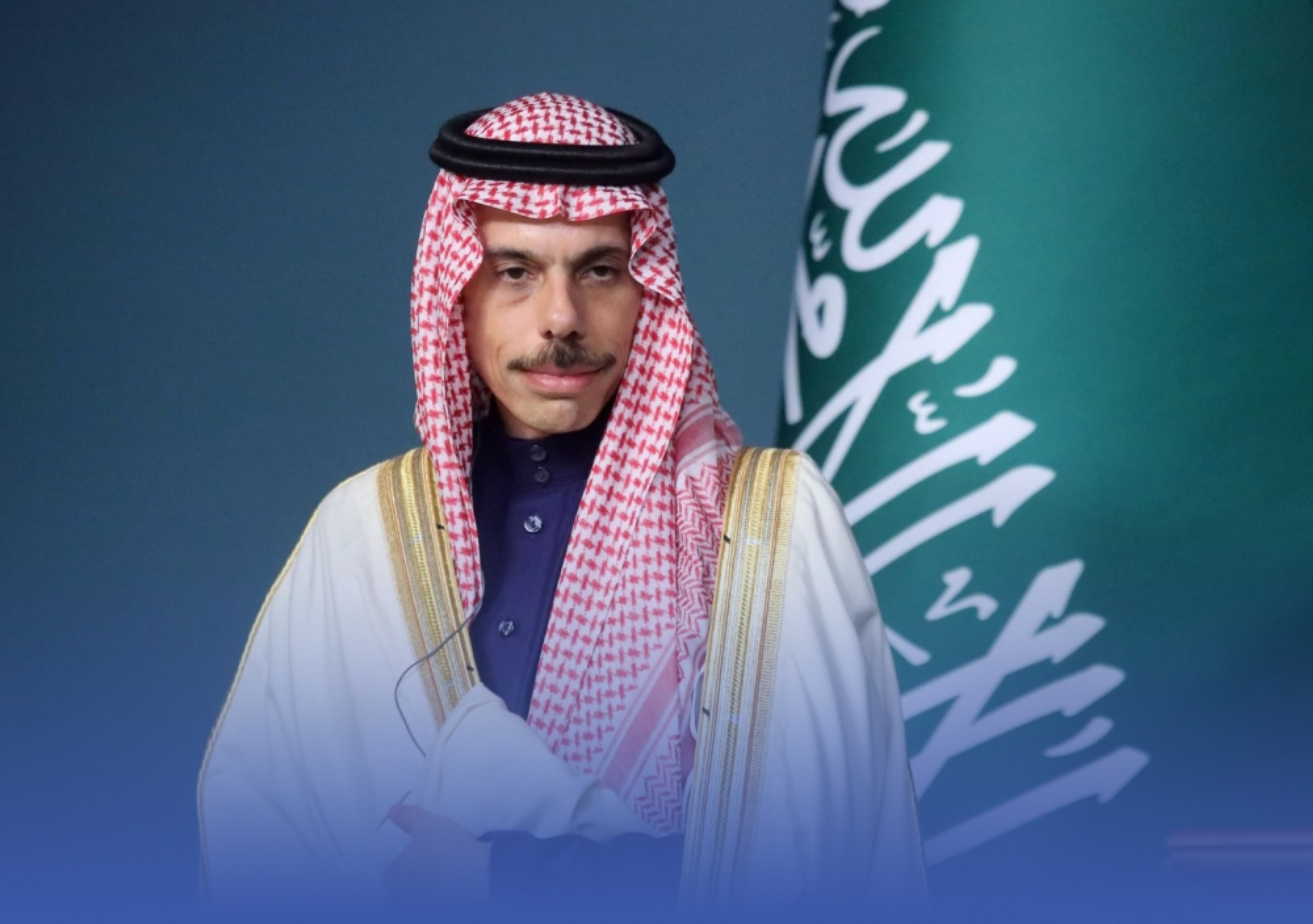
As part of the Kingdom of Saudi Arabia’s ongoing diplomatic efforts to promote regional and international security and stability, His Highness Prince Faisal bin Farhan bin Abdullah, Minister of Foreign Affairs, received a series of important telephone calls today from several of his counterparts in key countries around the world. These calls included discussions with Mr. Wang Yi, Member of the Political Bureau of the Central Committee of the Communist Party of China and Minister of Foreign Affairs of the People’s Republic of China; Ms. Oana Toiu, Minister of Foreign Affairs of Romania; Dr. Subrahmanyam Jaishankar, Minister of External Affairs of the Republic of India; and Mr. Sugino, Minister of Foreign Affairs of the Republic of Indonesia.
High-level international coordination to contain crises
During these intensive consultations, the rapidly evolving events in the Middle East were discussed, with a focus on the need to intensify joint coordination to address existing tensions. These talks come at a critical juncture, requiring concerted international efforts to prevent the conflict from escalating and to discuss the potential repercussions of these events on security and peace, not only regionally but also on the broader international stage.
Dimensions of strategic partnerships with Asian and European powers
These contacts reflect the political weight of the Kingdom of Saudi Arabia and its pivotal role in international decision-making. The talks with the Chinese side, represented by Mr. Wang Yi, underscore the importance of Beijing's role as a major power and a permanent member of the Security Council in supporting de-escalation efforts. Similarly, the engagement with India, through Minister Jaishankar, highlights the depth of strategic relations with rising Asian powers and their influence on global security and economic issues.
On another front, contact with Indonesian Foreign Minister Sugino represents important coordination with the world's most populous Muslim-majority country, strengthening the alignment of perspectives on issues facing the Muslim world. Meanwhile, coordination with Romanian Foreign Minister Iona Toiu adds a significant European dimension to the consultations, contributing to the direct transmission of regional viewpoints to the European arena.
Saudi efforts to promote security and stability
His Highness the Minister of Foreign Affairs reviewed with his counterparts the current efforts to address the latest developments, emphasizing the Kingdom's firm stance calling for prioritizing dialogue and diplomacy, and working diligently to halt any escalation that could threaten the safety and well-being of nations. During these discussions, it was agreed to continue consultations and joint coordination on all developments, in a manner that serves the interests of the countries concerned and contributes to maintaining global security and stability.


Politics
America: Gulf states are countering Iranian attacks, and Washington is intensifying its strikes
The US Joint Chiefs of Staff chairman affirms the role of Gulf states in repelling Iranian attacks. Defense Secretary Pete Higseth announces the destruction of 20 Iranian vessels and imminent air superiority within a week.

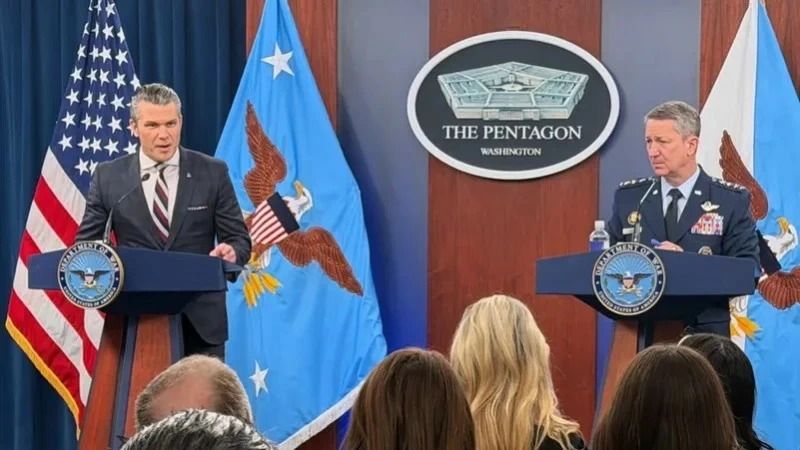
In a significant development amid the rapidly unfolding events in the Middle East, the Chairman of the US Joint Chiefs of Staff, General Dan Keane, affirmed that the Gulf Arab states and Jordan are playing a pivotal role in defending their territories and sovereignty by activating their advanced air defense capabilities to counter Iranian attacks. This statement reflects the high level of military coordination in the region, with US military officials indicating that military operations against Tehran are progressing at a faster pace than anticipated, achieving tangible progress in neutralizing the adversary's military capabilities.
In a related development, US Defense Secretary Pete Higseth announced at a press conference on Wednesday that the United States is achieving "remarkable results" in the early days of the ongoing war, describing the operation as twice as powerful as the liberation of Iraq. Higseth explained that these actions are a direct and decisive response to the killing of six American soldiers, emphasizing that Washington is committed to avenging their deaths and protecting its interests and those of its allies. He added that US forces, in cooperation with Israel, could achieve near-total control of Iranian airspace within just one week, paving the way for the complete neutralization of missile threats.
On the ground and technical front, military leaders revealed the use of B-2 and B-52 strategic bombers, which play a key role in achieving air superiority, employing 500- and 1,000-pound laser-guided bombs to strike precise targets deep inside Iran. These intensive strikes, targeting approximately 2,000 sites to date, have inflicted heavy losses on the Iranian navy, with 20 warships sunk to the bottom of the Gulf, significantly reducing Tehran's ability to threaten maritime navigation or launch naval attacks.
Strategically, this escalation represents a qualitative shift in the regional balance of power. The Gulf states' active participation in defending their airspace, and the US forces' interception of thousands of drones (approximately 2,000 drones and 500 missiles launched by Iran), underscore the importance of integrated air defense systems, which Washington has long sought to strengthen with its regional partners. This cooperation not only protects lives but also sends a powerful political message of unity in the face of threats that destabilize the region.
Regarding the near future, General Dan Keane emphasized that the current focus is on destroying Iran's ballistic missile capabilities and undermining the regime's ability to rebuild its military strength. He indicated that the next 24 to 48 hours will see an expansion of strikes to include vital military facilities and infrastructure that previously enabled Tehran to support its foreign operations. These developments confirm that the military operation is not merely intended for temporary deterrence, but rather to fundamentally alter Iran's offensive capabilities for years to come.
Politics
Behind the scenes of Iran's secret communications with the CIA to end the war
A New York Times report reveals secret contacts between Iranian intelligence and the CIA through a third party, and Trump's stance on negotiations amid ongoing Israeli strikes and Tehran's chaos.

In a striking development that reveals the depth of the crisis gripping Tehran, The New York Times has disclosed the existence of back channels of communication between Tehran and Washington, directly contradicting the official public pronouncements. While the surviving Iranian leaders insist on their categorical refusal to negotiate with US President-elect Donald Trump, informed officials have confirmed that elements within the Iranian Ministry of Intelligence have been in indirect contact with the Central Intelligence Agency (CIA).
Behind the scenes of secret communication via a third party
According to the report, these contacts were made through the intelligence service of a third country (which was not named), just one day after the outbreak of direct war with Iran. This move suggests a desperate attempt by elements within the Iranian regime to find a way out of the existential crisis gripping the country, in light of the intense Israeli strikes targeting the leadership structure in Tehran.
Washington's stance: Doubts and a shift in Trump's strategy
On the American side, this initiative was met with coolness and widespread skepticism. The newspaper reported that American officials doubt the seriousness of the offer or the ability of any current Iranian official to finalize a ceasefire agreement, given the prevailing chaos and the absence of effective central leadership. President Donald Trump, who had previously hinted at his openness to a deal, drastically changed his tone, declaring from his platform that it was "too late" for talks, and noting with wry regret that most of the figures Washington had considered for negotiations were already dead.
The regional context and fears of a "Libyan scenario"
These leaks come at a time when Israeli officials are pushing to continue the military campaign for several more weeks, aiming to inflict maximum damage on Iran's military capabilities, which could lead to the complete collapse of the government. This highlights a major dilemma discussed by analysts: experts warn that regime change does not necessarily result in a pro-Western, liberal democracy.
Geopolitical analyses suggest that a sudden power vacuum could drag Iran into catastrophic scenarios similar to the civil war in Syria or the chaos that engulfed Libya after Gaddafi's fall. Observers believe that Washington, despite ignoring the current initiative, may find itself facing a difficult choice: either dealing with the remnants of a hardline regime or confronting a failed state the size of Iran in the volatile Middle East region.
Potential US conditions and the future of the conflict
Should negotiations resume in the future, The New York Times anticipates that Washington will demand a full Iranian commitment to abandoning its nuclear and missile programs and ceasing support for regional proxies, in exchange for allowing the remaining leadership to maintain its domestic economic and political influence. However, the fundamental question remains: would war definitively close the door to diplomatic solutions, or would military pressure produce a new Iranian leadership compelled to accept international demands?.
Politics
The International Atomic Energy Agency confirms that Iranian nuclear facilities are safe from radiation
The International Atomic Energy Agency (IAEA) confirmed that no radioactive leaks were detected at Iranian nuclear facilities after analyzing satellite images of the Isfahan, Bushehr, and Natanz sites.


The International Atomic Energy Agency issued an official statement today, putting an end to growing concerns about the safety of Iranian nuclear facilities , categorically confirming that no damage has been detected at facilities containing nuclear materials, and therefore there is no risk of radioactive leakage at the present time.
Analysis of satellite imagery and assessment results
The agency explained in its report that its assessment was based on a thorough and comprehensive analysis of the latest available satellite imagery. This analysis demonstrated the integrity of the critical infrastructure at sensitive nuclear sites. Despite assurances of nuclear safety, the statement transparently acknowledged damage to two buildings located near the Isfahan nuclear site, but clarified that this damage did not affect the nuclear facility itself or the containment of radioactive materials.
The report also included assurances about other strategic sites, stressing that there was no negative impact on the Bushehr nuclear power plant or the Natanz site, noting that the damage previously reported in Natanz was limited to the entrances only and did not affect the core of the nuclear operations.
The importance of international oversight and the general context
These assurances come at a time of escalating geopolitical tensions in the region, making the safety of nuclear facilities a top priority for the international community and neighboring countries. The International Atomic Energy Agency (IAEA) plays a pivotal role as a neutral safeguards body, aiming to ensure that nuclear programs do not become sources of threat, whether military or environmental.
Historically, Iran's nuclear program has been subject to rigorous monitoring under comprehensive safeguards agreements, and sites like Isfahan and Natanz are considered cornerstones of Iran's nuclear fuel cycle. Therefore, any talk of targeting or damage to these sites immediately raises global concerns about a repeat of radiological disasters, making the IAEA's categorical denial a reassuring message to global markets and regional security.
Environmental and security impact of facility safety
From an environmental and health perspective, confirmation of the absence of a radioactive leak vital news for the countries of the region. Radioactive leaks do not recognize geographical boundaries and can lead to long-term contamination of water, soil, and air, threatening marine life in the Gulf and the public health of the population. The agency's reliance on modern technologies and satellite monitoring enhances the credibility of information and provides real-time data that helps dispel rumors and prevent unwarranted escalation based on misinformation.
-

 Local News 6 days ago
Saudi Arabia approves regulations for the continued presence of Gulf vehicles: duration and penalties
-
Local news one week ago
The Ministry of Interior begins procedures for a royal pardon for common law prisoners
-
Local news one week ago
The deadline for property registration in Hail and Riyadh is Thursday
-
Local news one week ago
Under the patronage of the Minister of Information, an agreement was signed between the Ministry of Information and Waves Marketing Company
-
Culture and Art, 1 week ago
The Devil's Prisons series was halted: The full story of "The Emperor's" being moved to YouTube
-
Local News 6 days ago
Saudi Energy: A new identity for electricity that aligns with Vision 2030
-
Local News 6 days ago
The Food and Drug Administration is recalling Bebelac and Aptamil milk due to potential contamination
-
Local news one week ago
Registration is now open for domestic pilgrims for the 1447 AH season: Dates and conditions via Nusuk