
Politics
Saudi Arabia ranked in the highest category of the United Nations Cybersecurity Index
The report issued by the United Nations through its specialized agency for information and communication technologies revealed the Kingdom's ranking

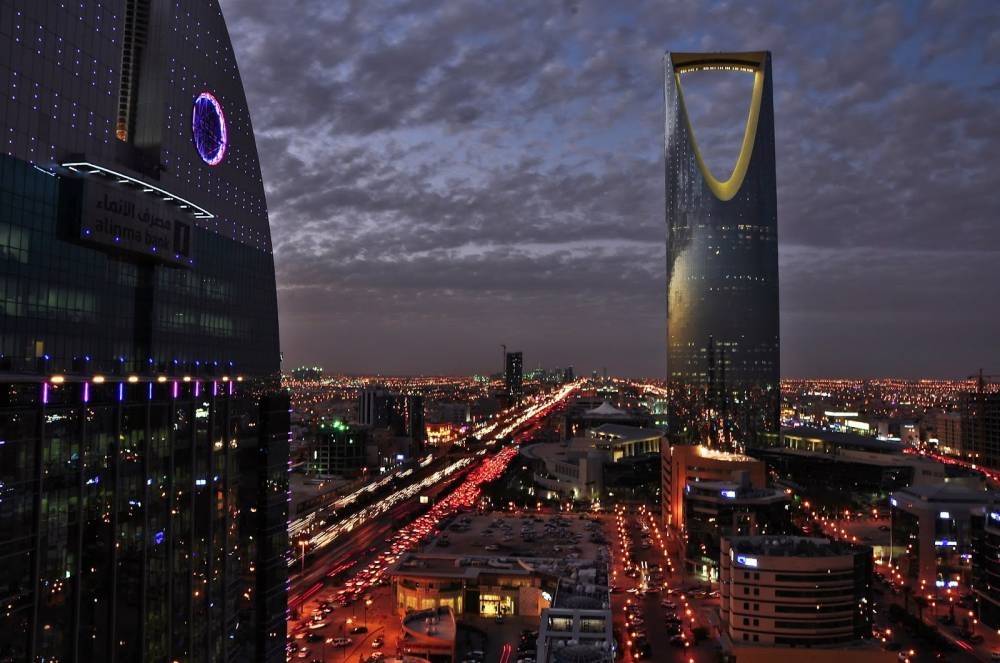
The report issued by the United Nations through its specialized agency for information and communication technology revealed that the Kingdom of Saudi Arabia is a leading role model in the highest category of the Global Cybersecurity Index 2024, which measures the commitment to cybersecurity for more than (190) United Nations member states.
While the index measures countries’ commitment through (83) sub-indicators distributed across five axes, the Kingdom achieved a rate of (100%) in all criteria, which made it classified as a leading model in the highest category of the United Nations Cybersecurity Index 2024.
The National Cybersecurity Authority explained that the index is a key benchmark in the cybersecurity sector internationally. It comprehensively measures cybersecurity models adopted in various countries, due to the breadth of its criteria and axes, which are distributed across the following aspects: 1) Legal Measures: These pertain to the availability of cybercrime legislation and cybersecurity regulations. 2) Regulatory Measures: These cover national cybersecurity strategies and the presence of a responsible cybersecurity entity in each country. 3) Cooperation Measures: These cover cooperation efforts in the field of cybersecurity, as well as bilateral and multilateral agreements and public-private partnerships. 4) Capacity Building Measures: These include criteria related to cybersecurity professionals obtaining certifications and accreditations, professional training courses, cybersecurity educational programs, research and development support and incentive mechanisms, and the launch of awareness campaigns. 5) Technical Measures: These address topics related to cyber incident response teams.
The Cybersecurity Authority indicated that this leading position achieved by the Kingdom is the result of the guidance and support of the wise leadership in laying the foundation for the Saudi model in cybersecurity, with the Authority leading its work and efforts, with the contribution of the Saudi Information Technology Company (SITE).
The Saudi model is based on the centralization of cyber governance at the national level, including assessment, response and national capacity building, and the decentralization of operations entrusted to national entities. The outputs of this successful model have contributed to strengthening national cyber security and technological sovereignty, and enhancing information sharing in international cooperation activities.
The authority also stated that the Kingdom’s cyber ranking in this index is an extension of its advanced position in a number of international indicators, the latest of which was the Kingdom’s achievement last June of first place globally in the cybersecurity index according to the World Competitiveness Yearbook 2024; noting that this achievement is the culmination of the Kingdom’s tireless work in promoting cybersecurity at the local and international levels, and the high level of integration between all actors in the cybersecurity system in the Kingdom from the governmental, private and non-profit sectors.
The National Cybersecurity Authority is the competent authority for cybersecurity in the Kingdom and the national reference in its affairs. It aims to enhance it to protect the vital interests and infrastructure of the state and its national security. It is also responsible for stimulating the growth of the cybersecurity sector in the Kingdom, encouraging innovation and investment in it, and developing policies, governance mechanisms, frameworks, standards, controls and guidelines related to cybersecurity; to reach a safe and reliable Saudi cyberspace that enables growth and prosperity.
In addition, the Minister of State, Member of the Council of Ministers, and Chairman of the Board of Directors of the National Cybersecurity Authority, Dr. Musaed bin Mohammed Al-Aiban, on his own behalf and on behalf of the members of the Board of Directors of the Authority and all its employees, extended his congratulations and blessings to the Custodian of the Two Holy Mosques, King Salman bin Abdulaziz Al Saud, and the Crown Prince, Prime Minister, Prince Mohammed bin Salman bin Abdulaziz, on the occasion of the United Nations, through its specialized agency for information and communication technology, classifying the Kingdom as a leading model in the highest category of the United Nations Cybersecurity Index 2024.
He pointed out that the Kingdom’s ranking in the highest category in the Global Cybersecurity Index is a manifestation of its advanced position in various international indicators related to the cybersecurity sector, and an affirmation of the proactive and insightful vision of the wise leadership in establishing the cybersecurity sector in the Kingdom in a comprehensive manner, with its security and developmental aspects and with its various local and international dimensions; which has made the Saudi model in cybersecurity a successful and pioneering model that is relied upon internationally.
He appreciated the great support that the cybersecurity system receives from the Custodian of the Two Holy Mosques, King Salman bin Abdulaziz Al Saud, and Prince Mohammed bin Salman bin Abdulaziz, as the Authority has enjoyed sound guidance, support and follow-up from the wise leadership since its establishment.
Dr. Al-Aiban explained that the cybersecurity system, since its establishment, has enjoyed continuous guidance from the Crown Prince, who stands behind all the achievements made for the cybersecurity sector in the Kingdom. He added that Vision 2030 and its ambitious programs, which stem from the Kingdom’s rich history and its continuous development journey, have made the Kingdom a pioneering and leading model to be emulated in various fields, including the Kingdom achieving first place globally in the cybersecurity index according to the World Competitiveness Yearbook for 2024.
He added that the cybersecurity sector in the Kingdom has witnessed great development in record time, since the establishment of the National Cybersecurity Authority as the competent authority in the Kingdom for cybersecurity, and the national reference in its affairs, and the establishment of the Saudi Information Technology Company (SITE), and that the Kingdom’s prestigious position in this index is the result of the efforts made in promoting cybersecurity in the Kingdom, and the high level of integration between all national entities in this vital and promising sector, especially since the Saudi model is based on the centralization of cyber governance at the national level and the decentralization of operations entrusted to national entities.
The doctor concluded his statement by thanking the wise leadership for its continued support of the cybersecurity system in the Kingdom, and thanking the national entities that contributed to reaching this advanced level, stressing that the National Cybersecurity Authority will continue to move forward in implementing the tasks assigned to it, and work with all partners towards reaching a safe and reliable Saudi cyberspace that enables growth and prosperity.


Politics
A new US destroyer is in the Middle East to deter regional threats
The US Navy has sent the destroyer 'Delbert D. Black' to reinforce its military presence in the Middle East, bringing the number of destroyers to 6 to counter escalating tensions and ensure maritime security.

In a move reflecting escalating tensions in the Middle East, U.S. Department of Defense (Pentagon) officials announced the deployment of an additional destroyer to the region to bolster the U.S. Navy's military presence. The sources explained that the USS Delbert D. Black, an advanced Arleigh Burke-class destroyer, entered the Fifth Fleet's area of operations within the past 48 hours to support efforts to ensure the security and stability of vital waterways.
This move comes amid a significant US military buildup in the region, bringing the number of US destroyers deployed in the Middle East to six with the addition of this destroyer. This naval force operates alongside an aircraft carrier and three other warships, forming a substantial deterrent force aimed at protecting US and allied interests and countering any potential threats to freedom of international navigation, particularly in the Strait of Hormuz and the Bab el-Mandeb Strait.
Historical background and strategic context
The American military presence in the Middle East is not new; it has existed for decades and is closely linked to global energy security. The U.S. Fifth Fleet is based in Bahrain, and its primary mission is to secure the strategic waterways through which a significant portion of the world's oil passes. Recent years have seen a series of security incidents, including attacks on oil tankers and the seizure of commercial vessels, prompting the United States to increase the frequency of its patrols and bolster its military capabilities in the region to counter what it describes as "destabilizing activities.".
Importance and expected effects
The deployment of an additional destroyer carries multiple messages on various levels. Regionally , it serves as a clear deterrent to adversaries and reaffirms Washington's commitment to the security of its Gulf allies and Israel. It also aims to reassure international partners that the United States remains a key player in maintaining regional security. Internationally , the stability of the Middle East is vital to the global economy. Any disruption to energy supplies resulting from a potential conflict could lead to a sharp rise in oil prices, negatively impacting economies worldwide. Therefore, this military buildup is seen as a precautionary measure to safeguard the stability of global markets. However, some analysts believe that this increased military buildup could raise the risk of miscalculation and lead to an unintended confrontation, keeping the region on the brink of perpetual tension.
CBS News was the first to report the deployment of the additional warship, at a time when there are increasing indications that the United States is continuing to strengthen its military presence in anticipation of any security developments, and to emphasize its readiness to respond firmly to any hostile act targeting its forces or interests in this vital region of the world.
Politics
With Saudi support: The third phase of the development of Aden International Airport has begun
The third phase of the Aden International Airport development project, supported by Saudi Arabia, was announced, which will enhance the infrastructure, facilitate transportation, and support stability in Yemen.
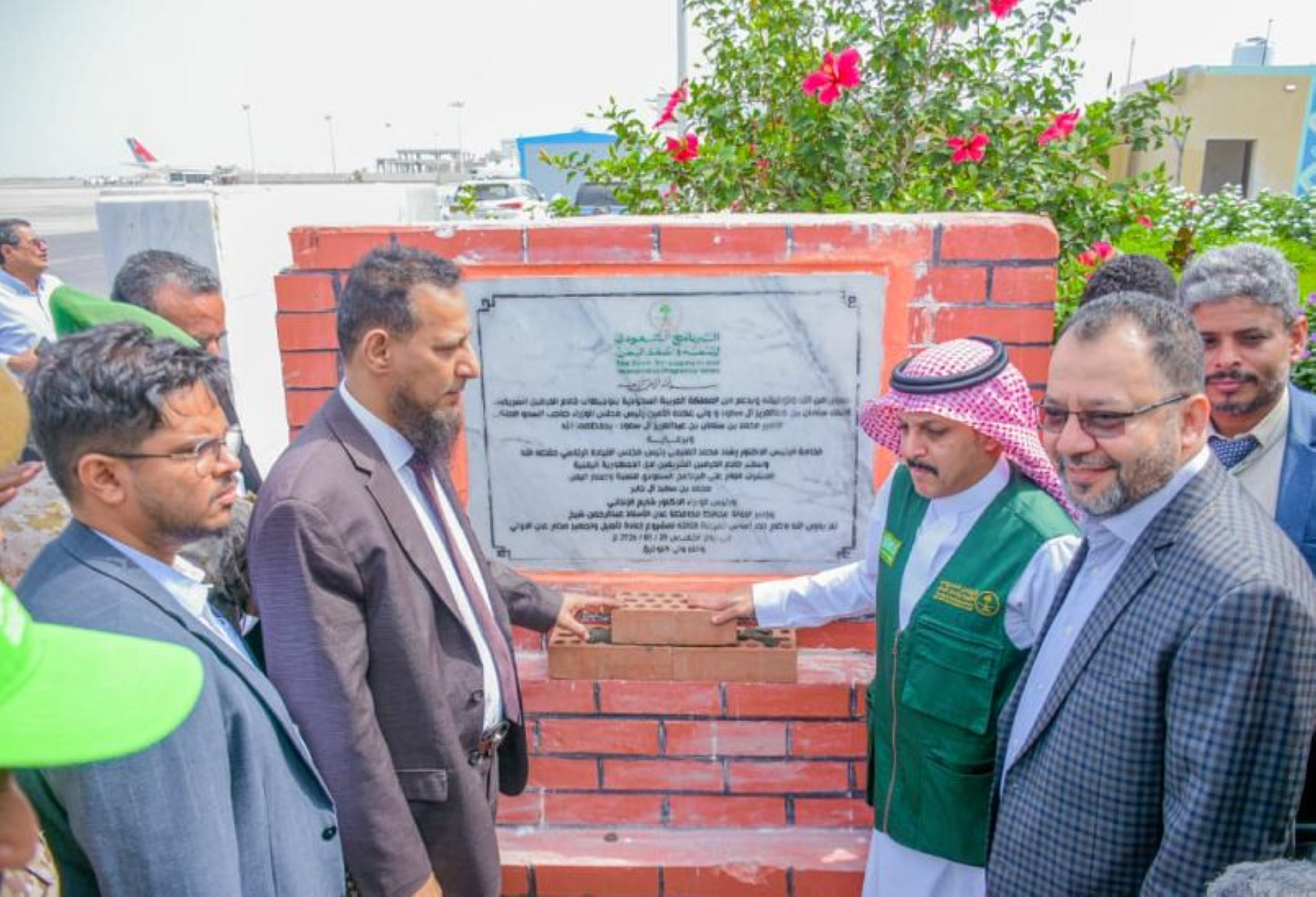
In a strategic move aimed at reconnecting Yemen with the world and strengthening its vital infrastructure, the Ambassador of the Custodian of the Two Holy Mosques to Yemen and Supervisor of the Saudi Development and Reconstruction Program for Yemen, Mohammed Al Jaber, announced the laying of the foundation stone for the third phase of the project to develop and upgrade Aden International Airport. This ambitious project embodies the continuity of Saudi support for Yemen during its most difficult times and reflects the Kingdom's unwavering commitment to supporting stability and development for the brotherly Yemeni people.
Historical background and strategic importance
Aden International Airport is one of the oldest and most important airports in Yemen. For decades, it served as the country's main gateway to the world and a vital hub for trade and air transport. However, years of conflict have severely damaged its infrastructure, leading to a decline in services and a significant reduction in its operational capacity. This situation has isolated millions of Yemenis and hindered the delivery of humanitarian aid and essential travel for medical treatment, education, and employment. Therefore, the importance of its rehabilitation project lies in its potential to be a lifeline, restoring to Aden and Yemen as a whole some of its former regional prominence and role.
Project details and expected impact
Ambassador Al Jaber explained that the third phase, which has been launched, focuses on rehabilitating the main runway and upgrading navigation and communication systems in accordance with international standards. This phase complements previous efforts in the first two phases, which witnessed tangible achievements including the rehabilitation of the auxiliary runway, the modernization of the main passenger terminal, the expansion of passenger parking areas, the securing of airport gates, the construction of new air cargo facilities, and enhancing the airport's emergency response capabilities. The completion of these phases is expected to significantly increase the airport's capacity, improve safety and security standards, and facilitate unprecedented passenger and cargo traffic.
Economic and humanitarian dimensions
The project's impact extends beyond logistics to encompass broad economic and humanitarian dimensions. Locally, the rehabilitated airport will revitalize economic activity in Aden and surrounding areas, creating direct and indirect job opportunities and encouraging investment. On the humanitarian front, it will facilitate faster and more efficient delivery of relief and medical aid, and offer a glimmer of hope for Yemeni citizens seeking medical treatment, education, or family reunification abroad. Al-Jaber affirmed that the Kingdom, under the guidance of its wise leadership and the supervision of Defense Minister Prince Khalid bin Salman, will continue working alongside the Presidential Leadership Council and the Yemeni government to deliver further development projects that benefit all the people of Yemen.
Politics
Faisal bin Farhan discusses strengthening cooperation with the Austrian Foreign Minister
Foreign Minister Prince Faisal bin Farhan met with his Austrian counterpart Beate Meinl-Reisinger in Riyadh to discuss ways to strengthen bilateral relations and to review the latest regional and international developments.
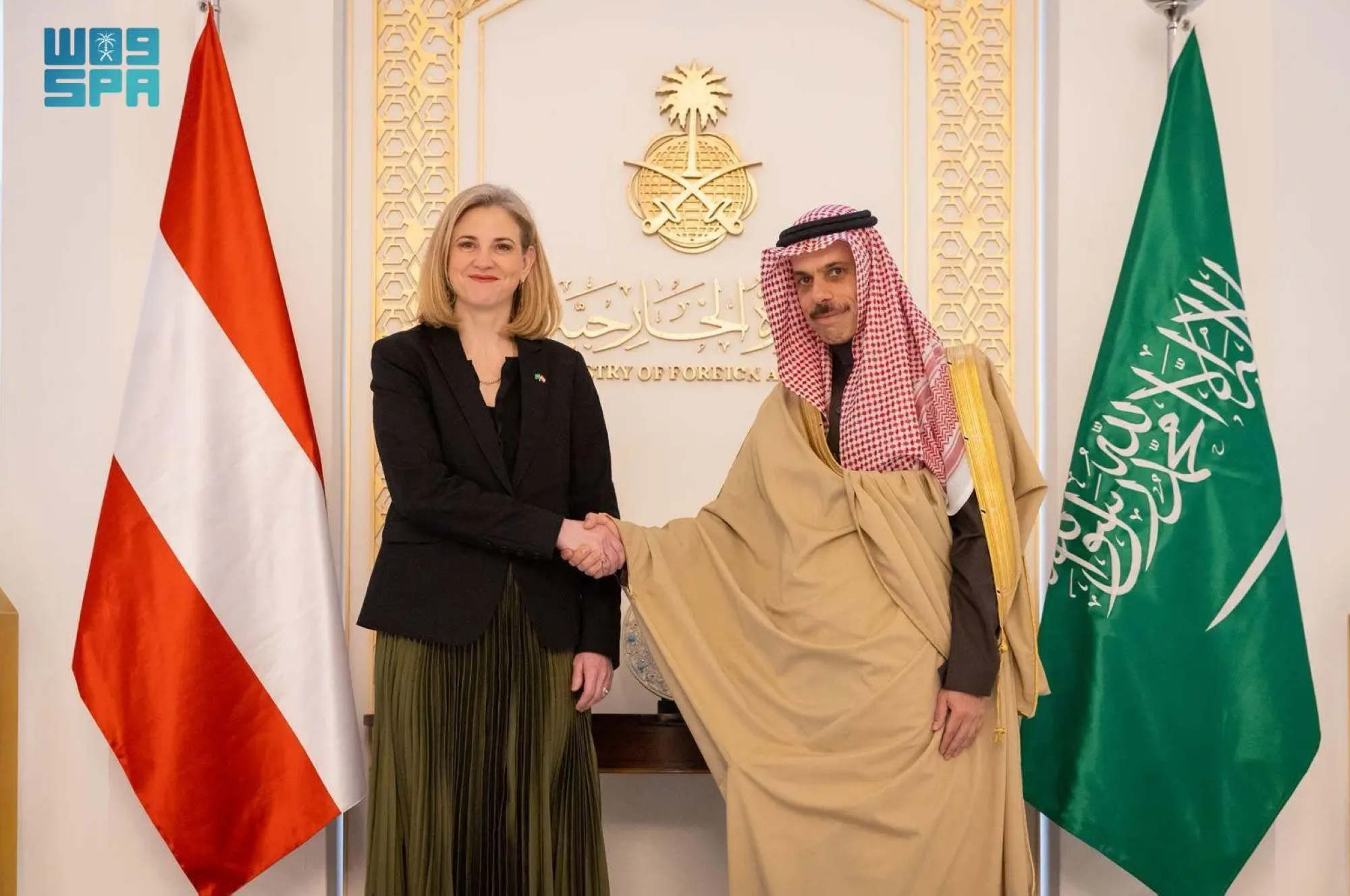
His Highness Prince Faisal bin Farhan, Minister of Foreign Affairs, received Her Excellency Beate Meinl-Reisinger, Minister of Foreign Affairs of the Republic of Austria, at the Ministry's headquarters in Riyadh on Thursday. The meeting provided an important opportunity to deepen the strategic dialogue between the two countries. Discussions focused on the strong bilateral cooperation and ways to enhance and develop it across various fields, as well as the latest developments in the region and international efforts related to them.
Historical background and long-standing relationships
The Kingdom of Saudi Arabia and the Republic of Austria enjoy deep-rooted diplomatic and historical relations spanning decades, based on mutual respect and shared interests. These relations are of particular importance given Austria's role as an active member of the European Union and the headquarters of several important international organizations in Vienna, most notably the Organization of the Petroleum Exporting Countries (OPEC), which adds a strategic dimension to the dialogue between the two countries in the field of energy and the stability of global markets. This visit comes within the framework of the two countries' leaderships' commitment to ongoing coordination and consultation on issues of common interest.
Prospects for economic cooperation and Vision 2030
The meeting addressed ways to broaden bilateral cooperation, particularly in the economic, investment, and trade sectors, in line with the goals of the Kingdom's Vision 2030. The Vision presents an opportunity for Austrian companies to capitalize on the Kingdom's mega-projects across diverse sectors such as renewable energy, tourism, technology, and entertainment. Both countries also seek to enhance cultural and academic exchange, contributing to building bridges of understanding between the two friendly nations.
The impact of the meeting on the regional and international levels
This meeting is of paramount importance given the challenges facing the Middle East. Discussing the latest regional developments reflects the pivotal role played by the Kingdom, under the leadership of the Custodian of the Two Holy Mosques and his Crown Prince, in promoting security and stability, and its tireless efforts to find political and peaceful solutions to the region's crises. Coordination with European partners, such as Austria, is a cornerstone for garnering international support for diplomatic efforts aimed at de-escalating tensions and addressing pressing humanitarian issues. The shared vision between Riyadh and Vienna regarding the necessity of adhering to international law and supporting multilateral solutions strengthens joint efforts to confront global challenges.
At the conclusion of the meeting, the importance of continued communication and consultation between officials of both countries was emphasized. The Saudi delegation included the Undersecretary of the Ministry of Foreign Affairs for Political Affairs, Ambassador Dr. Saud Al-Sati; the Ambassador of the Custodian of the Two Holy Mosques to the Republic of Austria, Mr. Abdullah bin Khalid Tolah; and the Director General of the European Department, Ambassador Abdulrahman Al-Ahmad.
-

 Local News 4 days ago
Landslide in Riyadh: Details of the incident in Al-Sahafa neighborhood and containment efforts
-
 Local News 5 days ago
The death penalty was carried out against a citizen who stabbed another to death in Tabuk
-

 Culture and Art, 1 week ago
Ramez Galal in Ramadan 2026: Details of the bloody prank show
-

 Local News 6 days ago
First birth on the Riyadh train: A heartwarming story at Andalus station
-

 Culture and Art 4 days ago
Haifa Wehbe's absence in Riyadh: A photo crisis or a strained relationship with the media?
-

 Local News 4 days ago
Riyadh collapse: Emergency plans to secure water after a main pipeline burst
-

 Culture and Art 4 days ago
City Kitchen series: A drama of conflict and the middle class during Ramadan
-

 Culture and Art 4 days ago
The series "Kasra": Dawood Hussein in a moving social drama this Ramadan