Politics
Sending Tomahawk missiles to Ukraine: A Russian warning of dire consequences
Russia warns of dire consequences after supplying Tomahawk missiles to Ukraine, amid escalating tensions between Moscow and Washington and significant geopolitical implications.


Tensions are escalating between Moscow and Washington over Tomahawk missiles
Amid escalating international tensions, former Russian President Dmitry Medvedev warned that the US supply of Tomahawk missiles to Ukraine could have dire consequences for everyone, specifically mentioning the impact on former US President Donald Trump. These remarks come against a backdrop of increasing geopolitical complexities among the world's major powers.
Russian warnings and American statements
Medvedev explained that distinguishing between conventional Tomahawk missiles and those equipped with nuclear warheads is impossible once launched, raising concerns about how Russia would respond to such a development. He hinted at the possibility of a Russian response of a nuclear nature, reflecting the gravity of the current situation.
For his part, Trump warned that he might send long-range Tomahawk missiles to Ukraine if Moscow did not end the war there soon. He emphasized that he might be prepared to increase pressure on Russian President Vladimir Putin using a substantial weapons system, stressing the power and impact of these offensive missiles.
Talks with Zelensky
Trump's remarks came after a phone call with Ukrainian President Volodymyr Zelensky, during which they discussed strengthening Ukraine's air defenses and long-range capabilities. Zelensky described the call as "very productive," indicating a convergence of views on the importance of bolstering Ukraine's defense capabilities.
International reactions and strategic analysis
Russian President Vladimir Putin has previously warned that the United States supplying Ukraine with long-range missiles would seriously damage relations between Moscow and Washington. This warning reflects Russia's deep concern about any escalatory steps that could worsen the security situation in the region.
Saudi Arabia and its diplomatic role
Amid these escalating tensions, Saudi Arabia is playing a crucial diplomatic role in attempting to de-escalate the situation and promote regional and international stability. Riyadh is relying on its diplomatic strength and strategic balance to achieve peace and stability in the region and the world.
Conclusion and analysis of the international situation
The situation between Russia and the United States remains sensitive and complex, requiring wisdom and diplomacy to avoid any escalation that could lead to disastrous consequences. Continued dialogue and mutual understanding are the best way to resolve conflicts and ensure global security and peace.




Politics
Trump sets a timeframe for the war with Iran, while Al-Busaidi insists on diplomacy
Oman's foreign minister affirms that the door to diplomacy with Iran remains open, despite Trump's prediction that the war could last four weeks. An analysis of the statements and Oman's role.
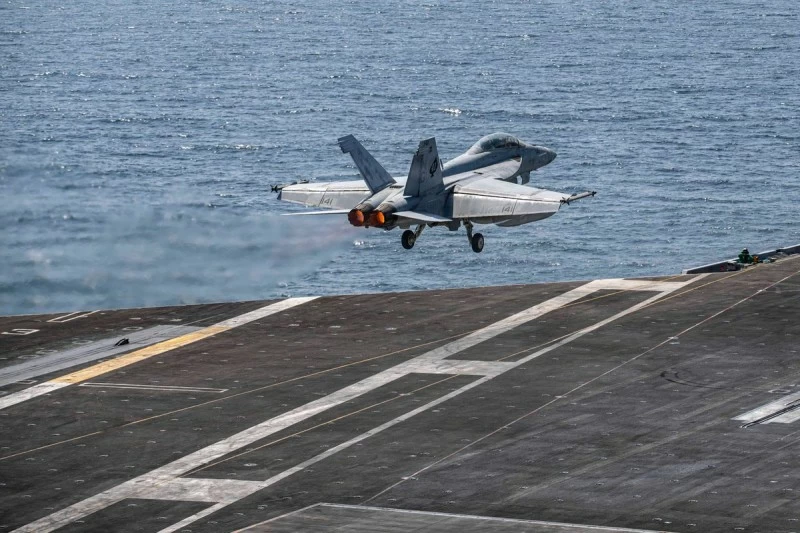
Amid escalating geopolitical tensions in the Middle East, a clear divergence has emerged in international statements and positions regarding how to deal with the Iranian issue. While US President Donald Trump has hinted at a specific timeframe for any potential military confrontation, the Sultanate of Oman, through its Foreign Minister, has affirmed that diplomatic channels remain the best and safest option for the region and the world.
Omani diplomacy: A voice of wisdom amidst the drums of war
Oman's Foreign Minister, Badr al-Busaidi, reiterated his country's firm stance on peaceful solutions on Sunday, emphasizing that "the door to diplomacy remains open" to resolving the ongoing conflict with Tehran. Al-Busaidi stressed that resuming talks as soon as possible is in the interest of all parties involved and would spare the region the devastating consequences of a conflict with potentially disastrous repercussions.
In a tweet on his official Twitter account, Al-Busaidi revealed important details regarding the previous negotiations, explaining that the talks hosted by Geneva had "made real progress toward an unprecedented agreement between Iran and the United States." The Omani minister added a profoundly significant statement: "Although the hope was to avoid war, its outbreak should not mean the extinguishing of hope for peace," indicating Muscat's unwavering belief in the efficacy of dialogue, even in the most dire circumstances.
The historical context of the Omani role
Al-Busaidi’s statements do not come out of thin air, but are based on a long legacy of quiet Omani diplomacy. Muscat has long played the role of the “Switzerland of the Middle East,” having previously been a trusted mediator in the Iranian nuclear issue and hosted the secret talks that paved the way for the 2015 nuclear agreement. Therefore, Oman’s emphasis on keeping the door to diplomacy open carries international weight, given the direct channels of communication the Sultanate maintains with both Washington and Tehran.
Trump's assessment: A swift and limited war
On the other side of the spectrum, the British newspaper the Daily Mail reported controversial statements by US President Donald Trump, in which he suggested that any military confrontation with Iran would not be protracted. He was quoted as saying, "A war with Iran would probably last four weeks." This statement reflects a strategic vision that relies on intensive, time-limited airstrikes rather than engaging in a full-scale ground invasion or a protracted war of attrition, which aligns with the modern US military doctrine of avoiding involvement in long-term conflicts in the Middle East.
The European position and the repercussions of the conflict
This verbal escalation coincided with European moves, as the leaders of France and Britain pledged to continue joint coordination to ensure maritime security and regional stability, while emphasizing the need to prevent Iran from acquiring nuclear weapons. These developments come at a time when the world is holding its breath, given the strategic importance of the Arabian Gulf region.
Any military conflict, whether lasting four weeks as Trump suggests or protracted, will have enormous economic and political repercussions. The region includes the Strait of Hormuz, a vital artery for global oil supplies, and any disruption to shipping there would lead to skyrocketing energy prices, threatening the global economy with a new wave of inflation. While the drums of war beat in Washington, Muscat clings to the thread of diplomatic hope, in a frantic race between the language of fire and the language of dialogue.
Politics
America announces the decapitation of the snake and the targeting of Khamenei and the Revolutionary Guard
The US Central Command announced the execution of a large-scale strike against the Iranian Revolutionary Guard and the targeting of the headquarters of Supreme Leader Ali Khamenei, describing the operation as cutting off the head of the snake.
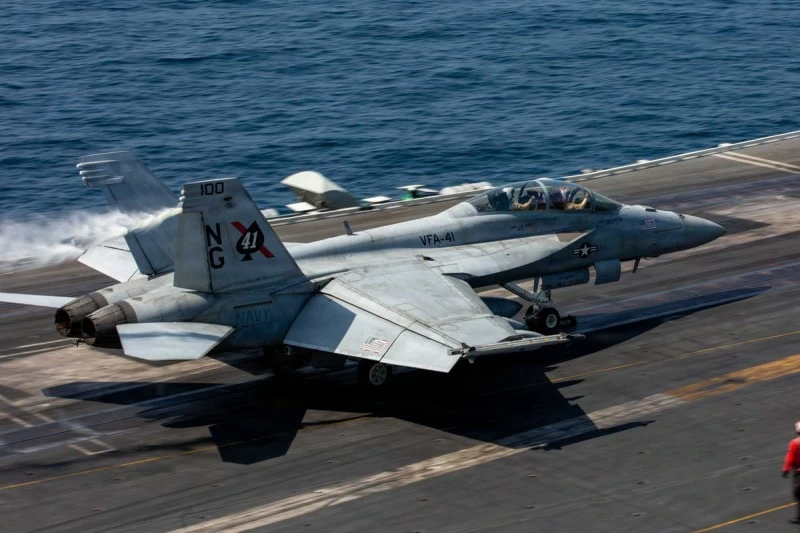
In an unprecedented military development signaling a radical shift in the rules of engagement, the US Central Command announced today (Sunday) the execution of a large-scale military operation dubbed "Decapitating the Snake." This announcement coincided with Iranian media reports confirming that Basij militia sites in Tehran had been subjected to intense attacks, signaling a dangerous escalation in the regional landscape.
Details of the US strike and the announcement of the Supreme Leader's death
In its official statement, U.S. Central Command detailed the operation, noting that the Iranian Revolutionary Guard Corps (IRGC) was responsible for the deaths of more than 1,000 American citizens over the past 47 years. The statement emphasized that yesterday's U.S. strike was decisive and wide-ranging, with the Command declaring: "America has the strongest military in the world, and the IRGC no longer has a command center.".
In a show of force, U.S. Central Command released a video on its official social media accounts documenting the bombing of the compound of Iranian Supreme Leader Ali Khamenei, confirming his death in the operation. The footage showed a barrage of precision missiles launched from U.S. warships and fighter jets, targeting a massive complex consisting of four security zones, resulting in the complete destruction of several key buildings within the compound.
The context of the historical conflict between Washington and Tehran
This operation comes within the context of a long history of tension between the United States and Iran spanning nearly five decades, specifically since 1979. Washington has long considered the Iranian Revolutionary Guard Corps (IRGC) the primary instrument for implementing Iranian policies in the region, and the United States previously designated it as a foreign terrorist organization. Successive US administrations accuse the IRGC of supporting armed groups in the Middle East and destabilizing the region, which explains the reference to "47 years" in the US statement as a symbol of the duration of the conflict since the Iranian Revolution.
Strategic importance and implications of the event
The term “decapitating the snake” carries profound strategic implications in military doctrine, referring to targeting the enemy’s top leadership to cripple its decision-making capacity. Targeting the Supreme Command headquarters in Tehran and Basij sites is not merely a military strike; it represents a shift in the regional balance of power. This event is expected to have seismic repercussions across the Middle East, potentially including changes in political alliances, direct impacts on global energy markets, and the possibility of widespread retaliation from Tehran’s regional allies.
Politics
Texas attack: 3 dead, 14 injured, gunman wearing Iranian flag
Details of a shooting in Austin, Texas, that left 3 dead and 14 injured. Police and the FBI are investigating a suspected terrorist act by a perpetrator wearing an Iranian flag. Here are the details.

The city of Austin, Texas, witnessed a bloody day, with at least three people killed and 14 others seriously injured in a horrific shooting on Sunday. Security forces were deployed to the scene, and initial assessments from the city's police and the FBI suggest the attack may have been an act of terrorism, given its nature and surrounding circumstances.
Details of the attack and the identity of the suspect
Western media outlets and multiple news reports indicated that the gunman who carried out the attack was wearing a shirt bearing the Iranian flag, immediately raising questions about the motives behind the attack. Fox News quoted law enforcement and FBI sources as saying that initial indications pointed to terrorism as a motive. Authorities identified the attacker as a 53-year-old American citizen of Senegalese descent. Media outlets and social media platforms circulated a photo of the suspect holding a rifle, suggesting that the attack was premeditated.
The security context and the challenges of armed violence
This incident comes at a time of heated and ongoing debate in the United States regarding gun control laws and the rising frequency of mass shootings. Texas is one of the states that has experienced several similar incidents in recent years, placing significant pressure on police and local authorities to ensure community safety. The FBI's early involvement in the investigation reflects the seriousness of the incident, as the agency typically handles cases involving national security or those with a domestic or international terrorist dimension.
Symbolic meanings and ongoing investigations
The fact that the perpetrator wore a shirt bearing the Iranian flag presents a complex challenge to the investigation, especially given the well-known geopolitical tensions. Investigators are currently examining the suspect's digital and social media background to determine whether he belongs to any extremist groups, or if this was an isolated act reflecting personal motives cloaked in political symbolism. Such investigations typically take time to ascertain the true motives and distinguish between individual criminal acts and organized terrorism. For now, medical efforts are focused on saving the lives of the 14 injured, while authorities continue to collect forensic evidence from the scene to uncover all the circumstances.
-

 Local News 4 days ago
Saudi Arabia approves regulations for the continued presence of Gulf vehicles: duration and penalties
-
Local News 7 days ago
The Ministry of Interior begins procedures for a royal pardon for common law prisoners
-
Local news one day ago
Jeddah Airport alerts for travelers due to airspace closure and flight disruptions
-
Politics, one week ago
Trump plans to create a $2 billion alternative to the World Health Organization
-
Local News 6 days ago
The deadline for property registration in Hail and Riyadh is Thursday
-
Sports one week ago
Tickets for the Al-Ahli vs. Al-Hilal King's Cup match postponed: New date
-
Local News 6 days ago
Under the patronage of the Minister of Information, an agreement was signed between the Ministry of Information and Waves Marketing Company
-
Culture and Art 4 days ago
The Devil's Prisons series was halted: The full story of "The Emperor's" being moved to YouTube