Politics
Putin condemns Khamenei's killing: a violation of international law and a dangerous escalation
Putin offers condolences to the Iranian president on the killing of Supreme Leader Ali Khamenei in Israeli and American strikes, describing the assassination as a flagrant violation of international law and human morality.


Russian President Vladimir Putin strongly condemned the assassination of Iran's Supreme Leader, Ali Khamenei, and members of his family, describing the incident as a flagrant violation of all humanitarian and ethical standards and principles of international law. This firm stance was expressed in an official telegram of condolence sent by Putin to his Iranian counterpart, Masoud Pezeshkian, the text of which was published on the Kremlin's official website.
The telegram read: “Please accept my sincere condolences and deepest sympathy on the death of the Supreme Leader of the Islamic Republic of Iran, Ali Khamenei, and his family, in an act that constitutes a flagrant violation of all standards of human morality and international law.” This statement reflects the depth of the strategic alliance between Moscow and Tehran, and Russia’s rejection of political assassinations, which Moscow considers an undermining of national sovereignty.
Official announcement details
Iranian state television announced early Sunday morning the death of Supreme Leader Ali Khamenei, stating that he was killed in a joint Israeli-American strike. The Iranian news agency Tasnim confirmed the details, saying, "Supreme Leader Khamenei was killed at his residence. He was carrying out his duties in his office at the time of his death," indicating a major security breach and a direct attack on the highest levels of power in Iran.
Russian-Iranian relations and the international context
The Russian reaction is particularly significant given the significant rapprochement between Moscow and Tehran in recent years. The two countries have formed a united front on numerous regional and international issues, from cooperation on the Syrian crisis to coordination in countering Western sanctions. Analysts believe that Putin's description of the incident as a "flagrant violation of international law" is not merely a formality, but a political message to the West and Israel that Russia will not remain silent in the face of a shift in the rules of engagement in the Middle East.
The importance of the Supreme Guide position and the repercussions of a power vacuum
The position of Supreme Leader in Iran is the apex of power in the Islamic Republic, wielding extensive authority that includes command of the armed forces, control of the judiciary, and oversight of the regime's general policies. Therefore, the absence of a figure of Ali Khamenei's stature, who led the country for decades, presents Iran and the region with critical challenges regarding filling the political vacuum and the mechanisms for the transfer of power through the Assembly of Experts.
Risks of regional escalation
Directly blaming Israeli-American strikes threatens to shift the conflict in the Middle East from proxy wars to direct confrontation. The international community fears that this incident could trigger widespread retaliatory attacks, potentially igniting a full-blown regional war, especially given the presence of Iranian allies in the region who might join in. This makes Putin's call for adherence to international law an attempt at restraint at a historically critical juncture.




Politics
US refueling aircraft are heading to the Middle East in anticipation of an Iranian response
Flightradar24 data detected nine US KC-135R refueling aircraft heading to the Middle East and Europe, in a strategic move in anticipation of an Iranian response following recent developments.
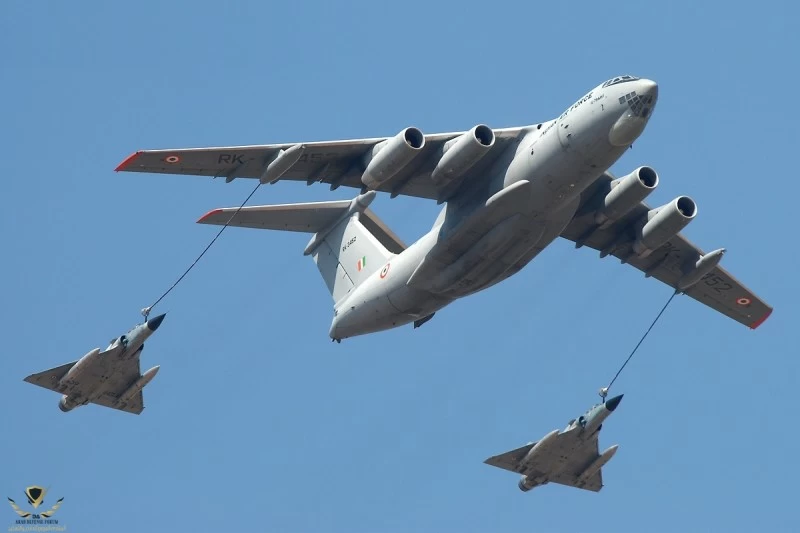
Recent flight data from FlightRadar24, a platform specializing in tracking global air traffic, revealed a notable US military movement involving nine Boeing KC-135R Stratotanker aerial refueling aircraft. These US Air Force planes departed from bases within the United States and headed towards Europe, in a coordinated move following the announcement of the death of Iranian Supreme Leader Ali Khamenei, raising the specter of a potential escalation in the region.
According to open source unit analysis and tracking data, six of these aircraft continued their course through European airspace heading directly towards the Middle East region, while three other aircraft settled into transit routes over Europe, indicating the formation of a logistical air bridge linking Western bases with the potential theater of operations in the Arab and Gulf region.
Implications of the military move and the importance of KC-135R aircraft
This type of intensive movement cannot be interpreted as mere routine or training air activity, as aerial refueling tankers form the backbone of any extended U.S. combat deployment abroad. The KC-135R Stratotanker is a vital component of the U.S. military's Global Reach strategy, giving the military command the ability to keep attack fighters, strategic bombers, and reconnaissance and surveillance aircraft airborne for far longer periods than their own capabilities allow.
This logistical support allows fighter jets to take off with maximum loads of ammunition and weapons instead of fuel, relying on aerial refueling to reach their targets, greatly expanding the operational range of US forces and giving them high flexibility in carrying out strikes or enforcing no-fly zones.
Regional context and escalating tensions
This air buildup comes at a highly sensitive time, as the Middle East region experiences heightened anticipation and caution regarding a potential Iranian retaliation. Historically, the United States has deployed refueling squadrons prior to major military operations or as a preemptive deterrent to reassure allies and send warning messages to adversaries.
The deployment of this large number of tankers simultaneously reflects Washington's intention to ensure a high level of combat readiness for its forces stationed at military bases throughout the Gulf states, the Mediterranean Sea, and the Arabian Sea. Military experts indicate that the presence of this number of "flying refueling stations" suggests that the Pentagon is taking into account the possibility of prolonged aerial engagements or the need to conduct round-the-clock combat air patrols (CAP) to protect airspace and vital interests from any missile or drone attacks that Tehran or its proxies might launch.
Politics
Iran: Formation of a temporary leadership council and the start of the transitional phase
Ali Larijani announces the start of the transitional phase in Iran and the formation of a temporary leadership council comprising the president, the head of the judiciary, and a jurist, to manage the country until a successor to Supreme Leader Ali Khamenei is elected.
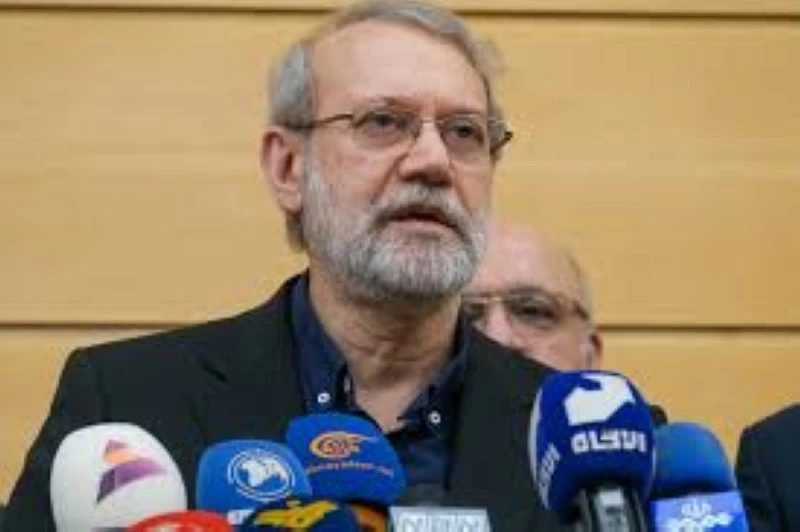
The Secretary of Iran's Supreme National Security Council, Ali Larijani, officially announced the start of the transitional phase in the country, confirming that a temporary leadership council would be established very soon to manage state affairs. This pivotal announcement, according to a breaking news report on Iranian state television, marked the beginning of the transitional phase on Sunday, following the announcement of the death of Supreme Leader Ali Khamenei.
Details of the interim leadership council
In detailing the constitutional procedures to be followed, Larijani explained that a "temporary leadership council will be formed soon," referring to the structure of this council as stipulated by the Iranian constitution for emergency situations. This council will assume full responsibility, comprising the president, the head of the judiciary, and a member of the Guardian Council, to ensure the continued functioning of sovereign state institutions until the election of a new leader.
Constitutional context and succession mechanism
This move comes in implementation of Article 111 of the Iranian Constitution, which regulates the transfer of power in the event of the Supreme Leader's death, removal, or incapacitation. Larijani confirmed that the interim leadership council "will assume the duties of the Supreme Leader until a successor to the late Ali Khamenei is elected," emphasizing the speed of the process by saying, "This council will be formed as soon as possible, and we have been working on its formation since today.".
It is worth noting that the Assembly of Experts, composed of 88 elected jurists, will hold emergency and intensive sessions to discuss the selection of the third Supreme Leader of the Islamic Republic, in a process that may take days or weeks, making the role of the interim leadership council vital in maintaining stability during this critical period.
The importance of the event and its regional impact
This event represents a historic turning point in the trajectory of the Iranian political system, given the broad powers vested in the position of the Supreme Leader, which include command of the armed forces, control of the Revolutionary Guard, and the formulation of the country's foreign and strategic policies. The world, as well as regional and international powers, are watching Tehran closely to observe the transfer of power and the smooth functioning of the political process, due to its direct implications for the region's volatile issues, the nuclear agreement, and the geopolitical balance in the Middle East.
In concluding his remarks, which aimed to reassure the Iranian public and send messages of strength abroad, Larijani said: "We stand united against our enemies," referring to internal unity in the face of potential challenges during this critical phase of contemporary Iranian history.
Politics
Saudi Arabia condemns the Iranian attack on Oman and declares its full solidarity
The Kingdom strongly condemns the Iranian attack on the Sultanate of Oman, and affirms its readiness to put all its capabilities at the disposal of Muscat, warning of the consequences of Tehran’s continued undermining of the security and stability of the region.

The Kingdom of Saudi Arabia expressed its strong condemnation and denunciation of the brutal Iranian attack targeting the sisterly Sultanate of Oman, describing it as a blatant violation of the sovereignty of a neighboring state and a founding member of the Gulf Cooperation Council. This firm stance affirms Riyadh's categorical rejection of any infringement upon the security and stability of the Sultanate, emphasizing that this escalation constitutes a serious breach of international norms and conventions that stipulate respect for the sovereignty of states and good neighborliness.
Unlimited Saudi solidarity with Muscat
In an official statement reflecting the depth of fraternal relations and shared destiny, the Kingdom affirmed its commitment to providing all its resources and capabilities to support the Sultanate of Oman in all measures it takes to protect its territory and citizens. Riyadh clarified that Oman's security is an integral part of the Kingdom's security, and that any threat to Muscat is considered a direct threat to Riyadh, thus necessitating a unified Gulf and Arab stance against these transgressions.
Dimensions of the escalation and its impact on the stability of the region
The Kingdom of Saudi Arabia warned of the grave consequences of the Iranian regime's continued hostile policies and violations of state sovereignty, noting that such actions undermine de-escalation efforts and threaten regional and international peace and security. This warning stems from the Kingdom's unwavering commitment to sparing the region the ravages of conflict. However, the escalating aggression necessitates a firm and decisive response to deter any attempts to destabilize the vital Arabian Gulf region, which is crucial to the entire world.
A call for the international community to assume its responsibilities
In closing, the Kingdom called upon the international community and the Security Council to take serious stances and decisive measures against Iran's repeated violations. It stressed that international silence regarding these attacks encourages further chaos, emphasizing the need to activate international mechanisms to hold accountable those who disregard international law, in order to ensure the stability of energy supplies and protect international waterways and navigation, which could be affected by this dangerous escalation.
-

 Local News 3 days ago
Saudi Arabia approves regulations for the continued presence of Gulf vehicles: duration and penalties
-
Local News 6 days ago
The Ministry of Interior begins procedures for a royal pardon for common law prisoners
-
Local news one week ago
19 requirements to reduce dust from projects in Riyadh and fines for violators
-
Local news one day ago
Jeddah Airport alerts for travelers due to airspace closure and flight disruptions
-
Politics, one week ago
Trump plans to create a $2 billion alternative to the World Health Organization
-
Culture and Art, 1 week ago
Amr Diab appears with his four sons and a highly anticipated concert in Türkiye
-
 Local news one week ago
Three billion riyals deposited as Ramadan aid for social security beneficiaries
-
Local News 5 days ago
The deadline for property registration in Hail and Riyadh is Thursday