
Politics
Prince Abdullah bin Khalid presents his credentials as ambassador to Britain
In a royal ceremony at St. James's Palace, Prince Abdullah bin Khalid presented his credentials to King Charles III as Saudi Arabia's ambassador, affirming the depth of the strategic partnership between the two kingdoms.

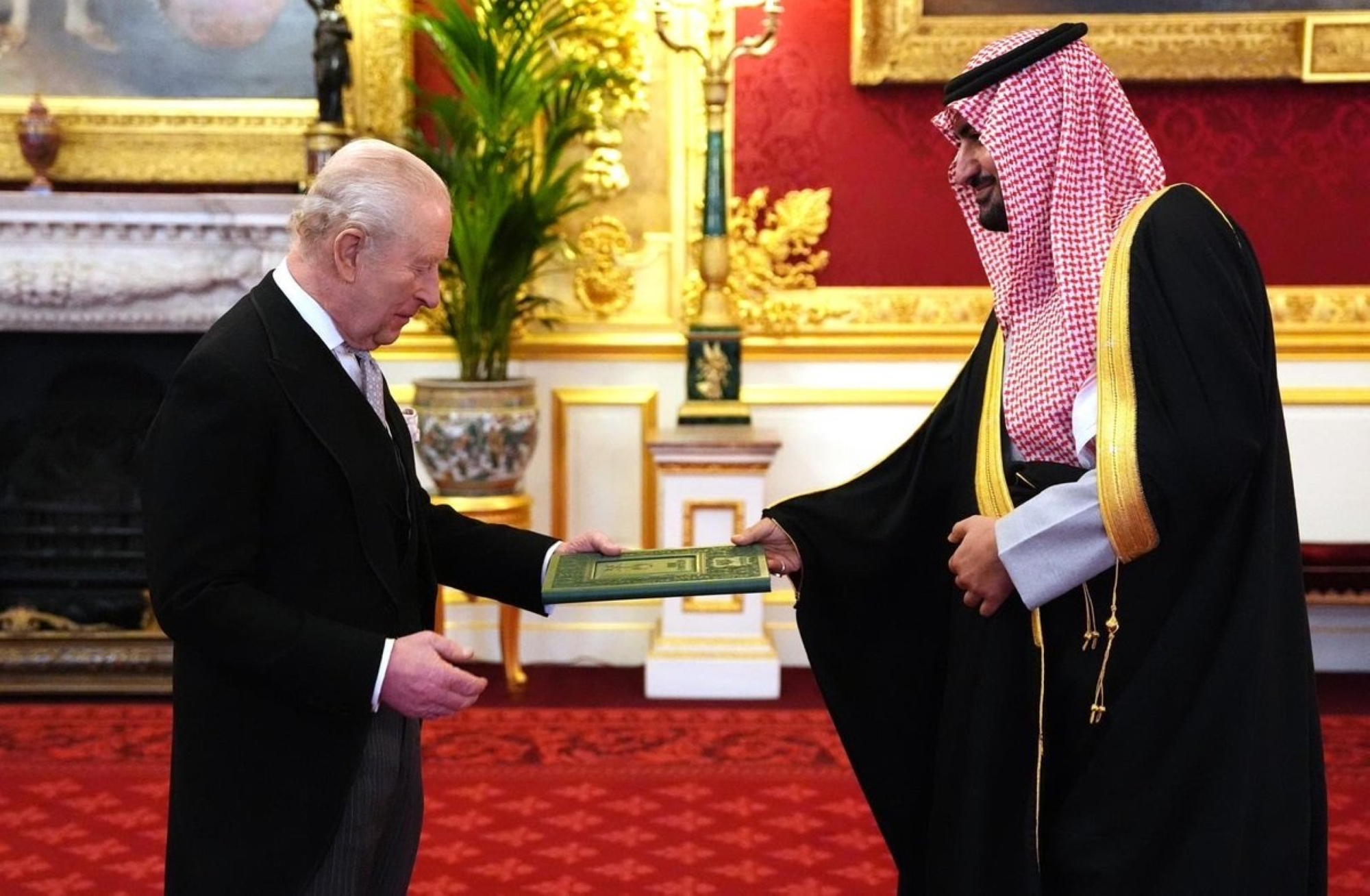
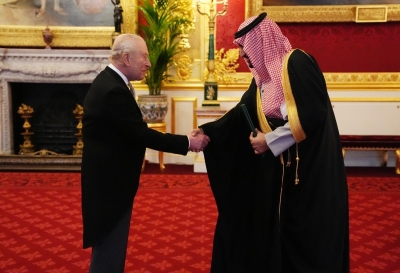
In a festive atmosphere imbued with time-honored royal traditions, His Royal Highness Prince Abdullah bin Khalid bin Sultan bin Abdulaziz officially presented his credentials to His Majesty King Charles III, King of the United Kingdom of Great Britain and Northern Ireland, thus becoming Ambassador Extraordinary and Plenipotentiary of the Custodian of the Two Holy Mosques to the British Royal Court.
Royal ceremony at St. James's Palace
The presentation of credentials took place at the historic St. James's Palace in London, the official residence of the British monarch and the traditional venue for the accreditation of foreign ambassadors. His Royal Highness received a reception befitting the stature of the Kingdom of Saudi Arabia, with meticulous protocol reflecting the long-standing traditions of British diplomacy observed from the arrival of his official motorcade to his meeting with His Majesty the King.
Messages of affection and mutual appreciation
During the cordial and warm meeting, Prince Abdullah bin Khalid conveyed the greetings and appreciation of the Custodian of the Two Holy Mosques, King Salman bin Abdulaziz Al Saud, and His Royal Highness Crown Prince Mohammed bin Salman bin Abdulaziz Al Saud, Prime Minister, to His Majesty King Charles III. His Highness also expressed the Saudi leadership's wishes for continued progress, prosperity, and security for the government and people of the friendly United Kingdom.
For his part, King Charles III welcomed the new ambassador, entrusting him with conveying his sincere greetings and deep appreciation to the Custodian of the Two Holy Mosques and His Royal Highness the Crown Prince, praising the strong relations that bind the two royal families and the two friendly countries, and wishing the Kingdom of Saudi Arabia and its people further growth and prosperity.
More than a century of historical relations
This diplomatic step is particularly significant given the deep historical ties between Saudi Arabia and the United Kingdom, which span more than a century. The United Kingdom was among the first countries to establish diplomatic relations with Saudi Arabia, and these relations have grown steadily over the decades, based on mutual respect and shared interests. This partnership serves as a model for enduring strategic alliances that have contributed to enhancing security and stability in the Middle East and the world.
Strategic partnership and future vision
The appointment of Prince Abdullah bin Khalid comes at a crucial time, as bilateral relations are witnessing significant momentum, particularly within the framework of the Saudi-British Strategic Partnership Council. The ambitious goals of Saudi Arabia’s Vision 2030 align with the United Kingdom’s aspirations to enhance economic and investment cooperation. Current and future areas of collaboration encompass vital sectors such as renewable energy, technology, financial services, education, and culture, in addition to close cooperation in security and defense matters.
The presence of His Highness Prince Abdullah bin Khalid, with his experience and vision, is expected to contribute to pushing these relations towards broader horizons, and enhancing joint coordination regarding current international issues, in a way that serves the interests of the two friendly peoples and enhances the opportunities for peace and sustainable development globally.




Politics
Saudi Arabia condemns the attack on Diori Hamani Airport in Niger and expresses solidarity with the victims
The Kingdom expresses its strong condemnation of the terrorist attack on Diori Hamani Airport in Niger, affirming its position rejecting violence and its full solidarity with the government and people of Niger in their tragedy.
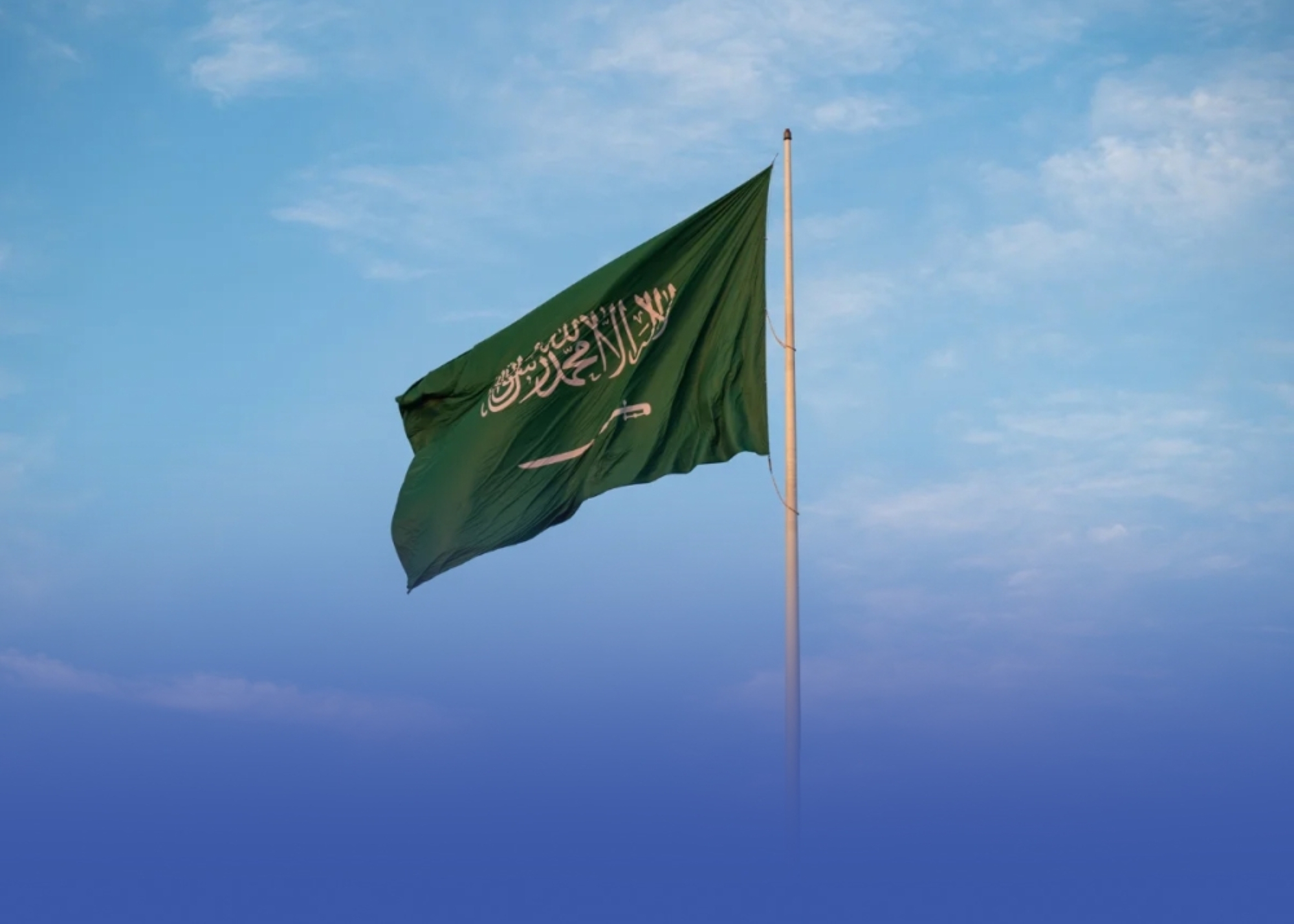
In an official statement, the Kingdom of Saudi Arabia expressed its strong condemnation and denunciation of the treacherous terrorist attack that targeted Diori Hamani International Airport in Niamey, the capital of the Republic of Niger. This criminal act resulted in a number of casualties, including deaths and injuries, in an incident that has shocked local and regional communities.
The Kingdom, through its Ministry of Foreign Affairs, reaffirmed its firm and unwavering stance against all forms of violence, extremism, and terrorism, regardless of their manifestations or motives. It emphasized its categorical rejection of targeting innocent civilians and vital infrastructure, expressing its full solidarity with the sisterly Republic of Niger, its government and people, in this tragic event.
Context of security challenges in the Sahel region
This attack comes at a time when the Sahel region of Africa is facing escalating security challenges, with countries in the region, including Niger, facing persistent threats from armed groups seeking to destabilize the region. Targeting airports and vital infrastructure is a dangerous tactic aimed at isolating countries, crippling their economies, and disrupting transportation, necessitating a concerted international effort to counter these growing threats to regional peace and security.
The strategic importance of Diori Hamani Airport
Diori Hamani International Airport is Niger's main air gateway and a vital transport hub in West Africa. Its role extends beyond passenger traffic; it is a lifeline for logistical and humanitarian operations in the region. Therefore, targeting such a facility carries serious implications that go beyond the immediate material and human losses, impacting the overall sense of security and stability in the capital, Niamey.
Saudi Arabia's position in support of international stability
This condemnation falls within the framework of Saudi Arabia's foreign policy, which consistently calls for enhanced international cooperation to combat terrorism and eliminate its root causes. Riyadh has long been at the forefront of supporting its sisterly and friendly nations in Africa in addressing security and development challenges, emphasizing that security is indivisible and that the stability of the Sahel region positively impacts international peace and security.
The Kingdom concluded its statement by offering sincere condolences and heartfelt sympathy to the families of the victims and to the government and people of Niger, asking God Almighty to have mercy on the deceased, to grant the injured a speedy recovery, and to protect Niger and its people from all harm.
Politics
Iranian boats intercept a US ship in the Strait of Hormuz
The UK Maritime Trade Operations (UKMTO) has revealed details of an incident in which six Iranian boats intercepted a US vessel near Oman. Learn about the background of the tension and its impact on navigation in the Strait of Hormuz.
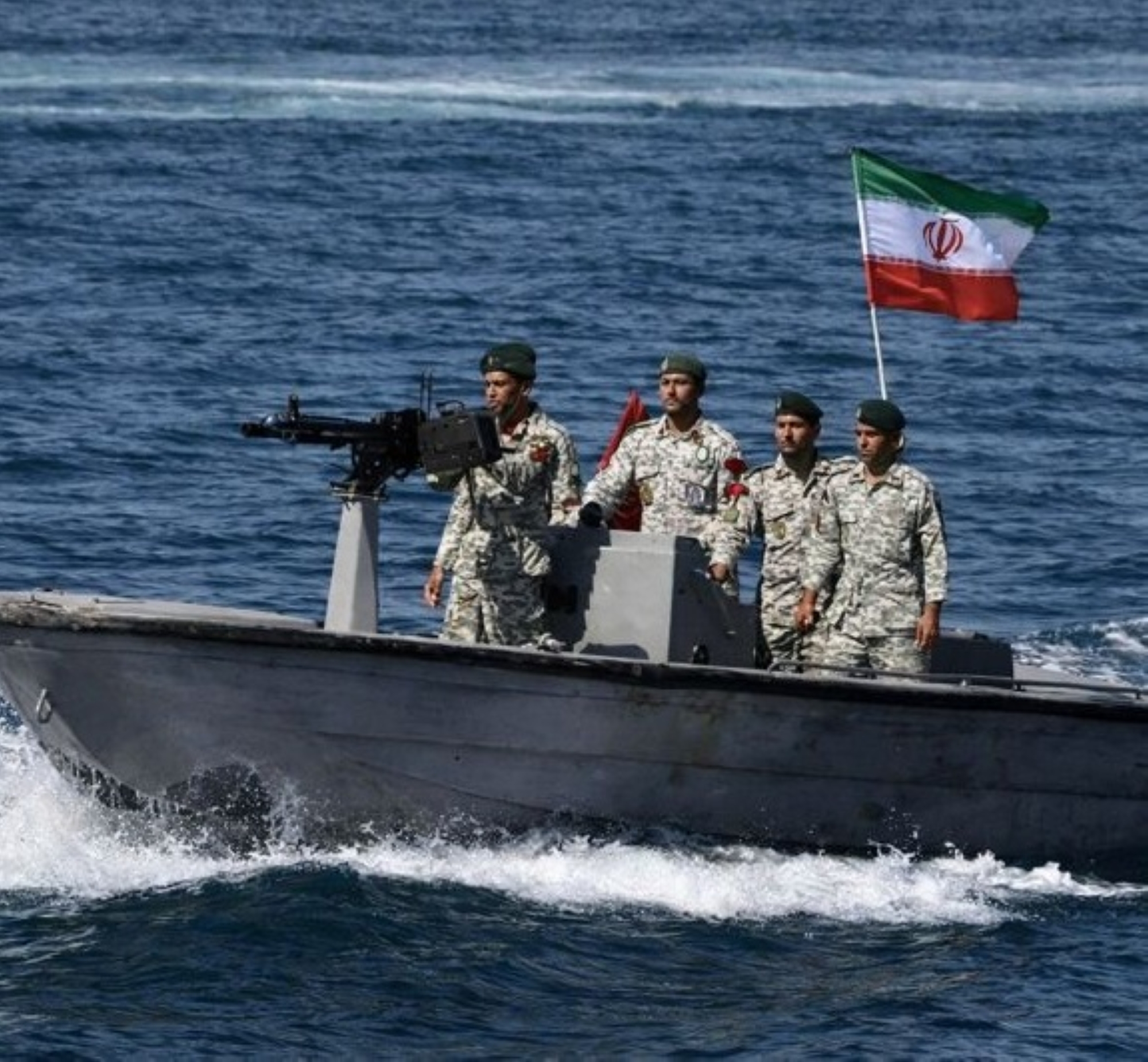
In a new development reflecting the continued tension in the strategic waterways of the Middle East, the United Kingdom Maritime Trade Operations (UKMTO) revealed a security incident that occurred off the coast of the Sultanate of Oman, in which six armed Iranian boats attempted to intercept a commercial vessel flying the flag of the United States of America.
Details of the naval confrontation
Official reports indicate that the incident occurred approximately 30 kilometers north of Oman, specifically within the shipping lane of the vital Strait of Hormuz. According to the British authorities, Iranian boats approached the vessel and attempted to contact its crew via radio, demanding an immediate halt. However, the American ship ignored these warnings and continued its course without complying with the orders.
The Vanguard Maritime Risk Management Group identified the targeted vessel as the Stena Imperative. The group confirmed that the ship never entered Iranian territorial waters and was escorted by a U.S. warship, which prevented the situation from escalating into an actual seizure. The vessel left the area safely without any armed confrontation or serious security incident.
The Iranian narrative and the context of tension
In contrast, Iran claimed that the ship entered its territorial waters without the necessary permits, prompting warnings. This incident comes at a time of heightened security sensitivity in the region, as the Strait of Hormuz is a vital artery for global energy supplies, with nearly a fifth of the world's oil consumption passing through it.
Background to the Tanker War and its strategic dimension
This incident cannot be separated from the tense historical and political context between Tehran and Washington in the Gulf waters. Recent years, specifically 2023 and 2024, have witnessed a series of similar incidents, in which Iran seized three commercial vessels near or within the Strait of Hormuz.
Observers believe these actions are often retaliatory, or tit-for-tat, in response to the United States seizing Iranian oil shipments or detaining tankers linked to Tehran as part of international sanctions. These incidents increase the risks to international shipping, driving up maritime insurance costs and directly impacting the stability of global energy markets, as the region remains a flashpoint requiring constant security vigilance to ensure freedom of navigation.
Politics
Iranian drone shot down near US aircraft carrier in the Arabian Sea
A US F-35 fighter jet shot down an Iranian drone that approached the aircraft carrier USS Abraham Lincoln in the Arabian Sea. Details of the incident and its impact on regional tensions.
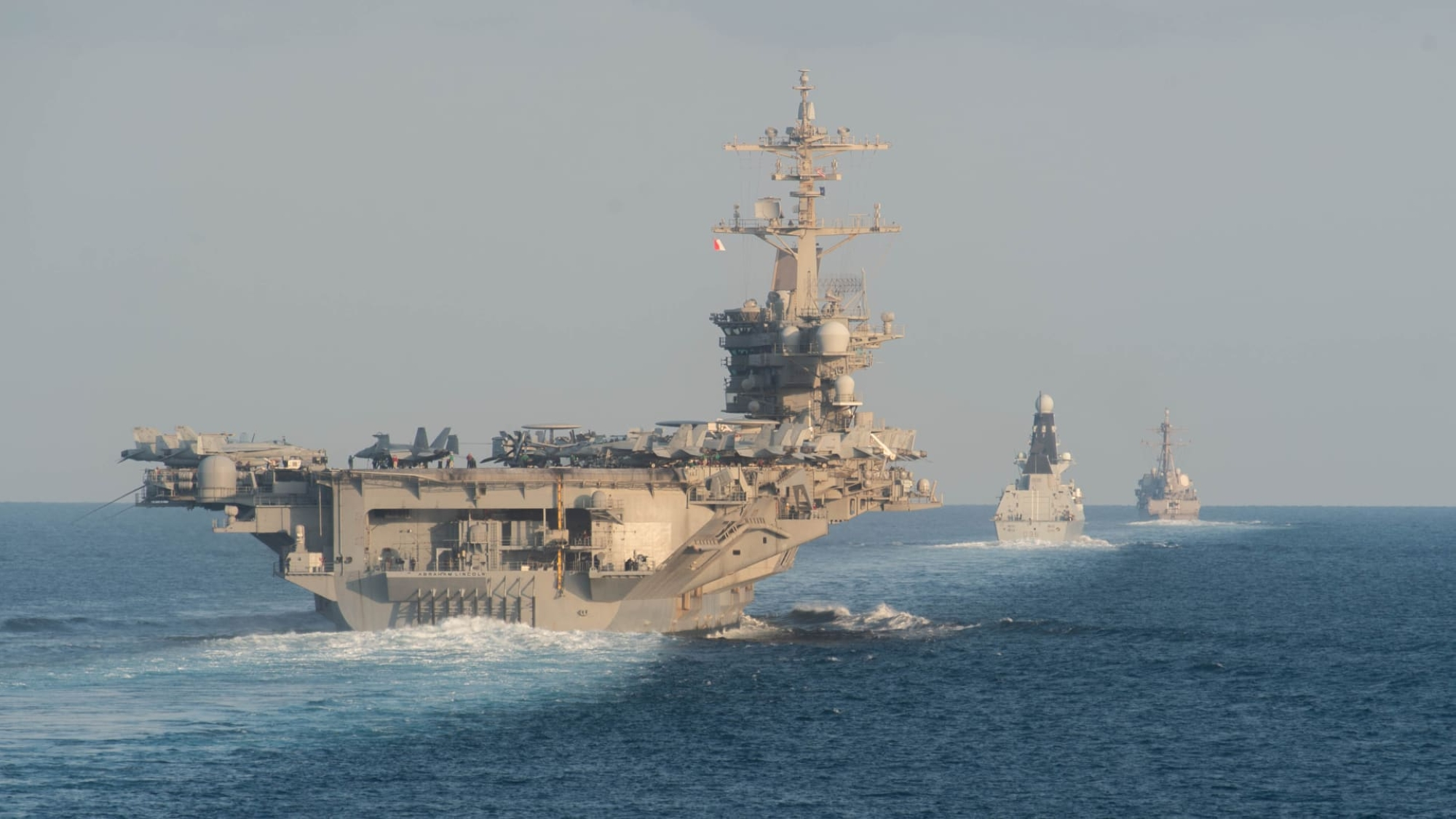
In a significant security development reflecting the ongoing tensions in the region's strategic waterways, the US Navy shot down an Iranian drone over the Arabian Sea. The incident occurred when radar detected a Shahed-139 drone approaching the USS Abraham Lincoln carrier strike group in a dangerous manner, prompting an immediate and decisive response from the carrier's air forces.
Details of the air interception
According to reports, the drone was heading directly toward the US aircraft carrier, ignoring standard warning protocols for such situations. A sophisticated US F-35 Lightning II fighter jet, known for its stealth capabilities and advanced electronic systems, was immediately scrambled to intercept the aerial target. The fighter successfully shot down the Iranian drone before it posed a direct threat to the safety of the naval vessels or the carrier's crew, demonstrating the rapid response of US defenses to unmanned aerial threats.
Strategic context and military importance
This incident is particularly significant given the type of weapons used; the deployment of a fifth-generation fighter jet like the F-35 against a drone sends a powerful military message, underscoring the high combat readiness of the Abraham Lincoln carrier strike group. This aircraft carrier is a cornerstone of the US deterrence strategy in the Middle East, patrolling the Arabian Sea and the Gulf to ensure maritime security and protect vital interests.
On the other hand, the incident highlights the growing reliance on drones in the region's military strategies, where they are frequently used for reconnaissance and surveillance, and sometimes for military skirmishes. The Arabian Sea is a vital waterway for global trade and energy supplies, making any military confrontation there a matter of international concern, given its potential impact on the stability of energy markets and the safety of maritime shipping lanes.
Background of regional tensions
This incident cannot be separated from the broader context of ongoing tensions between the United States and Iran in the region. Recent years have witnessed several similar incidents, including encounters between speedboats and naval vessels, or attempts to intercept drones. This latest event underscores the continuation of a "shadow war" and calculated skirmishes aimed at testing the defensive lines and rules of engagement of both sides, without escalating into a full-blown military confrontation. Military experts confirm that the continued high state of alert among US forces reflects an awareness of the potential risks that could arise from any miscalculation in this sensitive region of the world.
-

 Local news one week ago
Landslide in Riyadh: Details of the incident in Al-Sahafa neighborhood and containment efforts
-

 Culture and Art, 1 week ago
Haifa Wehbe's absence in Riyadh: A photo crisis or a strained relationship with the media?
-
 Local news one week ago
Riyadh collapse: Emergency plans to secure water after a main pipeline burst
-

 Culture and Art, 1 week ago
City Kitchen series: A drama of conflict and the middle class during Ramadan
-

 Culture and Art, 1 week ago
The series "Kasra": Dawood Hussein in a moving social drama this Ramadan
-

 Local news one week ago
Applying for the 1447 Opportunities Program for Teachers via the Fares System
-

 Local News 6 days ago
Ramadan 2026 discounts in Saudi Arabia: Offers valid for 54 days
-
 Culture and Art 5 days ago
The death of artist Huda Shaarawi “Umm Zaki” and her funeral in Damascus