Politics
Pilgrims throw stones at Jamarat al-Aqaba today
The hearts of the pilgrims gathered and united in a magnificent scene, responding to God Almighty on Mount Arafat, and raising their hands in supplication

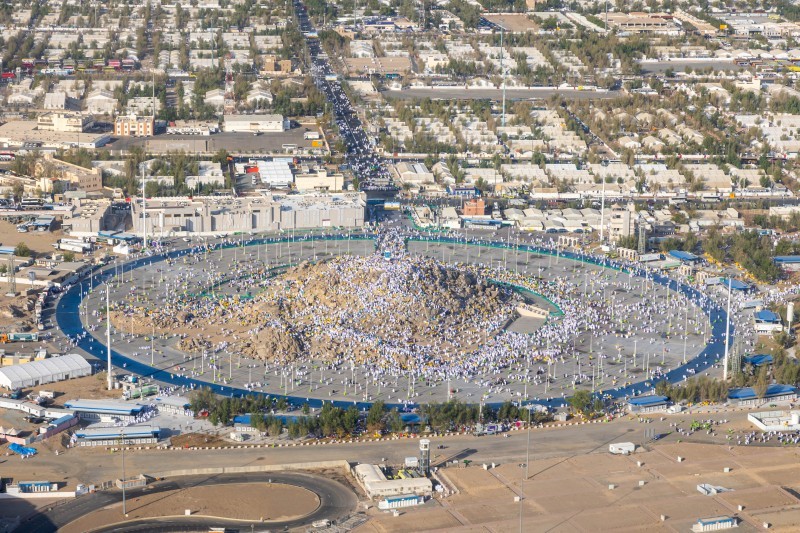
The hearts of the pilgrims gathered and their hearts united in a great scene, responding to God Almighty on Mount Arafat, and their hands were raised in supplication to God seeking forgiveness and mercy before their prayers of Dhuhr and Asr combined and shortened with one Adhan and two Iqamas, supplicating with whatever was easy for them, following the Sunnah of the best of mankind, Muhammad (peace and blessings be upon him).
With the dawn of yesterday (Friday), the ninth of Dhul-Hijjah of the year 1443 AH, the caravans of pilgrims to the Sacred House began to head to the pure plain of Arafat, filled with an atmosphere of faith, humility and tranquility, surrounded by divine care, supplicating and calling upon God Almighty to grant them pardon, forgiveness, mercy and deliverance from Hellfire.
Large crowds of pilgrims flocked early to the Namira Mosque in Arafat to perform the combined and shortened prayers of Dhuhr and Asr, following the Sunnah of the Prophet Muhammad (peace and blessings be upon him), and to listen to the Arafat sermon. The sides of the mosque, which has an area of 110,000 square meters, and the surrounding courtyards, which have an area of eight thousand square meters, were filled with the guests of God.
Leading the worshippers were the Advisor to the Custodian of the Two Holy Mosques, the Governor of Makkah Region and Chairman of the Central Hajj Committee, Prince Khalid Al-Faisal, his deputy, Prince Badr bin Sultan, and a group of scholars and officials. During his Arafat sermon this year at Namira Mosque, the Secretary-General of the Muslim World League and member of the Council of Senior Scholars, Muhammad Al-Issa, called on the pilgrims and the Muslim masses to increase their supplication and good deeds, and to beware of being led by the ignorant and foolish into pointless arguments and their consequences.
The convoys of the pilgrims to the holy site of Arafat were accompanied by direct security monitoring carried out by members of various security sectors who surrounded the vehicle roads and pedestrian paths to organize them according to the plans for the escalation and movement of the pilgrims, in addition to guiding them and ensuring the necessary safety for them to ensure smooth and flexible movement.
With full readiness for the various government sectors working in the service of the pilgrims, medical, ambulance and supply services were provided throughout the holy site, and what the guests of God need who traveled long distances and endured hardship from all over the world to perform the fifth pillar of Islam, praising the Almighty for guiding them to it.
The Advisor to the Custodian of the Two Holy Mosques, the Governor of Makkah Region and Chairman of the Central Hajj Committee, Prince Khalid Al-Faisal, and the Minister of Interior and Chairman of the Supreme Hajj Committee, Prince Abdulaziz bin Saud bin Nayef bin Abdulaziz, followed up on the process of moving the pilgrims to Arafat, directing that the best services be provided so that the guests of God may enjoy performing the rituals in safety and peace.
Security forces personnel began organizing traffic and assisting pilgrims, while security aircraft patrolled the skies above the holy site to monitor the movement of pilgrims.
On another note, pilgrims departed this morning (Saturday) for Mina to perform the stoning of the Jamarat al-Aqaba al-Kubra, and then the Tawaf al-Ifadah around the ancient House, amidst an integrated system of medical, security and service services, under the continuous directives of the wise leadership, as preparations and plans of all security, health and service sectors began yesterday evening to receive the crowds of pilgrims in Mina.


Politics
The commander of the joint forces receives the Yemeni Minister of Defense to discuss resolving the crisis
Details of the meeting between the Commander of the Joint Forces, Lieutenant General Fahd Al-Salman, and the new Yemeni Minister of Defense, Lieutenant General Taher Al-Aqili, to discuss developments and efforts to end the Yemeni crisis.
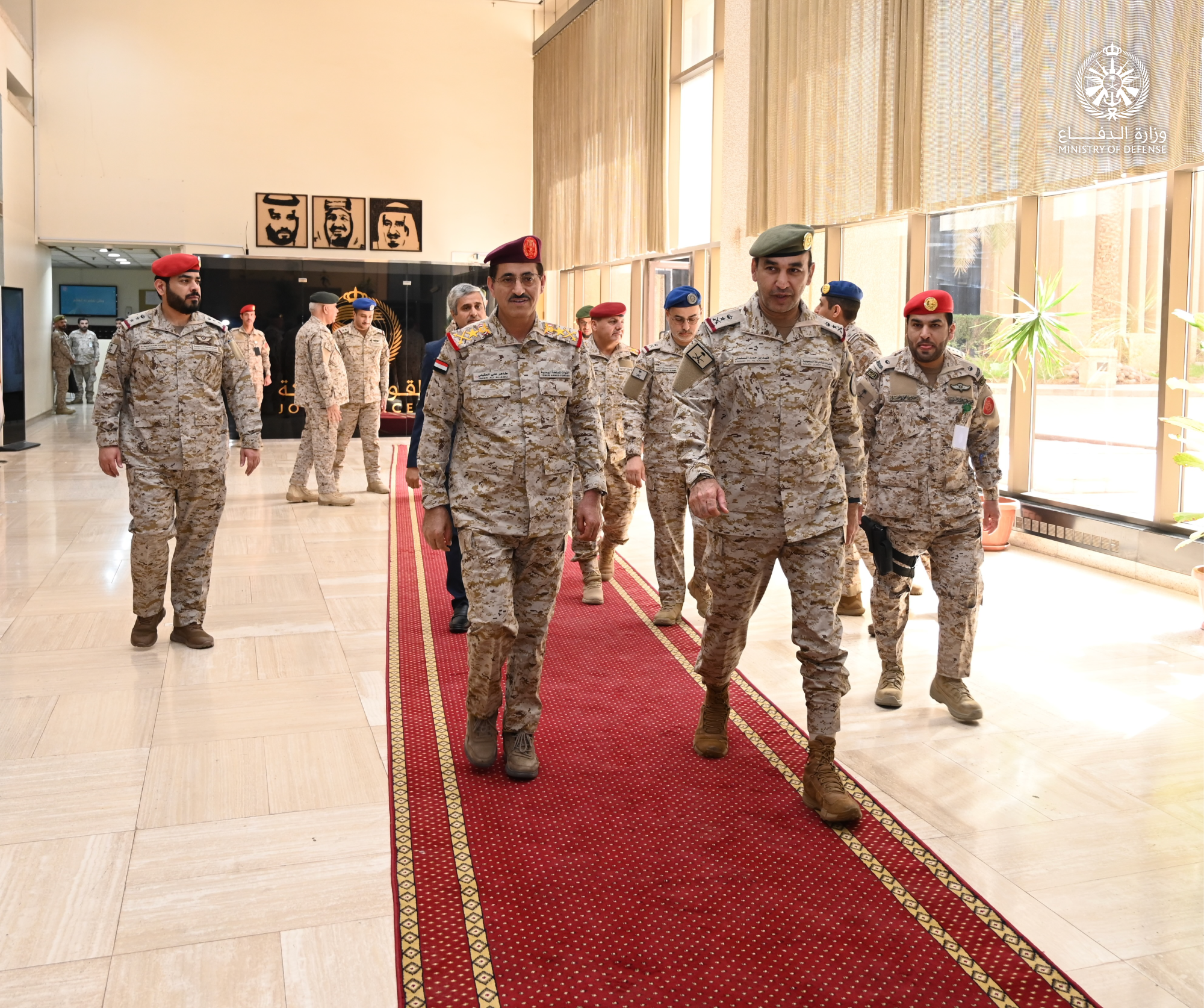
As part of ongoing efforts to enhance military and security coordination between the Kingdom of Saudi Arabia and the Republic of Yemen, the Commander of the Joint Forces, Lieutenant General Fahd bin Hamad Al Salman, received the Minister of Defense of the Republic of Yemen, Lieutenant General Taher bin Ali Al Aqili, at the Joint Forces Command headquarters. This important meeting reflects the depth of the fraternal relations and shared destiny that unites the two brotherly countries in confronting current challenges.
Lieutenant General Salman began the meeting by congratulating the Yemeni Minister of Defense on his appointment, expressing his wishes for his success in fulfilling his weighty duties and responsibilities during this critical period. The meeting included extensive discussions on the evolving field and military situation within Yemen, as well as a review of efforts aimed at resolving the crisis and ensuring security and stability for the brotherly Yemeni people.
The importance of joint military coordination
This meeting is of particular importance given the pivotal role played by the Joint Forces of the Coalition to Restore Legitimacy in Yemen, led by the Kingdom of Saudi Arabia. Direct coordination between the Joint Forces Command and the Yemeni Ministry of Defense is the cornerstone of unifying military efforts, enhancing combat readiness, securing liberated areas, and countering threats to the security of Yemen and the region.
Context of the crisis and international efforts
This meeting comes at a time when the Yemeni arena is witnessing ongoing efforts aimed at finding sustainable political and military solutions to the protracted crisis. The Kingdom of Saudi Arabia, through its leadership of the coalition, consistently affirms its unwavering commitment to supporting the legitimate Yemeni government and its national institutions, not only militarily, but also through political, humanitarian, and developmental channels, to ensure the return of normalcy and alleviate the suffering of the Yemeni people.
Towards a safe and stable future
Both sides concluded the meeting by emphasizing the need for continued consultation and close coordination to address all potential challenges. This military cooperation is an integral part of the comprehensive strategy aimed at restoring the Yemeni state and enforcing the rule of law, thus paving the way for a future of peace and prosperity and fulfilling the aspirations of the Yemeni people for a dignified life free from conflict and foreign interference.
Politics
Tehran and Washington: Nuclear talks to include energy and aircraft
An Iranian official revealed details of talks with Washington that included investments in energy and the purchase of aircraft, coinciding with Araqchi's visit to Geneva and the continued military tension in the region.

In a significant development in the complex diplomatic relations between Tehran and Washington, Hamid Ghanbari, Iran's Deputy Foreign Minister for Economic Affairs, revealed a new Iranian strategy aimed at linking a return to the nuclear agreement to tangible economic benefits for the United States. Ghanbari explained that Tehran seeks an agreement that encompasses not only political and nuclear aspects but also includes mutual economic benefits to ensure the agreement's sustainability.
The Iranian official indicated that the current negotiations directly address vital issues, including shared interests in oil and gas fields, as well as joint fields and investments in the mining sector. Perhaps the most significant point in Qanbari's remarks was the explicit mention of including "aircraft purchases" among the negotiating items, a matter of utmost sensitivity and importance for Tehran, whose civilian air fleet has suffered from obsolescence due to long-standing sanctions.
Criticism of the previous agreement and the introduction of economic guarantees
In justifying this new approach, Ghanbari criticized the structure of the 2015 nuclear agreement (the Joint Comprehensive Plan of Action) with world powers, arguing that it "did not guarantee any economic interests for the United States." Tehran believes that the absence of direct US economic interests in the previous agreement facilitated Washington's subsequent withdrawal from it without incurring significant commercial losses. By proposing energy investments and aircraft deals (which could involve major companies like Boeing), Iran is attempting to create a network of interests that would make it difficult for any future US administration to dismantle the agreement again.
Diplomatic moves in Geneva amid military tension
These economic statements coincide with intense diplomatic activity, as the Iranian Foreign Ministry confirmed that Foreign Minister Abbas Araqchi departed Tehran for Geneva. This visit is to participate in a new round of indirect talks with the United States regarding the nuclear issue, as well as to hold important meetings with the Director General of the International Atomic Energy Agency and other international figures, in an effort to break the ongoing deadlock.
Despite the resumption of negotiations this month to resolve the decades-long dispute and avert a military confrontation, the atmosphere is rife with threats of force. US officials have indicated that the United States is not only pursuing diplomacy but has also bolstered its military presence by deploying a second aircraft carrier to the region. This move serves as a clear deterrent, as Washington prepares for the possibility of a large-scale military campaign should diplomatic talks fail to curb Iran's nuclear program, placing the region at a critical crossroads between economic progress and a dangerous military escalation.
Politics
Israel approves land registration in the West Bank: a step towards annexation and Palestinian condemnation
The Israeli government has approved measures to facilitate land registration for settlers in the West Bank. The Palestinian Authority rejects the decision, deeming it a de facto annexation that threatens the future of the two-state solution and the region.

In a remarkable development that deepens the complexities of the political and security landscape in the region, the Israeli Security Cabinet approved a package of new measures aimed at tightening Israeli control over the occupied West Bank and facilitating land purchases and registrations for settlers, a move that has provoked angry reactions from the Palestinian side.
In detailing the decision, Israeli Prime Minister Benjamin Netanyahu confirmed that these moves are in line with his government's security vision, noting that the idea of establishing a Palestinian state represents an existential "security threat" to Israel, especially given the electoral challenges he faces later this year. For his part, Israeli Defense Minister Yisrael Katz defended the decision, considering the transfer of land registration authority in the West Bank a "necessary security measure." The Security Cabinet, in its official statement, justified this step as a direct and appropriate response to what it described as "illegal land registration operations" promoted by the Palestinian Authority in Area C.
On the other hand, the decision was met with categorical rejection from the Palestinian Presidency, which stated that these measures constitute a "de facto annexation" of the occupied Palestinian territories, and an explicit declaration of the start of implementing plans aimed at entrenching the occupation through the expansion of illegal settlements, thus undermining any remaining opportunities to achieve peace based on the two-state solution.
The context of the conflict on land in the West Bank
This Israeli move comes within the context of a long history of conflict over land since the occupation of the West Bank in 1967. The issue of land registration is of paramount strategic importance, as vast areas of the West Bank, specifically Area C as defined by the Oslo Accords, are under full Israeli security and administrative control. Successive Israeli governments have consistently sought to bolster settlement activity in these areas, which constitute approximately 60% of the West Bank and are considered the strategic reserve of a future Palestinian state.
Political and legal repercussions
Observers and political analysts believe that allowing settlers to register their land represents a dangerous shift in the legal status of the West Bank, transferring authority from the military administration to civilian procedures similar to those applied within Israel—a process known as "creeping annexation." This shift not only threatens the territorial contiguity of any future Palestinian state but also presents the international community with new legal challenges regarding violations of international law and UN Security Council resolutions that deem settlements illegal.
This decision is expected to increase tensions on the ground, as Palestinians fear that these concessions will lead to the confiscation of more private and public lands, thus closing the door permanently to the political process and pushing the region towards further escalation and confrontation.
-

 Local news one week ago
The Spears of Victory 2026 military exercises concluded in Saudi Arabia with international participation
-
Culture and Art 5 days ago
The "Between and Between" exhibition in Jeddah: 5 artists reshape Saudi memory
-
Culture and Art 6 days ago
Shakira's concert in Jeddah: Details of the international star's first concert in Saudi Arabia
-
Local News 3 days ago
Saudi Arabia's National Arabic Language Policy: 8 Principles to Promote Identity
-
Culture and Art, 1 week ago
The truth about Nancy Ajram's video and Epstein Island, and her legal response
-
Local news two days ago
Adopting the National Policy for the Arabic Language: Strengthening Identity and Vision 2030
-
Culture and Art, 1 week ago
Rawan Bin Hussain's first appearance after her imprisonment and deportation from Dubai
-
Local News 3 days ago
The Riyadh-Rin-Bisha dual carriageway, spanning 559 km, has been completed