Politics
Pauline Hanson and the niqab: Controversy in the Australian Parliament and angry reactions
Details of Senator Pauline Hanson's wearing of the niqab inside the Australian Parliament, the angry political reactions, and the background of the controversy surrounding the ban on the niqab and the government's position.


The political scene in Australia witnessed a controversial incident that brought renewed attention to issues of religious freedoms and national security, when far-right Senator Pauline Hanson, leader of the One Nation party, entered the Australian Senate wearing a full black niqab (burqa), in a move described as a political demonstration aimed at pushing for a ban on wearing the niqab in public places.
Details of the incident and the heated confrontation
Hanson sat in her seat for nearly 20 minutes, her face completely covered, much to the astonishment and shock of her colleagues in Parliament. When it was her turn to speak, she removed the veil to reveal her identity, justifying her actions as necessary to demonstrate that the garment posed a security threat, and calling for a complete ban on it in Australia. This act provoked immediate and fierce reactions from both the government and the opposition.
The strongest response came from the then-Australian Attorney-General, George Brandis, who rebuked Hanson in a passionate and impassioned speech. “No, Senator Hanson, we will not ban the burqa,” Brandis said, his voice trembling. He warned her against offending the Muslim community in Australia, calling her remarks “appalling” and stating that ridiculing the religious beliefs of others was not the best way to serve national security. Brandis’s response was met with thunderous applause and a standing ovation from members of the opposition parties (Labor and the Greens), in a rare display of political unity against hate speech.
Political context and historical background
This event cannot be separated from the broader context of the policies of Hanson's One Nation party, which has been known since the 1990s for its anti-immigrant and anti-multicultural stances. In the 1990s, Hanson warned of the "Asian threat," before shifting her focus in recent years to Muslims and Islam, exploiting global fears of terrorism to promote a populist political agenda.
This incident comes at a time when Australia, like other Western countries, is experiencing heated debates about balancing civil liberties with security concerns. Although the Australian constitution protects freedom of religion, the far right is constantly trying to import models of religious bans implemented in some European countries, such as France and Belgium.
Security measures and refutation of claims
Procedurally, Senate Majority Leader Stephen Parry revealed that Hoyt Hanson had already been vetted before entering the chamber, refuting her claim of a “security risk.” He explained that parliamentary security followed established protocols, with Hanson revealing her face to security personnel in a private area before entering, thus confirming that the current security system is effective and does not necessitate a blanket ban on religious attire.
Importance and expected impact
This incident demonstrated the isolation of extremist rhetoric within the Australian legislature, as Hanson's actions backfired, uniting diverse political factions in defense of the values of tolerance and pluralism. The incident also highlighted the maturity of Australian political society in dealing with racist provocations, confirming that Australia, one of the world's most successful multicultural societies, remains committed to its approach of respecting religious and cultural diversity despite attempts by the far right to undermine this stability.




Politics
Mojtaba Khamenei as Supreme Leader of Iran: Details of the selection of Khamenei's successor
Reports indicate that Mojtaba Khamenei has been chosen as Iran's Supreme Leader, succeeding his father, under pressure from the Revolutionary Guard. Learn about the behind-the-scenes details of this decision and the implications of this dynastic succession in Tehran.
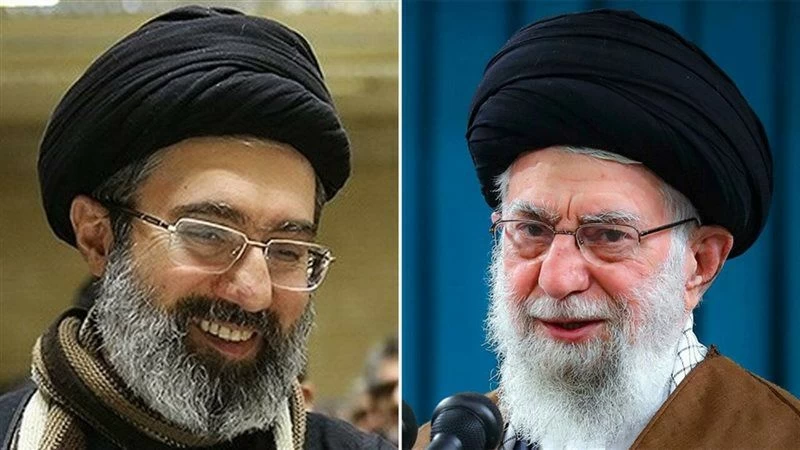
Media reports, citing the London-based Iran International channel, indicate that Iran's Assembly of Experts has selected Mojtaba Khamenei , son of current Supreme Leader Ali Khamenei, as the next Supreme Leader of the Islamic Republic. According to sources described as well-informed, this decision was made in complete secrecy and under direct and intense pressure from commanders of the Iranian Revolutionary Guard Corps , suggesting a significant shift in the balance of power within Tehran.
Behind the scenes of the secret selection and the role of the Revolutionary Guard
Sources reported that Mojtaba Khamenei was chosen during a secret meeting of the Assembly of Experts, amid unprecedented security measures described as "at the highest possible level." This news confirms earlier speculation in Iranian media that the succession issue would be resolved this week. It is believed that the Revolutionary Guard, which now controls key sectors of the country's economy and security apparatus, strongly pushed for this choice to ensure the continuation of the regime's policies and protect its strategic interests in the post-Ali Khamenei era.
Who is Mojtaba Khamenei? A path from obscurity to the top
Mojtaba Khamenei is known as the most influential figure in the "Supreme Leader's household," despite his limited media appearances. His biography reveals a blend of military and religious background; he joined the ranks of the Revolutionary Guard and participated in the Iran-Iraq War (1980-1988), which established his close ties with the current military leadership. In the late 1990s, he pursued religious studies at the Qom seminary , further solidifying his religious legitimacy.
His name became prominent following the 2005 presidential elections, and then in the events of 2009, when the reformist opposition accused him of playing a pivotal role in managing the security file and suppressing protests, as well as expanding the influence of the Revolutionary Guard's intelligence apparatus to become a rival to the official Ministry of Intelligence.
Historical context and the succession crisis
If officially confirmed, this event would mark a historic turning point in the course of the 1979 Iranian Revolution against the Shah's hereditary rule. The transfer of power from father to son is generating considerable debate about the concept of "republic" within the regime and recalls the 1989 transfer of power from Khomeini to Khamenei, which was also a carefully orchestrated political process. However, the difference today lies in the dominant role of the military establishment, represented by the Revolutionary Guard, which appears to be seeking to install a leader who can guarantee the loyalty of the security apparatus.
Expected local and regional repercussions
The appointment of Mojtaba Khamenei is expected to solidify the Iranian regime's hardline policies, both domestically regarding social and political freedoms, and internationally in managing regional and nuclear issues. Observers believe this choice reflects the desire of the regime's "hard core" to preempt any surprises that might arise from a power vacuum, especially given the geopolitical tensions plaguing the Middle East.
Politics
Yemen: Giants Brigade seizes Iranian smuggling boat bound for Houthis
Southern Giants forces thwarted a smuggling attempt originating from the Iranian port of Bandar Abbas and seized a shipment of smuggled medicine destined for the Houthis. Details of the operation and confessions from the sailors.

In a high-quality security operation reflecting the vigilance of the military forces in securing the Yemeni coasts, the Southern Giants Forces announced on Wednesday that they had successfully seized a smuggling boat coming from Iranian territory, which was on its way to deliver an unauthorized shipment to areas under the control of the Houthi group.
Details of the security operation and the crew's confessions
A source within the security campaign of the Southern Giants Forces reported that maritime patrol units, following a precise intelligence operation, intercepted a boat exceeding 20 meters in length. The inspection revealed a large shipment containing 3,000 cartons of smuggled and unauthorized medicines, carefully concealed.
The source confirmed to Okaz newspaper that the forces arrested the boat's crew of five sailors, all of whom hail from Hodeidah Governorate. During initial investigations, the sailors confessed that they had departed directly from the Iranian port of Bandar Abbas, with their final destination being the port of Salif, north of Hodeidah, which the Houthi group uses as a major maritime gateway.
The Iranian smuggling route: a recurring pattern
This operation comes amid a long series of smuggling attempts in Yemeni territorial waters. The shipping route originating from Iranian ports, specifically Bandar Abbas, is one of the most prominent routes identified internationally and locally for transporting contraband to the Houthis. Previous UN reports indicate that this route is not only used for smuggling unlicensed goods, but has also been used in the past for smuggling fuel, weapons, and drone components, thus violating international resolutions and Security Council resolutions related to the arms embargo on armed groups.
The Southern Giants Forces and the Joint Forces on the West Coast play a pivotal role in securing the Bab al-Mandab Strait and the southern Red Sea, areas of high strategic sensitivity to global trade, making the seizure of such boats an achievement that transcends the local dimension to the regional and international dimension in protecting waterways.
Health and economic risks
Beyond the security implications, smuggled drug shipments pose serious health risks to citizens in Houthi-controlled areas. Medicines arriving via smuggling boats often lack even the most basic transport and storage standards (such as refrigeration) and are frequently of unknown origin or expired, transforming them into deadly poisons instead of treatments. Drug smuggling is also a source of illicit funding for Houthi-linked smuggling networks, enabling them to bolster their parallel economy beyond government oversight.
Presidential praise for security vigilance
In an official statement regarding the incident, Yemeni Presidential Leadership Council member Abdulrahman al-Mahrami (Abu Zara'a) praised this remarkable security achievement. Al-Mahrami commended the efforts of the security campaign forces and the Southern Giants Brigades in protecting the coast, emphasizing the need to enhance combat and security readiness to combat all forms of smuggling and prevent the arrival of any supplies that could be used by terrorist groups to destabilize the region.
The seized items were confiscated and the accused were detained to complete the legal procedures, in preparation for referring them to the competent authorities, in a step that confirms the determination of the legitimate government and the forces loyal to it to dry up the sources of smuggling in all its forms.
Politics
Israel bombs secret nuclear site near Tehran: Day 5 details
On the fifth day of the escalation, Israel announced the bombing of the secret “Minzadeh” nuclear facility near Tehran, and Iran responded with waves of missiles targeting Tel Aviv and Jerusalem amid international concerns.


The mutual military confrontations between the United States and Israel on one side, and Iran on the other, entered their fifth day amid a dangerous and unprecedented escalation, as the Israeli army officially announced the execution of a precise air strike targeting a secret underground military site near the Iranian capital, Tehran, confirming that this site is linked to the Iranian nuclear program.
Details of the intelligence operation and the targeting of “Minzadeh”
In detailing the operation, the Israeli army revealed that the strike's success was the result of intensive intelligence efforts during which security agencies tracked and monitored the movements of a group of senior Iranian nuclear scientists. This meticulous surveillance led to the identification of their new base, to which they had relocated to continue their sensitive research and activities.
The military identified the targeted facility as being on the eastern edge of Tehran, calling it the “Minzadeh” complex. The military statement indicated that Iranian scientists had been working inside this fortified complex since Israel launched devastating strikes against previous nuclear sites during the war that began in June 2005, suggesting Tehran’s determination to rebuild its nuclear capabilities discreetly.
Iran responded immediately, launching missiles towards Tel Aviv and Jerusalem
On the other hand, the Iranian response to this attack was swift; Israeli radars detected the launch of two successive waves of ballistic missiles from Iranian territory toward the Israeli heartland within a period of no more than 30 minutes. Sirens wailed across wide areas, and loud explosions were heard in the skies over Jerusalem.
In the greater Tel Aviv area, fragments of interceptor missiles and ammunition fell, lightly injuring a woman and causing limited material damage, while the Israeli Home Front Command continued to warn settlers to stay near shelters.
The regional context and the risks of sliding into all-out war
These rapid developments have deepened international fears of the region sliding into a full-blown regional war, especially with the United States becoming a direct party to the exchange of fire. Military analysts point out that targeting secret underground facilities like Minzadeh reflects a qualitative shift in Israel's target bank and sends a clear message that underground fortifications are no longer an obstacle to the destructive capabilities of modern missiles.
This escalation also casts a dark shadow over the stability of the Middle East, as targeting nuclear infrastructure is considered a red line that Tehran has long warned against crossing, putting the region in front of open scenarios that may extend beyond the borders of the warring states to affect global energy security and navigation.
-

 Local News 6 days ago
Saudi Arabia approves regulations for the continued presence of Gulf vehicles: duration and penalties
-
Local news one week ago
The Ministry of Interior begins procedures for a royal pardon for common law prisoners
-
Local news one week ago
The deadline for property registration in Hail and Riyadh is Thursday
-
Local news one week ago
Under the patronage of the Minister of Information, an agreement was signed between the Ministry of Information and Waves Marketing Company
-
Culture and Art 7 days ago
The Devil's Prisons series was halted: The full story of "The Emperor's" being moved to YouTube
-
Local News 5 days ago
Saudi Energy: A new identity for electricity that aligns with Vision 2030
-
Local News 5 days ago
The Food and Drug Administration is recalling Bebelac and Aptamil milk due to potential contamination
-
Local news one week ago
Registration is now open for domestic pilgrims for the 1447 AH season: Dates and conditions via Nusuk