
Politics
Pakistan downs Indian drone and considers suing New Delhi
Pakistani authorities shot down an Indian drone in the disputed Kashmir region, as they prepare to sue New Delhi after


Pakistani authorities shot down an Indian drone in the disputed Kashmir region, as they prepare to sue New Delhi after it suspended a water-sharing treaty on the Indus River following an armed attack that left several dead and wounded last week.
Pakistani state radio reported on Tuesday that an Indian quadcopter drone was shot down along the Line of Control (the de facto border in Kashmir), thwarting a violation of its airspace. It added that Indian forces had attempted to conduct reconnaissance operations using a quadcopter drone in the Bhimber border region.
The Indian army announced that Pakistani forces had again fired small arms near the Line of Control in Kashmir, and that its forces responded "in a restrained and effective manner," without reporting any casualties. Pakistan did not confirm the incident, although residents on its side reported hearing gunfire.
For his part, Pakistani Minister of Law and Justice Aqeel Malik revealed that his country is preparing to take international legal action regarding India's suspension of the Indus River Waters Treaty. He stated that Pakistan is considering three legal avenues, including appealing to the World Bank, which mediated the treaty. He added that Islamabad is also considering taking the case to the Permanent Court of Arbitration or the International Court of Justice in The Hague, arguing that India has violated the 1960 Vienna Convention on the Law of Treaties.
He added that consultations on the legal strategy are nearing completion, noting that the final decision on legal avenues will be made soon, and may include taking cases to more than one international body.
Meanwhile, India closed more than half of the tourist sites in its part of Kashmir starting Tuesday to tighten security measures following an attack on tourists last week. A government document stated that the Jammu and Kashmir authorities decided to close 48 out of 87 tourist destinations in the region and increase security presence in the remaining tourist areas.
Pakistani Defense Minister Khawaja Asif warned on Monday that an Indian military incursion was imminent amid escalating tensions between the two nuclear-armed countries.
Western media quoted Asif as confirming that his country had reinforced its forces in anticipation of an imminent Indian incursion, noting that strategic decisions had been made in this context.
He noted that Indian rhetoric had become more escalatory and that the Pakistani military had warned the government of a possible imminent Indian incursion, without providing further details about its assessment of its proximity. He affirmed that Pakistan was on high alert but would not use its nuclear arsenal unless "there is a direct threat to our existence.".
The Pakistani minister announced that Islamabad had contacted friendly countries such as the Gulf states and China, and had briefed Britain, the United States, and others on the situation. He added that some friendly Gulf states had intervened to mediate between the two sides, without naming any of them. Asif stated that the United States had so far "stayed clear" of involvement in the matter.
Following the Kashmir attack that killed 26 people and injured others, India accused two of the attackers of being Pakistani, while Islamabad denied any connection to the incident and demanded an impartial investigation, accusing New Delhi of waging a disinformation campaign against it.
Indian Prime Minister Narendra Modi vowed to hunt down and punish the attackers. India suspended the Indus Waters Treaty, which governs water sharing, and ordered Pakistani diplomats to leave the country within a week. It also halted the issuance of visas to Pakistani citizens and canceled all previously issued visas.
For its part, Pakistan denied the accusations, restricted a number of Indian diplomatic staff in Islamabad, declared that any interference with rivers outside the Indus Waters Treaty was an “act of war,” suspended trade with India, and closed its airspace to it.
Related News




Politics
Crown Prince and Putin discuss relations and regional developments | Details
Details of the call between Crown Prince Mohammed bin Salman and Russian President Putin, in which they discussed strengthening bilateral relations, cooperation files, and developments in regional and international events.
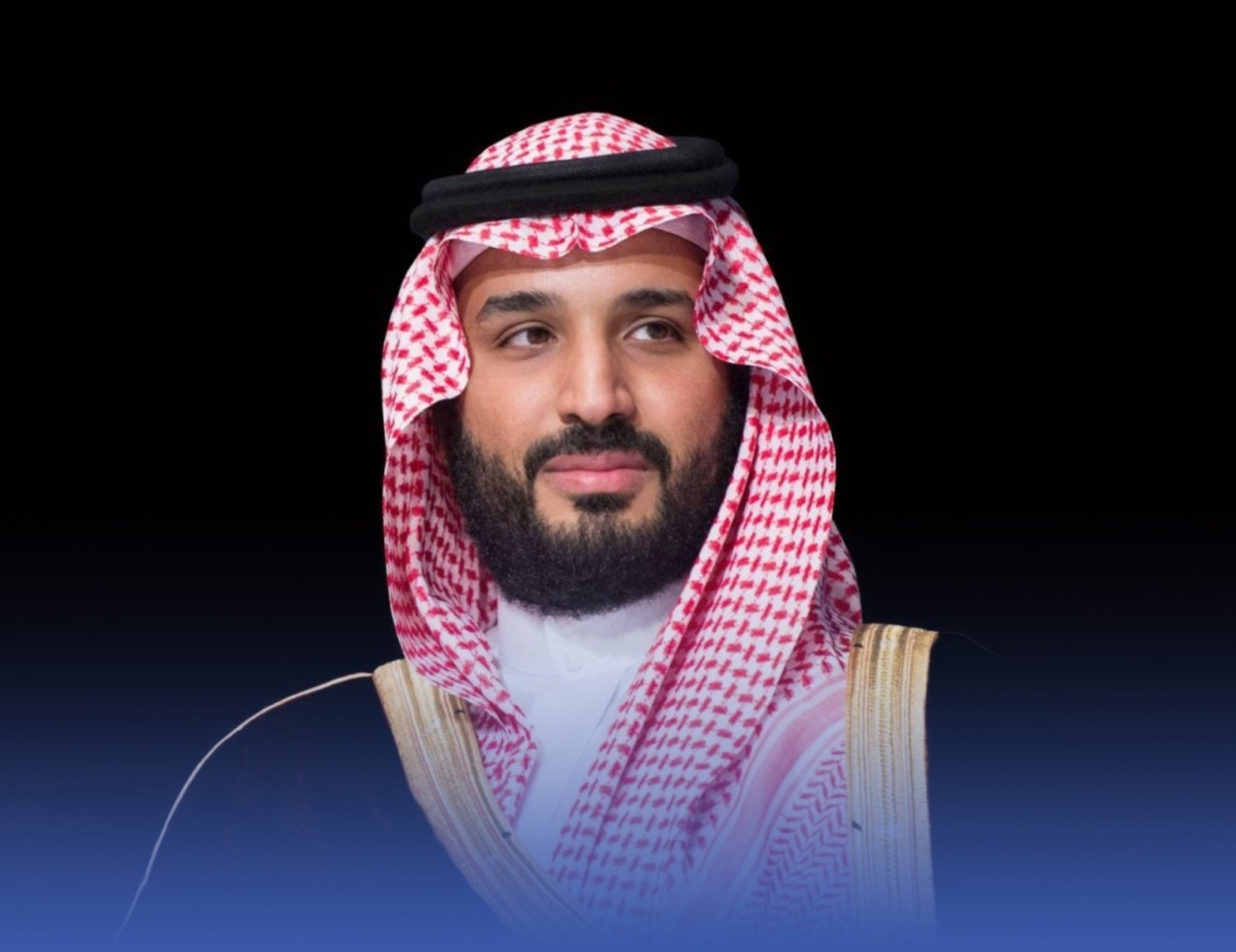
His Royal Highness Prince Mohammed bin Salman bin Abdulaziz Al Saud, Crown Prince and Prime Minister, made a telephone call today to President Vladimir Putin, President of the Russian Federation, as part of the ongoing coordination and consultations between the leaderships of the two friendly countries.
Strengthening bilateral relations and strategic partnership
During the call, the two sides reviewed the distinguished bilateral relations between the Kingdom of Saudi Arabia and the Russian Federation. They discussed existing areas of cooperation across various sectors and ways to support and develop them to serve the interests of both friendly nations. These discussions reaffirm the depth of the strategic partnership between Riyadh and Moscow, which has witnessed remarkable growth in recent years through the exchange of official visits and the activation of joint committees.
Coordinating positions on energy and economic issues
Within the framework of joint cooperation, communication between the Kingdom and Russia is of paramount importance given their global economic weight, particularly in the energy sector. Both countries play a pivotal role in maintaining the stability of global oil markets through continuous coordination, which positively impacts global economic growth. This cooperation is a cornerstone of economic relations, as both parties consistently strive to ensure market equilibrium that serves the interests of both producers and consumers.
Discussion of regional and international developments
The call also included a review of the rapidly evolving events on the regional and international stages. The two leaders discussed a number of issues of mutual interest, given the geopolitical challenges facing the Middle East and the world, which necessitate high-level coordination. These discussions underscore the Kingdom of Saudi Arabia's commitment to engaging with influential international powers to contribute to de-escalation and the resolution of crises through diplomatic means, thereby strengthening international peace and security.
The importance of ongoing consultation
This contact reflects the Kingdom's steadfast approach to strengthening dialogue with various countries around the world and reaffirming its leading and pivotal role in regional and international decision-making. Political circles view the Saudi-Russian consultations as a crucial factor in forging understandings that contribute to resolving outstanding issues and supporting stability in the region, particularly given the current circumstances which necessitate concerted international efforts.
Politics
Prince Abdullah bin Khalid presents his credentials as ambassador to Britain
In a royal ceremony at St. James's Palace, Prince Abdullah bin Khalid presented his credentials to King Charles III as Saudi Arabia's ambassador, affirming the depth of the strategic partnership between the two kingdoms.
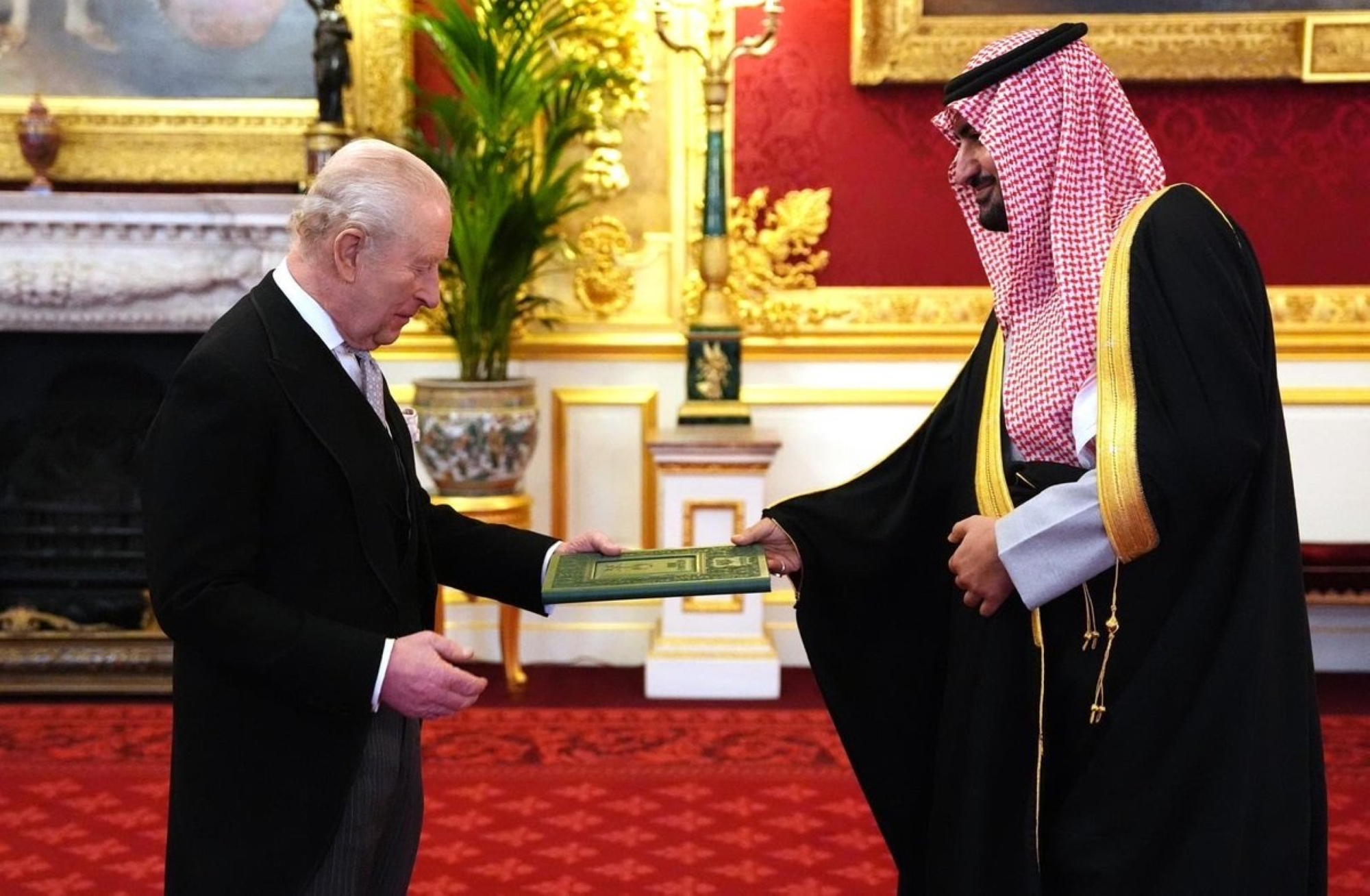
In a festive atmosphere imbued with time-honored royal traditions, His Royal Highness Prince Abdullah bin Khalid bin Sultan bin Abdulaziz officially presented his credentials to His Majesty King Charles III, King of the United Kingdom of Great Britain and Northern Ireland, thus becoming Ambassador Extraordinary and Plenipotentiary of the Custodian of the Two Holy Mosques to the British Royal Court.
Royal ceremony at St. James's Palace
The presentation of credentials took place at the historic St. James's Palace in London, the official residence of the British monarch and the traditional venue for the accreditation of foreign ambassadors. His Royal Highness received a reception befitting the stature of the Kingdom of Saudi Arabia, with meticulous protocol reflecting the long-standing traditions of British diplomacy observed from the arrival of his official motorcade to his meeting with His Majesty the King.
Messages of affection and mutual appreciation
During the cordial and warm meeting, Prince Abdullah bin Khalid conveyed the greetings and appreciation of the Custodian of the Two Holy Mosques, King Salman bin Abdulaziz Al Saud, and His Royal Highness Crown Prince Mohammed bin Salman bin Abdulaziz Al Saud, Prime Minister, to His Majesty King Charles III. His Highness also expressed the Saudi leadership's wishes for continued progress, prosperity, and security for the government and people of the friendly United Kingdom.
For his part, King Charles III welcomed the new ambassador, entrusting him with conveying his sincere greetings and deep appreciation to the Custodian of the Two Holy Mosques and His Royal Highness the Crown Prince, praising the strong relations that bind the two royal families and the two friendly countries, and wishing the Kingdom of Saudi Arabia and its people further growth and prosperity.
More than a century of historical relations
This diplomatic step is particularly significant given the deep historical ties between Saudi Arabia and the United Kingdom, which span more than a century. The United Kingdom was among the first countries to establish diplomatic relations with Saudi Arabia, and these relations have grown steadily over the decades, based on mutual respect and shared interests. This partnership serves as a model for enduring strategic alliances that have contributed to enhancing security and stability in the Middle East and the world.
Strategic partnership and future vision
The appointment of Prince Abdullah bin Khalid comes at a crucial time, as bilateral relations are witnessing significant momentum, particularly within the framework of the Saudi-British Strategic Partnership Council. The ambitious goals of Saudi Arabia’s Vision 2030 align with the United Kingdom’s aspirations to enhance economic and investment cooperation. Current and future areas of collaboration encompass vital sectors such as renewable energy, technology, financial services, education, and culture, in addition to close cooperation in security and defense matters.
The presence of His Highness Prince Abdullah bin Khalid, with his experience and vision, is expected to contribute to pushing these relations towards broader horizons, and enhancing joint coordination regarding current international issues, in a way that serves the interests of the two friendly peoples and enhances the opportunities for peace and sustainable development globally.
Politics
Mohammed bin Salman and Erdogan discuss strengthening relations in Riyadh
Crown Prince Mohammed bin Salman received Erdogan at Al-Yamamah Palace. Official talks addressed strengthening bilateral relations, investment opportunities, and regional issues.

In a move reflecting the depth of the growing relations between the two regional powers, His Royal Highness Prince Mohammed bin Salman bin Abdulaziz, Crown Prince and Prime Minister, received this evening at the Royal Court in Al-Yamamah Palace in Riyadh, His Excellency President Recep Tayyip Erdoğan, President of the Republic of Turkey, where an official reception ceremony was held for His Excellency befitting the level of fraternal relations between the two countries.
An extensive and comprehensive session of talks
The Crown Prince and the Turkish President held an expanded official meeting, which began with His Royal Highness Prince Mohammed bin Salman welcoming President Erdoğan to the Kingdom of Saudi Arabia. The Turkish President expressed his great pleasure at this visit and at meeting with His Royal Highness the Crown Prince. The discussions focused on reviewing the prospects for bilateral relations between the two brotherly countries and exploring ways to develop them in various political, economic, and defense fields.
Context of the visit and its strategic importance
This visit comes at a crucial time, as Saudi-Turkish relations are witnessing active diplomatic and economic engagement aimed at establishing a new phase of strategic cooperation. These talks are of paramount importance given the political and economic weight of both countries in the Middle East, as they seek to align their joint efforts to achieve the goals of Saudi Arabia's Vision 2030 and Turkey's development plans, particularly in the energy, investment, defense industries, and trade sectors.
The talks also touched in depth on the rapidly evolving events in the region and the world, where the importance of joint coordination and efforts to enhance regional and international security and stability, and to confront the current challenges facing the region, was emphasized.
High-level attendance from both sides
The large ministerial presence from both sides reflected the comprehensiveness of the discussions and the diversity of the issues raised. The Saudi side was represented by: Minister of Energy Prince Abdulaziz bin Salman, Minister of State Prince Turki bin Mohammed bin Fahd, Deputy Governor of Riyadh Prince Mohammed bin Abdulrahman, Minister of Sports Prince Abdulaziz bin Turki bin Faisal, Minister of the National Guard Prince Abdullah bin Bandar, Minister of Defense Prince Khalid bin Salman, Minister of Foreign Affairs Prince Faisal bin Farhan, Minister of Culture Prince Badr bin Abdullah, National Security Advisor Dr. Musaed Al-Aiban, Minister of Commerce Dr. Majid Al-Qasabi, Minister of Finance Mr. Mohammed Al-Jadaan, Minister of Investment Engineer Khalid Al-Falih, Minister of Transport Engineer Saleh Al-Jasser, and the Kingdom’s Ambassador to Turkey Fahd Abu Al-Nasr.
The Turkish delegation included ministers and senior officials, including: Foreign Minister Hakan Fidan, Family Minister Mahinur Ozdemir, Energy Minister Alparslan Bayraktar, Youth and Sports Minister Osman Aşkin Bak, Finance Minister Mehmet Şimşek, Defense Minister Yaşar Güler, Health Minister Kemal Memişoğlu, Industry Minister Mehmet Fatih Kacır, Trade Minister Ömer Polat, Intelligence Chief İbrahim Kalın, Head of Defense Industries Haluk Gürgün, and a number of senior advisors and officials in the Turkish Presidency.
-

 Local news one week ago
Landslide in Riyadh: Details of the incident in Al-Sahafa neighborhood and containment efforts
-

 Culture and Art, 1 week ago
Haifa Wehbe's absence in Riyadh: A photo crisis or a strained relationship with the media?
-
 Local news one week ago
Riyadh collapse: Emergency plans to secure water after a main pipeline burst
-

 Culture and Art, 1 week ago
City Kitchen series: A drama of conflict and the middle class during Ramadan
-

 Culture and Art, 1 week ago
The series "Kasra": Dawood Hussein in a moving social drama this Ramadan
-

 Local news one week ago
Applying for the 1447 Opportunities Program for Teachers via the Fares System
-

 Local News 6 days ago
Ramadan 2026 discounts in Saudi Arabia: Offers valid for 54 days
-
 Culture and Art 5 days ago
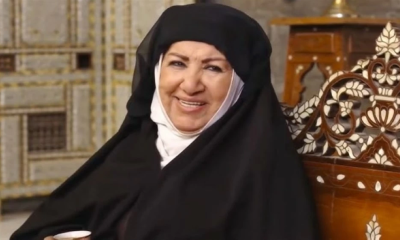
The death of artist Huda Shaarawi “Umm Zaki” and her funeral in Damascus