Politics
Non-profit funds are limited to "family" and "civil" funds
The National Center for the Development of the Non-Profit Sector has released the draft system for non-profit institutions and funds for public consultation in preparation for its approval.


The National Center for the Development of the Non-Profit Sector has released a draft regulation for non-profit institutions and funds for public consultation before its final approval. The regulation aims to organize and develop the affairs of non-profit institutions and funds, enhance their contribution to national development, strengthen citizen participation in community service and development, achieve social solidarity and its sustainability, and guarantee the independence of these institutions and funds while protecting their authority in managing their finances. The regulation stipulates how funds should be managed in the event of the suspension or cessation of an institution's activities. An institution may conduct its activities and provide its services outside the Kingdom after obtaining approval from the Center and relevant authorities, provided that the institution submits an application to the Center outlining its purpose and the details of the individuals or legal entities targeted to benefit from its activities or services. The institution's resources consist of funds allocated by the founder(s) or their relatives up to the fourth degree, including endowments, donations, bequests, or any other financial resources.
The institution may receive subsidies from the supervising authority, provided that they are allocated to activities that fall within the jurisdiction of the supervising authority. The institution may not be dissolved or merged into another institution except with the consent of the founder or founders. Regarding the types of funds, the system confirmed that it should take one of the following forms: family funds and community funds.
The fund may be dissolved voluntarily or merged with another fund after the approval of two-thirds of the Board of Trustees. Those in charge of the affairs of the fund that has been dissolved voluntarily or merged with another fund by a decision of the competent authority may not liquidate it or dispose of its funds or documents, except in accordance with what is stipulated in the regulations. Any institution or fund shall be penalized by temporarily suspending its activity for a period not exceeding 6 months or canceling its license, or by one of the two penalties, if it violates the provisions of Sharia, public order, or public morals, or commits any act that undermines national unity or causes the stirring of discord and division. It shall also be penalized if it fails to report to the concerned authorities cases of suspicion in which the proceeds of the funds, or some of them, represent criminal activity, or if the institution carries out its activities and provides its services outside the Kingdom without the approval of the Center or the relevant authorities.
Among the cases in which the institution is penalized is contracting or making agreements with countries, organizations, international institutions, or any governmental and non-governmental entities located outside the Kingdom, without the approval of the center and the competent authority.
Less serious offenses
The system identified the less serious violations and penalized each institution or fund with a written warning and temporary suspension of activity for a period not exceeding 6 months, or with one of the two penalties if the license is not renewed within 90 days of the license expiring, or if the basic regulations are violated, or if documents, reports, information, or data requested by the center are not submitted, or if there is a delay in submitting them.
Those in charge of the institution or fund whose activity has been temporarily suspended or whose license has been revoked by a decision of the center are not permitted to dispose of the institution’s or fund’s funds or documents.




Politics
The US military destroys 11 ships and 1,250 Iranian targets
The US Central Command announced that it had struck 1,250 Iranian targets and destroyed 11 ships in the Gulf of Oman, affirming its commitment to protecting freedom of navigation and ending maritime threats.
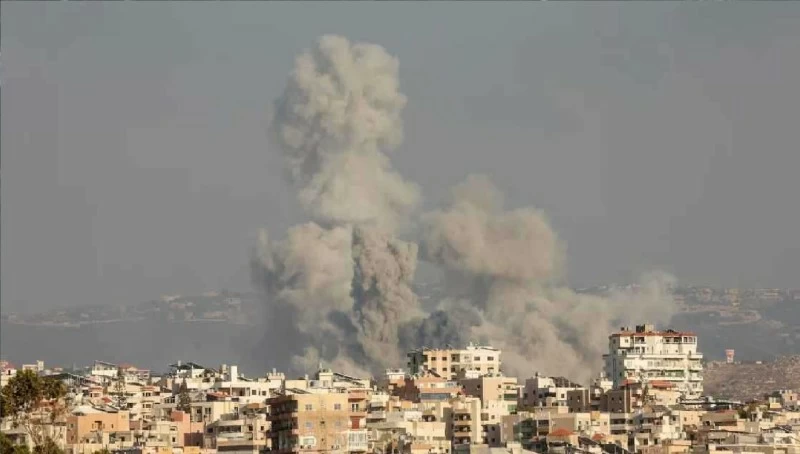
In a significant and notable military escalation, the US military announced today (Monday) that it has intensified its military operations against Iranian regime targets, as the war enters its third consecutive day. Official data revealed that more than 1,250 strategic targets inside and outside Iran have been struck since the start of operations, in a move aimed at neutralizing military capabilities that threaten regional security.
Clearing the Gulf of Oman of Iranian ships
In detailing the naval operation, the US Central Command (CENTCOM) confirmed in an official statement that it had achieved a significant success by completely destroying Iranian naval capabilities in the Gulf of Oman. The statement clarified that the Iranian regime no longer possesses any vessels in these vital waters, after 11 ships that were present there were targeted and destroyed just two days prior. This decisive action comes within the framework of Washington's strategy to secure international waterways and ensure the safety of commercial shipping.
End of the era of maritime threats
In its statement, Central Command emphasized that “the Iranian regime has been attacking international shipping in the Gulf of Oman for decades, and those days are over.” These remarks clearly signal a shift in the rules of engagement, moving from a policy of containment to one of direct deterrence and a decisive end to threats, reflecting growing American impatience with destabilizing activities in the waterways.
Strategic importance and freedom of navigation
In discussing the historical and economic context, the US military noted that freedom of navigation has been a cornerstone of American and global economic prosperity for over 80 years. The Gulf of Oman is a vital waterway connecting the Arabian Sea to the Strait of Hormuz, through which a significant portion of the world's oil supply passes. The United States has long considered the protection of these waterways an integral part of its national security and global economic security, as any disruption in this region has direct repercussions for global energy markets.
Reaffirming the American commitment
The US military concluded its statement by affirming that American forces will continue to defend freedom of navigation resolutely and will not allow any future threats to impede international trade. This military move carries multiple messages, not only to Tehran but to the entire international community, indicating that Washington is prepared to use its overwhelming military force to protect global economic interests and impose stability in the Middle East.
Politics
Zelenskyy offers Ukraine's experience in shooting down drones to allies
Ukrainian President Zelenskyy announces his country's readiness to share tactics for shooting down Iranian Shahed drones with allies, and calls on Europe to increase production of air defense systems.

Ukrainian President Volodymyr Zelensky announced today (Monday) that his country is fully prepared to transfer its combat experience gained on the battlefield, specifically in confronting Iranian Shahed drones, to its allies and international partners who may face similar threats.
In an official post on the X platform (formerly Twitter), Zelenskyy affirmed that Ukraine's experience in air defense has become an indispensable pillar in the current global security landscape. He stated, "Everyone now sees that Ukraine's experience in defense is indispensable in many respects," and called for deepening military and technical cooperation with Western partners.
Tactics for confronting "Witness"... Unique field experience
The Ukrainian president's remarks come at a time when Ukrainian forces have gained extensive experience in dealing with intense air attacks. Since the start of the Russian invasion, Moscow has increasingly relied on Iranian-made Shahed-131 and Shahed-136 drones, low-cost suicide aircraft used to overwhelm air defenses and target energy infrastructure.
Kyiv has developed cost-effective strategies to counter this threat, creating “mobile fire groups” that use machine guns and anti-aircraft guns (such as the German Gepard) to shoot down these drones instead of draining expensive Western air defense missiles such as the Patriot or Iris-T – expertise that Zelensky is seeking to share to promote collective security.
Strengthening common European security
Zelensky added, "We are ready to share this experience and assist the countries that supported Ukraine this winter and throughout the war. We are ready to work on developing Europe's common defense capabilities." This statement indicates Kyiv's desire to be an active participant in the European security system, not merely a recipient of aid, especially given the growing concerns in Europe about escalating geopolitical tensions.
Call to increase defense production
In a related context, the Ukrainian president did not merely offer his expertise, but also issued a clear and urgent appeal to Western countries to significantly increase their production of air defense systems and interceptor aircraft. He explained that Europe desperately needs to build a "real force" capable of protecting its airspace, emphasizing that current stockpiles and production capacities must be doubled to meet current challenges and ensure the sustainability of support for Ukraine and the protection of NATO's eastern borders.
Politics
Qatar shoots down two Sukhoi Su-24 fighter jets and intercepts ballistic missiles and drones
The Qatari Air Force shot down two Iranian Sukhoi Su-24 fighter jets and intercepted seven ballistic missiles and five drones. The Ministry of Defense confirmed its readiness and issued directives for remote operations.
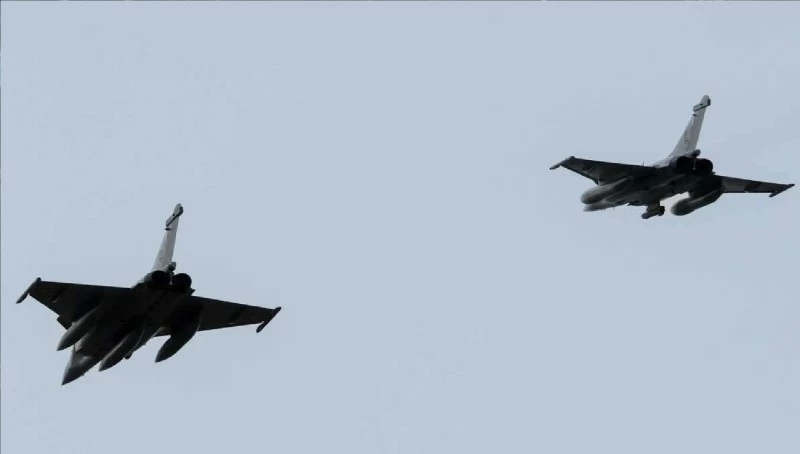
In a remarkable field development, the Qatari Emiri Air Force announced today (Monday) that it had successfully shot down two Sukhoi 24 fighter jets coming from Iranian airspace, as part of intensive defensive operations that included intercepting seven ballistic missiles using advanced air defense systems.
The Qatari Ministry of Defense issued an official statement detailing the operation, noting that defense systems, in joint coordination between the Qatari Emiri Air Force and the Qatari Emiri Navy, also intercepted five drones targeting several vital areas within the country. The Ministry confirmed that these aerial threats were dealt with according to a precise and pre-planned operational strategy, resulting in the downing of all hostile missiles and drones before they reached their targets, without any damage.
Defense capabilities and military readiness
This military achievement reflects the significant development of the Qatari Armed Forces in recent years. As part of its defense strategy, Qatar has modernized its military arsenal with the latest fighter jets and global air defense systems. The ability to simultaneously engage fighter jets, ballistic missiles, and drones demonstrates the effectiveness of the country's command, control, and early warning network in protecting its airspace and territorial waters.
Context of tensions and their regional impact
This incident carries significant strategic implications given the sensitive geographical location of the Arabian Gulf region, a vital artery for global energy supplies. Such incidents typically raise concerns about regional stability, as international attention focuses on the importance of maintaining maritime and airspace security in this crucial area. Qatar's firm response sends a clear message about the country's readiness to defend its sovereignty against any airspace violations, regardless of their origin.
Internal precautionary measures
In a related development concerning the security situation, and as a precautionary measure to ensure the safety of citizens and residents, Qatari authorities have directed the extension of remote work for all employees in all ministries and government agencies. This step is a standard procedure in security situations to reduce traffic on the streets and facilitate the movement of military vehicles and emergency teams if needed.
The Ministry of Defense concluded its statement by affirming that the Qatari Armed Forces possess all the necessary capabilities and resources to protect and preserve the sovereignty of the state and its territories, and that they will not hesitate to firmly and forcefully confront any external threat that affects the security and stability of the homeland.
-

 Local news two days ago
Jeddah Airport alerts for travelers due to airspace closure and flight disruptions
-
Local News 5 days ago
Saudi Arabia approves regulations for the continued presence of Gulf vehicles: duration and penalties
-
Local news one week ago
The Ministry of Interior begins procedures for a royal pardon for common law prisoners
-
Local News 7 days ago
The deadline for property registration in Hail and Riyadh is Thursday
-
Sports one week ago
Tickets for the Al-Ahli vs. Al-Hilal King's Cup match postponed: New date
-
Local News 7 days ago
Under the patronage of the Minister of Information, an agreement was signed between the Ministry of Information and Waves Marketing Company
-
Culture and Art 5 days ago
The Devil's Prisons series was halted: The full story of "The Emperor's" being moved to YouTube
-
Local news one week ago
Saleh Al-Maghamsi appointed Imam of the Prophet's Mosque: Details of the Royal Decree