Politics
Mount Khandama... a historical landmark and a destination for visitors to view the Grand Mosque from towering heights
Mount Khandama boasts a distinctive view of the city of Mecca, thanks to its strategic location near the Grand Mosque and surrounding areas

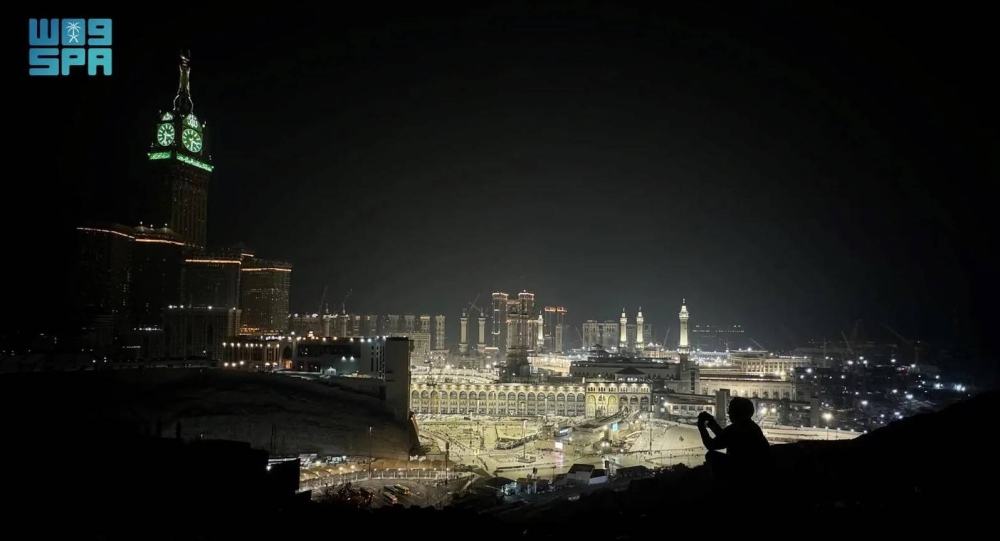
Mount Khandama is distinguished by its unique view of the city of Mecca, thanks to its strategic location near the Grand Mosque and the surrounding areas. The rainy weather in Mecca during the past few days, which brought a kind of moderate atmosphere, led to visitors and families going out to enjoy themselves and have fun.
The Saudi Press Agency (SPA) captured several scenes of Mecca's neighborhoods from the top of Mount Khandama, which offers a unique blend of historical views of the city's old quarters and buildings with modern urban developments reflecting its progress. Located in the eastern part of Mecca, Mount Khandama runs alongside the area surrounding the Grand Mosque. It stretches lengthwise, beginning in the Al-Misfalah neighborhood in the north and ending in the Jarwal area in the south. To the east, it is bordered by the Second Ring Road, a major thoroughfare in Mecca, while to the west, it connects with important areas such as Al-Misfalah, one of Mecca's oldest neighborhoods.




Politics
Trump to Iran: It's too late to negotiate after your military capabilities have been destroyed
Donald Trump refuses to negotiate with Iran, vowing to destroy its air and naval defenses, amid a large-scale US-Israeli military escalation and fears of open war.
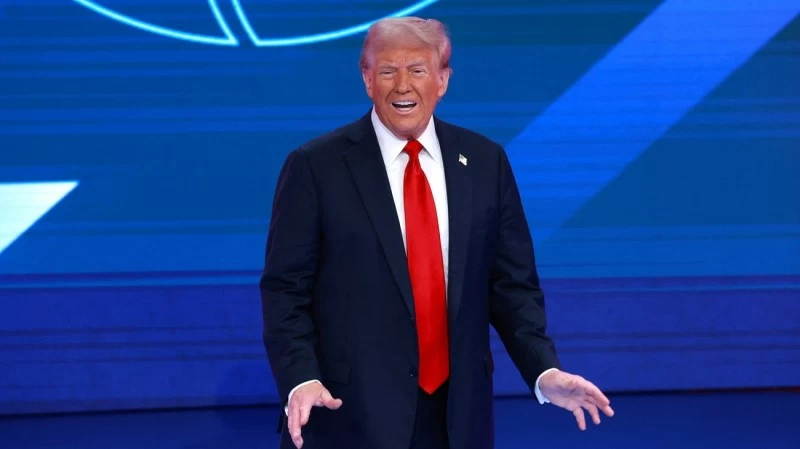
In an unprecedented escalation of the military and political situation, US President Donald Trump announced his categorical rejection of any attempts at negotiation from the Iranian side at the present time, stressing that these calls came too late after Tehran lost the pillars of its strategic military power.
In a fiery statement posted on his social media platform Truth Social, Trump asserted that the Iranian regime is now attempting to salvage its lifeline through diplomacy, but that it is too late. He wrote bluntly: "The Iranians have lost their air defenses, their air force, their navy, and their leaders... and then they wanted to negotiate. I said: It's too late." These remarks come as the United States, in close coordination with Israel, continues its intensive military operations, which appear to have achieved broad strategic objectives.
Context of the conflict and historical background
This dramatic development cannot be separated from a long history of tension between Washington and Tehran. Relations between the two countries have long been governed by the “maximum pressure” policy previously pursued by Trump, which focused on crippling the Iranian economy and isolating it diplomatically. Analysts suggest that the current strikes are the culmination of a long history of disputes over regional influence, the ballistic missile program, and the thorny issue of the nuclear program.
President Trump, who authorized the airstrikes in direct coordination with Israel on Saturday, had initially estimated the operations would last four to five weeks. However, developments on the ground and the administration's efforts to justify a full-scale war have shifted the focus toward an open-ended confrontation aimed at completely neutralizing the Iranian threat.
Military and nuclear dimensions
In justifying the massive attack, Trump focused on Iran's relentless pursuit of nuclear weapons, an accusation Tehran has consistently denied, maintaining that its program is peaceful. Nevertheless, Washington and Tel Aviv consider Iran's acquisition of a nuclear bomb a red line that cannot be crossed, which explains the ferocity of the attacks targeting military infrastructure.
Trump's talk of destroying Iran's navy and air defenses carries serious strategic implications. Iran relies heavily on its naval power in the Strait of Hormuz to threaten to close global oil shipping lanes, and on its air defenses to protect its nuclear facilities. According to Trump's statements, neutralizing these capabilities would deprive Iran of its most important bargaining chips, making its calls for negotiations now appear as an attempt at surrender rather than an attempt at equal dialogue.
Expected regional repercussions
This escalation is expected to cast a long shadow over the entire Middle East. The absence of Iranian defensive capabilities could fundamentally alter the balance of power in the region and reshape security and political alliances. Furthermore, a protracted war could lead to instability in global energy markets, presenting the international community with complex economic and security challenges in the coming period.
Politics
British warning to Iran: We will not remain silent about the targeting of our allies in the region
Britain sent a firm message to Iran through spokeswoman Jocelyn Waller, stressing that it would not remain silent in the face of attacks on allies and praising efforts to protect civilians amid escalating regional tensions.

In a significant development reflecting the depth of geopolitical tensions in the Middle East, the United Kingdom sent a strongly worded message to Tehran, reaffirming its unwavering commitment to the security and stability of its allies in the region. This firm stance was delivered by the British government spokesperson for the Middle East and North Africa, Jocelyn Wallard, who emphasized that London would not remain silent in the face of any actions that jeopardize the security of its partners.
Details of the British warning
In a video posted to her official X account (formerly Twitter), Waller explained that Iran had launched a series of attacks over the past three days in various parts of the region, targeting countries that had not initiated any hostile action against it. The British official indicated that this behavior represents an unjustified escalation that threatens regional peace, emphasizing that "we will not stand idly by" in the face of these transgressions.
Regional context and the importance of alliances
This statement comes at a time of regional instability, as major international powers, particularly the United Kingdom, seek to reaffirm their commitment to security and defense agreements with Gulf and Middle Eastern states. Historically, Britain has deep strategic ties with countries in the region, extending beyond economics to include close military and security cooperation. This British stance is interpreted as part of a Western deterrence strategy aimed at preventing the escalation of conflict and ensuring freedom of navigation and global energy security.
Protection of civilians and international responsibility
In her remarks, Waller highlighted the humanitarian and social dimensions of the targeted countries, describing them as homelands that welcome citizens of diverse nationalities and backgrounds, including a large British community living and working there. She expressed the UK government's deep gratitude to the local authorities and military forces in those countries, commending their effective and vigilant efforts to protect civilians from air and missile threats.
Implications of timing and the future
The timing of this message carries significant political implications, underscoring that the international community is closely monitoring Iranian actions. Observers believe that London's use of firm diplomatic language suggests a potential increase in security and intelligence coordination between Britain and its allies in the coming period to neutralize any future threats and maintain stability in this vital region for the entire world.
Politics
The Revolutionary Guard claims to have targeted a US aircraft carrier and Mossad operations
The Revolutionary Guard announces targeting the aircraft carrier Abraham Lincoln with cruise missiles, and sources reveal Mossad ground operations inside Iran targeting defense industries.

In a remarkable development amid escalating tensions in the Middle East, and coinciding with the continuation of joint US-Israeli strikes, the Iranian Revolutionary Guard announced new details regarding the naval confrontation, claiming that the US aircraft carrier “Abraham Lincoln” was forced to flee its strategic location after being targeted by cruise missiles.
Details of the Iranian novel
Revolutionary Guard spokesman Brigadier General Ali Mohammad Naeini provided details of the alleged operation on Tuesday, stating that the largest US naval vessel had departed its position and was heading towards the southeastern Indian Ocean. According to the official IRNA news agency, Naeini explained that "the aircraft carrier was stationed approximately 250 to 300 kilometers from the Iranian coast, near the Chabahar port in the southeast of the country.".
The Iranian military official added that “after four cruise missiles were launched towards it, the carrier had no option but to flee and move away from the range of the direct threat,” in a reference to Tehran’s attempt to impose new deterrence equations in the regional and international waters adjacent to its borders.
Mossad operations and targeting of defense industries
On the other side of the conflict, and in connection with the complex military operations, Israeli sources revealed another dimension to the confrontation that goes beyond conventional airstrikes. Reports indicate that members of the Israeli intelligence agency (Mossad) and special forces operated on the ground deep inside Iran. This information coincides with Iranian sources announcing that a defense industries headquarters was targeted by precision airstrikes.
Military experts point out that the successful targeting of sensitive facilities such as defense industry headquarters often requires accurate intelligence from the field, which reinforces the hypothesis of Israeli intelligence and operational activity on the ground to direct strikes or carry out sabotage operations that precede the air bombardment.
The context of the conflict and its regional repercussions
These developments come amid a years-long "shadow war" between Tehran and Tel Aviv, which has recently erupted into the open in an unprecedented manner. Talk of targeting a US aircraft carrier, whether accurate or part of a psychological warfare campaign, represents a dangerous escalation in military rhetoric, as aircraft carriers are symbols of US mobile military power.
Observers of international affairs believe that the region is witnessing a reshaping of the rules of engagement. On one hand, the United States and Israel are seeking to undermine Iranian military capabilities, specifically in the field of military and missile manufacturing. On the other hand, Iran is trying to prove its ability to threaten American interests in the Indian Ocean and the Arabian Sea, which poses serious challenges to the security of international navigation and energy supplies that may affect regional and international stability.
-

 Local News 3 days ago
Jeddah Airport alerts for travelers due to airspace closure and flight disruptions
-
Local News 5 days ago
Saudi Arabia approves regulations for the continued presence of Gulf vehicles: duration and penalties
-
Local news one week ago
The Ministry of Interior begins procedures for a royal pardon for common law prisoners
-
Local news one week ago
The deadline for property registration in Hail and Riyadh is Thursday
-
Sports one week ago
Tickets for the Al-Ahli vs. Al-Hilal King's Cup match postponed: New date
-
Local news one week ago
Under the patronage of the Minister of Information, an agreement was signed between the Ministry of Information and Waves Marketing Company
-
Culture and Art 6 days ago
The Devil's Prisons series was halted: The full story of "The Emperor's" being moved to YouTube
-
Local News 5 days ago
Saudi Energy: A new identity for electricity that aligns with Vision 2030