Politics
Mikati: There are no contacts with Hezbollah and I did not make the decision to open fire to stop it
Lebanon's caretaker Prime Minister Najib Mikati announced today (Sunday) that the Lebanese army is ready to reinforce its position in the south of the country

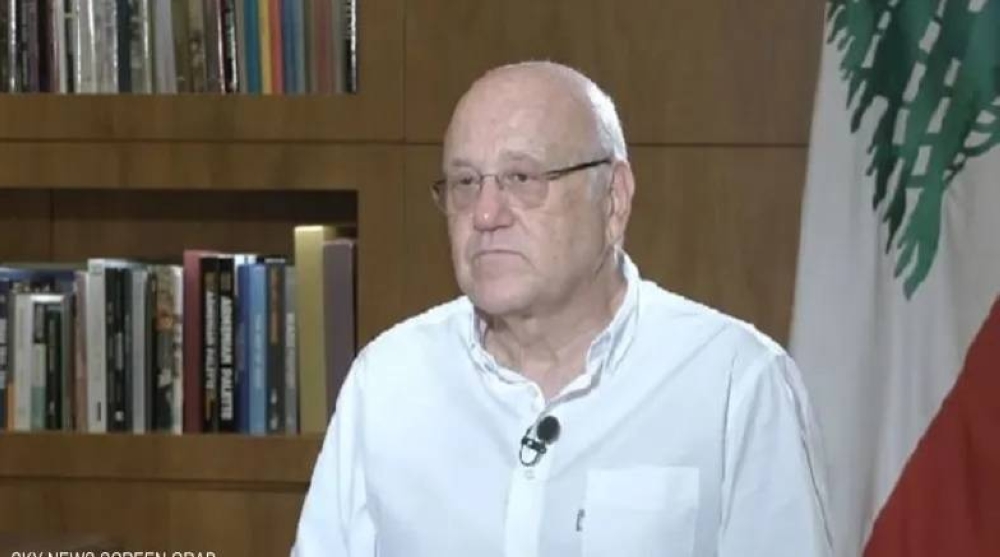
Lebanon’s caretaker Prime Minister Najib Mikati announced today (Sunday) that the Lebanese army is ready to reinforce its position in the south of the country, provided that the necessary equipment is available, stressing the need to fully implement Resolution 1701.
Mikati said in an interview with Sky News Arabia: “I did not make the decision to open fire until I made the decision to stop it, but if a ceasefire is reached, we will fully abide by it from the Lebanese side, and I pledge to implement Resolution 1701,” adding: “The moment the Israelis reach a ceasefire, not a single shot will be fired from the Lebanese side.”.
He explained that the Lebanese army is ready to reinforce its position in the south in terms of numbers immediately, but in terms of equipment, everyone knows that it does not have the equipment that should be there, provided that there are no weapons in the area.
He continued, saying: “When that (equipment) is provided, the army will be able to reach a ceasefire and fully implement Resolution 1701 between the Lebanese and Israeli sides, and this is what we are committed to,” revealing that conferences will be held within two weeks to support the Lebanese army and secure what it needs in terms of equipment to carry out the required missions.
He pointed out that implementing Resolution 1701 would strengthen the presence of the Lebanese army and enable it to carry out its duties with the assistance of the peacekeeping forces in the south (UNIFIL), so that the region remains safe and secure in the south, indicating that Lebanon will not pay the price alone if things remain as they are.
Mikati denied any contact between him and Hezbollah, saying: “I have no contact with Hezbollah, and my contact is with Nabih Berri, the Speaker of the Lebanese Parliament.” He asked: “In this situation, amidst the destruction and the killing of civilians, where are the paramedics, where is international legitimacy, and where is the humanity that exists in the world?”.
Mikati said: “I am concerned with a ceasefire, the implementation of Resolution 1701, and the return of displaced people from the south to their homes,” adding: “It is time for the people of the south to return to their homes in an acceptable manner without coercion, and there will be major breakthroughs with the arrival of the necessary aid and the development of a plan for its distribution.”.
He stressed that in all his communications he always emphasizes the humanitarian issue and permanent stability in the south, acknowledging the existence of criticisms regarding the handling of the displaced persons crisis and expressing his apologies to them.
Mikati asked: “Can the Palestinian issue be resolved with more oppression and non-recognition of rights? If Hezbollah and Hamas were dissolved, would we resolve the Palestinian issue?” He stressed that if we do not look to resolve the Palestinian issue in a just way and if the Palestinian people do not have the right to self-determination, I believe that any violence will breed violence and any oppression and persecution will breed more hatred among peoples, and therefore this is not the solution.
At the same time, the spokesman for the Israeli occupation army issued a new warning today to evacuate about 25 areas in southern Lebanon and called on their residents to head immediately to the north of the Awali River.




Politics
Iraq denies firing from Kuwait and affirms border stability
The Iraqi Ministry of Interior officially denies reports of gunfire from the Kuwaiti side on the Basra border, confirms the stability of the security situation, and warns those spreading rumors of legal accountability.
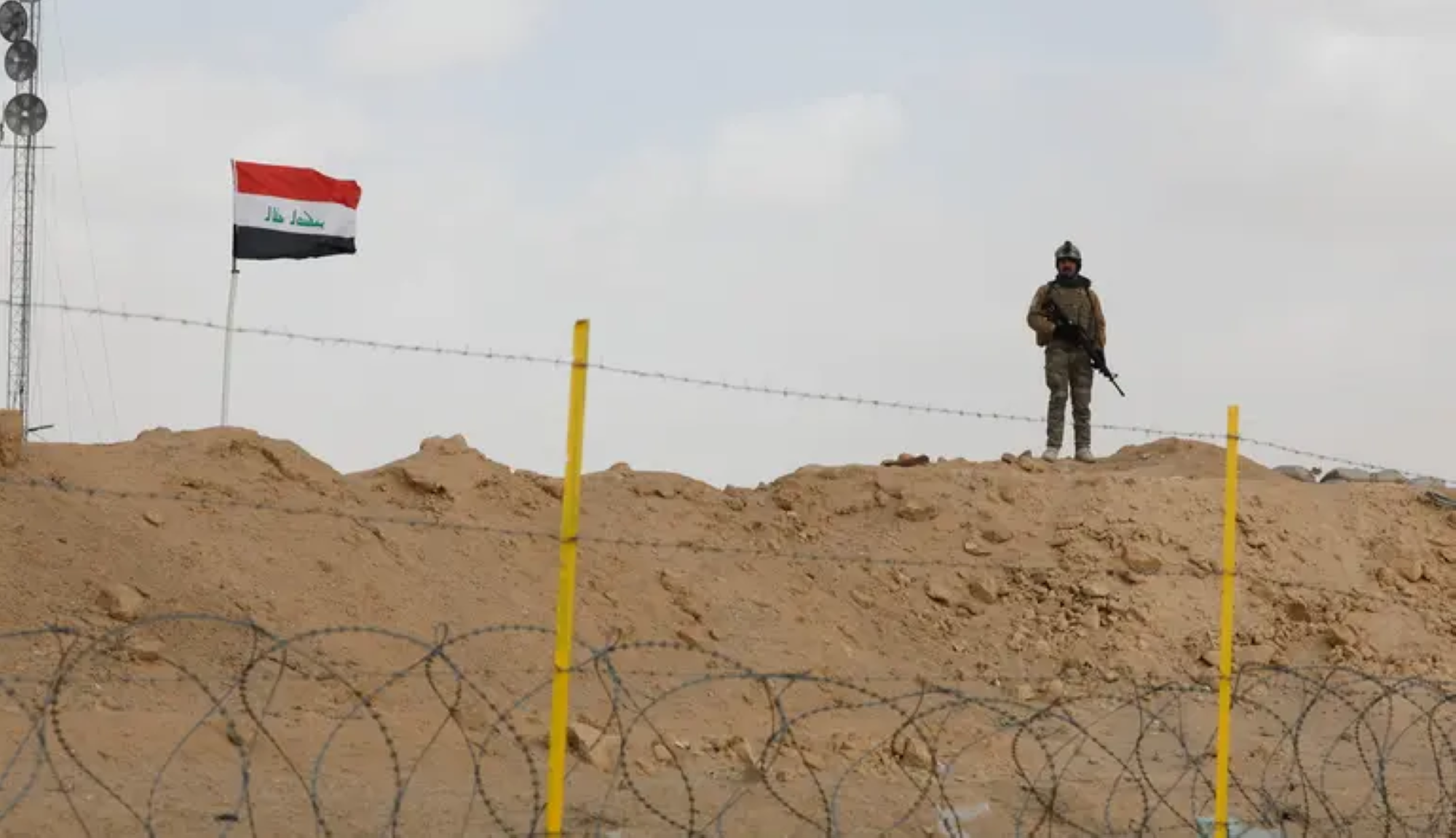
The Iraqi Ministry of Interior, in an official statement issued this evening (Friday), categorically denied the validity of the news circulated by some social media platforms and media outlets, which claimed that gunfire had occurred from the Kuwaiti side towards one of the border points belonging to Basra Governorate in southern Iraq.
The ministry explained in its statement that this information is completely false, stressing that no security breach or incident of this kind has been recorded in the area of responsibility, and that the movement and security situation along the border strip between the two countries is proceeding in a very normal and stable manner, amid mutual security coordination to control the borders and prevent any violations.
The importance of stability on the Iraqi-Kuwaiti border
The Iraqi-Kuwaiti border holds immense strategic and security importance for both countries. Relations between Baghdad and Kuwait have witnessed remarkable development and a qualitative leap in recent years, overcoming the tensions of the 1990s. The stability of the border regions, particularly in Basra Governorate, Iraq's economic heartland, is a cornerstone of national security for both sides, in addition to serving as a vital corridor for trade and passenger traffic through official border crossings such as the Safwan-Abdali crossing.
Security cooperation and combating rumors
In a related context, the Ministry of Interior called on all media outlets and bloggers to exercise accuracy and credibility, and to rely solely on official and authorized sources when disseminating sensitive security information. The Ministry warned against being swayed by malicious rumors intended to sow confusion and anxiety among citizens, or those that attempt to disrupt the growing fraternal relations and established diplomatic ties between the peoples and leaderships of Iraq and Kuwait.
The ministry also stressed that it will not tolerate any violation of the law, affirming its full legal right to pursue and hold accountable those who spread false news that affects civil peace, security and stability, and to take all necessary legal measures against them to ensure that such claims that harm the country’s higher interests are not repeated.
This swift and decisive denial comes to block any attempts to escalate the situation in the media, and to confirm the strength of the ongoing security coordination between the border guard forces in both countries to prevent any illegal activities, thus ensuring the continuation of calm and stability in this sensitive regional area.
Politics
Washington seizes 1.8 million barrels of oil from a Venezuelan tanker
Details of the US seizure of the oil tanker Skipper and 1.8 million barrels of Venezuelan crude, as part of a strategy of sanctions and pressure on the Maduro regime.
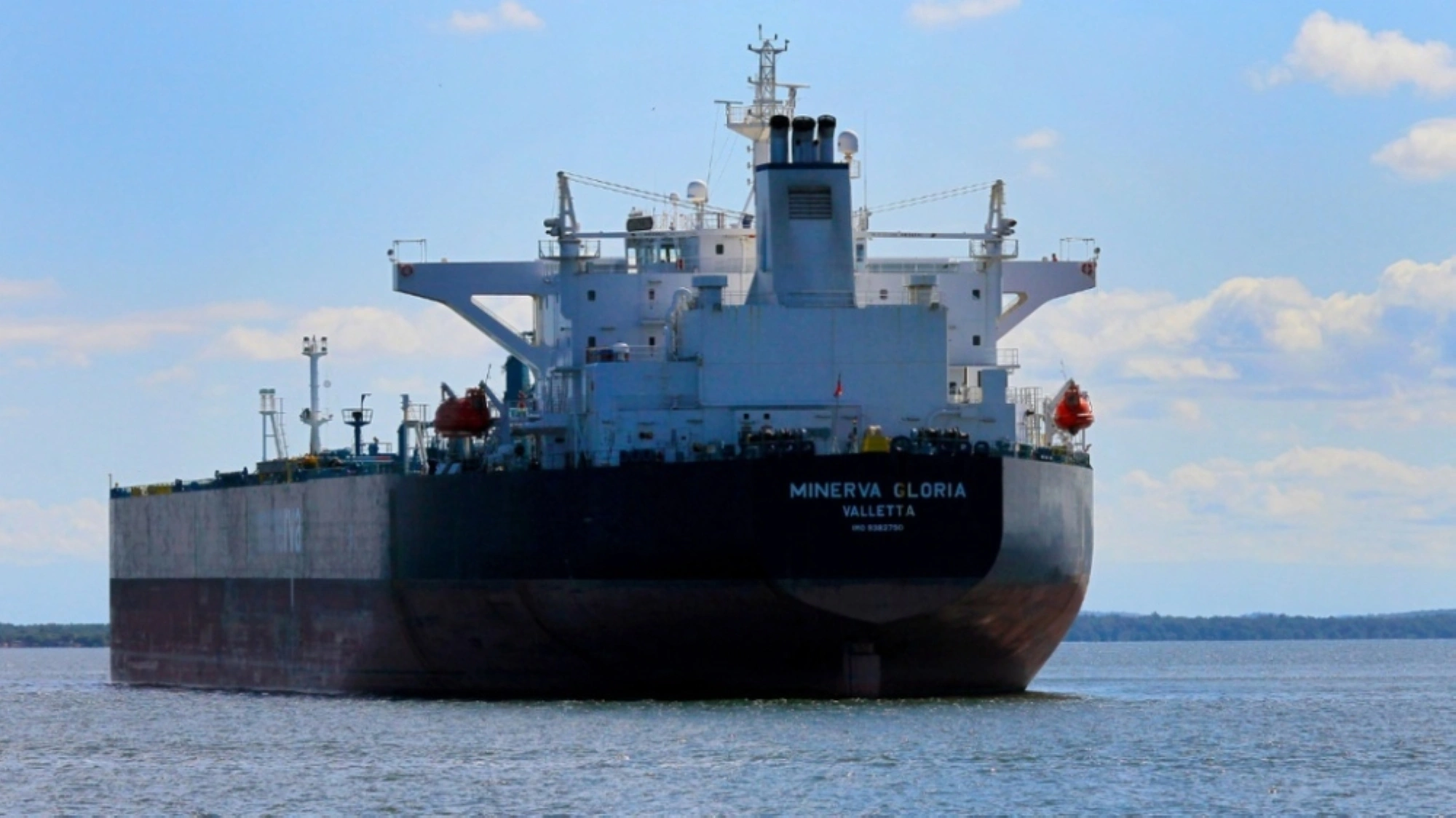
In a new escalation of international sanctions, the US Department of Justice announced its formal action to seize the supertanker "Motor Tanker Skipper," along with a massive cargo of approximately 1.8 million barrels of crude oil. This operation is part of ongoing efforts to tighten the noose on illicit financing networks linked to Venezuela's state-owned oil company, Petróleos de Venezuela (PDVSA).
Maritime evasion and camouflage techniques
US investigations revealed that the tanker "Skipper" was not operating normally, but rather engaged in a series of complex operations to evade sanctions. According to the Department of Justice, the tanker transported massive quantities of crude oil from both Iran and Venezuela, using sophisticated techniques to conceal its identity and route. These methods included falsifying its AIS (Automatic Identification System) data and illegally flying the flags of various countries to disguise its true destinations, a blatant violation of international maritime law and the US sanctions regime.
The temporal and political context of the operation
This seizure is particularly significant given its timing and the surrounding political context. The tanker was detained off the Venezuelan coast last December, a move that paved the way for subsequent dramatic developments. These actions are part of Washington's maximum pressure strategy against ousted President Nicolás Maduro, which culminated in the US military operation and his capture in early January 2016, according to the timeline of events.
The post-Maduro era: Cooperation with the interim administration
With the radical political changes in Caracas, officials in the Trump administration are currently pushing for a new chapter with the interim government in Venezuela. These moves aim to allow American companies to resume operations and access Venezuela's vast oil reserves, provided that comprehensive structural reforms are initiated. Through this approach, Washington is asserting that the era of covert funding for regimes it considers a threat to US national security is over, and that the current focus is on rebuilding economic relations on terms that guarantee transparency and compliance with international law.
Economic and strategic dimensions
The seizure of 1.8 million barrels is a significant blow to smuggling networks, as this quantity represents a substantial financial value that would have been used to support regimes under severe sanctions. Through this operation, the United States sends a clear message to all players in the maritime energy transport market that attempts to circumvent sanctions by changing flags or manipulating navigation data will not go unpunished, and that the long arm of the American justice system is capable of accessing and seizing these assets.
Politics
Britain temporarily withdraws its staff from Iran following Trump's threats
Britain is temporarily withdrawing its staff from Iran and suspending consular services due to the deteriorating security situation, amid Trump's statements about nuclear weapons and the possibility of military escalation.
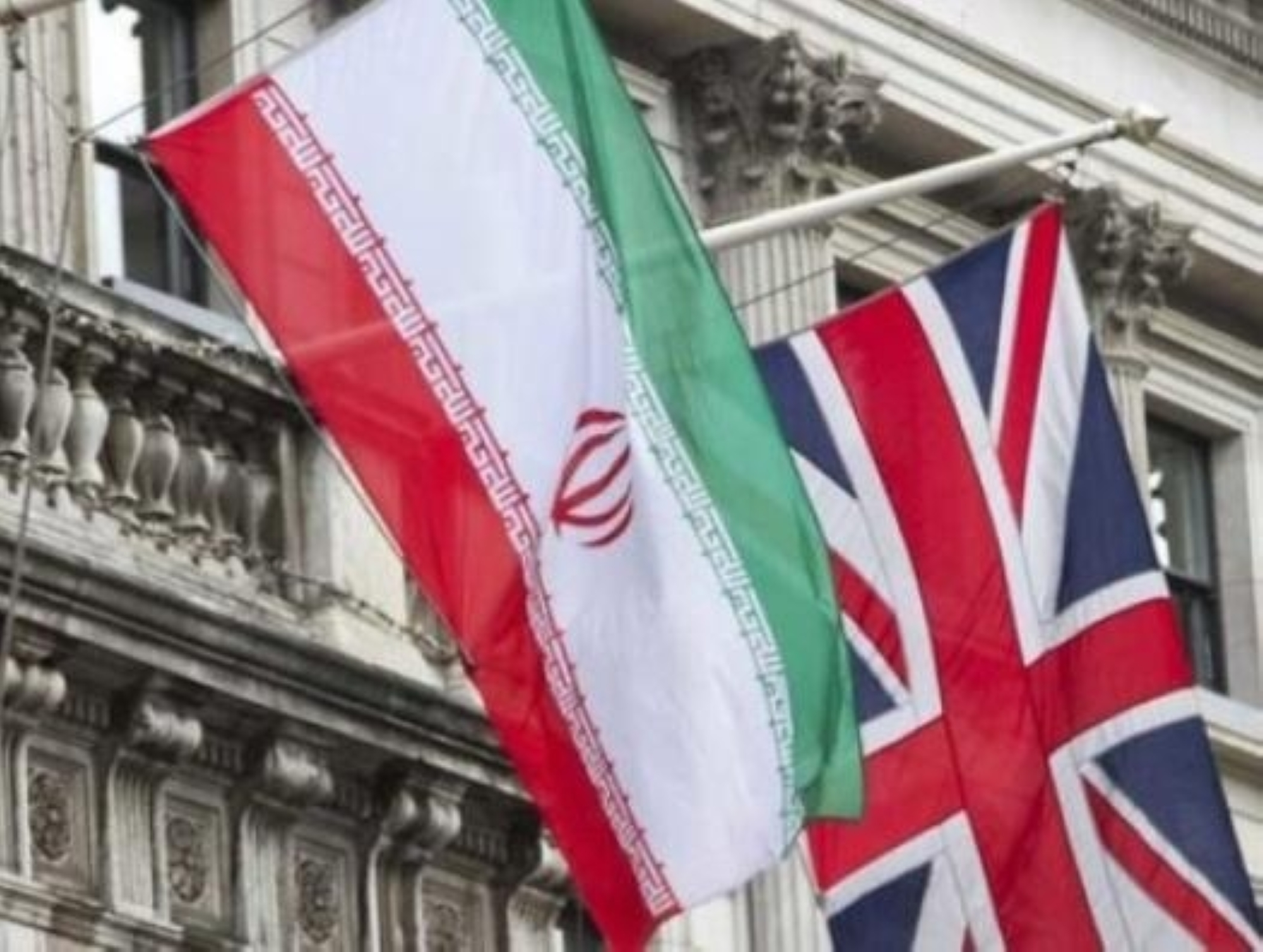
The British government announced today (Friday) the temporary withdrawal of its staff from Iran, a move reflecting deep international concern over the deteriorating security situation in the Middle East. London confirmed that this decision is part of a series of stringent precautionary measures primarily aimed at ensuring the safety and security of its diplomatic mission personnel in Tehran, given the volatile regional environment.
Suspension of consular services and remote work
In detailing the new measures, the British Foreign Office clarified that the embassy in Tehran will not close permanently but will continue to operate remotely. However, the Foreign Office explicitly advised its citizens that it is not currently providing any direct consular services, even in what might be considered emergencies. The Foreign Office also noted that its ability to assist British nationals in Iran has become extremely limited, urging them to exercise the utmost caution.
Trump and the nuclear issue: an escalation in rhetoric
The British decision comes amid escalating geopolitical tensions, particularly following fiery remarks by US President Donald Trump. During his State of the Union address on Tuesday, Trump briefly outlined the justifications for a potential US attack on Iran. While he reiterated his preference for a diplomatic solution to the crisis, the language of threats was strongly present.
In his speech, the US president emphasized a red line that cannot be crossed, asserting that he will not allow Tehran to acquire a nuclear weapon under any circumstances. These statements reflect the continuation of the maximum pressure policy, both political and military, that Washington and its allies are exerting on Iran, amid growing international concerns that any miscalculation could lead to a wider conflict in the region.
Background of the tension and its potential effects
To understand the implications of the British move, it is essential to consider the historical context of diplomatic relations between the West and Iran, which have long been characterized by extreme sensitivity. Western countries often resort to reducing their diplomatic missions when intelligence reports indicate a heightened threat level, whether due to internal unrest or fears of retaliatory attacks targeting diplomatic premises, as has occurred in the past.
The withdrawal of staff carries political implications that extend beyond the administrative measure; it signals a diminishing chance of immediate de-escalation and reduces direct communication channels that play a vital role in defusing crises before they escalate. This decision also casts a shadow over the regional landscape, potentially prompting other countries to take similar steps, thus increasing Tehran's diplomatic isolation and placing the region's maritime and energy security under close international scrutiny.
-

 Culture and Art, 1 week ago
The ban on the Hamdiya series in Iraq: Reasons and official response
-
Local News 5 days ago
The Ministry of Interior begins procedures for a royal pardon for common law prisoners
-
Culture and Art, 1 week ago
The series "Taht El Ard" (Underground) has been postponed and will not air during Ramadan 2026
-
Reports one week ago
King Salman Relief Center's Ramadan aid includes 9 countries
-
Local news two days ago
Saudi Arabia approves regulations for the continued presence of Gulf vehicles: duration and penalties
-
Local news one week ago
19 requirements to reduce dust from projects in Riyadh and fines for violators
-
Culture and Art, 1 week ago
Details of the first episode of the series "Al-Maddah 6: The Legend of the End"
-
Sports one week ago
Dates for the Al-Nassr vs. Al-Wasl match in the 2026 AFC Champions League quarter-finals