Politics
The ceasefire between Lebanon and Israel has failed: statements by the US envoy
The failure of the Lebanon-Israel truce is raising international concern, and the US envoy is seeking to restore stability amid increasing political and security complications.

The United States is seeking to restore stability to Lebanon amid a faltering ceasefire agreement
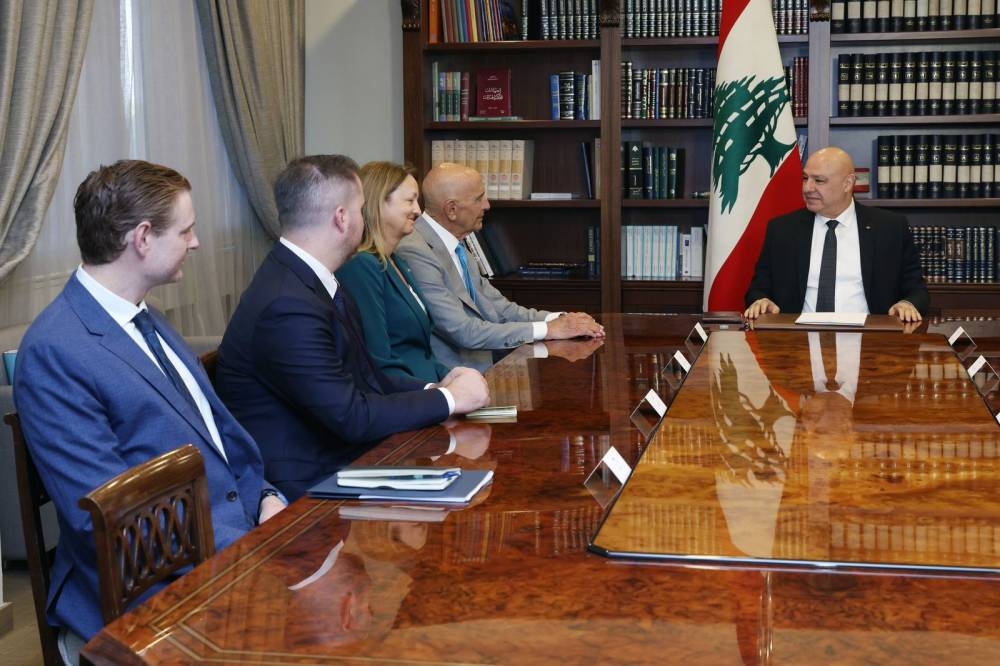
In a move aimed at addressing ongoing tensions between Lebanon and Israel, US Special Envoy Tom Barrack acknowledged the failure of the cessation of hostilities agreement between the two countries. Barrack affirmed that the United States is working to address the reasons for this failure, noting that Washington has no guarantees and cannot compel Israel to take specific steps.
The United States' position on Hezbollah
During his meeting with Lebanese Prime Minister Nawaf Salam at the Government Palace, Barak reiterated that the issue of disarming Hezbollah is an internal Lebanese matter. He clarified that Washington designates Hezbollah as a terrorist organization and does not engage in any direct dialogue with it, reflecting a consistent American stance toward the party and its influence in the region.
Supporting stability and peace in the region
The US envoy indicated that his country is discussing with the Lebanese government how to provide the necessary guidance and support to restore stability and peace in the region. He stated that current efforts are focused on restoring stability rather than escalating tensions. Barak's visit to Lebanon comes at the direct behest of US President Donald Trump, who considers the Lebanese issue a high priority within his vision for achieving comprehensive regional stability.
Lebanese reforms and restoring international confidence
Regarding internal Lebanese affairs, Barak praised the reforms undertaken by the Lebanese government, describing them as an important and essential step towards restoring international confidence. These reforms could be key to improving international relations and bolstering external support for Lebanon in light of the difficult economic and political circumstances it is facing.
Official meetings and Lebanese observations
The US envoy arrived in Beirut late Sunday and began his third official visit with a meeting with President Joseph Aoun on Monday morning. During the meeting, Lebanese observations on the US response were presented, indicating the continuation of dialogue and communication between the two countries despite the existing challenges.
In a related context, Saudi Arabia remains committed to regional stability and seeks to promote peace and security in the Middle East through support for diplomatic efforts and constructive political solutions. Given its pivotal and moderating role in the region, Riyadh remains a vital strategic partner for the United States and many other countries striving for regional security and stability.




Politics
Saudi forces participate in the Arabian Gulf Security 4 exercise in Qatar
Saudi security forces are participating in the 'Arabian Gulf Security 4' exercise hosted by Qatar, with the aim of strengthening security cooperation and integration among the Gulf Cooperation Council countries to confront common challenges.
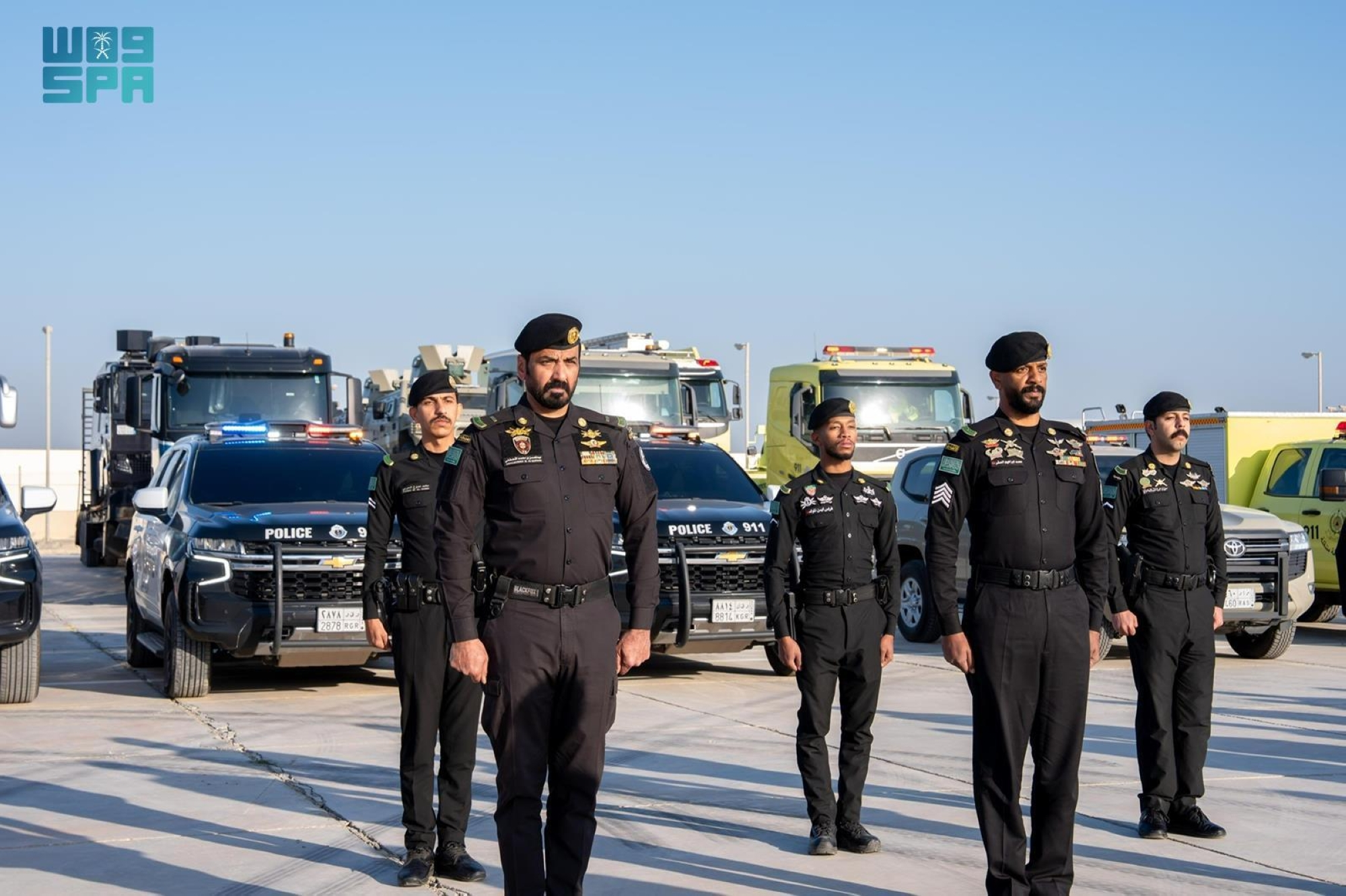
Saudi security forces are actively participating in the fourth joint Gulf tactical exercise for security agencies of the Gulf Cooperation Council (GCC) countries, entitled "Arabian Gulf Security 4," hosted by the sisterly State of Qatar. This significant participation, which includes specialized forces from the Ministry of Interior and the Presidency of State Security, reflects the Kingdom's firm commitment to strengthening the joint Gulf security framework and deepening cooperation and integration with the GCC member states.
Background and context of the exercise
Exercise 'Arabian Gulf Security 4' is a continuation of a series of successful periodic exercises aimed at implementing the decisions of the Interior Ministers of the Gulf Cooperation Council (GCC) states and applying the provisions of the Joint Security Agreement. The first iteration of this exercise was launched in the Kingdom of Bahrain in 2016, followed by the second in the United Arab Emirates in 2019, and then the third hosted by the Kingdom of Saudi Arabia in the Eastern Province in 2022. This continuity reflects a unified strategic vision and a deep understanding of the importance of collective action to confront evolving security threats.
Strategic importance and expected impact
These exercises are of paramount strategic importance given the geopolitical challenges facing the region. Regionally, the exercise aims to enhance the readiness and field coordination of Gulf security forces, and to standardize operational concepts and procedures for addressing complex security scenarios, such as counterterrorism, transnational organized crime, cybersecurity, and the protection of critical infrastructure. The exercise also sends a clear deterrent message to anyone attempting to undermine the security and stability of the Gulf states, and underscores their unity and strong cohesion.
At the international level, the stability of the Arabian Gulf region is a cornerstone of global energy security and the stability of the international economy. Through these exercises, the GCC states demonstrate their capability and commitment to protecting their national security and securing vital waterways, as well as their effective contribution to international efforts to combat terrorism and organized crime, thus reinforcing their position as a reliable partner in maintaining international peace and security. The exercise is expected to significantly enhance joint planning and rapid response capabilities, refine the skills of participating forces, and facilitate the exchange of advanced expertise among them.
Politics
A Saudi fuel grant arrives in Socotra to support Yemen's electricity
The first batch of Saudi oil derivatives has arrived in Socotra to operate power plants, as part of broader support aimed at improving basic services and supporting economic stability in Yemen.

The first shipment of petroleum derivatives provided by the Kingdom of Saudi Arabia through the Saudi Development and Reconstruction Program for Yemen has arrived in Yemen's Socotra Archipelago. This shipment is part of a broader support package aimed at revitalizing the vital electricity sector, alleviating the humanitarian suffering of the Yemeni people, and ensuring the continuity of essential services that have been severely impacted by the country's ongoing crisis.
General context and ongoing Saudi support
This support comes within the framework of Saudi Arabia's ongoing efforts to assist Yemen in confronting the challenges posed by years of conflict, which have led to the deterioration of infrastructure and the decline of basic services, most notably the energy sector. This grant is part of a recently announced Saudi development and economic support package totaling 1.9 billion Saudi riyals, encompassing 28 vital development projects and initiatives. This grant is not the first of its kind; it follows successive oil grants provided by the Saudi Development and Reconstruction Program for Yemen in 2018 (US$180 million), 2021 (US$422 million), and 2022 (US$200 million), reflecting a firm Saudi commitment to supporting Yemen's stability.
Details of the grant and its direct impact
This initial shipment aims to power electricity stations in key districts of Socotra, including Hadibu, Qalansiyah, Muri, and Alama, ensuring a reliable power supply for residents and vital infrastructure in these areas. The current grant comprises 339 million liters of diesel and fuel oil, valued at US$81.2 million. Subsequent shipments are planned to cover more than 70 power generation stations across various Yemeni governorates, a step intended to achieve sustainable stability in the energy sector.
Economic and social importance
The anticipated impact of this grant extends far beyond simply providing electricity to homes; it encompasses all aspects of life. A stable electricity supply ensures the efficient operation of hospitals and medical centers, the continuity of education in schools, and the functioning of airports and seaports, which are vital arteries of the economy. Furthermore, the availability of electricity contributes to boosting commercial activity and supporting small and medium-sized enterprises, thus laying the foundation for economic recovery. Strategically, these initiatives enhance the capacity of Yemeni government institutions to deliver services to their citizens. The grant agreement was signed with the Yemeni Ministry of Electricity and Energy, stipulating that petroleum derivatives will be purchased from the Yemeni company PetroMasila, thereby supporting national companies and contributing to the revitalization of the local economy.
Politics
America's withdrawal from the World Health Organization: reasons and consequences
Washington has officially announced its withdrawal from the World Health Organization. Learn about the historical background of the decision and its financial and political impact on global health security and the fight against epidemics.

In a move that will leave its mark on the global health landscape for years to come, the United States has confirmed its formal and final withdrawal from the World Health Organization. The decision, activated by presidential executive order, stems from what Washington described as the organization's "repeated failures" in its handling of the COVID-19 pandemic. The US indicated it will no longer participate in WHO meetings, even as an observer, and will instead address global public health issues directly with other countries.
A tense historical background: a decision that did not come out of nowhere
This decision was not entirely unexpected by observers, as it represents the culmination of years of escalating tension between Washington and the UN agency. The roots of the dispute can be traced back to the administration of former President Donald Trump, who sharply criticized the organization during the height of the COVID-19 pandemic, accusing it of bias toward China and of being slow to declare a global health emergency. In 2020, his administration had already begun the process of withdrawing from the WHO, a move that was later frozen and ultimately reversed by the Biden administration, which emphasized the importance of the US role in leading global health from within international organizations. Therefore, the current decision represents a strong resurgence of isolationist policies in the health sector, reflecting a deep division within US policy regarding the effectiveness of multilateral cooperation.
The consequences of withdrawal: a loss for America and the world
The withdrawal of the United States, the largest financial contributor to the organization's budget at nearly 18%, is a devastating blow to global health efforts. The financial repercussions are already being felt, with the organization facing a severe crisis that has led to staff reductions and a scaling back of its core programs, with a quarter of its staff expected to be laid off. This funding shortfall not only threatens the organization's ability to coordinate responses to future pandemics but also impacts its vital programs to combat diseases such as polio, malaria, and HIV/AIDS in developing countries, leaving a void that may prove difficult to fill.
On the other hand, experts believe the decision will harm American interests themselves. By withdrawing, Washington loses its seat at the table where global health decisions are made and isolates itself from the WHO's early warning and virus monitoring networks, which are considered the first line of defense against pandemics. As WHO Director-General Tedros Adhanom Ghebreyesus stated, this withdrawal is "a loss for America and for the world," emphasizing that global health challenges can only be addressed through collective and coordinated action.
An uncertain future and financial disputes
Complicating matters further is the ongoing dispute over financial dues. Under the organization's rules, a withdrawing member state is obligated to settle its outstanding financial commitments, which in the case of the United States amount to approximately $260 million. While the organization maintains that Washington has not paid its contributions for 2024 and 2025, the US State Department denies that any legal requirement exists to make payments before the withdrawal is finalized. In a symbolic gesture, the American flag was removed from the organization's headquarters in Geneva, ushering in a new period of uncertainty surrounding the future of international health cooperation in a world facing escalating health threats.
-

 Reports one week ago
Achievements of Saudi government sectors in 2025
-
Local news two weeks ago
FDA warns of contaminated Nestle infant formula | Recall details
-
Technology 4 weeks ago
US ban on drones: reasons and consequences
-
Technology 3 weeks ago
Saudi Arabia launches the world's largest government data center, 'Hexagon'
-
Technology 3 weeks ago
Merging KSA Map and Baladi Plus: A step towards Saudi digital sovereignty
-
Technology two weeks ago
Hexagon: Saudi Arabia strengthens its data sovereignty with the world's largest government center
-
Technology 3 weeks ago
European banks and artificial intelligence: A plan to lay off 200,000 employees
-
Politics 3 weeks ago
The coalition destroys smuggled Emirati weapons in Mukalla in a qualitative strike