
Politics
Learn about the regulations for allocating and reclaiming state-owned properties
The Board of Directors of the General Authority for State Properties approved the regulations for allocating and recovering state properties, stipulating that the allocating entities


The Board of Directors of the General Authority for State Properties approved the regulations for allocating and recovering state properties, provided that the entities to which properties are allocated are ministries and other government agencies that are funded from the general budget or entities for which orders or decisions have been issued authorizing the allocation of properties to them. The Authority may allocate a property to more than one government entity.
The regulations aim to organize matters related to the allocation and recovery of state properties without prejudice to the relevant regulations, orders, decisions and agreements. They apply to all entities requesting allocation and entities to which allocations are made. The provisions of the regulations apply to all allocation processes, except for those for which a royal order has been issued, which shall be implemented directly by completing the procedures. State properties shall not be allocated to non-governmental entities except with the approval of the Prime Minister, with the exception of entities for which special orders or decisions have been issued.
The regulations stipulate that the entity requesting allocation must coordinate with the Authority to develop a plan to estimate its future real estate needs for a three-year period. No state-owned property may be allocated to any entity except in accordance with this needs assessment plan, provided that the requesting entity does not already own an unused property that meets its needs. The area of the property to be allocated must conform to the standards adopted by the Authority and be within the scope of the requesting entity's needs. The Authority may allocate property to the requesting entity without adhering to the plan if the government entity is established after the start of the fiscal year, or if unforeseen circumstances arise for the entity that were not anticipated when the plan was submitted and approved.
The state property to be allocated must be used in accordance with the approved city plans, and it must be vacant or not exploited by the entity to which it is allocated, and there must be no existing dispute over it at the time of allocation, and it must be free of third-party rights. No part of the land to be allocated shall be allocated except after it has been planned. If it has not been planned, then a land division plan shall be prepared for it, taking into account the technical controls and requirements, design policies, and approved planning standards.
Buildings are to be allocated if they are free of structural defects and meet the necessary licensing requirements from the competent authorities. Before allocating real estate, the Authority ensures that the property to be allocated has been appraised by a qualified appraiser with recognized and relevant professional qualifications and recent experience in the properties being appraised.
The regulations stipulate that the Authority may allocate state-owned property to more than one government entity. State-owned property allocated to more than one government entity is considered shared if it is surrounded by a single fence, housed in a single building, or shares public services such as electricity, water, and sewage, or if it shares operation, maintenance, cleaning, and security contracts. The Authority oversees shared properties according to the shared buildings policy adopted by the Authority in agreement with the Ministry of Finance and the Government Spending Efficiency and Projects Authority.
When will the property be returned?
The Authority, in the interest of a temporary public benefit, may allocate the use of a state-owned property, or part thereof, to another entity for a period not exceeding three years from the date of the allocation decision. If the entity to which the property was allocated wishes to relinquish it, it must notify the Authority through the portal within a period of no less than six months from the date of relinquishment. The regulations stipulate that the committee shall submit a recommendation to the governor to reclaim the state-owned property, or part thereof, if the entity to which the property was allocated relinquishes it, or part thereof, or if the purpose of the allocated property, or part thereof, has been fulfilled, or if the efficiency of the utilization of the property, or part thereof, has decreased, or if the property, or part thereof, is used for a purpose other than that for which it was allocated, or if the property is left vacant for a period exceeding six months from the date of receipt, unless the vacancy is due to a reason beyond the control of the entity to which the property was allocated. The regulations also stipulate that the property may be reclaimed if the building of the state-owned property becomes unusable, according to a report by an accredited technical expert.
No construction without a permit
The regulations stipulate that the entity allocated the property must preserve the state property allocated to it, utilize it optimally for its intended purpose, and operate it in accordance with the National Guide for Asset and Facilities Management approved by the Government Spending and Projects Efficiency Authority, and not make any structural modifications to the state property allocated to it except after obtaining the Authority’s approval.
It bears all risks that the property may be exposed to during the allocation period, and commits to not building on the property allocated to it except after obtaining a copy of the deed, completing the necessary licenses, and conducting the necessary studies.
It must also commit to returning the property to the Authority if the project is not started within three years from the date of receipt, or provide an excuse acceptable to the Authority, explaining the reason for the delay in benefiting from the property, and commit to returning the surplus of the allocated area after the project is completed.




Politics
Saudi Arabia condemns Iranian attacks and affirms its right to respond and protect its territory
The Kingdom strongly condemns the Iranian attacks on Riyadh and the Eastern Province. An official statement affirms its commitment to confronting the attacks and reserving the right to respond in order to protect the Kingdom's security and the stability of the region.

In a strongly worded official statement, the Kingdom of Saudi Arabia expressed its categorical rejection and condemnation in the strongest terms of the blatant Iranian attacks targeting civilian sites in the capital, Riyadh, and the Eastern Province. The relevant authorities confirmed the success of the Royal Saudi Air Defense Forces in intercepting and thwarting these cowardly attacks before they could achieve their objectives, reflecting the high level of readiness of the Kingdom's defense system in protecting its airspace and territory.
A blatant violation of sovereignty and international conventions
The official statement clarified that these attacks cannot be justified under any pretext and constitute a flagrant violation of international laws and norms that criminalize targeting civilian and populated areas. This dangerous escalation comes despite the Kingdom's previously measured stance, in which Saudi authorities clearly affirmed to the Iranian side that they would not permit the use of their airspace or territory as a platform for any military operations targeting Iran, as part of the Kingdom's efforts to keep the region away from further conflict.
The importance of the Eastern region and regional security
Targeting the Eastern Province takes on a dangerous dimension that transcends the geographical boundaries of the event, given the region's global economic and strategic importance as the world's main energy artery. Any threat to this region is not only a threat to the Kingdom's security, but also a direct threat to global energy supplies and international economic stability. Analysts point out that such hostile acts undermine efforts to de-escalate tensions in the region and fuel further inflame tensions at a time when the Middle East needs wisdom and dialogue.
The right of reply and the protection of national security
In light of this unjustified aggression, the Kingdom of Saudi Arabia stressed that it will not hesitate to take all necessary and deterrent measures to defend its national security, protect its resources, and ensure the safety of its citizens and residents. The statement included firm language affirming the Kingdom's full right to respond to this aggression in the manner and at the time it deems appropriate, thus placing the international community before its responsibilities to condemn this reckless behavior that threatens regional and international peace and security.
Politics
Crown Prince: The Kingdom's capabilities are being harnessed to support our brothers against Iran
The Crown Prince made contact with the leaders of the Gulf states and Jordan, stressing Saudi Arabia's full solidarity and its readiness to put all its capabilities at the disposal of its brothers in the face of the recent Iranian attacks.


In a firm stance that embodies the depth of fraternal ties and the unity of common destiny, His Royal Highness Prince Mohammed bin Salman bin Abdulaziz Al Saud, Crown Prince and Prime Minister - may God protect him - conducted a series of intensive telephone calls today with the leaders of brotherly countries, including His Highness Sheikh Mohammed bin Zayed Al Nahyan, President of the United Arab Emirates, His Majesty King Hamad bin Isa Al Khalifa, King of the Kingdom of Bahrain, His Highness Sheikh Tamim bin Hamad Al Thani, Emir of the State of Qatar, His Highness Sheikh Mishal Al-Ahmad Al-Jaber Al-Sabah, Emir of the State of Kuwait, and His Majesty King Abdullah II bin Al-Hussein, King of the Hashemite Kingdom of Jordan.
During these calls, His Royal Highness the Crown Prince expressed the Kingdom of Saudi Arabia's strong condemnation and denunciation of the brutal Iranian attacks targeting the security and stability of these brotherly nations. He unequivocally affirmed the Kingdom's unwavering support for its brothers, emphasizing that the Kingdom is placing all its resources and capabilities at their disposal to support them in all measures they take to defend their security and sovereignty, considering any threat to the security of the Gulf states and Jordan a direct threat to the security of the Kingdom.
Strategic dimensions and unity of destiny
This decisive move by His Royal Highness the Crown Prince reaffirms the long-standing principles of Saudi policy, which views the security of the Gulf region and the Arab world as a whole as indivisible. By virtue of its leading position and its political and economic weight, the Kingdom has always been a steadfast shield and primary support for its brothers in confronting regional challenges. This swift action reflects a profound sense of responsibility towards protecting Arab national security from any external threats that seek to destabilize this vital region of the world.
A history of solidarity in the face of challenges
Historically, the Kingdom of Saudi Arabia has never hesitated to support Arab causes and stand against expansionist ambitions that threaten the region. These communications constitute a highly significant political message to the international and regional community, indicating that the Gulf Cooperation Council (GCC) states and the Hashemite Kingdom of Jordan stand united as a solid bloc against any aggression. The high level of coordination among the leaders strengthens the joint defense system and sends a strong deterrent signal to any party that attempts to test the patience of the allies or tamper with the resources of the region's peoples.
Regional and international importance
This event is doubly important given the geopolitical location of the targeted countries. The Gulf region is the world's energy lifeline, and its stability is a cornerstone of the global economy. Therefore, Saudi Arabia's unwavering support is not only aimed at protecting the national borders of its sister nations, but also serves the interests of international peace and security, thwarting attempts to spread chaos that could disrupt international shipping lanes and global energy supplies.
Politics
40 killed in Israeli bombing of a school in Minab, southern Iran
Forty female students were killed in an Israeli bombing that targeted the Al-Shajara Al-Tayyiba school in Minab, southern Iran, as part of the American-Israeli attack, amid ongoing rescue operations to recover the victims.
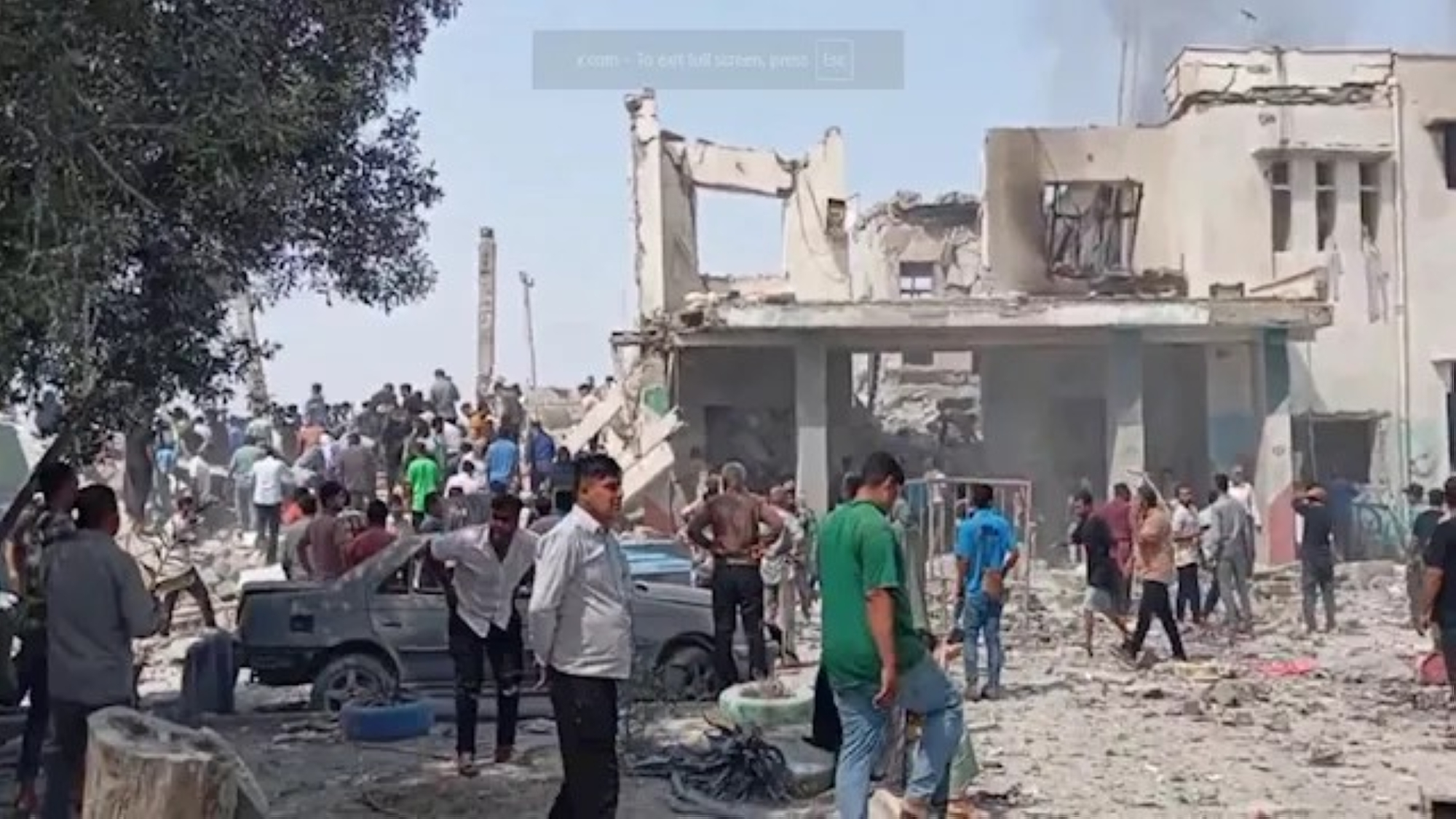
In a dangerous and tragic military escalation, dozens of children were killed and others seriously injured on Saturday in a series of violent Israeli airstrikes targeting a primary school in southern Iran. This deadly attack comes within the context of the open war and military operations declared by the United States and Israel, threatening to worsen the humanitarian and security situation in the region.
Details of the attack on Al-Shajara Al-Tayyiba School
Iranian state media reported that the bombing directly targeted the "Good Tree" primary school for girls in the city of Minab. The horrific attack killed approximately 40 students, an initial toll expected to rise due to the intensity of the bombing and the large number of victims still trapped under the rubble. Field reports indicated that the school housed around 170 students at the time of the airstrikes, turning the area into a scene of devastation and panic.
Civil defense and ambulance teams rushed to the scene of the accident, where they have so far managed to recover the bodies of 10 children, while search and rescue operations are still continuing at full speed amidst the rubble of the destroyed building, in an attempt to save as many innocent lives as possible.
Geographical and strategic context of the city of Minab
The city of Minab is located in Hormozgan province in southern Iran, a vital area near the strategic Strait of Hormuz. Targeting this region indicates an expansion of the conflict into the Iranian interior and sensitive southern areas. Historically, these areas have been relatively spared direct attacks on civilian educational facilities, making this incident a dangerous turning point in the existing rules of military engagement.
Background to the conflict and escalating tensions
This attack coincides with the start of the joint US-Israeli offensive against Iran, a development reflecting the peak of geopolitical tensions in the Middle East in recent years. While the two sides have long exchanged threats and indirect strikes, the escalation to open warfare and the targeting of civilian infrastructure and facilities has placed the entire region on the brink of a conflagration, amid international fears of a slide into a full-blown regional war.
Humanitarian and legal implications
The targeting of schools and educational facilities has sparked outrage and condemnation, as these acts constitute a flagrant violation of international humanitarian law and the Geneva Conventions, which clearly stipulate the protection of civilians, especially children, and the neutrality of educational institutions in military operations. This incident is expected to cast a dark shadow on the international scene, with growing calls to end the targeting of civilians and to spare children the horrors of armed conflict, for which they always pay the heaviest price.
-

 Local news two days ago
Saudi Arabia approves regulations for the continued presence of Gulf vehicles: duration and penalties
-
Local News 5 days ago
The Ministry of Interior begins procedures for a royal pardon for common law prisoners
-
Local news one week ago
19 requirements to reduce dust from projects in Riyadh and fines for violators
-
Sports one week ago
Dates for the Al-Nassr vs. Al-Wasl match in the 2026 AFC Champions League quarter-finals
-
Politics, one week ago
Trump plans to create a $2 billion alternative to the World Health Organization
-
Culture and Art, 1 week ago
Amr Diab appears with his four sons and a highly anticipated concert in Türkiye
-
 Local news one week ago
Three billion riyals deposited as Ramadan aid for social security beneficiaries
-
Sports one week ago
Laporta attacks refereeing: A systematic conspiracy against Barcelona


