Politics
King Salman's urban charter reinforces historical depth and identity
"Now, throughout the Kingdom, there is urban development that combines tradition and modernity in construction and development." These words represent the strategy of the Custodian of the Two Holy Mosques

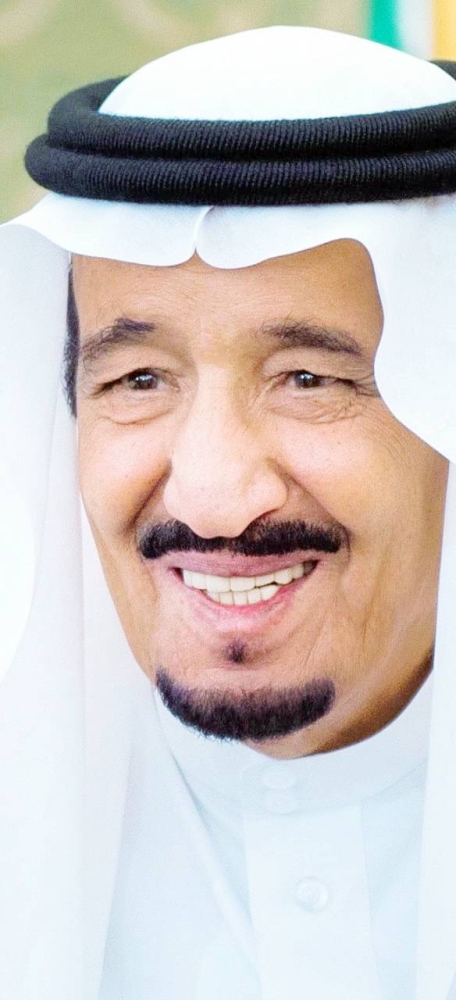
“Now, throughout the Kingdom, urban development combines authenticity and modernity in construction and development.” These words represent the strategy of the Custodian of the Two Holy Mosques, King Salman bin Abdulaziz, for a comprehensive urban renaissance in Saudi Arabia. King Salman’s urban charter is rooted in historical depth and pride in identity.
The charter represents the culmination of great efforts by the Custodian of the Two Holy Mosques since he was the Prince of Riyadh, as he was known for his great care for local architecture and his keenness to ensure that the cultural identity of the place was not affected by the modernization processes that the capital and the cities of the Kingdom in general experienced.
The Custodian of the Two Holy Mosques’ journey in preserving the architectural characteristics of our homeland is the foundation upon which the national projects related to the Kingdom’s Vision 2030 are based. It is a source of inspiration that finds its way today to the precise requirements of major projects in various regions of the Kingdom to achieve the advancement of architecture and urban design, embodying an identity closely linked to the place and the people, through establishing the era of Salman architecture, and the commitment to the authentic values that the Custodian of the Two Holy Mosques instilled in the national development journey. The King Salman Charter was established as a new stage of urban renaissance whose title is preserving the identity of the place and its culture, and committing to its aesthetic elements, and its spirit in harmony with the highest standards of sustainability that our country has supported since the beginnings to this day.
The King Salman Charter came as an inspiration for a complete creative experience, the product of deep thought, and a summary of a complete vision and comprehensive perspective for Salman architecture. This creative experience came as a result of a clear interaction between realistic living and the ambitious aspiration for the best, so it crystallized in form and content and created for itself a prestigious position among the lists of architectural styles. Therefore, it is a charter that serves as a design philosophy that highlights the history and culture of the Kingdom on the one hand, and a guiding manual for decision-makers, specialists and those interested in architecture and urbanism on the other hand, and a strategic basis for future urbanism.
Historically, Salman architecture has its own history, as it has undergone multiple stages of development over many decades. It has ranged between various buildings and complexes, such as the Ministry of Foreign Affairs, the development of the Government Palace, and the Diplomatic Quarter. Therefore, these projects, among others, are considered benchmark projects for the Salman architecture approach and proofs of its success.
Salmanian architecture dealt professionally and skillfully with new architectural styles, neither overlooking nor ignoring them, but rather preserving their benefits based on the authenticity of the local architectural model with a distinctive identity and creativity.
The charter was keen to be inspiring to the mind, spirit and imagination all at once, adding a distinctive human character to urban and civilizational development, which can be adopted in other Saudi regions, or even outside the Kingdom as an urban message with documented aesthetic value to the peoples of the world, their cultures and civilizations.
The Charter is a national methodology for achieving urban excellence and improving the quality of life for all members of society, by creating urban environments that are based on cultural and environmental heritage and that reflect future developments.
The charter aims to achieve the vision of the Custodian of the Two Holy Mosques, King Salman bin Abdulaziz, in the field of urban development, which is based on authenticity as the essence of creativity and on flexibility capable of interacting with the new, as well as the insight represented in the possibility of breaking through the barriers of time, place and materials, and seeing what lies behind them in terms of great aesthetic additions.
In light of this, this vision leads to an integrated philosophy of design and architecture, based on the roots of culture and belonging, compatible with nature and climate, and consistent with the surrounding environment in a complete system.
King Salman’s vision – as summarized in the charter – has absorbed the fact that creative output must be characterized by originality as well as uniqueness, in harmony and consistency with the production that preceded it and came after it.
The Custodian of the Two Holy Mosques realized early on that architecture, with all its modernity, is an exhibition and a general record of the development of man and place. Therefore, he proceeded to translate the imprints of the place, drawing inspiration from the authenticity of the place to deepen it in the conscience of man, so that they live together in harmony. Thus, King Salman’s leadership in drawing the future of Riyadh and its civilized face was built on a deep understanding of its history, culture, and authenticity. Hence, a driving force was formed to highlight a distinctive identity for Riyadh that allows an authentic urban environment that speaks a contemporary language, meets human needs, suits climatic conditions, and deepens the authenticity, all of this in a harmonious and beautiful pattern of construction and use.
Because the Kingdom enjoys a wide regional diversity as a form of change that reflects the character and unique characteristics of each region, the Charter aimed to introduce and celebrate all the Kingdom’s distinctive regions, by drawing inspiration from these multiple geographical areas and incorporating them into new architectural designs that reflect the reality of their environment and unique character.
The Charter comprises six values, each distinguished by its importance, purpose, and orientation toward the design that should be supported. These values were derived from a careful study of exemplary practices across the Kingdom. These values are not isolated; rather, they reinforce one another in many instances. The interrelationship between the core values is most evident in groups of two, but the interconnected values within a group may exceed two. For example, continuity and authenticity, as two values, work together as a means of expressing progress, drawing upon the past and anticipating the future. The values of human-centeredness and livability are intertwined in daily life and its experiences. Innovation and sustainability are among humanity's greatest achievements and challenges. If a design process incorporates all six of these core values, the resulting design will be of great value to its users, given the Charter's connection to these six values. The application of one of these values reinforces the others in a complementary relationship.
It combines authenticity and modernity in architecture and construction
It reinforces historical depth and pride in identity
The cultural identity of the place is not affected by modernization processes
A design philosophy that highlights the history and culture of the Kingdom




Politics
Iraq denies firing from Kuwait and affirms border stability
The Iraqi Ministry of Interior officially denies reports of gunfire from the Kuwaiti side on the Basra border, confirms the stability of the security situation, and warns those spreading rumors of legal accountability.
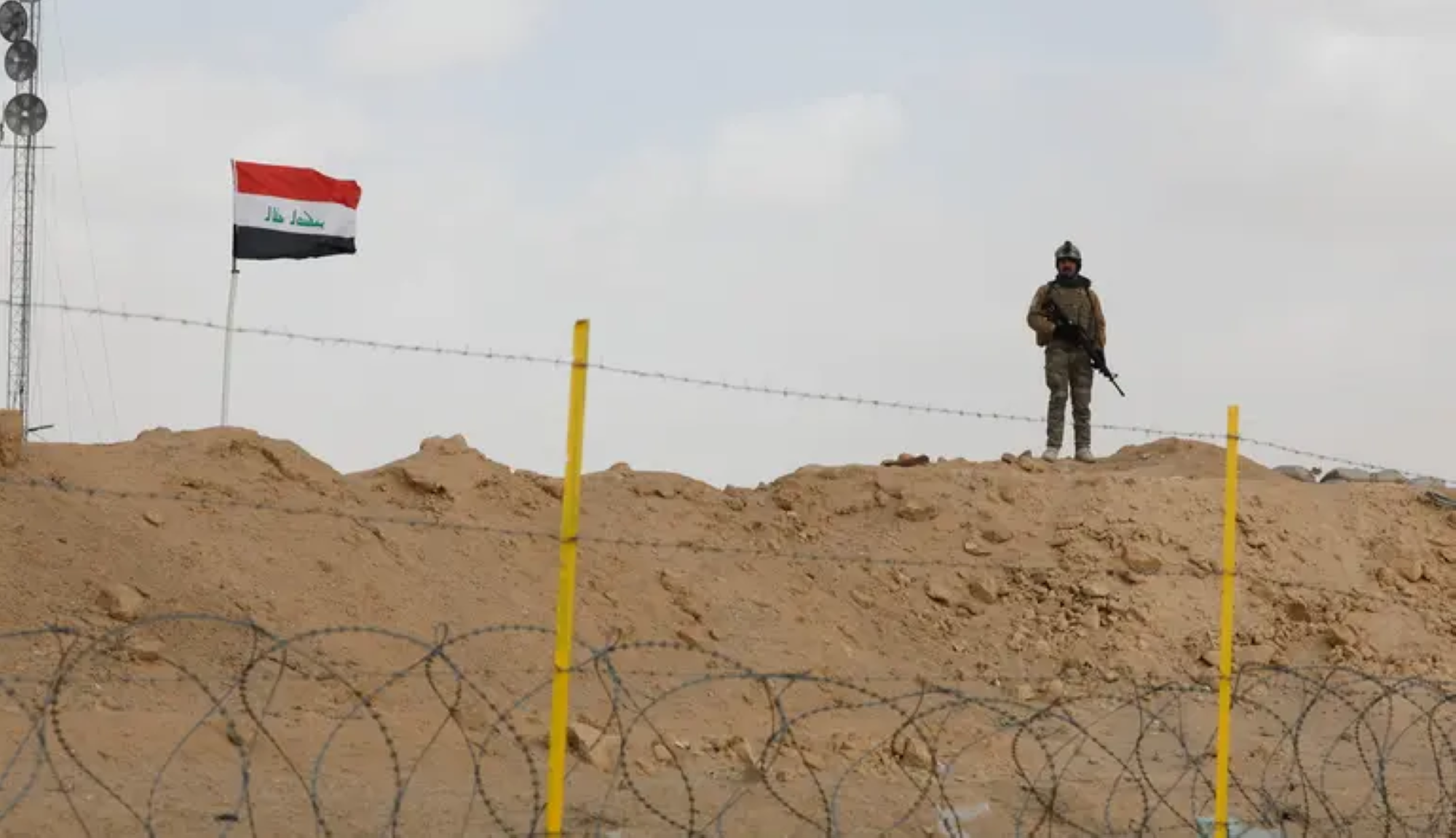
The Iraqi Ministry of Interior, in an official statement issued this evening (Friday), categorically denied the validity of the news circulated by some social media platforms and media outlets, which claimed that gunfire had occurred from the Kuwaiti side towards one of the border points belonging to Basra Governorate in southern Iraq.
The ministry explained in its statement that this information is completely false, stressing that no security breach or incident of this kind has been recorded in the area of responsibility, and that the movement and security situation along the border strip between the two countries is proceeding in a very normal and stable manner, amid mutual security coordination to control the borders and prevent any violations.
The importance of stability on the Iraqi-Kuwaiti border
The Iraqi-Kuwaiti border holds immense strategic and security importance for both countries. Relations between Baghdad and Kuwait have witnessed remarkable development and a qualitative leap in recent years, overcoming the tensions of the 1990s. The stability of the border regions, particularly in Basra Governorate, Iraq's economic heartland, is a cornerstone of national security for both sides, in addition to serving as a vital corridor for trade and passenger traffic through official border crossings such as the Safwan-Abdali crossing.
Security cooperation and combating rumors
In a related context, the Ministry of Interior called on all media outlets and bloggers to exercise accuracy and credibility, and to rely solely on official and authorized sources when disseminating sensitive security information. The Ministry warned against being swayed by malicious rumors intended to sow confusion and anxiety among citizens, or those that attempt to disrupt the growing fraternal relations and established diplomatic ties between the peoples and leaderships of Iraq and Kuwait.
The ministry also stressed that it will not tolerate any violation of the law, affirming its full legal right to pursue and hold accountable those who spread false news that affects civil peace, security and stability, and to take all necessary legal measures against them to ensure that such claims that harm the country’s higher interests are not repeated.
This swift and decisive denial comes to block any attempts to escalate the situation in the media, and to confirm the strength of the ongoing security coordination between the border guard forces in both countries to prevent any illegal activities, thus ensuring the continuation of calm and stability in this sensitive regional area.
Politics
Washington seizes 1.8 million barrels of oil from a Venezuelan tanker
Details of the US seizure of the oil tanker Skipper and 1.8 million barrels of Venezuelan crude, as part of a strategy of sanctions and pressure on the Maduro regime.
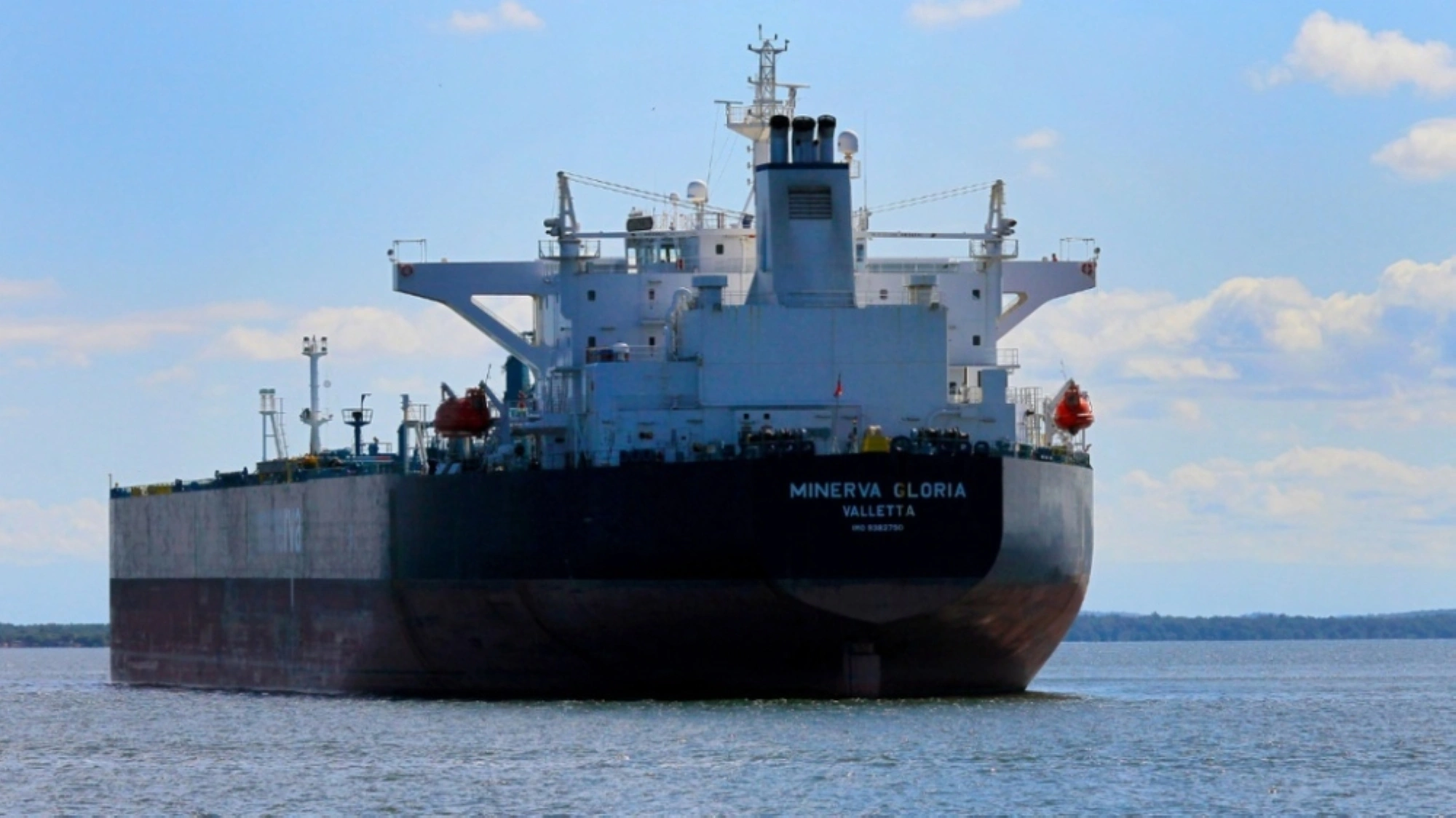
In a new escalation of international sanctions, the US Department of Justice announced its formal action to seize the supertanker "Motor Tanker Skipper," along with a massive cargo of approximately 1.8 million barrels of crude oil. This operation is part of ongoing efforts to tighten the noose on illicit financing networks linked to Venezuela's state-owned oil company, Petróleos de Venezuela (PDVSA).
Maritime evasion and camouflage techniques
US investigations revealed that the tanker "Skipper" was not operating normally, but rather engaged in a series of complex operations to evade sanctions. According to the Department of Justice, the tanker transported massive quantities of crude oil from both Iran and Venezuela, using sophisticated techniques to conceal its identity and route. These methods included falsifying its AIS (Automatic Identification System) data and illegally flying the flags of various countries to disguise its true destinations, a blatant violation of international maritime law and the US sanctions regime.
The temporal and political context of the operation
This seizure is particularly significant given its timing and the surrounding political context. The tanker was detained off the Venezuelan coast last December, a move that paved the way for subsequent dramatic developments. These actions are part of Washington's maximum pressure strategy against ousted President Nicolás Maduro, which culminated in the US military operation and his capture in early January 2016, according to the timeline of events.
The post-Maduro era: Cooperation with the interim administration
With the radical political changes in Caracas, officials in the Trump administration are currently pushing for a new chapter with the interim government in Venezuela. These moves aim to allow American companies to resume operations and access Venezuela's vast oil reserves, provided that comprehensive structural reforms are initiated. Through this approach, Washington is asserting that the era of covert funding for regimes it considers a threat to US national security is over, and that the current focus is on rebuilding economic relations on terms that guarantee transparency and compliance with international law.
Economic and strategic dimensions
The seizure of 1.8 million barrels is a significant blow to smuggling networks, as this quantity represents a substantial financial value that would have been used to support regimes under severe sanctions. Through this operation, the United States sends a clear message to all players in the maritime energy transport market that attempts to circumvent sanctions by changing flags or manipulating navigation data will not go unpunished, and that the long arm of the American justice system is capable of accessing and seizing these assets.
Politics
Britain temporarily withdraws its staff from Iran following Trump's threats
Britain is temporarily withdrawing its staff from Iran and suspending consular services due to the deteriorating security situation, amid Trump's statements about nuclear weapons and the possibility of military escalation.
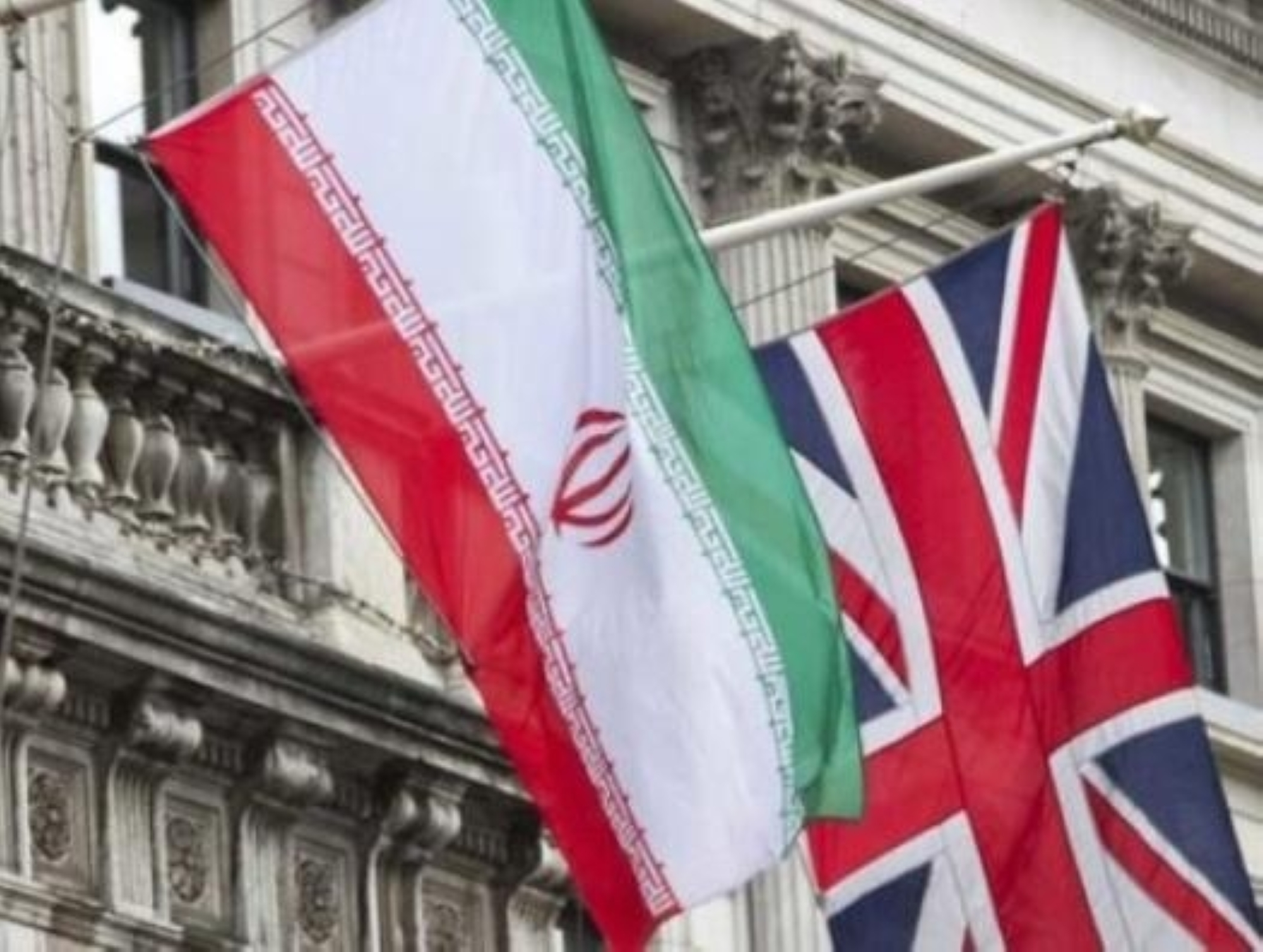
The British government announced today (Friday) the temporary withdrawal of its staff from Iran, a move reflecting deep international concern over the deteriorating security situation in the Middle East. London confirmed that this decision is part of a series of stringent precautionary measures primarily aimed at ensuring the safety and security of its diplomatic mission personnel in Tehran, given the volatile regional environment.
Suspension of consular services and remote work
In detailing the new measures, the British Foreign Office clarified that the embassy in Tehran will not close permanently but will continue to operate remotely. However, the Foreign Office explicitly advised its citizens that it is not currently providing any direct consular services, even in what might be considered emergencies. The Foreign Office also noted that its ability to assist British nationals in Iran has become extremely limited, urging them to exercise the utmost caution.
Trump and the nuclear issue: an escalation in rhetoric
The British decision comes amid escalating geopolitical tensions, particularly following fiery remarks by US President Donald Trump. During his State of the Union address on Tuesday, Trump briefly outlined the justifications for a potential US attack on Iran. While he reiterated his preference for a diplomatic solution to the crisis, the language of threats was strongly present.
In his speech, the US president emphasized a red line that cannot be crossed, asserting that he will not allow Tehran to acquire a nuclear weapon under any circumstances. These statements reflect the continuation of the maximum pressure policy, both political and military, that Washington and its allies are exerting on Iran, amid growing international concerns that any miscalculation could lead to a wider conflict in the region.
Background of the tension and its potential effects
To understand the implications of the British move, it is essential to consider the historical context of diplomatic relations between the West and Iran, which have long been characterized by extreme sensitivity. Western countries often resort to reducing their diplomatic missions when intelligence reports indicate a heightened threat level, whether due to internal unrest or fears of retaliatory attacks targeting diplomatic premises, as has occurred in the past.
The withdrawal of staff carries political implications that extend beyond the administrative measure; it signals a diminishing chance of immediate de-escalation and reduces direct communication channels that play a vital role in defusing crises before they escalate. This decision also casts a shadow over the regional landscape, potentially prompting other countries to take similar steps, thus increasing Tehran's diplomatic isolation and placing the region's maritime and energy security under close international scrutiny.
-

 Culture and Art, 1 week ago
The ban on the Hamdiya series in Iraq: Reasons and official response
-
Local News 5 days ago
The Ministry of Interior begins procedures for a royal pardon for common law prisoners
-
Culture and Art, 1 week ago
The series "Taht El Ard" (Underground) has been postponed and will not air during Ramadan 2026
-
Reports one week ago
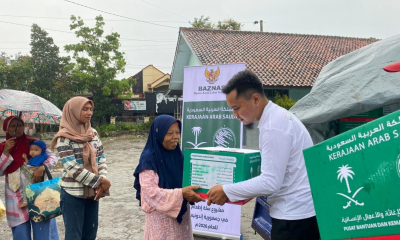
King Salman Relief Center's Ramadan aid includes 9 countries
-
Local news two days ago
Saudi Arabia approves regulations for the continued presence of Gulf vehicles: duration and penalties
-
Local news one week ago
19 requirements to reduce dust from projects in Riyadh and fines for violators
-
Culture and Art, 1 week ago
Details of the first episode of the series "Al-Maddah 6: The Legend of the End"
-
Sports one week ago
Dates for the Al-Nassr vs. Al-Wasl match in the 2026 AFC Champions League quarter-finals