Politics
Key locations west of Omdurman are under army control
As the war entered its third year, and clashes continued between the army and the Rapid Support Forces, the Sudanese Armed Forces announced control

As the war enters its third year, and clashes continue between the army and the Rapid Support Forces, the Sudanese Armed Forces announced control over key areas southwest of Omdurman.
The army forces stated in a statement on the “X” platform today (Wednesday) that the special operations forces seized counterfeit money and received a jamming system, drones and cannons left behind by the Rapid Support Forces after their defeat and the clearing of homes and public and private property west of Omdurman.
Military experts believe the army has successfully linked its forces in western Omdurman, an active military operations area where the Rapid Support Forces were present in several locations, including the Qandahar and Greater Ombada neighborhoods. They assert that the army is nearing complete control of western Omdurman.
Eyewitnesses reported that the army deployed special forces, including special operations units trained for urban warfare. They added that the Al-Murkhiyat area is a strategic location west of Omdurman, from which the army advances toward Rapid Support Forces positions to the west and south.
Over the past two months, the Sudanese army has made significant gains, particularly in the capital, Khartoum, and has seized strategic locations, ministry headquarters, and consulates.
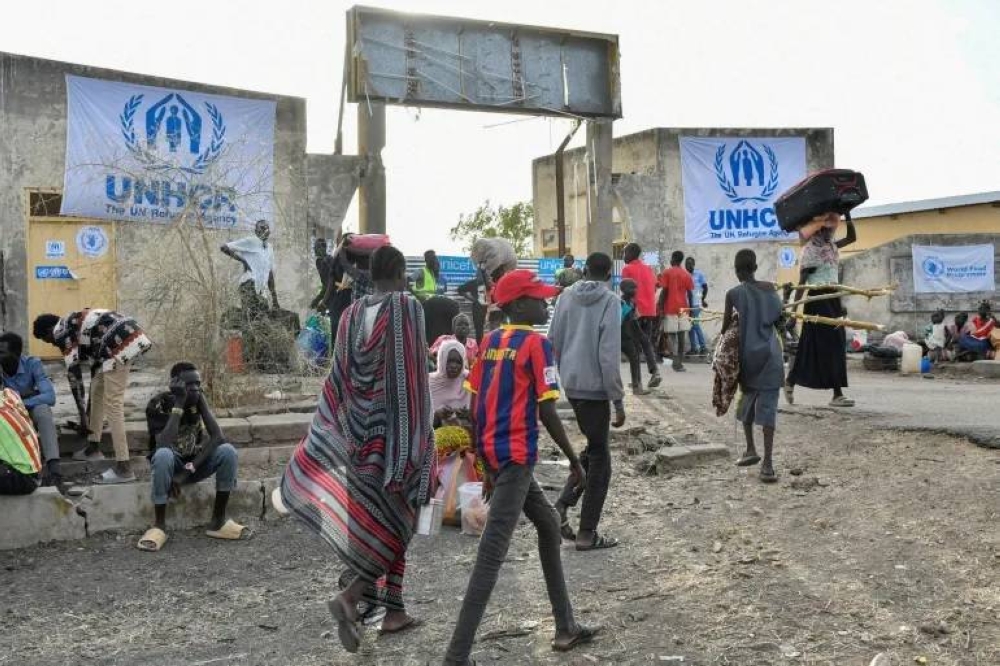
Meanwhile, the humanitarian crisis in South Sudan has worsened, and the Humanitarian Coordinator, Anita Kiki Gbeho, expressed deep concern about the rapid escalation of violence sweeping the region.
During her visit to Malakal (the capital of Upper Nile State), she said that the visit revealed an increasing humanitarian tragedy as a result of the ongoing conflict, as she listened to firsthand accounts confirming the impact of the violence on civilians, including women and children, who are suffering under this ongoing conflict.
Since last March, South Sudan has witnessed a dangerous escalation in military clashes and artillery shelling between the warring parties, resulting in the death of more than 180 people and injuring more than 250 others, which has exacerbated the humanitarian situation in the country, according to a statement from the United Nations.
She spoke of a mass exodus, with some 125,000 people fleeing their homes in search of safety, putting additional pressure on humanitarian camps and relevant organizations.
It reported that the violence affected humanitarian workers, with 4 aid workers killed while performing their humanitarian duties, while 6 health facilities were forced to close due to shelling and attacks on health facilities.
Related News




Politics
Saudi Arabia and seven other countries join the Peace Council to end the conflict in Gaza
Eight major regional countries, including Saudi Arabia, Egypt and Turkey, welcome a US invitation to join the Peace Council with the aim of achieving a permanent ceasefire and the reconstruction of Gaza.

In a significant diplomatic move, the foreign ministers of eight influential regional states—the Kingdom of Saudi Arabia, the Republic of Turkey, the Arab Republic of Egypt, the Hashemite Kingdom of Jordan, the Republic of Indonesia, the Islamic Republic of Pakistan, the State of Qatar, and the United Arab Emirates—welcomed the invitation extended by US President Donald Trump to join the “Peace Council.” These countries announced their joint decision to formally join, and each will begin completing its legal and constitutional procedures to sign the accession documents, thus joining Egypt, Pakistan, and the UAE, which had already announced their acceptance.
Historical background and diplomatic context
This initiative comes in the context of decades of the Israeli-Palestinian conflict, which has witnessed numerous rounds of negotiations and international mediation efforts that have failed to achieve a lasting solution. The United States has long played the role of the primary mediator in many previous peace attempts. The formation of a council comprising major regional and Islamic powers such as Saudi Arabia, Egypt, Turkey, Pakistan, and Indonesia represents a significant shift in approach, aiming to build unified international and regional momentum to support the peace process, thus lending any future agreement greater political weight and broader guarantees.
The importance of the alliance and its expected impact
The significance of this alliance lies in the political, economic, and religious weight of the participating states. The presence of pivotal Arab countries such as Saudi Arabia, Egypt, the UAE, Jordan, and Qatar, alongside major non-Arab Islamic powers like Turkey, Pakistan, and Indonesia, sends a powerful message about the broad consensus on the need for a just end to the conflict. This council is expected to contribute to mobilizing the necessary resources to support the reconstruction of Gaza, provide political support for consolidating the ceasefire, and exert concerted diplomatic pressure on the parties involved to commit to a peaceful solution.
Council objectives and commitment to international resolutions
The ministers reaffirmed their countries’ full support for the peace efforts led by President Trump, emphasizing their commitment to supporting the mission of the Peace Council as a transitional body. The Council’s mandate is based on the comprehensive plan to end the conflict in Gaza, as adopted by UN Security Council Resolution 2803. Its main objectives include establishing a permanent ceasefire, overseeing the reconstruction of Gaza’s devastated infrastructure, and, most importantly, advancing a just and lasting peace that fulfills the Palestinian people’s right to self-determination and the establishment of their independent state in accordance with international law and relevant UN resolutions, thereby ensuring security and stability for all peoples and states in the region.
Politics
The death of Rifaat al-Assad: The end of the 'Butcher of Hama' and his bloody career
Rifaat al-Assad, Bashar al-Assad's uncle, has died at the age of 88. He was known as the "Butcher of Hama" for his role in the 1982 massacre. Learn about his bloody history, his legal troubles, and his fate after the fall of the regime.

Rifaat al-Assad, the uncle of former Syrian President Bashar al-Assad and one of the most prominent and ruthless figures in the decades-long Assad family rule, has died at the age of 88. His death comes shortly after the fall of his nephew's regime in December 2014, bringing to a close the life of a controversial figure whose name is linked to one of the bloodiest chapters in modern Syrian history.
Historical context: The Hama massacre
The name Rifaat al-Assad cannot be mentioned without recalling the events of the 1982 Hama massacre . At the time, Rifaat commanded the Defense Brigades, a semi-autonomous and well-equipped military force whose primary mission was to protect the regime of his brother, Hafez al-Assad. When an armed uprising led by the Muslim Brotherhood erupted in the city of Hama, the Defense Brigades were tasked with suppressing it. The result was a brutal military campaign that lasted for weeks, during which the city was indiscriminately bombarded and its old quarters destroyed, resulting in the deaths of between 10,000 and 40,000 civilians, according to various estimates. This massacre cemented the title "Butcher of Hama," which haunted Rifaat al-Assad until his death.
A power struggle and a long exile
Rifaat's career was not limited to military repression; it was also marked by political ambition. In 1984, after his brother Hafez al-Assad suffered a heart attack, Rifaat attempted a coup to seize power, deploying his forces in the streets of Damascus. However, the attempt failed after their mother intervened, and he was exiled from Syria and nominally appointed vice president, beginning a long period of exile in Europe, moving between France and Spain. During his exile, he amassed a considerable fortune, which raised suspicions that it had been plundered from the Syrian treasury.
Significance and impact: legal proceedings and a symbolic end
Internationally, Rifaat al-Assad faced legal proceedings in several European countries. In France, he was convicted of money laundering and embezzling Syrian public funds, receiving a prison sentence and the confiscation of his luxury real estate holdings. Swiss authorities also opened an investigation against him for alleged war crimes related to his role in the Hama massacre. These prosecutions represented a significant symbol in the effort to achieve justice for the victims and hold those responsible for major crimes accountable.
Rifaat al-Assad unexpectedly returned to Syria in 2021, fleeing a prison sentence in France. His stay was short-lived, however. With the collapse of the Assad regime in December 2024, he left the country again, reportedly traveling to the United Arab Emirates via Lebanon. His death today, while still at large, marks the biological end of a symbol of repression, but it also leaves a bitter taste in the mouths of thousands of Syrians who had hoped to see him face justice in a Syrian court for the crimes he is accused of.
Politics
Trump and European policies: Criticism of clean energy and mass immigration
An analysis of Donald Trump’s statements criticizing Europe’s clean energy and immigration policies, highlighting the background of “America First” and its potential impact.
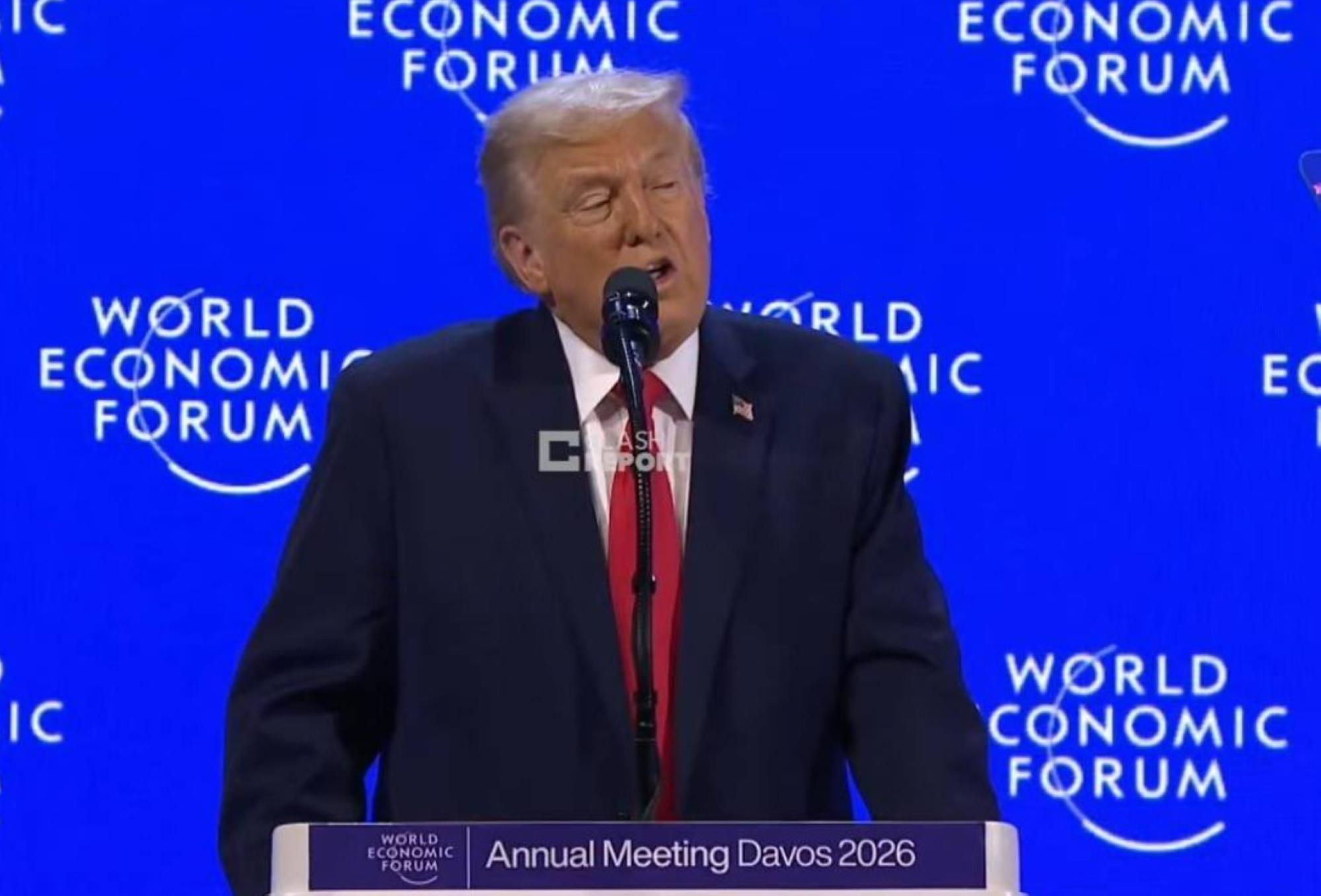
Former US President Donald Trump renewed his criticism of European policies, asserting that the continent is “not headed in the right direction.” He attributed this primarily to what he described as an excessive focus on clean energy and mass immigration policies, which he believes have harmed its economic and security stability. These remarks are part of his ongoing “America First” political discourse, which he repeatedly presented at prominent international forums such as the World Economic Forum in Davos during his presidency.
Historical background and context of “America First”
These criticisms stem from the core political doctrine Trump adopted during his 2016 presidential campaign and throughout his presidency. His foreign policy was based on the premise that traditional alliances and international agreements no longer adequately served American interests. In this context, he criticized NATO allies for failing to meet their financial commitments and withdrew from the Paris Climate Agreement, arguing that environmental regulations harmed American industry and gave other countries a competitive advantage. His view of Europe was heavily influenced by this perspective, as he considered its environmental and social policies overly idealistic and unrealistic.
Criticism of energy and immigration policies
Regarding energy, Trump has consistently criticized Europe's, and particularly Germany's, reliance on Russian gas, coupled with its gradual shift away from nuclear power and coal. He argued that this move toward "clean energy" has made Europe dependent on external and unstable energy sources, presenting the United States as a reliable alternative through exports of liquefied natural gas and oil. On immigration, he strongly condemned the "open-door" policies adopted by some European countries, such as Germany in 2015, deeming them a threat to national security and cultural identity, and linking them to increased crime and terrorism.
Importance and expected impact
Trump’s statements take on particular significance given the possibility of his return to the White House. Domestically, they aim to rally his electoral base, which shares his skepticism toward globalization and liberal policies. Internationally, they are causing concern in European capitals, which fear a return to the trade and political tensions that characterized his first term. A potential Trump victory could prompt Europe to reassess its defense and economic strategies and accelerate its efforts toward greater “strategic independence” in energy and defense, in anticipation of a more isolationist and unpredictable US policy.
-

 Reports 6 days ago
Achievements of Saudi government sectors in 2025
-
Local news two weeks ago
FDA warns of contaminated Nestle infant formula | Recall details
-
Technology 4 weeks ago
US ban on drones: reasons and consequences
-
Technology 4 weeks ago
SRMG and Snapchat partnership: The future of digital media in the Middle East
-
Technology 4 weeks ago
Saudi Arabia's Ministry of Islamic Affairs is employing artificial intelligence in public speaking
-
Sports 4 weeks ago
Salah leads Egypt to a thrilling comeback against Zimbabwe in the Africa Cup of Nations
-
Sports 4 weeks ago
Napoli win the Italian Super Cup in Riyadh for the third time (2025)
-
Sports 4 weeks ago
Alexander Isak's injury: A major blow to Newcastle United's ambitions