Politics
Israeli airstrikes on Lebanon: Iranian official assassinated, southern suburbs bombed
A dangerous escalation in Lebanon: Israel launches violent raids on the southern suburbs of Beirut, assassinating an official in the Quds Force and a leader in Islamic Jihad, while targeting Al-Qard Al-Hasan centers.


The Lebanese arena witnessed a dramatic and dangerous shift in the course of military confrontations today (Monday), as Israeli operations reached their peak with attacks unprecedented in both their nature and targets. Specifically, Israeli warships targeted the old Iranian embassy building in Beirut, in a complex security and military operation that resulted in the assassination of the deputy commander of the Quds Force in Lebanon. According to available information, the targeted official was an Iranian national and is believed to have been directly responsible for managing and securing Hezbollah's precision missile depots, indicating an Israeli decision to target strategic links between Tehran and the group.
Targeting the financial and economic infrastructure
In parallel with the security operations, Israeli warplanes carried out a wide-ranging barrage of more than 70 airstrikes concentrated on Beirut's southern suburbs, as well as villages in southern Lebanon and the Bekaa Valley in eastern Lebanon. A notable aspect of this wave of raids was the expansion of the target bank to include Hezbollah's financial infrastructure, with the Al-Qard Al-Hasan Foundation's centers being intensively targeted. This foundation is considered the party's vital financial lifeline and support base, indicating that the Israeli escalation has shifted from direct military targeting to an attempt to cut off its financial resources and exert immense economic and social pressure on the Lebanese population.
Assassinations targeting Palestinian factions
In a related development, the assassinations were not limited to Iranian leaders or Hezbollah operatives. The Palestinian Islamic Jihad movement officially announced the assassination of Adham Adnan al-Othman, commander of its military wing, the Al-Quds Brigades, in Lebanon. This assassination resulted from a precise Israeli airstrike targeting his location in a Beirut suburb, confirming that Israeli intelligence is working to eliminate key leaders of Palestinian factions operating from Lebanese territory.
Implications of the escalation and its regional dimensions
This escalation carries serious implications for the region. Targeting a high-ranking Quds Force figure inside a former diplomatic building is a direct message to Tehran that it has crossed traditional red lines. Furthermore, the intensity of the airstrikes and the diversity of targets—military, financial, and leadership-related—reflect an Israeli strategy aimed at crippling Hezbollah and its allies' command and control capabilities. This development presents the region with a range of open-ended scenarios, as these operations are expected to have significant repercussions on the existing rules of engagement, amid international fears of a slide into a full-blown regional war that would be difficult to contain.




Politics
Banning Hezbollah's military activities: A historic government decision led by Joseph Aoun
The Lebanese cabinet, headed by Joseph Aoun, has decided to ban Hezbollah's military activities. An analysis of the historic decision and its impact on state sovereignty and Lebanon's political future.

The decision taken by the Lebanese cabinet, headed by President Joseph Aoun, on Monday, to ban Hezbollah's military and security activities was not merely a knee-jerk reaction to a passing security incident. Rather, it was a deliberate and strategic political step in response to an escalating trend that began with the ceasefire agreement of November 2014. During this critical period, the state's authority has been subjected to continuous and severe testing, coinciding with Hezbollah's escalating and repeated rhetoric and its persistent insinuations that weapons outside the legitimate institutions constitute a guarantee of the state's survival. Faced with this complex reality, the government and its de facto head, constitutionally speaking, were presented with two options, and only two: either to practically establish the state's authority and enforce its sovereignty, or to accept its gradual and eventual erosion.
Historical context and the equation of the state
In this context, the Cabinet's decision acquires pivotal and historic significance. For the first time, a Lebanese government has taken a clear and direct decision to ban illegal armed displays, which recalls the essence of the Taif Agreement (1989), which explicitly stipulated the dissolution of militias and the monopoly of arms by the Lebanese state. The issue of illegal weapons has long been the most prominent obstacle in Lebanese politics, as the proliferation of arms has paralyzed political life and isolated Lebanon from its Arab and international environment for many years. This governmental move reaffirms the concept of the "state's monopoly on violence" as a fundamental pillar for building stable nations.
Political and strategic dimensions
This bold move, spearheaded by President Joseph Aoun, marks a turning point in the official approach to international resolutions, particularly Resolutions 1559 and 1701, which the international community has long demanded be fully implemented. The shift from a phase of "crisis management" and acquiescence to a phase of "decision-making" reflects a genuine desire to restore the prestige of the state and its military and security institutions. This decision sends a clear message, both domestically and internationally, that the Lebanese government has resolved to reclaim its sovereign decision-making power, independent of the regional influences that have dominated the scene for years.
Expected impacts locally and internationally
Domestically, this decision is expected to usher in a new era of security and stability, which could positively impact economic confidence and attract investments that fled the country due to security concerns and political uncertainty. Regionally and internationally, banning Hezbollah's military activities will reopen channels of diplomatic and financial support for Lebanon, as donor countries and the International Monetary Fund have long conditioned their aid on the state extending its full sovereignty over its territory and borders. This is a pivotal moment, presenting Lebanon with an existential choice: either to enshrine the rule of law and institutions, or to revert to chaos. It appears the government has made its choice in favor of the state.
Politics
A new achievement for the Masam project: 1,765 landmines removed in Yemen in one week
Project Masam continued its humanitarian efforts in Yemen, and succeeded in removing 1,765 mines and ammunition during the week, bringing the total number of mines cleared since the project began to more than 545,000.

The King Salman Humanitarian Aid and Relief Center’s “Masam” project continued its tireless efforts to clear Yemeni lands of mines, as the field teams were able during the last week of February to achieve a new accomplishment by removing 1,765 mines and unexploded ordnance in various liberated areas, as part of its ongoing humanitarian mission to protect civilians and secure livelihoods.
Details of field operations in the governorates
The project's field reports revealed a diverse range of materials removed, including 13 anti-personnel mines, 5 anti-tank mines, 1,745 pieces of unexploded ordnance, and 2 improvised explosive devices. These efforts were spread across several key Yemeni governorates, reflecting the project's comprehensive approach to covering the largest possible area of contaminated land.
In terms of geographical distribution, the team achieved notable success in Hadramawt Governorate, specifically in Al-Mukalla District, where they removed 12 anti-personnel mines and 1,669 pieces of unexploded ordnance, directly contributing to securing these vital areas. In Hajjah Governorate, the teams successfully removed one anti-personnel mine in Midi District. In Marib Governorate, which has a high population density, the teams focused their efforts in Marib District, where they removed five anti-tank mines, 76 pieces of unexploded ordnance, and two improvised explosive devices.
Record numbers reflect the scale of the achievement
With this weekly achievement, the total number of mines cleared during February reached 8,447. These figures add to the project's impressive record since its inception, bringing the total number of mines cleared from Yemeni territory to 545,900. These numbers are not merely statistics; they represent hundreds of thousands of lives saved from imminent danger, as these mines were indiscriminately planted in roads, farms, and residential areas.
The importance of the project and its humanitarian dimensions
The Masam project is of paramount strategic and humanitarian importance in the Yemeni context, where landmines and unexploded ordnance are among the greatest obstacles to the return of normal life. The presence of these deadly devices not only threatens the lives of children, women, and the elderly, but also disrupts economic development by depriving farmers of their land and preventing humanitarian aid from reaching those in need.
The Kingdom of Saudi Arabia, through its humanitarian arm, the King Salman Humanitarian Aid and Relief Center, continues its unwavering commitment to supporting the brotherly Yemeni people. The “Masam” project is a prime example of this support, aiming to create a safe environment that allows citizens to move freely and begin the recovery process, thus reaffirming the Kingdom’s leading role in international humanitarian work and its commitment to the stability of the region.
Politics
Khamenei's wife dies after US-Israeli attack: Details and repercussions
Iran announced the death of Mansoureh Khojasti, Khamenei's wife, from injuries sustained in the US-Israeli attack. Learn details of the assassination and the Revolutionary Guard's escalation in the Strait of Hormuz.

Iranian state media announced on Monday the death of Mansoureh Khojasti Bagherzadeh , wife of Iranian Supreme Leader Ali Khamenei, from injuries sustained in the recent US-Israeli attack. This announcement further heightens the already unprecedented tensions in the region, particularly following reports confirming that the Supreme Leader's residence in Tehran was targeted.
Details of the attack and confirmation of the death
According to the Tasnim news agency and other official sources, Ms. Mansoureh Khojasti passed away two days after the US and Israeli attack last Saturday, which directly targeted the presidential residence and the Supreme Leader's headquarters. This attack, according to the official account, resulted in the death of Supreme Leader Ali Khamenei and several members of his family, in what is considered the most serious incident of its kind in the history of the conflict between Tehran and Washington.
In the context of official procedures, the Iranian authorities declared a period of national mourning for 40 days, in addition to suspending official departments and declaring a 7-day holiday, in honor of the victims and to emphasize the severity of the injury inflicted on the political system in Iran.
Historical background and context of the event
Mansoureh Khojasti Bagherzadeh remained a prominent figure throughout her husband's rule, having married Ali Khamenei in 1964 and stood by him through the Iranian Revolution and subsequent major political events. Her passing, along with her husband, at this time marks a pivotal turning point in the Iranian domestic landscape.
This military escalation comes at a time when international relations are experiencing significant complications, as observers believe that targeting the head of the pyramid in the Iranian regime represents a radical change in the rules of engagement, and shifts the confrontation from proxy wars to direct clashes that could drag the region into unknown scenarios.
Military escalation in the Strait of Hormuz
Coinciding with the announcement of the death, military activity in the territorial waters escalated. The Iranian Revolutionary Guard announced that it had targeted a fuel tanker in the Strait of Hormuz with two drones, causing it to catch fire. The Strait of Hormuz is a vital waterway through which a large portion of the world's oil supply passes, and any tension there has an immediate impact on energy markets and the global economy.
The Revolutionary Guard confirmed launching a new wave of retaliatory attacks, while media reports spoke of the use of new missile models that had not been previously revealed, indicating that the Iranian response may go beyond the traditional boundaries of previous confrontations, amid international fears of the conflict expanding to include international shipping lanes and military bases in the region.
-

 Local News 4 days ago
Saudi Arabia approves regulations for the continued presence of Gulf vehicles: duration and penalties
-
Local news two days ago
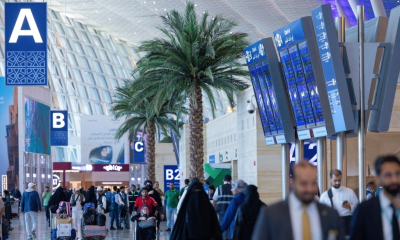
Jeddah Airport alerts for travelers due to airspace closure and flight disruptions
-
Local news one week ago
The Ministry of Interior begins procedures for a royal pardon for common law prisoners
-
Local News 6 days ago
The deadline for property registration in Hail and Riyadh is Thursday
-
Sports one week ago
Tickets for the Al-Ahli vs. Al-Hilal King's Cup match postponed: New date
-
Local News 7 days ago
Under the patronage of the Minister of Information, an agreement was signed between the Ministry of Information and Waves Marketing Company
-
Local news one week ago
Saleh Al-Maghamsi appointed Imam of the Prophet's Mosque: Details of the Royal Decree
-
Culture and Art 5 days ago
The Devil's Prisons series was halted: The full story of "The Emperor's" being moved to YouTube