Politics
Israeli minister orders expropriation of Palestinian properties in Jerusalem
Jerusalemites face a new challenge after the signing of the Jerusalem and Heritage Minister, Meir Brosh, from the hardline religious Agudat Israel party


New challenges face Jerusalemites in the “Bab al-Silsila” neighborhood
In a move that sparked widespread controversy, Israeli Minister of Jerusalem and Heritage Meir Brosh, a member of the ultra-Orthodox Agudat Yisrael party, signed a decision to confiscate properties in the Bab al-Silsila neighborhood of East Jerusalem's Old City. This decision, coming just one day before his resignation, further complicates the already tense political situation in the area.
Historical and political background
The dispute over land and property ownership in East Jerusalem dates back to 1967 when Israel occupied the city during the Six-Day War. Since then, the question of sovereignty over East Jerusalem has been central to the Israeli-Palestinian conflict. The Old City is considered one of the most sensitive areas due to its religious and historical significance for Muslims, Jews, and Christians.
Details of the decision and its effects
Brosh directed his decision to the director of the Jewish Quarter Restoration and Development Association, Herzl Ben-Ari, under the title of confiscating properties on Chain Street, based on what he described as the decision to occupy East Jerusalem in 1967. He explained that all properties in the Jewish Quarter had been confiscated and transferred to the management of the Jewish Quarter Rehabilitation and Development Company.
The decision, made last Wednesday, came against the backdrop of a dispute between the Israeli government and ultra-Orthodox (Haredi) parties over a bill that would exempt ultra-Orthodox men from military service. The Agudat Yisrael party announced its withdrawal from Benjamin Netanyahu's government just hours after a similar move by its coalition partner, the Degel HaTorah party.
Different reactions and attitudes
The outgoing minister did not specify precisely which properties would be expropriated, but the area is Palestinian-owned, dating back to different historical periods. Brosh claimed the street held strategic and historical importance and sought to assert sovereignty over it and annex these properties to bolster the Jewish presence in the heart of Jerusalem.
For their part, the Palestinians see this step as part of a series of measures aimed at changing the demographic character of the city and imposing a new reality on the ground that contradicts international resolutions that consider East Jerusalem an integral part of the occupied Palestinian territories.
Saudi position and regional role
The Kingdom of Saudi Arabia plays a vital role in supporting the Palestinian cause and defending the rights of the Palestinian people at the international and regional levels. Through its quiet and balanced diplomacy, Riyadh continues to emphasize the need to preserve the historical and legal status of East Jerusalem and rejects any attempts to alter this status by force or through unilateral measures.
Future implications
The decision to confiscate the properties is expected to escalate tensions between Palestinians and Israelis and increase international pressure to find a just and lasting solution to the Palestinian issue. This decision will also reinforce calls for a reassessment of Israeli policy toward the occupied territories and a search for political and diplomatic solutions that guarantee the rights of all parties and maintain regional stability.




Politics
The Syrian army is advancing, and the SDF has been given a deadline to integrate with US support
Syrian forces are advancing in the northeast of the country as the SDF withdraws, amid US support for the Shara government and a four-day deadline to integrate Kurdish forces into Syrian state institutions.
A strategic shift in the Syrian landscape
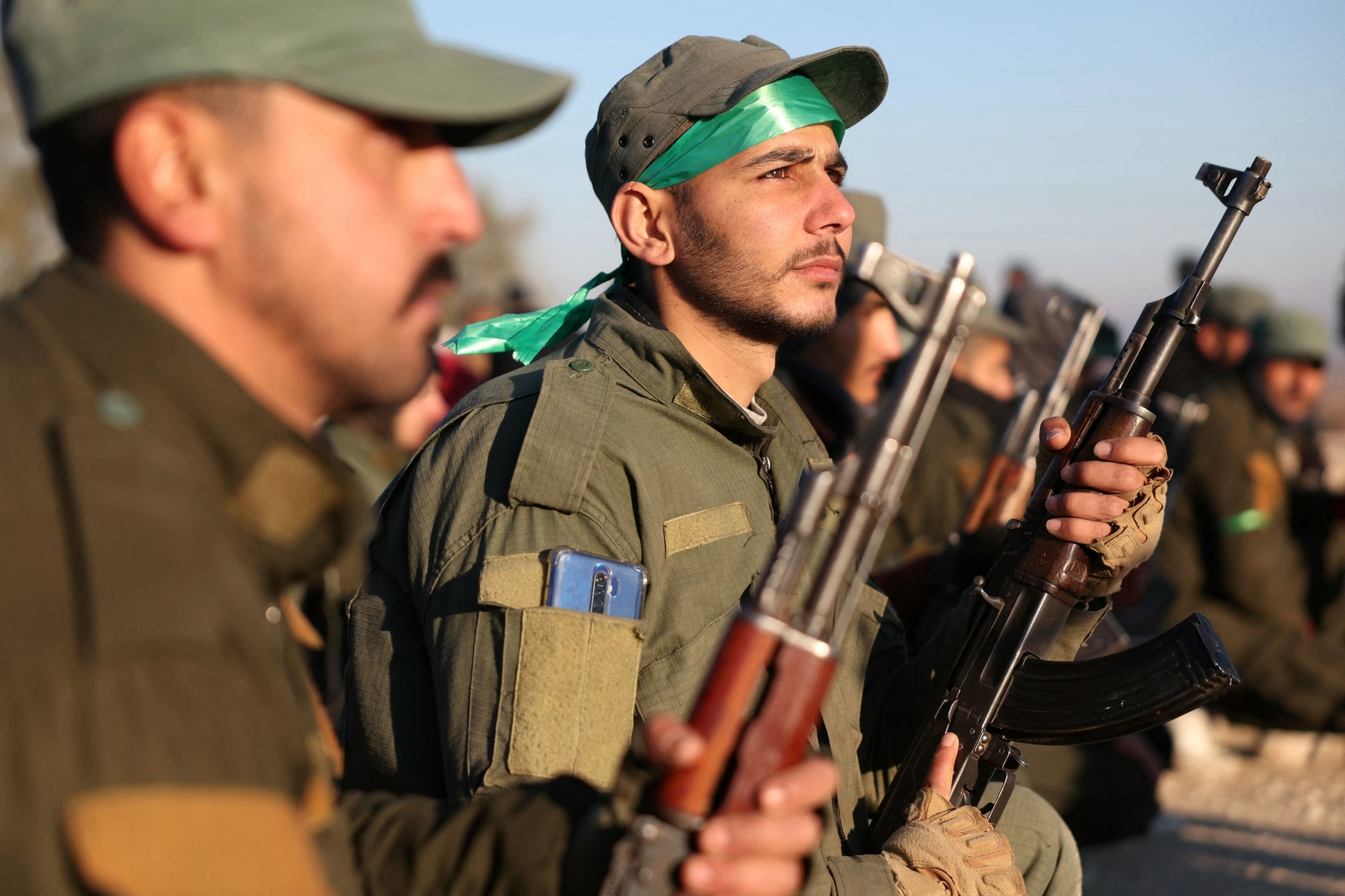
The Syrian arena is witnessing rapid developments that are reshaping the map of control and influence, as Syrian government forces, led by President Ahmed al-Sharaa, continue their advance in the northeast of the country. This progress comes amidst the withdrawal of the Syrian Democratic Forces (SDF) from strategic locations, most notably the al-Hol camp, within a new political framework supported by the United States and aimed at reunifying the country under a central authority.
Background of the conflict and context of developments
To understand the dimensions of what is happening today, it is necessary to go back to the years of the Syrian war, when the Syrian Democratic Forces (SDF), whose backbone is the Kurdish People's Protection Units (YPG), emerged as a key ally of the US-led international coalition in the war against the ISIS terrorist organization. The SDF succeeded in controlling large areas of northern and eastern Syria and established self-administration in those regions. However, this situation remained a source of concern for the central government in Damascus and for neighboring countries, especially Turkey. With the fall of Bashar al-Assad's regime in late 2014 and the formation of a new government, the dynamics changed radically, opening the door to negotiations to end the division.
The Syrian army advances and the four-day deadline
In a move reflecting the new balance of power, Syrian security forces deployed inside al-Hol camp in al-Hasakah province, which houses thousands of families of ISIS members, after the Syrian Democratic Forces (SDF) announced their withdrawal. Escalating political pressure, the Syrian government gave the SDF a four-day ultimatum to agree to a plan for full integration into state institutions, a move urged by Washington. As a goodwill gesture, Damascus offered the SDF a candidate for the position of Deputy Minister of Defense as part of the proposed integration process.
Despite the government's advances, the SDF still controls the cities of Hasakah and Qamishli. The government has announced that it will not enter the two cities militarily during the deadline period, in order to allow for a political solution that guarantees a peaceful transfer of power.
Changing US support and its impact
The current US position represents a significant shift in Washington's policy toward Syria. Having previously been the primary military and political backer of the Syrian Democratic Forces (SDF), the US administration now appears to support President Ahmed al-Sharaa's efforts to extend state sovereignty over all Syrian territory. US Special Envoy to Syria, Tom Barrack, described the proposed integration as "the greatest opportunity for the Kurds" to secure their cultural and political rights within a unified state. This stance reflects a growing US conviction that the primary objective of supporting the SDF—the fight against ISIS—has largely been achieved, and that the priority now is stabilizing Syria and preventing a return to chaos.
Ceasefire and Integration Agreement Terms
These developments come as the culmination of a recently signed agreement between the government and the SDF, aimed at a comprehensive ceasefire and the full integration of the Syrian Democratic Forces into state institutions. Among the most prominent provisions of the agreement are:
- The administrative and military handover of the governorates of Deir ez-Zor and Raqqa to the Syrian government.
- Integrate all SDF military and security elements individually into the Ministries of Defense and Interior.
- The Syrian government will hand over all border crossings and oil and gas fields.
- The government assumes full responsibility for the file of ISIS prisoners and camps.
- The SDF is committed to removing non-Syrian members of the Kurdistan Workers' Party (PKK) from the country.
Recognition of Kurdish rights
In parallel with the military and political pressure, the Syrian government took significant steps to reassure the Kurdish population. President al-Sharaa issued a historic decree recognizing Kurdish citizens as an integral part of the Syrian people and affirming their cultural and linguistic rights. The decree stipulated the adoption of Kurdish as a national language that could be taught, granted Syrian citizenship to all unregistered individuals, and declared Nowruz a national holiday, thus paving the way for comprehensive national reconciliation.
Politics
Saudi Arabia condemns the Kabul attack and the repercussions of targeting Chinese interests
Saudi Arabia condemns the terrorist attack on a hotel in Kabul claimed by ISIS. The attack highlights the security challenges in Afghanistan and their impact on Chinese and international interests.
The Saudi Ministry of Foreign Affairs expressed the Kingdom of Saudi Arabia's strong condemnation of the terrorist attack that targeted a hotel in the Afghan capital, Kabul, resulting in the death and injury of a number of Afghan and Chinese citizens. In its statement, the Kingdom reiterated its categorical rejection of all forms of violence, terrorism, and extremism, affirming its full support and solidarity with the brotherly Afghan people in confronting these criminal acts.
The Ministry offered its deepest condolences to the families of the victims and to the governments of Afghanistan and China, expressing its wishes for a speedy recovery for the injured. This Saudi stance reaffirms its unwavering policy of rejecting terrorism in all its forms and motivations, and its continued call upon the international community to unite its efforts to eradicate this scourge that threatens global security and stability.
Background of the attack and its security context
The attack occurred on Monday at the Kabul Longan Hotel in the Shahr-e-Naw district, a bustling commercial area in the heart of the Afghan capital. The hotel is a popular destination for Chinese nationals and business travelers visiting the country. The Islamic State-Khorasan Province (ISIS-K) claimed responsibility for the attack, which is part of a series of attacks by the group aimed at destabilizing Afghanistan and challenging the authority of the ruling Taliban.
Since the Taliban's return to power in August 2021, ISIS-Khorasan has emerged as the country's most significant security challenge. The group focuses its attacks on religious minorities, Taliban forces, and foreign interests, attempting to demonstrate the current government's inability to maintain security and undermine its potential international relations. This attack follows previous targeting of sensitive sites, including the Russian and Pakistani embassies in Kabul, reflecting a clear strategy by the group to disrupt any attempts at normalization or foreign investment in Afghanistan.
Importance and potential impacts
The targeting of Chinese citizens carries significant implications both domestically and internationally. On the one hand, China, which has kept its embassy open in Kabul, seeks to bolster its economic influence in Afghanistan by investing in its rich natural resources, particularly in the mining sector. This attack sends a direct message to Beijing that its investments and citizens are not immune to danger, potentially prompting it to reassess the extent of its economic involvement in the country.
Regionally, the attack underscores that Afghanistan remains a security challenge for the entire region. Saudi Arabia's condemnation in this context reaffirms the need for a coordinated regional and international approach to support stability in Afghanistan and prevent it from once again becoming a safe haven for terrorist groups. The Saudi position reflects a commitment to regional stability and underscores that combating terrorism requires comprehensive international cooperation that goes beyond security solutions to address the root causes of extremism.
Politics
Trump's presidential plane malfunctioned en route to the Davos Forum
Details of the technical malfunction that forced US President Donald Trump's plane to turn back while en route to the Davos Economic Forum, and how he resumed his trip.
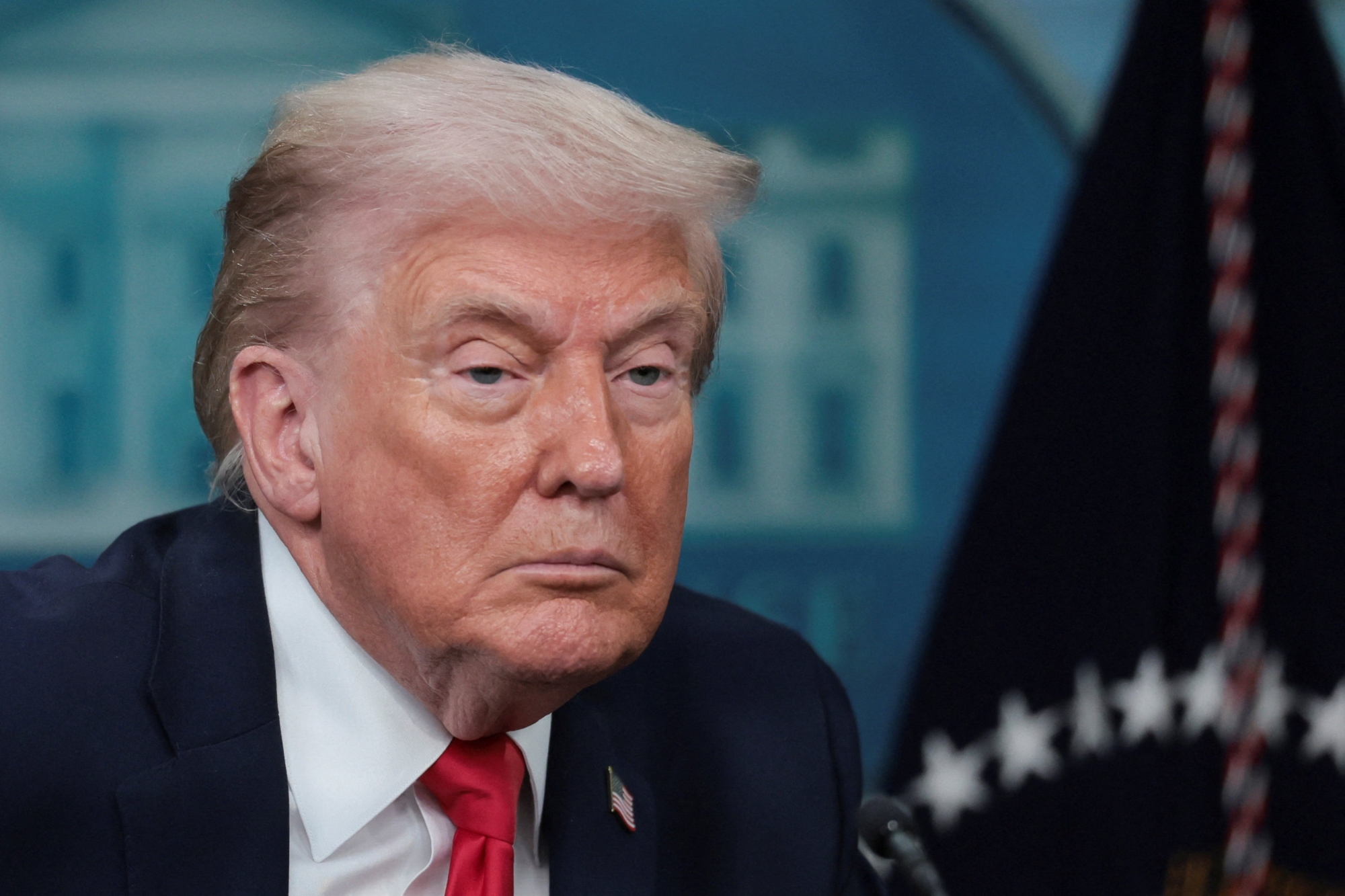
Former US President Donald Trump resumed his trip to Switzerland to participate in the World Economic Forum in Davos after his presidential plane, Air Force One, experienced a minor technical malfunction that forced it to return to its base as a precaution. The incident, though minor, highlighted the strict protocols and high level of preparedness surrounding the travel of the US president.
Details of the incident and the swift response
About 90 minutes after takeoff from Joint Base Andrews near Washington, the crew of Air Force One detected what was described as a “minor electrical issue.” The decision was immediately made to return to base to ensure the highest safety standards. The plane landed safely, and President Trump and his entourage were transferred to a replacement aircraft that was ready to depart, allowing them to continue their journey to Davos without significant delay.
The importance of the Davos Economic Forum
The World Economic Forum, held annually in Davos, Switzerland, is one of the most important international gatherings, bringing together heads of state, top executives from global corporations, and leading thinkers and academics. The forum aims to address the world's most pressing challenges, from the economy and trade to climate change and international security. Trump's participation in the forum garnered significant media attention, as the world awaited his speeches, which often championed his "America First" economic policies in a forum traditionally inclined towards globalization and free trade.
The US presidential plane: a symbol of power and safety
Air Force One (the call sign for any U.S. Air Force aircraft carrying the president) is more than just a means of transportation; it's a flying command center and mobile office equipped with state-of-the-art secure communications and advanced defense systems. The aircraft undergoes rigorous and continuous inspection and maintenance, making technical incidents extremely rare. Having a backup aircraft always ready is standard operating procedure to ensure the president's schedule is never disrupted by any unforeseen event.
Rare incidents in the history of presidential aviation
Despite the near-perfect safety record of the U.S. presidential air fleet, history records a few minor incidents that were handled efficiently. In 2011, former President Barack Obama's plane had to abort a landing attempt due to poor weather conditions. In 2012, a plane carrying then-Vice President Joe Biden experienced a bird strike mid-flight but landed safely without incident. These incidents underscore that the established procedures prioritize the safety of leaders.
-

 Reports 6 days ago
Achievements of Saudi government sectors in 2025
-
Local news two weeks ago
FDA warns of contaminated Nestle infant formula | Recall details
-
Technology 4 weeks ago
US ban on drones: reasons and consequences
-
Technology 4 weeks ago
SRMG and Snapchat partnership: The future of digital media in the Middle East
-
Technology 4 weeks ago
Saudi Arabia's Ministry of Islamic Affairs is employing artificial intelligence in public speaking
-
Sports 4 weeks ago
Salah leads Egypt to a thrilling comeback against Zimbabwe in the Africa Cup of Nations
-
Sports 4 weeks ago
Napoli win the Italian Super Cup in Riyadh for the third time (2025)
-
Sports 4 weeks ago
Alexander Isak's injury: A major blow to Newcastle United's ambitions