
Politics
Israel threatens Hezbollah with intervention if the Lebanese government fails to act
Israel threatens military intervention if Lebanon does not disarm Hezbollah, escalating regional tensions and warnings of dire consequences.

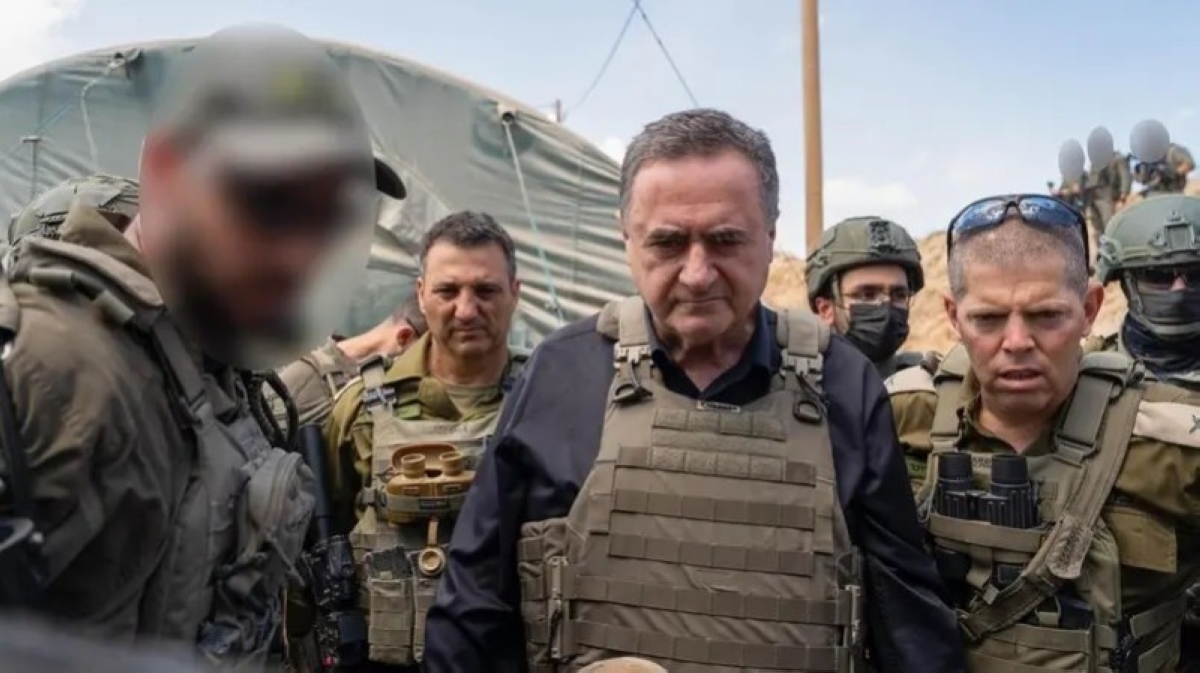
Tensions between Israel and Lebanon: threats and military movements
In a new escalation of regional tensions, Israeli Defense Minister Yisrael Katz threatened that Tel Aviv might take military action if Beirut does not disarm Hezbollah. This statement came in a post on the “X” platform, where he indicated that Lebanese President Joseph Aoun is dragging his feet on addressing the issue.
Israeli statements and warnings
Katz said that Hezbollah is “playing with fire,” stressing the need for the Lebanese government to commit to disarming the group and removing it from southern Lebanon. He added that the Israeli army will continue to use maximum force to protect the residents of northern Israel, emphasizing that no threat to their security will be tolerated.
Airstrikes and escalation on the ground
In a related development, the Israeli army carried out an airstrike on southern Lebanon on Saturday night, killing four members of Hezbollah's Radwan Force in the town of Kfar Rumman in the Nabatieh district, including its logistics officer. This raid is part of a series of repeated Israeli attacks on southern Lebanon.
Agreements and truces: historical and political background
Despite the US-brokered ceasefire between Lebanon and Israel that went into effect in November 2014 after a year of fighting stemming from Israel's war on Gaza, tensions remain. Under the agreement, southern Lebanon was supposed to be demilitarized by Hezbollah and Israeli forces were to withdraw completely.
However, Israel maintained its forces in at least five locations in southern Lebanon after the deadline for a full withdrawal under the ceasefire agreement expired. The agreement also stipulated that the Lebanese government was responsible for dismantling all military infrastructure and confiscating unauthorized weapons in the area.
The Lebanese position and readiness to negotiate
For his part, Lebanese President Joseph Aoun expressed his country's readiness to enter into negotiations aimed at ending the Israeli occupation through mutual consent, at a time and place to be determined later. He also called on the international community to pressure Israel to abide by the ceasefire agreement.
During his meeting with German Foreign Minister Johannes Wadephul, Aoun called on the international community and the European Union to support efforts for peace and stability in the region. There appears to be a clear Lebanese desire to reach a diplomatic solution that would end the decades-long conflict.
Analysis of the Saudi position and its diplomatic role
Saudi Arabia plays an important diplomatic role in the region by supporting stability and promoting peaceful solutions to existing conflicts.
Saudi Arabia always seeks to promote regional stability by supporting international and regional efforts aimed at achieving peace and security.
In this context, the Kingdom’s position can be seen as part of a broader strategy to promote stability and strategic balance in the turbulent Middle East region.




Politics
Faisal bin Farhan and Araqchi discuss regional security and developments
The Saudi Foreign Minister received a call from his Iranian counterpart to discuss regional developments and to emphasize diplomatic solutions to enhance regional stability and resolve disputes through dialogue.
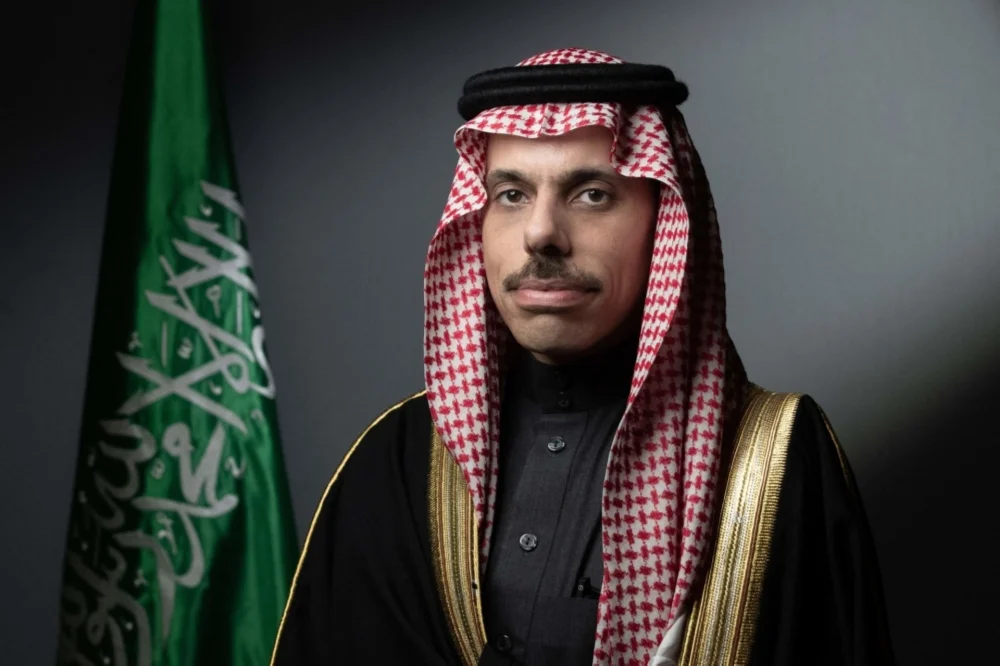
His Highness Prince Faisal bin Farhan bin Abdullah, the Saudi Minister of Foreign Affairs, received a telephone call from His Excellency Abbas Araqchi, the Minister of Foreign Affairs of the Islamic Republic of Iran. These discussions are part of the ongoing communication between the two sides to address issues of mutual interest and strengthen bilateral relations in a way that serves the interests of both countries and their neighboring peoples.
During the call, the two sides discussed a range of regional and international developments currently unfolding in the Middle East. They unequivocally emphasized the need to resolve existing disputes through constructive dialogue and diplomatic means, prioritizing reason and wisdom to prevent further escalation of tensions in the region. The ministers also discussed efforts to maintain regional security and stability, and to ensure the safety of navigation and international waterways, reflecting a shared understanding of the sensitivity of the current situation.
This contact is particularly significant given the recent historical context of relations between Riyadh and Tehran, especially following the agreement reached in Beijing in March 2013, which stipulated the resumption of diplomatic relations and the reopening of embassies. This ongoing communication between the two foreign ministers demonstrates the commitment of both parties to moving forward with the implementation of the agreement's provisions and strengthening confidence-building measures that contribute to a more stable and prosperous regional environment.
Regionally, these talks come at a time when the region is facing complex geopolitical challenges that require close coordination among influential regional powers. Saudi Arabia and Iran, as pivotal states in the Islamic world and the region, bear a significant responsibility in working to contain crises and prevent the escalation of conflicts. Observers note that maintaining open channels of communication between Riyadh and Tehran is a crucial safeguard for de-escalating tensions in several of the region's hotspots.
In conclusion, the contact reflects the Kingdom of Saudi Arabia’s constant commitment to its diplomatic approach based on building bridges of cooperation and supporting all efforts aimed at establishing the foundations of international security and peace, in order to achieve the developmental aspirations of the peoples of the region, away from the language of confrontation and conflicts.
Politics
The Crown Prince receives German Chancellor Friedrich Merz in Riyadh
Crown Prince Mohammed bin Salman is holding official talks with German Chancellor Friedrich Merz in Riyadh to review bilateral relations and the latest regional and international developments.
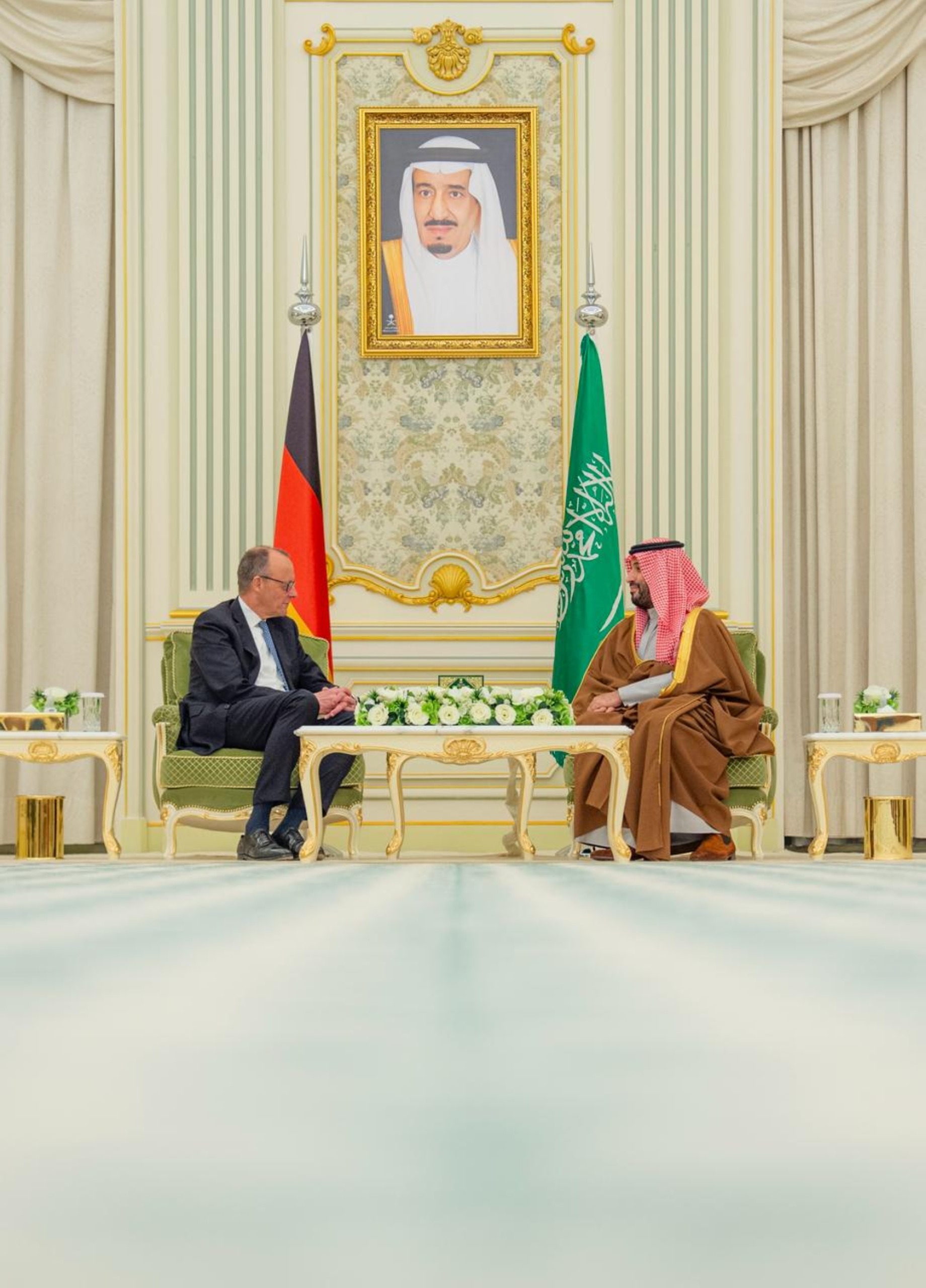
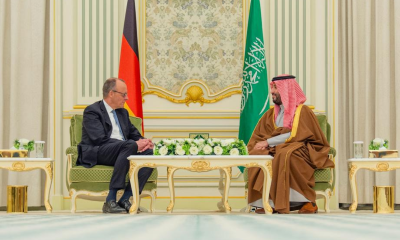
His Royal Highness Prince Mohammed bin Salman bin Abdulaziz Al Saud, Crown Prince and Prime Minister, received German Chancellor Friedrich Merz at the Royal Court in Al-Yamamah Palace in Riyadh this evening, on an official visit aimed at strengthening the bonds of joint cooperation between the two friendly countries.
A formal welcoming ceremony befitting the guest's status was held for the German Chancellor, after which His Royal Highness the Crown Prince and the Chancellor held extensive talks. At the outset of the meeting, His Royal Highness the Crown Prince welcomed the Kingdom's guest, wishing him and his delegation a pleasant stay. Chancellor Merz expressed his great pleasure at visiting the Kingdom and meeting His Royal Highness the Crown Prince, praising the warm reception and generous hospitality.
Strengthening bilateral relations and economic partnership
During the meeting, the two sides reviewed the long-standing bilateral relations between the Kingdom of Saudi Arabia and the Federal Republic of Germany and discussed ways to develop them across various vital sectors. These talks come at a time of remarkable progress in Saudi-German relations, driven by a shared desire to deepen economic and investment cooperation, particularly given the promising opportunities offered by the Kingdom's Vision 2030 and Germany's advanced industrial and technological expertise.
The meeting addressed opportunities for cooperation in renewable energy, green hydrogen, manufacturing, and technology, given Germany's status as a key economic partner for the Kingdom in Europe. Emphasis was also placed on the importance of joint efforts to enhance trade and encourage mutual investments that serve the interests of both nations.
Discussion of regional and international issues
On the political front, the two sides reviewed the latest regional and international developments and the efforts being made in this regard. Discussions touched upon the importance of strengthening security and stability in the Middle East region and the pivotal role the Kingdom plays in supporting peace efforts and resolving conflicts through diplomatic means. They also exchanged views on a number of issues of common interest, emphasizing the need to coordinate positions to address current global challenges.
High-level attendance
The Saudi delegation attending the talks included: Minister of Energy Prince Abdulaziz bin Salman, Minister of State and Cabinet Member Prince Turki bin Mohammed bin Fahd, Deputy Governor of Riyadh Region Prince Mohammed bin Abdulrahman, Minister of the National Guard Prince Abdullah bin Bandar, Minister of Foreign Affairs Prince Faisal bin Farhan, and Minister of Culture Prince Badr bin Abdullah bin Farhan. Also present were Minister of State and Cabinet Member and National Security Advisor Dr. Musaed bin Mohammed Al-Aiban, Minister of Commerce Dr. Majid Al-Qasabi, Minister of Finance Mohammed bin Abdullah Al-Jadaan (the accompanying minister), Minister of Investment Eng. Khalid bin Abdulaziz Al-Falih, and the Custodian of the Two Holy Mosques' Ambassador to Germany Fahd Al-Hathal.
On the German side, State Secretary and Federal Government Spokesperson Stephan Cornelius, German Ambassador to the Kingdom Michael Kindsgrab, State Advisor to the Federal Chancellor for Foreign and Security Policy Dr. Günter Sautter, State Advisor to the Federal Chancellor for Economic and Financial Policy Dr. Levin Höle, and a number of senior officials in the German government were present.
Politics
German Chancellor arrives in Riyadh: Details of the visit and the future of relations
German Chancellor Friedrich Merz arrived in Riyadh today on an official visit. Learn about the details of the reception and the importance of the visit in strengthening the economic partnership between Saudi Arabia and Germany.
The Federal Chancellor of the Federal Republic of Germany, Mr. Friedrich Merz, arrived in the Saudi capital, Riyadh, today, accompanied by a high-level delegation, at the start of an official visit to the Kingdom of Saudi Arabia aimed at discussing ways to enhance joint cooperation between the two friendly countries.
Official welcoming ceremony at King Khalid International Airport
Among those who welcomed the German Chancellor upon his arrival at King Khalid International Airport were His Royal Highness Prince Mohammed bin Abdulrahman bin Abdulaziz, Deputy Governor of Riyadh Region, and His Highness Prince Faisal bin Abdulaziz bin Ayyaf, Mayor of Riyadh. His Excellency the Minister of Finance, Mr. Mohammed Al-Jadaan (the accompanying minister), also participated in the welcoming ceremony, reflecting the economic importance of this visit.
The reception delegation also included the Acting Chargé d'Affaires at the Kingdom’s Embassy in Germany, Mr. Fahd Al-Hathal, the Ambassador of the Federal Republic of Germany to the Kingdom, Mr. Michael Kindsgrab, His Excellency the Acting Director of Riyadh Region Police, Major General Mansour bin Nasser Al-Otaibi, and His Excellency the Undersecretary of Royal Protocol, Mr. Fahd Al-Sahil.
Dimensions of the visit and the future of Saudi-German relations
The German Chancellor’s visit to Riyadh is of great importance in light of current international changes, as Germany is the Kingdom’s largest economic partner in Europe, while Saudi Arabia represents a pivotal political and economic force in the Middle East and the G20.
The presence of Finance Minister Mohammed Al-Jadaan as an accompanying minister to the German guest indicates that economic and investment issues will top the agenda of the talks. Through its Vision 2030, the Kingdom seeks to deepen partnerships with major industrial nations like Germany, particularly in the renewable energy, green hydrogen, technology, and manufacturing sectors, where German companies possess extensive expertise that can contribute to accelerating development and economic diversification in the Kingdom.
This visit comes as an extension of a long history of diplomatic and economic relations between Riyadh and Berlin. The talks are expected to address regional and international issues of common interest, which will enhance the prospects for peace and stability in the region, in addition to exploring opportunities to increase trade and open new horizons for mutual investments between the private sectors in both countries.
-

 Local news one week ago
Applying for the 1447 Opportunities Program for Teachers via the Fares System
-

 Local news one week ago
Ramadan 2026 discounts in Saudi Arabia: Offers valid for 54 days
-
 Culture and Art 6 days ago
The death of artist Huda Shaarawi “Umm Zaki” and her funeral in Damascus
-

 Technology 6 days ago
ICAN 2026 Conference Conclusion: Initiatives to Enhance Saudi Arabia's Leadership in Artificial Intelligence
-

 Local news one week ago
Saudi Arabia halts perennial fodder cultivation to conserve groundwater
-

 Local news one week ago
Applications are now open for the 1447 Opportunities Program for Teachers via the Fares system
-

 Culture and Art, 1 week ago
The truth about Fayez Al-Maliki's illness: biopsy results and details of his health condition
-
 Culture and Art 6 days ago
Huda Shaarawi: Farewell to “Umm Zaki,” the icon of Syrian drama