Politics
Israel approves measures to register West Bank lands
The Israeli cabinet has approved measures to facilitate the registration of West Bank land for settlers. The Palestinian Authority rejects the decision, deeming it a de facto annexation that threatens the two-state solution.


In a new escalation, the Israeli Security Cabinet officially approved a package of measures aimed at tightening Israeli control over the occupied West Bank and facilitating land purchases and registration for settlers, which sparked a wave of rejection and condemnation in Palestinian circles.
Israeli Prime Minister Benjamin Netanyahu justified these moves by linking them to security concerns, stating that the establishment of a Palestinian state represents an existential “security threat” to Israel, especially given the political challenges and elections he faces later this year. For his part, Israeli Defense Minister Yisrael Katz considered the land registration process in the West Bank not merely an administrative procedure, but a “necessary security measure.” Meanwhile, a statement from the security cabinet described the decision as an appropriate and direct response to what it termed the “illegal land registration operations” being promoted by the Palestinian Authority.
Background of the conflict over land and applicable laws
This move comes amid a long and complex struggle over land ownership in the West Bank, which has been under Israeli occupation since 1967. Historically, land in the West Bank has been governed by a mix of Ottoman, British, and Jordanian laws, as well as Israeli military orders. The issue of land registration, or "tabu," is one of the most intricate, as Israel has sought for decades to control what it calls "state land" in Area C, as defined by the Oslo Accords, which constitutes approximately 60% of the West Bank.
Allowing settlers to register land directly bypasses the previously complex legal procedures that required multiple approvals from the Civil Administration and the military. This change removes bureaucratic obstacles to expanding existing settlements and establishing new outposts, thus entrenching the Israeli civilian presence in the occupied territories.
Implications of the decision: Towards de facto annexation and the end of the two-state solution
On the Palestinian side, the decision was met with staunch rejection from the Palestinian Authority, which considered the move a de facto annexation of occupied Palestinian territory and a clear declaration of the commencement of plans to annex the West Bank, aiming to entrench the occupation through illegal settlement activity. Palestinians believe that transferring land registration authority from the military to Israeli civil procedures paves the way for the imposition of full Israeli sovereignty.
From a political and strategic standpoint, this decision has serious repercussions for the already faltering peace process. By facilitating settler land grabs, the West Bank is being fragmented, making the establishment of a geographically contiguous and viable Palestinian state virtually impossible. This effectively eliminates the two-state solution, which the international community has adopted as the basis for a political settlement in the region. Furthermore, these steps are likely to exacerbate tensions and clashes between settlers and Palestinians in villages and towns adjacent to settlements.




Politics
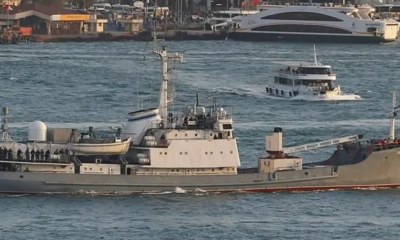
Russian investigation into oil tanker collision at Ust-Luga port
Russian authorities have launched an investigation into the collision of the oil tanker Tony with a pier at the strategic port of Ust-Luga. Learn more about the incident and the port's importance for energy exports.

Russian authorities have launched a comprehensive and urgent investigation into a maritime incident that occurred in one of the country's most important economic hubs, where an oil tanker collided with a pier in the strategic port of Ust-Luga. This port serves as a vital artery for Moscow's exports of crude oil and refined fuels via the Baltic Sea, making any incident within its boundaries particularly significant.
Details of the accident and material damage
The Northwest Region Transport Prosecutor's Office explained in an official statement that the accident occurred when the oil tanker "Tony" was maneuvering to approach the berth in preparation for loading petroleum products. According to preliminary investigations, the tanker collided with the dock at the port in the Leningrad region, causing significant damage to the dock wall and one of the port cranes.
Despite the structural damage, the statement emphasized a crucial point regarding environmental safety: no oil spill was recorded in the port waters, and no human casualties occurred among the ship's crew or dock workers, thus averting a potential environmental disaster in the sensitive Baltic waters.
Port of Ust-Luga: Strategic and Economic Importance
To understand the extent of the official interest in this incident, one must consider the paramount importance of the port of Ust-Luga. Located on the Gulf of Finland, approximately 110 kilometers west of St. Petersburg, the port has been intensively developed over the past two decades to serve as a Russian alternative to the ports of neighboring Baltic states, thus granting Russia complete sovereignty over its energy exports.
The port of Ust-Luga is one of the largest ports in Russia and the Baltic region in terms of cargo volume, handling massive quantities of crude oil, petroleum products, liquefied natural gas, coal, and fertilizers. Any disruption to its operations could directly impact supply chains and the shipping schedules of Russian energy to global markets.
Impact of the incident and legal proceedings
This incident comes at a time when global attention is focused on oil tanker traffic and port security. The public prosecutor's office is currently examining all circumstances surrounding the incident, including the technical condition of the tanker "Tony," the crew's competence, and the safety procedures in place at the port, to ensure that such incidents, which could threaten vital infrastructure for Russian energy exports, are not repeated.
Politics
Saudi Arabia is funding the expansion of Prince Faisal Hospital in Jordan with $14 million
The Saudi Fund for Development lays the foundation stone for the expansion of Prince Faisal Hospital in Jordan, worth $14 million, in the presence of the Jordanian Prime Minister, to enhance health services and increase capacity.
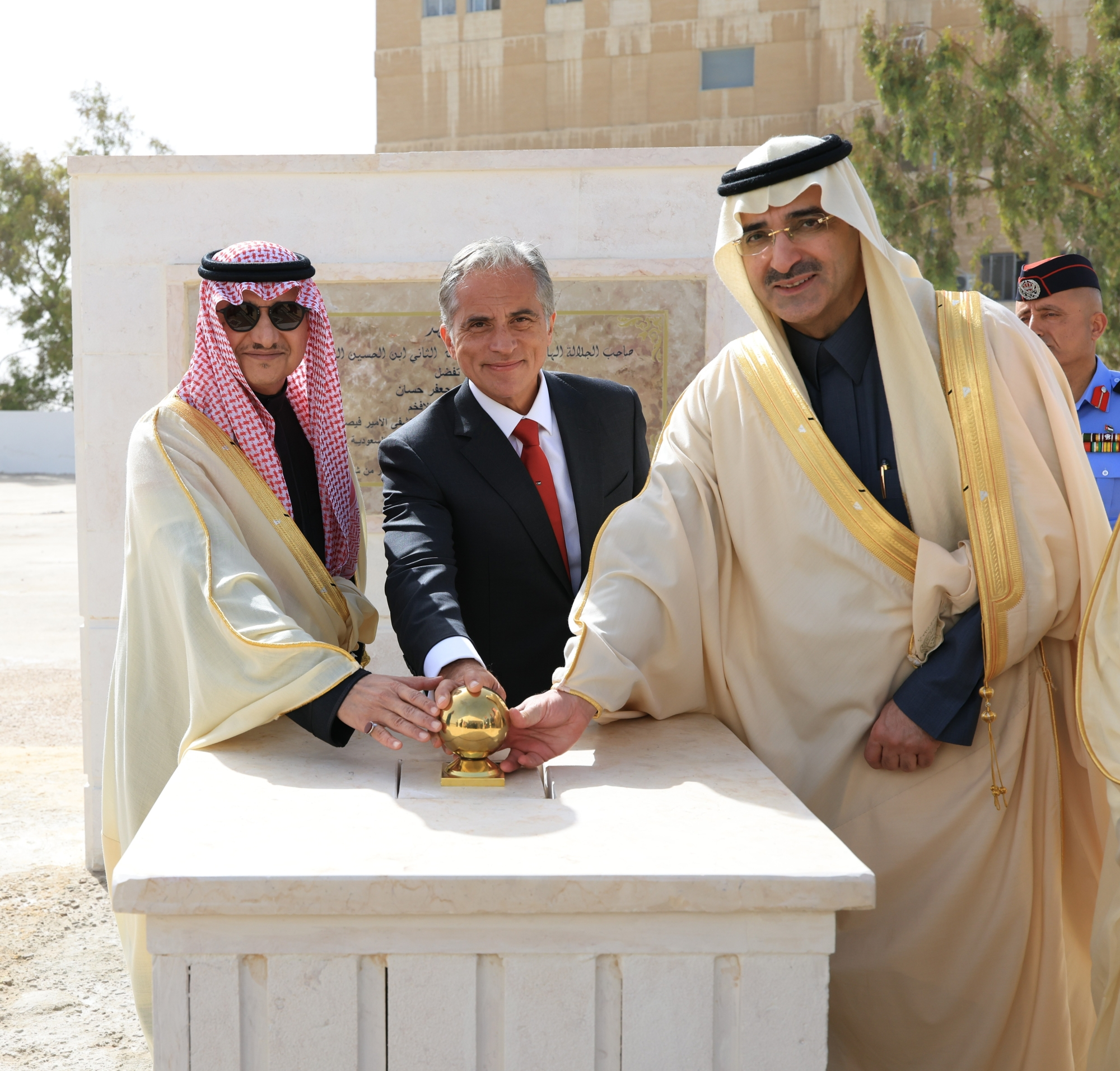
In a move reflecting the deep fraternal and strategic relations between the Kingdom of Saudi Arabia and the Hashemite Kingdom of Jordan, the Saudi Fund for Development contributed to financing a vital project to expand and modernize Prince Faisal Hospital, with a total value of approximately US$14 million. The project site witnessed a groundbreaking ceremony attended by high-level dignitaries, including the Prime Minister of Jordan, Dr. Jaafar bin Abdul Fattah Hassan, and the CEO of the Saudi Fund for Development, Mr. Sultan bin Abdul Rahman Al-Murshid, along with a number of officials from both sides.
This ambitious project aims to revolutionize medical services for the beneficiary communities. It focuses on the complete renovation and modernization of the existing hospital building, as well as the construction of a new four-story extension. Spanning a total area exceeding 8,000 square meters, the project will provide ample space to accommodate the new medical departments and specialized clinics needed by the area's residents.
From a technical and operational standpoint, the project directly contributes to increasing the hospital's capacity, thereby reducing waiting times and enhancing the efficiency and quality of healthcare services provided to citizens. The engineering plan also includes the construction of a helipad dedicated to rapid medical response and air medical evacuation, and the development of medical infrastructure according to the latest international engineering and technical standards, in order to keep pace with increasing population growth and meet the growing basic needs in the healthcare sector.
This support comes within a long history of development cooperation between the Kingdom of Saudi Arabia and Jordan, with the Saudi Fund for Development being a key partner in supporting infrastructure projects in Jordan for decades. This support is not limited to the health sector alone, but extends to the education, energy, water, and roads sectors, reflecting the Kingdom's unwavering commitment to supporting sustainable development in brotherly and friendly nations.
This expansion is particularly important given the location of Prince Faisal Hospital, which serves a large segment of the population in a densely populated area. The project is expected to have a tangible positive social and economic impact by improving public health indicators, providing a comprehensive and safe treatment environment, and creating new job opportunities during the construction and operation phases. This will enhance the stability of the healthcare system in Jordan and support its future plans.
Politics
Senegalese Prime Minister Ousmane Sonko arrives in Jeddah and receives an official welcome
Senegalese Prime Minister Ousmane Sonko arrived in Jeddah on an official visit. He was received by Prince Saud bin Jalawi and senior officials. Learn more about the visit and Saudi-Senegalese relations.
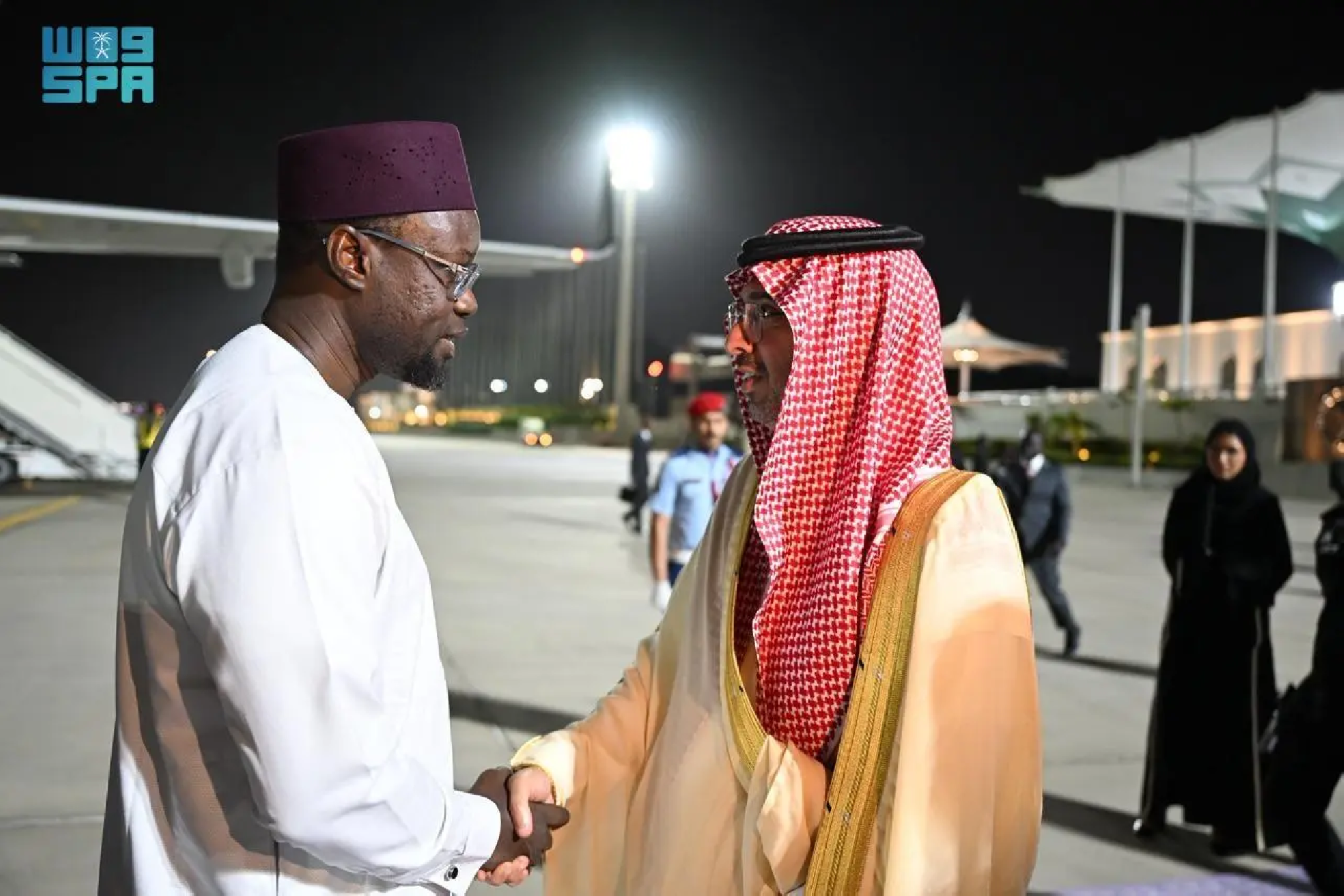
The Prime Minister of the Republic of Senegal, Mr. Ousmane Sonko, arrived in Jeddah today, Sunday, accompanied by a high-level delegation, on a visit to the Kingdom of Saudi Arabia that reflects the depth of the brotherly relations between the two countries.
At the forefront of those receiving the distinguished Senegalese guest upon his arrival at King Abdulaziz International Airport was His Royal Highness Prince Saud bin Abdullah bin Jalawi, Governor of Jeddah, who welcomed the Prime Minister and his accompanying delegation, wishing them a pleasant stay in the Kingdom.
The reception was also attended by a number of civilian and military officials, including the Deputy Mayor of Jeddah, Engineer Ali Al-Qarni, the Director of Jeddah Police, Major General Suleiman bin Omar Al-Tuwaireb, and the Director of Royal Protocol in the Makkah Region, Mr. Ahmed Abdullah bin Thafir. Also present were the Ambassador of the Republic of Senegal to the Kingdom, Mr. Biram Mbaneck Dieng, and members of the Senegalese Embassy.
Context of the visit and its political significance
Mr. Ousmane Sonko's visit to Saudi Arabia comes at a crucial time, as Senegal undergoes a new political phase following recent democratic transitions and elections that brought to power a new leadership eager to strengthen international partnerships. Sonko is a pivotal figure in the current Senegalese political landscape, and diplomatic circles view this visit as a step toward solidifying ties with major Islamic and Arab powers, particularly Saudi Arabia.
Historical relations and strategic partnership
The Kingdom of Saudi Arabia and the Republic of Senegal share strong historical ties spanning decades, based on Islamic brotherhood and joint cooperation in international forums, particularly through the Organization of Islamic Cooperation. Senegal is considered a strategic partner of the Kingdom in West Africa, as the two countries share similar views on many regional and international issues of concern to the Islamic world.
On the development and economic front, the Saudi Fund for Development has long been a major supporter of infrastructure and sustainable development projects in Senegal, reflecting the Kingdom's commitment to supporting the stability and prosperity of its sister nations. Such reciprocal visits between senior officials are expected to open new horizons for economic and investment cooperation, in line with the Kingdom's Vision 2030, which places particular emphasis on strengthening relations with the African continent, and in a way that serves the interests of both brotherly peoples.
-

 Local news one week ago
Agreement to regulate and empower street vendors in Jeddah: Details and objectives
-
Local news one week ago
The Spears of Victory 2026 military exercises concluded in Saudi Arabia with international participation
-
Culture and Art 4 days ago
The "Between and Between" exhibition in Jeddah: 5 artists reshape Saudi memory
-
Culture and Art 5 days ago
Shakira's concert in Jeddah: Details of the international star's first concert in Saudi Arabia
-
Culture and Art, 1 week ago
The truth about Nancy Ajram's video and Epstein Island, and her legal response
-
Culture and Art, 1 week ago
Rawan Bin Hussain's first appearance after her imprisonment and deportation from Dubai
-
Culture and Art, 1 week ago
Sarah Al-Wadaani without a hijab ignites social media and tops the trending list
-
Local news two days ago
The Riyadh-Rin-Bisha dual carriageway, spanning 559 km, has been completed