Politics
Islamabad celebrates defense agreement with Saudi Arabia with the colors of both flags
Islamabad celebrates the signing of the strategic defense agreement with Saudi Arabia, a historic step that strengthens bilateral cooperation and adorns the city with the colors of both flags.


The Saudi-Pakistani Joint Strategic Defense Agreement: A step towards strengthening bilateral cooperation
The Pakistani capital, Islamabad, witnessed joyous celebrations marking the signing of the Joint Strategic Defense Agreement between the Kingdom of Saudi Arabia and the Islamic Republic of Pakistan. The city's most prominent buildings and landmarks were adorned with the colors of the Saudi and Pakistani flags, reflecting the great importance both countries attach to this historic agreement.
Historical background of Saudi-Pakistani relations
Relations between Saudi Arabia and Pakistan date back decades to close cooperation and a strong partnership across various fields. These relations have witnessed remarkable development over the years, with the Kingdom being one of Pakistan's largest trading partners, in addition to Riyadh's consistent support for Islamabad during challenging times.
This agreement will strengthen military and defense cooperation between the two countries, reflecting their shared commitment to maintaining security and stability in the region.
Dimensions of the agreement and its impact on regional security
The Joint Strategic Defense Agreement aims to enhance the defense capabilities of both countries and develop military cooperation in line with current security challenges. This step is expected to contribute to strengthening regional stability and more effectively confronting common threats.
The agreement also reflects the two countries' desire to strengthen their military relations beyond mere training and traditional cooperation, to include new areas such as the exchange of intelligence information and advanced military technology.
Popular and diplomatic celebration of the agreement
The signing of the agreement was widely welcomed by the Pakistani people, who consider the Kingdom an important strategic partner. This welcome was evident in the celebrations that filled the streets of Islamabad and the decoration of national landmarks with the colors of the Saudi and Pakistani flags.
From a diplomatic perspective , this move is seen as a strong indication of the depth of bilateral relations and the two countries' desire to enhance cooperation to address shared challenges. The recent visit of Pakistani Prime Minister Shehbaz Sharif to the Kingdom further underscores the importance of this strategic partnership.
The future of Saudi-Pakistani relations
With the signing of the Joint Strategic Defense Agreement , the two countries look forward to a future of greater cooperation and partnership across various fields. This development is considered a significant step towards achieving shared strategic objectives that serve the interests of both nations and enhance their stability and national security.
In conclusion , this agreement represents a qualitative leap in the course of Saudi-Pakistani relations, and reflects a shared vision for a more secure and stable future for the entire region.




Politics
Khamenei's succession crisis: Iran enters the unknown and its proxies flounder
Iran faces its most serious political crisis with the absence of a successor to the Supreme Leader. This report analyzes the implications of this leadership vacuum on the stability of the regime and the actions of its regional proxies amidst the escalating tensions.

Iran is entering the most dangerous political and security juncture in its history, at a critical moment where an internal leadership crisis intertwines with multiple regional conflicts. The situation is rapidly escalating, and the world is watching closely to see what unfolds in Tehran. The country appears to be operating with a fragmented structure lacking a clear center of power, foreshadowing serious geopolitical repercussions.
Succession crisis and constitutional ambiguity
Following reports of the assassination of Supreme Leader Ali Khamenei, the regime has yet to announce a formal successor, despite the passage of sufficient time that should have allowed for a resolution through established constitutional mechanisms. Historically, the Iranian regime relies on the Assembly of Experts to select the Supreme Leader, the body constitutionally empowered to appoint or dismiss him. However, the current complexities point to a deep power struggle within the corridors of power, a stark contrast to the smooth transition that occurred in 1989 after Khomeini's death and Khamenei's ascension to the throne.
Lack of centralization and its impact on the system
While it is true that a temporary council was formed to manage certain tasks, and several names were floated behind closed doors, the public absence of a clear leader reflects a confusion that goes beyond mere protocol to the very core of the power structure. Iran is not a state of traditional institutions; rather, it is a system fundamentally based on the central authority of the "Supreme Leader," who controls the levers of power within the Revolutionary Guard, the army, and the judiciary. The absence of this figurehead creates a vacuum that temporary councils cannot fill, thus opening the door for the Revolutionary Guard to consolidate its political influence to an unprecedented degree.
The regional arms are floundering and the risks of escalation
Regionally, the picture is even more complex. The Iranian-backed armed factions in Lebanon, Yemen, Iraq, and Syria (the so-called "axis of resistance") rely on strategic guidance and direct funding from Tehran. In the absence of a central command structure, these proxies have begun to operate without a central authority, increasing the likelihood of military miscalculations or being drawn into ill-conceived confrontations with Israel or the United States. The lack of a coordinating force to guide these fronts could transform the region into a scene of complete chaos, where each faction acts according to its own narrow, local interests, detached from a unified Iranian strategy.
Politics
Trump to Iran: It's too late to negotiate after your military capabilities have been destroyed
Donald Trump refuses to negotiate with Iran, vowing to destroy its air and naval defenses, amid a large-scale US-Israeli military escalation and fears of open war.
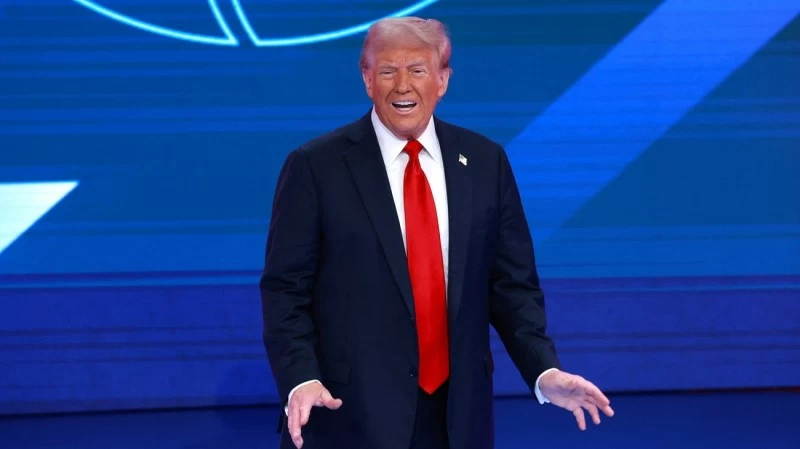
In an unprecedented escalation of the military and political situation, US President Donald Trump announced his categorical rejection of any attempts at negotiation from the Iranian side at the present time, stressing that these calls came too late after Tehran lost the pillars of its strategic military power.
In a fiery statement posted on his social media platform Truth Social, Trump asserted that the Iranian regime is now attempting to salvage its lifeline through diplomacy, but that it is too late. He wrote bluntly: "The Iranians have lost their air defenses, their air force, their navy, and their leaders... and then they wanted to negotiate. I said: It's too late." These remarks come as the United States, in close coordination with Israel, continues its intensive military operations, which appear to have achieved broad strategic objectives.
Context of the conflict and historical background
This dramatic development cannot be separated from a long history of tension between Washington and Tehran. Relations between the two countries have long been governed by the “maximum pressure” policy previously pursued by Trump, which focused on crippling the Iranian economy and isolating it diplomatically. Analysts suggest that the current strikes are the culmination of a long history of disputes over regional influence, the ballistic missile program, and the thorny issue of the nuclear program.
President Trump, who authorized the airstrikes in direct coordination with Israel on Saturday, had initially estimated the operations would last four to five weeks. However, developments on the ground and the administration's efforts to justify a full-scale war have shifted the focus toward an open-ended confrontation aimed at completely neutralizing the Iranian threat.
Military and nuclear dimensions
In justifying the massive attack, Trump focused on Iran's relentless pursuit of nuclear weapons, an accusation Tehran has consistently denied, maintaining that its program is peaceful. Nevertheless, Washington and Tel Aviv consider Iran's acquisition of a nuclear bomb a red line that cannot be crossed, which explains the ferocity of the attacks targeting military infrastructure.
Trump's talk of destroying Iran's navy and air defenses carries serious strategic implications. Iran relies heavily on its naval power in the Strait of Hormuz to threaten to close global oil shipping lanes, and on its air defenses to protect its nuclear facilities. According to Trump's statements, neutralizing these capabilities would deprive Iran of its most important bargaining chips, making its calls for negotiations now appear as an attempt at surrender rather than an attempt at equal dialogue.
Expected regional repercussions
This escalation is expected to cast a long shadow over the entire Middle East. The absence of Iranian defensive capabilities could fundamentally alter the balance of power in the region and reshape security and political alliances. Furthermore, a protracted war could lead to instability in global energy markets, presenting the international community with complex economic and security challenges in the coming period.
Politics
British warning to Iran: We will not remain silent about the targeting of our allies in the region
Britain sent a firm message to Iran through spokeswoman Jocelyn Waller, stressing that it would not remain silent in the face of attacks on allies and praising efforts to protect civilians amid escalating regional tensions.

In a significant development reflecting the depth of geopolitical tensions in the Middle East, the United Kingdom sent a strongly worded message to Tehran, reaffirming its unwavering commitment to the security and stability of its allies in the region. This firm stance was delivered by the British government spokesperson for the Middle East and North Africa, Jocelyn Wallard, who emphasized that London would not remain silent in the face of any actions that jeopardize the security of its partners.
Details of the British warning
In a video posted to her official X account (formerly Twitter), Waller explained that Iran had launched a series of attacks over the past three days in various parts of the region, targeting countries that had not initiated any hostile action against it. The British official indicated that this behavior represents an unjustified escalation that threatens regional peace, emphasizing that "we will not stand idly by" in the face of these transgressions.
Regional context and the importance of alliances
This statement comes at a time of regional instability, as major international powers, particularly the United Kingdom, seek to reaffirm their commitment to security and defense agreements with Gulf and Middle Eastern states. Historically, Britain has deep strategic ties with countries in the region, extending beyond economics to include close military and security cooperation. This British stance is interpreted as part of a Western deterrence strategy aimed at preventing the escalation of conflict and ensuring freedom of navigation and global energy security.
Protection of civilians and international responsibility
In her remarks, Waller highlighted the humanitarian and social dimensions of the targeted countries, describing them as homelands that welcome citizens of diverse nationalities and backgrounds, including a large British community living and working there. She expressed the UK government's deep gratitude to the local authorities and military forces in those countries, commending their effective and vigilant efforts to protect civilians from air and missile threats.
Implications of timing and the future
The timing of this message carries significant political implications, underscoring that the international community is closely monitoring Iranian actions. Observers believe that London's use of firm diplomatic language suggests a potential increase in security and intelligence coordination between Britain and its allies in the coming period to neutralize any future threats and maintain stability in this vital region for the entire world.
-

 Local News 3 days ago
Jeddah Airport alerts for travelers due to airspace closure and flight disruptions
-
Local News 5 days ago
Saudi Arabia approves regulations for the continued presence of Gulf vehicles: duration and penalties
-
Local news one week ago
The Ministry of Interior begins procedures for a royal pardon for common law prisoners
-
Local news one week ago
The deadline for property registration in Hail and Riyadh is Thursday
-
Sports one week ago
Tickets for the Al-Ahli vs. Al-Hilal King's Cup match postponed: New date
-
Local news one week ago
Under the patronage of the Minister of Information, an agreement was signed between the Ministry of Information and Waves Marketing Company
-
Culture and Art 6 days ago
The Devil's Prisons series was halted: The full story of "The Emperor's" being moved to YouTube
-
Local News 5 days ago
Saudi Energy: A new identity for electricity that aligns with Vision 2030